

What Is a Bing Rank Tracker?
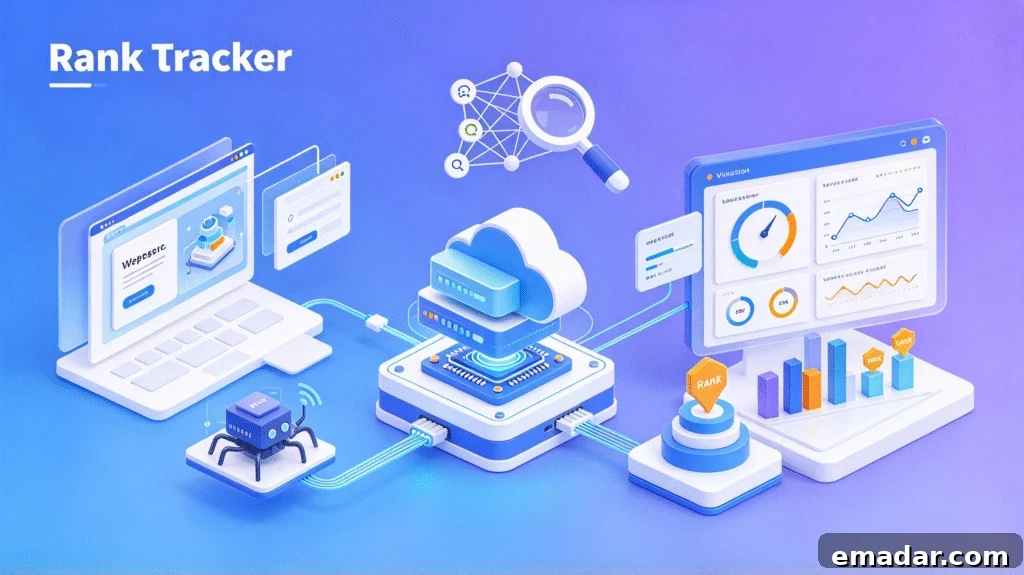
A Bing rank tracker is a system or workflow that monitors where a website appears in Bing search results for specific keywords. In practice, you enter a keyword, collect the Bing results for that query, locate the target website within those results, and record its ranking position.
While this process is straightforward for a few keywords, the complexity grows when tracking hundreds or thousands of terms across multiple markets. A useful tracker should capture not only the ranking position but also the conditions under which the search was performed, including keyword, ranking URL, search location, language, device, SERP features, timestamp, and historical position.
These contextual details matter because rankings are not universal: a page that ranks highly in one city may rank differently in another, and desktop and mobile results often diverge. Accurate Bing rank tracking is therefore less about a single number and more about creating a consistent measurement environment.
How Does a Bing Rank Tracker Work?
Most tracking workflows follow four core stages.
Keyword and Location Setup
First you define the keywords and the search environment. For example:
Keyword: project management software
Market: United States
Location: New York
Language: English
Device: Desktop
Defining these variables precisely ensures comparisons over time are valid and meaningful.
Bing SERP Collection
The system then collects the Bing SERP for each query. Depending on the solution, the output might be a simple ranking position or richer structured SERP data containing URLs, titles, snippets, and other elements that appear on the results page.
Note: Microsoft retired its Bing Search APIs on August 11, 2025, so teams building programmatic collection systems must rely on alternative data sources or tracking solutions to obtain search data.
Ranking Extraction
Next, the tracker identifies the target domain or URL within the returned results and records its rank. For example:
Keyword: running shoes

1. competitor-a.com
2. competitor-b.com
3. example.com
Here the target site would be recorded at position three.
Historical Tracking
Finally, results are stored for historical analysis. A single check is only a snapshot; a time series of rankings reveals trends, volatility, and the impact of changes. Historical tracking is therefore one of the most valuable features of a rank tracker.
What Makes Bing Rank Tracking Accurate?
A ranking value is useful only when the conditions behind it are consistent. Several variables require careful control.
Location
Geographic location strongly influences search results. For international and local SEO, collecting rankings from the target market is essential. If you track keywords for a U.S. audience but collect data from a different country, your results may be misleading. A geographically targeted collection environment is a critical part of accurate rank tracking.
The guiding principle is simple: the measurement environment should match the market being measured.
Device
Desktop and mobile SERPs often differ. If you track both device types, store and analyze them separately. Mixing results by device can create false signals where a device shift looks like a ranking change.
Language
Language settings should remain consistent. Comparing rankings captured under different language configurations can produce inaccurate conclusions. For international campaigns, treat country, city, language, and device as separate tracking dimensions.
SERP Context
Search pages contain more than ten organic links. They may include snippets, knowledge panels, ads, images, or other features that affect visibility. A good tracker preserves sufficient SERP context to explain a ranking, rather than logging position alone.
Why Location Matters for a Bing Rank Tracker
Location is one of the easiest variables to overlook and one of the most important for international SEO. Tracking the same keyword across multiple markets often reveals different ranking URLs and positions. For example, the same keyword might show a site at position 4 in the United States but position 7 in the United Kingdom and lower rankings in other countries. A single global rank conceals those differences; market-level datasets make them visible.
Market-level tracking is useful for international SEO, local SEO, regional content analysis, competitor monitoring, market research, and search visibility reporting. When tracking across many locations, ensure your network environment and collection endpoints correspond to the target countries or cities.
How to Choose a Bing Rank Tracker
Not every tracker fits every workflow. Before choosing a solution, evaluate these five areas:
Geographic Targeting
Confirm the system supports the countries and cities relevant to your program. For some projects, country-level coverage is enough; for local search, city-level targeting may be required.
Historical Data
Make sure the tracker stores historical records to reveal trends, sudden changes, landing-page swaps, and competitor movement. Historical context is essential to interpret ranking shifts.
Tracking Frequency
Daily checks are often sufficient for routine monitoring. More frequent sampling can help diagnose specific events, while stable sites may not need constant updates. Choose frequency to answer business questions, not just to gather more data.
SERP Data Depth
If pages frequently rank beyond the first page, tracking only top results will miss important information. Determine how many positions you need to capture before selecting a provider.
API or Dashboard
Decide whether you need an all-in-one platform (dashboard, reporting, and keyword management) or a data API that gives you more control over collection, parsing, and integration. Enterprise teams often use both approaches depending on the use case.
Bing Rank Tracker vs. SERP Data API
A SERP data API supplies raw search-result data; a Bing rank tracker converts that data into an ongoing monitoring system. A custom workflow built on an API must handle scheduling, parsing, domain matching, position calculation, historical storage, reporting, and error handling. Dedicated rank trackers typically provide these layers out of the box. Choose a platform for convenience and built-in reporting, or choose a data API for greater control over the data workflow.
Which IP Type Fits a Bing Rank Tracking Workflow?
IP infrastructure does not determine ranking logic, but it shapes the network location from which search data is collected.
Dynamic Residential IPs
Dynamic residential IPs provide flexible geographic coverage for multi-market research, regional SERP research, and large-scale keyword monitoring where varied locations are required.
Static Residential IPs
Static residential IPs are useful when a consistent residential endpoint matters over time, for example when measurement continuity helps reduce noise in the dataset.
Datacenter IPs
Datacenter IPs suit high-volume workflows where performance, low latency, and high concurrency are priorities. The correct choice depends on your collection needs rather than a one-size-fits-all assumption.
Common Bing Rank Tracking Mistakes
Avoid these pitfalls:
- Tracking every market from a single location, which produces unrepresentative results.
- Mixing desktop and mobile rankings instead of keeping them separate.
- Recording only position without location, device, timestamp, or ranking URL.
- Comparing results captured under inconsistent search conditions.
- Assuming a ranking change explains the cause—rankings indicate what changed, but further analysis is required to understand why.
A Practical Bing Rank Tracking Checklist
Before launching, confirm your workflow can answer these questions:
- Are target keywords clearly defined?
- Are target countries and cities specified?
- Is language tracked consistently?
- Are desktop and mobile results separated?
- Is the ranking URL recorded?
- Is historical data retained?
- Is the required SERP depth available?
- Does the network environment match the target market?
- Is the collection frequency appropriate?
- Can data be exported or integrated into existing reporting?
When these conditions are met, your ranking dataset will be far more actionable than a collection of isolated positions.
Conclusion: Accurate Bing Rank Tracking Starts With Consistent Data
Accurate Bing rank tracking depends on collecting comparable search data under clearly defined conditions. The most important variables to control are: Keyword → Location → Language → Device → SERP → Time. With these dimensions under control, ranking changes become easier to interpret and historical analysis becomes more reliable.
Because programmatic access to Bing search has changed, teams building automated tracking systems should pay closer attention to their data collection architecture and ensure the network location used for collection aligns with the markets they measure. The goal is not to gather the most data possible, but to capture consistent, relevant, and geographically appropriate data that supports sound SEO analysis.
Build a More Accurate Bing Rank Tracking Workflow
When location-specific network resources are required, evaluate IP options (dynamic residential, static residential, or datacenter) and match them to your collection needs. Choose the combination of tracking tools and network resources that preserves measurement consistency and enables reliable SEO insights.
Find IP resources and tracking configurations that align with your Bing rank tracking requirements.