Use Case
How Proximity Servers Power the Modern Web — From Data Delivery to User Experience
In today’s hyper-connected world, every millisecond matters. Whether you’re streaming a video, making a real-time transaction, or managing global data…

In today’s hyper-connected world, every millisecond matters. Whether you’re streaming a video, making a real-time transaction, or managing global data systems, the speed and efficiency of your connection define your digital experience.
Behind this smooth performance lies a crucial piece of internet infrastructure — the proximity server.
While most users never see it, this technology plays a central role in reducing latency, optimizing data delivery, and balancing network loads across the internet. In this article, we’ll unpack how proximity servers work, why they’re essential, and how advanced network ecosystems — such as IPFLY’s global proxy infrastructure — integrate similar principles to achieve seamless performance worldwide.
Understanding the Concept of a Proximity Server
A proximity server is a computing node or network server that’s strategically located near end-users to speed up data transmission.
In simple terms, it’s a server that acts as a “local middleman” between your device and the main source of data. Instead of every request traveling across long international routes, proximity servers store, process, or relay data from nearby locations — drastically cutting down on latency and improving reliability.
Proximity servers are part of a broader category of edge computing and content delivery networks (CDNs) — systems designed to deliver data faster by bringing it physically closer to where it’s needed.
How a Proximity Server Works
When you access a website or application, your device sends a request to a remote data center. But if that data center is located thousands of kilometers away, the request travels through multiple networks — increasing latency and decreasing response time.
A proximity server solves this by acting as a local data bridge. Here’s how the process unfolds:
1.User Request: You open an app or website.
2.Routing Optimization: The request is automatically directed to the nearest proximity server instead of the main global server.
3.Local Processing: The proximity server either retrieves cached data or forwards the request using optimized routes.
4.Response Delivery: The data returns via the shortest possible path — ensuring minimal delay.
This system ensures that users experience faster loading speeds, stable connections, and improved quality of service, regardless of where they are in the world.
Benefits of Using Proximity Servers
1.Reduced Latency
The primary advantage of a proximity server is speed. By processing data closer to the user, it cuts response times dramatically — crucial for gaming, video conferencing, and real-time financial transactions.
2.Improved Network Reliability
Proximity servers distribute data traffic across multiple nodes. If one route fails or slows down, the system reroutes requests automatically, maintaining uptime and stability.
3.Enhanced Data Security
Localizing traffic flow can strengthen security by isolating network threats and reducing exposure to cross-regional risks.
4.Load Balancing
These servers balance large-scale network demands efficiently, preventing central servers from overloading during peak traffic.
5.Better User Experience
From streaming platforms to e-commerce sites, proximity-based routing ensures smoother interactions and faster content delivery — leading to higher user satisfaction.
Proximity Servers vs. Traditional Servers
| Aspect | Traditional Server | Proximity Server |
| Location | Centralized data centers | Distributed near end-users |
| Latency | Higher due to long data travel | Lower, with shorter network paths |
| Scalability | Limited by physical location | Highly scalable through global deployment |
| Performance | Varies with distance | Consistent and optimized |
| Use Case | General hosting | Speed, reliability, and data delivery optimization |
The difference lies in proximity — where the data lives and how efficiently it’s delivered.
Real-World Applications of Proximity Servers
Online Gaming: Minimizes lag by connecting players to local servers.
Video Streaming: Reduces buffering and improves playback quality.
E-Commerce Platforms: Speeds up website loading times for customers in different regions.
IoT and Smart Devices: Supports real-time data exchange for connected systems.
Enterprise Networking: Enables global businesses to maintain fast, secure intranet communication.
How Emadar Leverages Proximity Principles for Global Network Performance
In large-scale data management, proximity-based routing is not limited to content delivery — it’s a principle also applied in proxy and IP network infrastructures, like those operated by IPFLY.
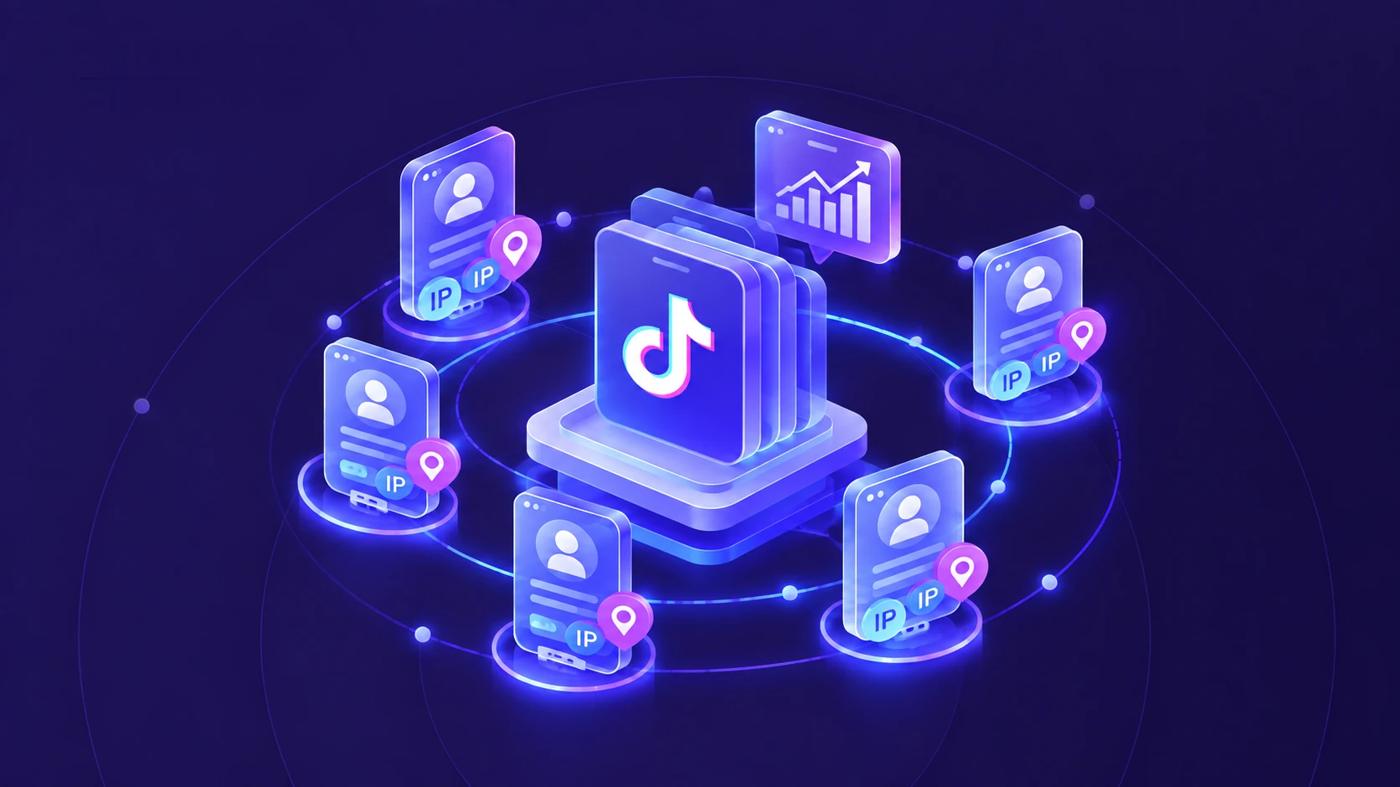
IPFLY maintains one of the world’s most extensive proxy IP networks, with over 90 million IPs distributed across 190+ countries and regions. Its architecture is built on proximity-aware design — connecting users through the nearest available, high-quality IP node for faster, more stable, and secure sessions.
Through intelligent routing algorithms, multi-layer verification, and geo-optimized IP pools, IPFLY effectively mirrors the same benefits as proximity servers:
1.Lower latency through localized connections
2.Improved global access coverage
3.Balanced traffic load across distributed nodes
4.High reliability with 99.9% uptime
This demonstrates how proximity-aware technologies have evolved beyond traditional servers — now serving as the foundation of modern proxy systems, research networks, and business-grade connectivity.
Stuck with IP bans from anti-crawlers, inaccessible customs data, or delayed competitor insights in cross-border research? Visit IPFLY.net now for high-anonymity scraping proxies, and join the IPFLY Telegram community—get “global industry report scraping guides”, “customs data batch collection tips”, and tech experts sharing “proxy-based real-user simulation to bypass anti-crawlers”. Make data collection efficient and secure!

Challenges of Proximity Server Implementation
While proximity servers bring enormous advantages, they also pose certain challenges:
1.Infrastructure Costs:
Deploying servers across multiple regions requires substantial investment.
2.Data Synchronization:
Maintaining consistency between local and central servers demands robust management systems.
3.Security Management:
Each new node increases the potential attack surface, requiring stronger defenses.
4.Regulatory Compliance:
Some regions impose strict data residency laws affecting server deployment.
Despite these challenges, advances in automation, cloud orchestration, and AI-driven traffic control are making proximity server networks more accessible and scalable than ever before.
The Future of Proximity Servers
As the global demand for real-time interaction and low-latency connectivity continues to grow, proximity servers will become even more critical. Emerging technologies — including 5G, edge AI, and smart routing protocols — are pushing proximity computing closer to the user than ever before.
Forward-looking platforms like IPFLY exemplify this evolution by integrating intelligent network proximity into large-scale proxy systems, enabling ultra-fast, reliable connections for both enterprise and research applications.
The future internet will not only connect us globally — it will do so locally, with every user linked to the closest possible network gateway for maximum performance.
Conclusion
A proximity server is more than a technical concept — it’s the invisible engine driving today’s seamless digital experiences. By reducing latency, optimizing performance, and localizing data delivery, proximity servers have redefined how information moves around the globe.
As technologies like IPFLY demonstrate, proximity-based infrastructure isn’t just for content delivery networks; it’s becoming the backbone of intelligent, distributed internet systems built for the next era of global connectivity.
Understanding how proximity servers work allows us to appreciate the hidden science behind every fast-loading page, every lag-free stream, and every real-time online interaction — the true power of closeness in the digital world.