
The global alternative data market is evolving rapidly under the influence of tighter regulation, cloud-native analytics, and specialized data science. Organizations are increasingly combining multiple data modalities—text, imagery, location, transactions, sensors, and web-scraped content—to uncover patterns that single-source analysis misses. Artificial intelligence is amplifying the usefulness of these signals across finance, marketing, and other industries.
Alternative data refers to information gathered from non-traditional sources—web pages, satellites, transactions, app activity, and other signals—that businesses and investors use to gain advance insights before those signals appear in official reports. A well-known example is using satellite images to estimate footfall in retail parking lots and infer quarterly sales. For many teams, the most accessible and abundant alternative data source is the public web, which is why reliable proxy infrastructure is central to any large-scale data collection effort.
This guide explores alternative data in detail: what it is, the main categories, typical users, collection methods, the importance of proxies, and legal and ethical considerations. It covers both strategic value and practical mechanics for building robust collection pipelines using professional proxy solutions.
What Is Alternative Data?
Definition and Core Concept
Alternative data describes information obtained from sources outside traditional inputs like financial statements, analyst reports, and government statistics. The term gained traction in finance, where “alternative” denotes data that supplements or precedes official filings.
The advantage lies in timeliness and exclusivity: these signals often reveal real-world activity before they are reflected in quarterly reports or market aggregates. Examples include competitor pricing, job posting volumes, and product review sentiment—each offering an early indicator of business performance.
Alternative Data vs. Traditional Data
Traditional data tends to be standardized, widely available, and lagging. Alternative data is often less structured, more current, and valuable to those who collect and analyze it first.
Common traditional sources include financial statements, analyst reports, government statistics, exchange data, and company press releases. In contrast, alternative sources include web-scraped prices and listings, satellite and geolocation data, social sentiment and search trends, transaction aggregates, and app usage and foot-traffic measurements.
The Information Asymmetry Advantage
Alternative data creates an information advantage: it enables earlier and often more granular insights into behavior and trends. Investors, for instance, can use transaction aggregates to infer consumer spending before earnings are released. Businesses can use competitor price monitoring to adjust strategy in near real time. This forward-looking capability is why many institutions invest heavily in alternative data programs.
Beyond finance, retailers, real estate firms, and marketing teams use these signals to make faster, better-informed decisions, from dynamic pricing to identifying emerging market opportunities.
Types of Alternative Data
Alternative data spans several categories, from broadly accessible web-scraped content to specialized feeds provided by vendors.
Web-Scraped Data
Web scraping is the most widely accessible method for collecting alternative data. Typical targets include:
- Product prices and listings – competitor pricing, assortment, and stock levels
- Customer reviews and ratings – sentiment and product feedback
- Job postings – hiring trends and workforce signals
- Real estate listings – availability and price movement
- Search engine results pages (SERPs) – SEO and rank monitoring
These public sources require infrastructure investment to collect reliably, but they are generally available without expensive vendor contracts.
Transaction Data
Transaction data consists of aggregated, de-identified card and receipt information. Typically sourced via vendors or consumer panels, it offers granular visibility into spending patterns, brand performance, and retail activity while being subject to strict privacy controls.
Geolocation and Mobility Data
Geolocation data, gathered from app SDKs and location providers, tracks foot traffic and movement. It is useful for retail performance benchmarking, urban planning, event attendance estimation, and transport analytics.
Satellite and Sensor Data
Imagery and sensor feeds provide observations such as parking lot counts, crop conditions, shipping movements, and infrastructure status. These signals support agricultural forecasting, logistics monitoring, energy asset surveillance, and environmental analysis.
Social Media and Sentiment Data
Social and review data capture public sentiment, product feedback, trend signals, and potential reputational shifts. Collected through APIs and scraping, these datasets are valuable for brand monitoring, launch tracking, crisis detection, and consumer insight.
Who Uses Alternative Data?
Investors and Hedge Funds
Investors were early adopters. Hedge funds and asset managers use alternative data to forecast performance ahead of earnings—tracking prices, hiring, app rankings, and other signals to inform positions and timing.
E-Commerce and Retail
E-commerce teams rely on competitor pricing, assortment intelligence, and stock monitoring to drive dynamic pricing, assortment decisions, and promotional strategies. Real-time visibility into competitors helps identify gaps and opportunities.
Real Estate
Real estate professionals use scraped listing data to monitor inventory, pricing trends, days-on-market metrics, and rental dynamics to spot shifts in local markets.
Marketing and Advertising
Marketing teams leverage alternative data for competitive intelligence, audience insights, campaign optimization, and brand monitoring—using both structured and unstructured signals to guide strategy.
B2B and Corporate Strategy
Corporate teams use alternative data for market intelligence, lead generation, supply chain risk monitoring, and M&A targeting, relying on behavioral and operational signals to prioritize opportunities.
How Alternative Data Is Collected
Web Scraping: The Primary Method
Web scraping extracts data programmatically from websites—prices, listings, reviews, job ads, and more. A typical pipeline includes:
- Target identification – selecting sites and data points
- Request generation – programmatically fetching pages
- Response parsing – extracting structured fields from HTML
- Data storage – saving results in databases or data lakes
- Validation and cleaning – ensuring quality and consistency
The Proxy Imperative
Large-scale web scraping depends on proxy infrastructure. Websites often personalize content by geographic location, enforce rate limits, and deploy anti-bot defenses. Rotating residential IPs help collectors appear as ordinary users, avoid blocks, and retrieve localized content.
Key reasons proxies are essential:
- Geo-personalization – content and prices vary by IP location
- Rate limits – distributing requests across many IPs avoids blocking
- Anti-bot defenses – residential IPs carry higher trust than datacenter addresses
Structured vs. Unstructured Data
Alternative data often mixes structured elements—prices, listings, numeric metrics—with unstructured text such as reviews or social posts. Converting unstructured data into usable signals requires techniques like natural language processing and sentiment analysis.
Data Freshness and Timeliness
Timeliness is crucial: the value of many signals decays quickly. Pipelines must support appropriate collection frequency, real-time or near-real-time processing, and alerting for significant changes while balancing cost and blocking risk.
The Role of Proxy Infrastructure in Alternative Data Collection
Why Proxies Are Non-Negotiable
Proxy infrastructure is foundational for scalable, reliable data collection. Proxies enable accurate geographic targeting, distribute request load to avoid rate limits, and reduce detection risk from anti-bot systems. For workflows that require consistent session IPs, static residential proxies are necessary.
Building a Complete Alternative Data Pipeline
An effective pipeline includes:
- Target selection – deciding which sources answer the business question
- Infrastructure provisioning – proxy networks, compute, and storage
- Scraping implementation – resilient scrapers built with tools like Scrapy, Selenium, or Playwright
- Data storage – structured repositories for analysis
- Processing and analysis – cleaning, normalizing, and extracting signals
- Monitoring and maintenance – ongoing health checks and adjustments
Legal and Ethical Considerations
The Legal Landscape
Collecting alternative data sits within a complex legal framework. As a guiding principle, public, non-personal data is generally safer to collect; personal data is regulated under laws such as GDPR, CCPA, and Japan’s APPI. Website terms of service may also restrict scraping and represent legal risk that should be evaluated with counsel.
Japan’s APPI Framework
Japan’s APPI, enforced by the Personal Information Protection Commission, includes recent amendments addressing statistical processing and AI development. Practically, public, read-only scraping of product and price data remains the common, lower-risk approach; collecting personal information without a lawful basis carries regulatory risk.
Ethical Best Practices
Responsible collection follows several principles:
- Prioritize public, non-personal data
- Respect robots.txt and site guidelines where possible
- Use human-like request pacing to avoid undue load
- Minimize impact on target servers
- Be transparent about collection when feasible
- Consult legal counsel before scaling commercial operations
The Future of Alternative Data
Multimodal Intelligence
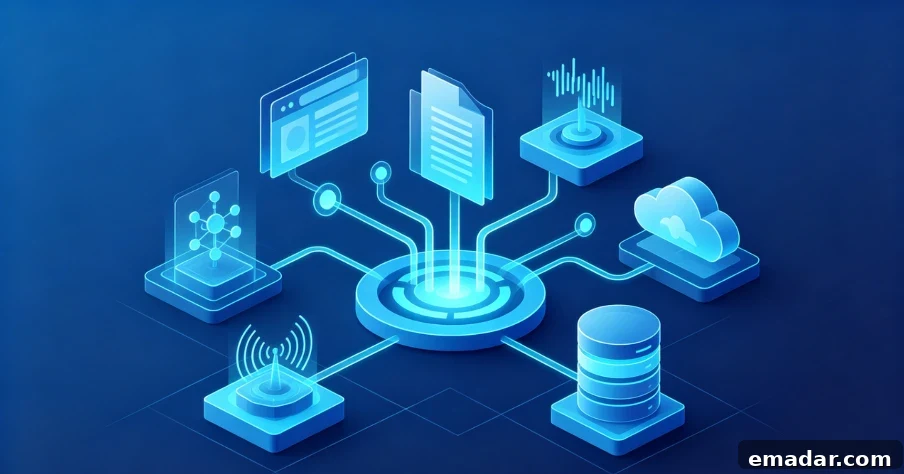
The field is moving toward multimodal intelligence, combining imagery, text, location, transaction, and sensor data to generate richer, more reliable insights. Integrating diverse signals helps reveal patterns that single sources cannot.
AI and Automation
AI is central to extracting value from alternative data—automating structure extraction, finding subtle patterns, surfacing anomalies, and generating actionable recommendations in near real time.
Regulatory Evolution and Democratization
Regulation will continue to evolve alongside data practices. At the same time, easier access to public web data and professional proxy infrastructure lowers the barrier to entry, making alternative data capabilities available to more organizations.
Alternative data is reshaping how organizations gain insight. By going beyond traditional statements and official statistics, businesses and investors can access timely, granular signals about market conditions, competitor actions, and consumer behavior. Combining multiple data sources and applying AI-driven analysis produces more robust intelligence.
For many teams, the public web is the most accessible source of alternative data, but collecting it reliably requires professional proxy infrastructure to address geo-targeting, rate limits, and anti-bot protections. Focusing on public, non-personal data and following ethical guidelines helps create defensible collection practices while legal counsel ensures compliance as regulations change.
Alternative data is not a passing trend; it has become a foundational capability for data-driven decision-making. Organizations that build resilient collection pipelines and integrate diverse signals will be better positioned to capture the competitive advantages these data sources unlock.
For teams building alternative data pipelines—whether for market intelligence, competitive analysis, or investment research—professional proxy infrastructure supports reliable web-scraped collection. Common proxy solutions include dynamic residential proxies for high-volume, geographically targeted scraping; static residential proxies for session persistence and authenticated workflows; and datacenter proxies for high-performance, non-defended workloads.
Establishing the right infrastructure and operational practices today enables organizations to harness alternative data safely, ethically, and effectively—turning non-traditional signals into actionable insight.