
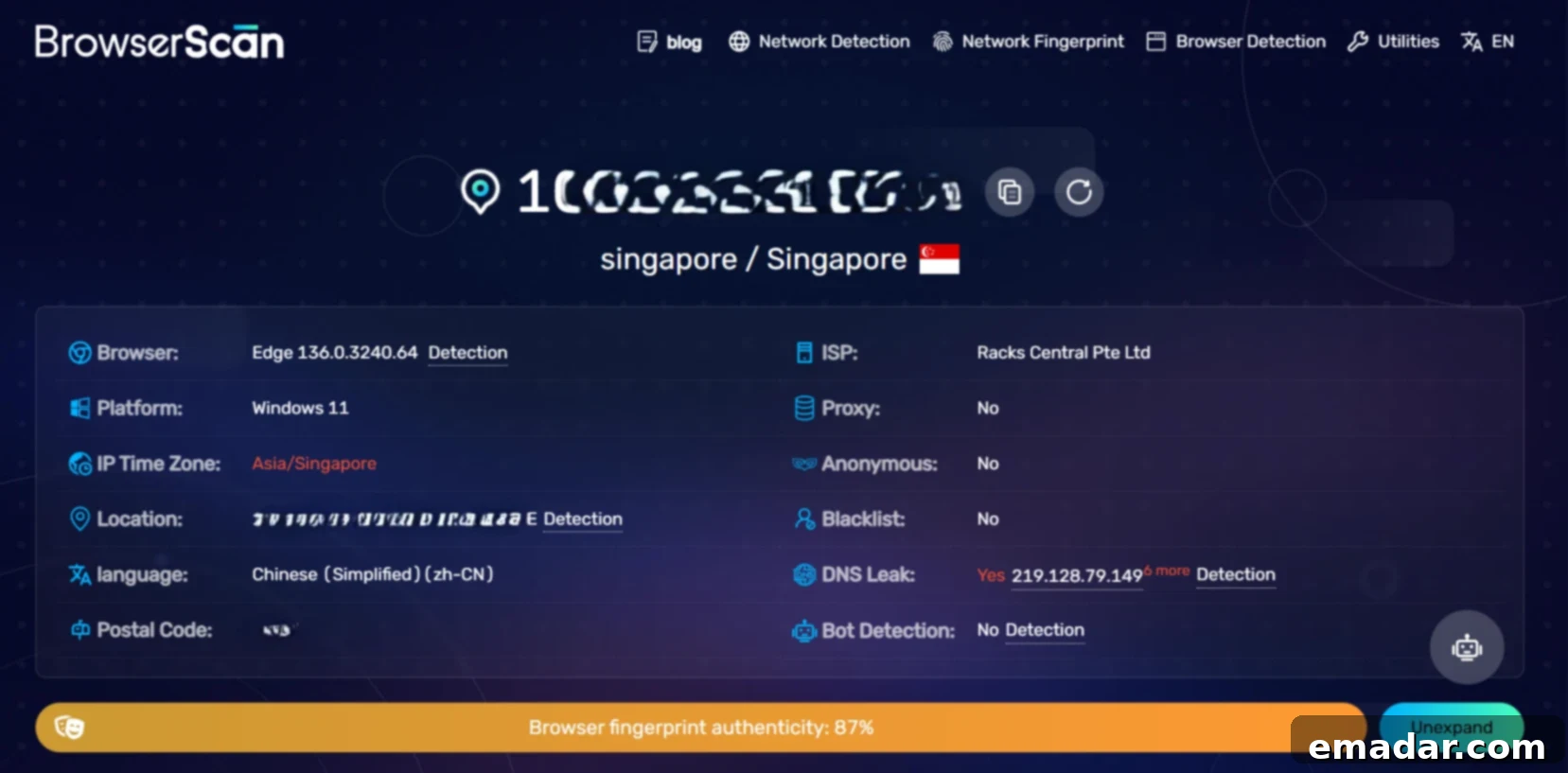
Every time you connect to the internet, whether you’re browsing your favorite news site, streaming a movie, or managing your online store, you leave behind a digital footprint: your IP address. At first glance, it appears to be nothing more than a series of numbers and dots or alphanumeric characters. However, this seemingly innocuous code functions as your unique digital home address, a crucial identifier that can reveal much more about your online activity and identity than most people realize.
In today’s interconnected world, understanding the intricacies of an IP address and its tracking capabilities is no longer merely a technical curiosity. For e-commerce entrepreneurs navigating complex platform rules, technology enthusiasts seeking deeper insights into network functionality, or privacy-conscious individuals aiming to safeguard their digital anonymity, comprehending how an IP address can track you is an absolute necessity. It’s about recognizing the power of this identifier and learning how to manage your digital presence effectively.
Decoding the Digital Address: What Exactly is an IP Address?
An IP address, which stands for Internet Protocol address, is a fundamental building block of the internet. It is a unique numerical label assigned to every device connected to a computer network that uses the Internet Protocol for communication. Think of it as the return address on a letter or the street address of your house; it’s how data packets know where to go and how information requested from websites and applications finds its way back to your specific device.
Without IP addresses, the internet as we know it simply wouldn’t function. Every time your device sends data, whether it’s loading a webpage or sending an email, your IP address is included in the packet header, telling the destination server where to send its reply. Your Internet Service Provider (ISP) is responsible for assigning you an IP address when you connect to their network, acting as the central authority for this digital identity.
Types of IP Addresses and Their Implications
IP addresses come in several main types, each with distinct characteristics and implications for tracking and online activity:
- Static IPs: As the name suggests, a static IP address remains constant every time your device connects to the internet. Businesses often utilize static IPs for servers, web hosting, or other services that require a consistent, unchanging address to be reliably accessible. While offering stability, a static IP can make it easier to track long-term activity associated with that specific address.
- Dynamic IPs: The vast majority of home and mobile users have dynamic IP addresses. These addresses are temporary and change periodically, often when your router restarts, or your ISP renews your lease on the address. While dynamic IPs offer a slight privacy advantage over static ones by making it harder to track an individual consistently over extended periods, your ISP still logs which dynamic IP was assigned to you at any given time, preserving a record of your online activity.
- IPv4 vs. IPv6: The internet has primarily run on IPv4 (Internet Protocol version 4) for decades. These addresses are 32-bit numbers, typically represented as four sets of numbers separated by dots (e.g., 192.168.1.1). However, with the explosive growth of connected devices, IPv4 addresses are running out. IPv6 (Internet Protocol version 6) is the successor, using 128-bit addresses represented as eight groups of four hexadecimal digits (e.g., 2001:0db8:85a3:0000:0000:8a2e:0370:7334). IPv6 offers an exponentially larger address space, allowing for vastly more unique devices to connect to the internet, and its adoption is crucial for the future of the web.
The type of IP address you have directly influences how consistently and effectively you can be tracked. Regardless of the type, however, any IP address can provide valuable clues about your digital presence and location, forming the groundwork for various tracking methods.
Unpacking the Tracking Mechanism: How Your IP Address Reveals Your Digital Footprint
Your IP address, far from being a random string of digits, acts as a breadcrumb trail that can be analyzed and leveraged in numerous ways. Websites, online platforms, advertisers, and even malicious actors can utilize this digital identifier to gather insights into your location, habits, and connections. Here’s a breakdown of the most common methods:
1. Pinpointing Your Geographic Location
Every IP address range is systematically tied to a specific geographic region. Internet Service Providers allocate blocks of IP addresses to particular cities, states, or even neighborhoods. This geo-IP mapping means that when you connect to a website, it can often determine your approximate location, frequently down to the city level, and sometimes even a more precise area within that city.
- For the average user, this explains why you automatically see local weather forecasts, region-specific news, or advertisements tailored to your area. Content providers also use this to enforce geo-restrictions, limiting access to certain media based on your location.
- For e-commerce sellers and platform administrators, this capability is critical for security and fraud detection. Platforms like Amazon or eBay may flag accounts if multiple logins occur from the same suspicious location or if an account’s IP suddenly changes from one continent to another, indicating potential account compromise or policy violations.
2. Mapping Your Online Behavior and Building Profiles
Websites and online services meticulously record every visit and action you take, linking these activities to your IP address. Over time, this data accumulation allows them to construct a detailed behavioral profile associated with that specific IP. Even if you don’t log in, your IP can connect your activities across different sessions.
- If you frequently browse specific product categories on an online store, algorithms can link this repeated behavior to your IP and use it to personalize product recommendations, display targeted ads, or even adjust pricing based on your perceived purchasing intent.
- Platforms where users manage multiple accounts (e.g., social media, gaming, e-commerce) often use IP analysis to detect patterns. If several accounts consistently log in from the same IP, algorithms can identify these accounts as being linked, potentially leading to warnings, restrictions, or even bans if platform policies are violated. This is a common challenge for sellers managing multiple stores.
3. Linking Multiple Devices to the Same Household
Most home networks share a single public IP address assigned by the ISP. This means that your smartphone, laptop, smart TV, tablet, and any other internet-connected device in your home typically transmit data using the same external IP. This shared identifier makes it remarkably easy for companies to recognize that all these devices belong to the same household or user.
- For marketers, this insight is invaluable for cross-device advertising, allowing them to track your journey from browsing on your desktop to completing a purchase on your phone.
- From a privacy perspective, it means that even if you try to separate your online activities by using different devices, your shared IP can inadvertently link them, making complete anonymity within your household network challenging.
4. Fueling Retargeting and Personalized Advertisements
The phenomenon of seeing ads for products you only glanced at moments ago on an entirely different website is known as retargeting. While cookies and tracking pixels are primary drivers, your IP address often serves as a foundational element, ensuring a persistent tracking backbone. Even if cookies are cleared or you switch browsers, your IP can still be used to maintain a connection to your browsing history, allowing ad networks to deliver highly personalized (and sometimes intrusive) advertisements across various platforms and devices.
5. Critical for Security Investigations and Threat Mitigation
IP addresses are not solely used for marketing; they are indispensable tools for law enforcement, platform security teams, and unfortunately, cybercriminals:
- Law Enforcement: In cases of illegal online activity, law enforcement agencies can work with ISPs to trace an IP address back to a specific subscriber, aiding in criminal investigations.
- Platform Security: Major online platforms like banks, social media sites, and e-commerce giants constantly analyze IP addresses to detect suspicious login attempts, fraudulent transactions, or bot activity. A login from an unusual IP location or repeated failed login attempts from a single IP can trigger immediate security alerts or account lockouts.
- Cyber Threats: If a hacker obtains your IP address, they can use it to identify your general location, discover your ISP, and potentially probe your network for vulnerabilities, paving the way for targeted attacks such as DoS (Denial of Service) attacks or attempts to exploit open ports.
In essence, an IP address is far more than a mere technical requirement for internet connectivity. It’s a fundamental component of your digital identity, revealing where you are, how you behave, and potentially even who you are when combined with other digital identifiers like browser fingerprints. It forms a crucial part of the intricate web of online tracking.
The Stakes Are High: Why IP Tracking Matters in Today’s Digital Landscape
While an IP address might seem like a benign technical detail, its implications for individuals and businesses in the digital realm are profound and varied. In today’s hyper-connected world, especially within the fast-paced environment of e-commerce, understanding and managing your IP footprint can be the difference between success and significant setbacks.
For E-commerce Sellers: Navigating the Minefield of Platform Policies
For entrepreneurs running multiple online stores or managing several accounts on platforms like Amazon, eBay, Shopify, or TikTok Shop, IP addresses are a critical, often unforgiving, factor. E-commerce platforms employ sophisticated algorithms designed to detect suspicious patterns that suggest policy violations, and your IP address is a primary signal:
- Account Linkage and Suspension: If two or more distinct accounts consistently log in from the same IP address, platforms may interpret this as an attempt to circumvent rules (e.g., creating multiple seller accounts to gain an unfair advantage or bypass restrictions). This can lead to accounts being linked, scrutinized, and potentially suspended or permanently banned, resulting in significant financial losses and reputational damage.
- Fraud Detection: A sudden and drastic change in an account’s login IP location (e.g., logging in from Asia one day and Europe the next) can immediately trigger fraud alerts, leading to account freezes or requests for additional verification. This is especially problematic for sellers who travel frequently or use unreliable VPNs.
- Competitive Advantage: Managing your IP addresses effectively allows each of your selling accounts to appear as an independent entity, reducing the risk of accidental association and ensuring compliance with platform terms of service. This is why many professional sellers invest in robust IP management tools and specialized multi-account browsers to maintain operational integrity.
For Technology Enthusiasts: Understanding the Internet’s Backbone
For those passionate about technology, IP addresses represent more than just a privacy concern; they are a gateway to comprehending the fundamental architecture of the internet itself. Understanding IP addresses is key to grasping how networks recognize devices, how data is routed, and why concepts like network anonymity are so complex:
- Network Mechanics: IP analysis underpins many essential internet functions, from how streaming services deliver content efficiently to how online gaming servers manage connections and how recommendation systems operate by understanding user origins.
- Layered Tracking: Tech enthusiasts realize that IP tracking is merely the initial layer of a much more elaborate surveillance system. It works in conjunction with device fingerprinting (collecting unique hardware/software configurations), browser fingerprints (identifying unique browser settings), cookies, and advanced behavioral analytics to create a highly accurate and persistent digital profile. Understanding this multi-layered approach provides deeper insight into modern web technologies and cybersecurity challenges.
For Privacy-Sensitive Users: Reclaiming Anonymity and Control
If digital anonymity and personal data protection are paramount to you, your IP address is often the first line of defense you seek to protect. Even without your explicit name, an exposed IP address can reveal a surprising amount of personal information:
- Precise Location Exposure: An IP can pinpoint your physical location, often to the city or even neighborhood level, revealing where you are physically located while online.
- Device and Account Linkage: It can unequivocally link multiple devices or online accounts back to you or your household, consolidating your digital footprint.
- Profiling Your Habits: Over time, it can contribute to a comprehensive profile of your online habits, including shopping preferences, political leanings, browsing history, and even your daily online schedule.
For these users, IP tracking isn’t merely an inconvenience; it can feel like a direct invasion of privacy and a form of pervasive surveillance. The realization that “someone knows where I am and what I’m doing” makes the active protection of IP data a top priority, driving the demand for effective privacy tools.
Empowering Yourself: How to Take Control of Your Digital Footprint
Given the extensive data that your IP address can reveal, the natural next step is to understand how you can safeguard your online identity. While connecting to the internet necessitates having an IP address, you have significant control over how much information it exposes. Fortunately, several practical strategies and tools are available to minimize tracking and keep your digital presence under your command.
Use a Virtual Private Network (VPN)
A Virtual Private Network (VPN) is one of the most popular and effective tools for general users to protect their IP address. When you connect to a VPN, your internet traffic is routed through an encrypted tunnel to a server operated by the VPN provider. Your original IP address is masked, and websites you visit will only see the IP address of the VPN server. This not only hides your real location but also encrypts your data, adding an extra layer of security. VPNs are excellent for everyday privacy, securing public Wi-Fi connections, and bypassing geo-restrictions for content access.
Utilize Proxy Servers
A proxy server acts as an intermediary between your device and the websites you visit. Instead of your real IP address being directly communicated to the destination server, the proxy server’s IP address is displayed. This effectively hides your original IP, making it significantly harder for websites and platforms to trace online activity back to you. Proxies are particularly valuable in specialized scenarios like web scraping, market research, or, crucially, for e-commerce professionals who need to manage multiple accounts without triggering platform detection algorithms, ensuring each account appears to originate from a distinct user and location.
Different types of proxies (e.g., HTTP, SOCKS, residential, datacenter) offer varying levels of anonymity, speed, and cost, allowing users to choose the best fit for their specific needs.
Rotate IPs for E-commerce Accounts
For e-commerce sellers managing numerous stores or accounts on the same platform, using a single, static IP address across all of them is a glaring red flag. Platforms are adept at detecting such patterns, which can lead to linked accounts and potential bans. The solution lies in IP rotation—assigning each account its own dedicated, unique IP address, or dynamically rotating through a pool of distinct IPs. This strategy creates a clear separation between accounts, preventing accidental linkage and significantly reducing the risk of detection. Many professional sellers rely on specialized multi-account browsers and IP management services that seamlessly integrate IP rotation capabilities.
Deploy Antidetect Browsers for Comprehensive Anonymity
As discussed, IP is only one layer of the tracking puzzle. Modern platforms analyze a multitude of data points, including cookies, local storage, device fingerprints, and browser environment settings. This is where antidetect browsers become indispensable. These advanced browsers don’t just manage IP addresses; they go a step further by simulating entirely unique browser fingerprints and environments for each “profile” you create. They allow you to configure independent proxy IPs for each virtual browser environment, ensuring that each online account appears as a distinct, authentic user with its own unique digital identity, immune to cross-referencing and sophisticated tracking mechanisms.
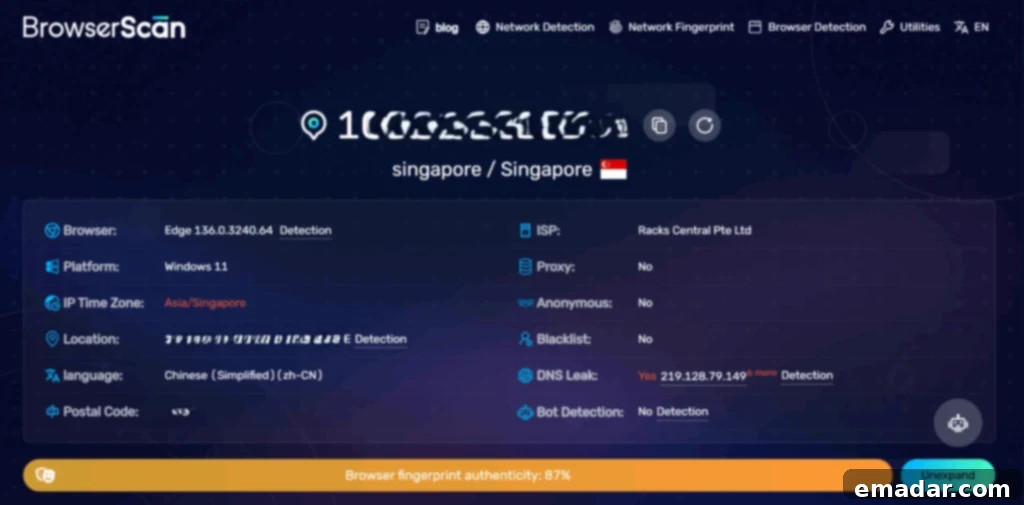
While using antidetect browsers, it’s crucial to verify that these virtual environments are truly independent and secure. Tools like BrowserScan offer critical verification capabilities:
- Detect Leaked Information: BrowserScan can meticulously scan your virtual browser environment to identify any potential information leaks (e.g., real IP address, DNS leaks, or unintended fingerprinting data) that could compromise your privacy.
- Verify Proxy Configuration: It allows you to confirm that your proxy IP is correctly configured and that the IP address displayed for each environment is indeed independent and distinct.
- Compare Fingerprint Differences: By comparing the browser fingerprints generated across different antidetect browser profiles, BrowserScan helps you confirm whether there are sufficient, unique differences to prevent correlation and tracking by sophisticated platforms.
With these features, BrowserScan stands as an essential companion for users of antidetect browsers, providing the assurance that their privacy and security measures are genuinely effective.
Conclusion: Taking Charge of Your Digital Identity
An IP address, often perceived as a simple technical necessity, is in reality a powerful digital identifier capable of revealing your location, mapping your online habits, linking your devices, and potentially even contributing to your overall digital identity. For anyone operating in the competitive e-commerce landscape, exploring the depths of technology, or steadfastly protecting their personal privacy, understanding the multifaceted role of IP tracking is no longer negotiable—it’s foundational.
The good news is that awareness brings empowerment. You are not powerless against pervasive tracking. By proactively utilizing tools like VPNs, proxy servers, and advanced antidetect browsers, you can significantly control the information your IP address exposes. Furthermore, verification tools such as BrowserScan provide the essential means to audit and strengthen your digital defenses, allowing you to confidently navigate the internet, understand your digital footprint, and take decisive control before others do.