
Residential Proxy IPs: The Ultimate Guide to Anonymity and Secure Online Access
When discussing online proxies, residential proxy IPs stand out as the “hidden champions.” Their core advantages—”high anonymity” and “difficulty in detection”—have made them indispensable for many engaged in cross-border access, information gathering, and market research. However, many only understand that they are “IPs from real residences,” without delving into how they function, their benefits, and how they differ from other proxy IPs. This comprehensive guide aims to demystify residential proxies, providing a deep dive into their functionality, advantages, and best use cases.
What Exactly is a Residential Proxy IP?
The Essence: Exclusive Proxy Resources Based on Real Residential Networks
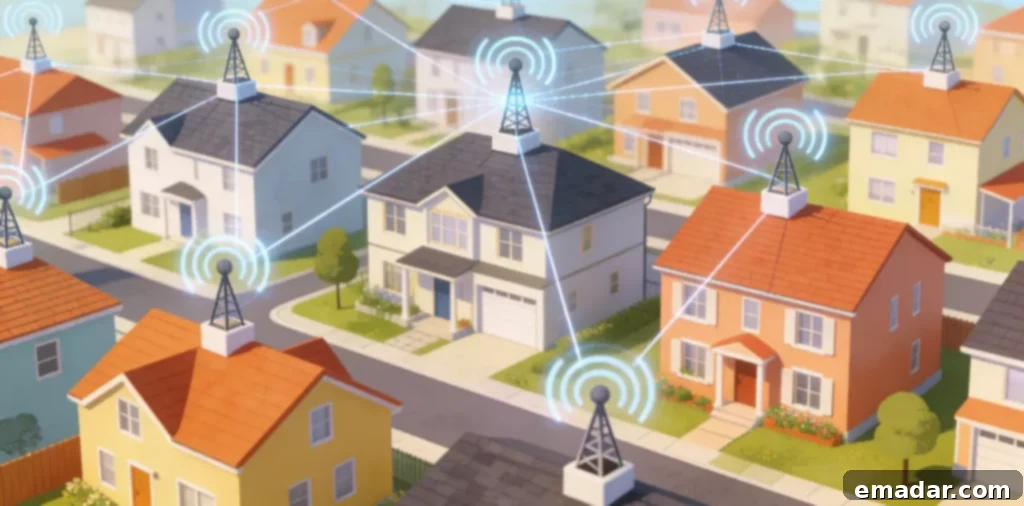
In simple terms, a residential proxy IP is an IP address used by real residents at home, allocated by operators like telecom companies and ISPs to ordinary households. Think of it as a “real residential ID card” in the online world. The most significant difference between it and the commonly heard data center IP lies in its “origin.” Residential proxy IPs come from ordinary families, with genuine geographical information and operator identification, appearing as “normal users.” Data center IPs, on the other hand, are generated in bulk by server clusters, lacking the attributes of a real residence, making them easily identifiable as proxies.
From a usage perspective, residential proxy IPs are divided into two types: static and dynamic. Static IPs are used long-term and are suitable for situations requiring a stable connection. Dynamic IPs switch within a certain range, but regardless of the change, they maintain residential attributes, making them suitable for scenarios where frequent IP changes and concealment are necessary. The core advantage of both types lies in their “real residence” identity—since they are IPs of “resident users,” they are naturally less likely to be detected by platforms.
Technical Principle: Encrypted Forwarding Logic of Real Network Links
The core of residential proxy IP implementation is the technical logic of “real residential node deployment + encrypted forwarding.” Proxy service providers, through legal and compliant means, collaborate with resident users worldwide, incorporating their residential network nodes into the proxy resource pool. When a user uses a residential proxy IP, the system matches an IP with real attributes from the residential nodes in the corresponding region and transmits the network request through an encrypted tunnel.
The specific transmission process is not complex, consisting of three steps: “user terminal – residential proxy node – target network.” The network request you send is first encrypted and transmitted to the selected residential proxy node. The node uses its real residential IP to forward the request to the target website, while hiding your real IP. The website’s response data is then encrypted and transmitted back along the same route. This method not only ensures that the IP is real but also protects data security. For example, IPFLY’s residential proxy service relies on real residential nodes distributed globally to achieve low-latency forwarding, ensuring the authenticity and stability of the IP, making it suitable for various scenarios requiring high anonymity.
Residential Proxy IP vs. Data Center IP: What’s the Difference?
Core Dimension Comparison: Anonymity, Detection Rate, and Suitable Scenarios
The differences between the two mainly lie in three aspects: First, anonymity. Residential proxy IPs have real residential attributes, perfectly mimicking ordinary users’ internet access, maximizing anonymity. Data center IPs have obvious server characteristics, making them easily recognizable by website risk control systems. Second, detection rate. The probability of residential proxy IPs being identified as “proxies” is extremely low, while the probability of data center IPs being detected is much higher. Third, suitable scenarios. Residential proxy IPs are suitable for situations where concealment and a real IP identity are required. Data center IPs are suitable for ordinary scenarios that are cost-sensitive and do not require high anonymity.
From a network stability perspective, residential proxy IPs rely on residential networks and are affected by peak usage and line quality, resulting in slight fluctuations in stability. Data center IPs rely on professional server clusters, with sufficient bandwidth and stable lines, resulting in less fluctuation. However, high-quality residential proxy service providers can effectively balance stability and anonymity through intelligent node scheduling algorithms, such as by monitoring node load in real-time and automatically switching to residential nodes with lower loads, ensuring smooth access.
Advantage Boundary: Not a Panacea, But Irreplaceable
It is essential to clarify that residential proxy IPs are not suitable for all scenarios. Their core advantage boundary is “high anonymity demand scenarios.” In these scenarios, they are irreplaceable. However, in ordinary scenarios without high anonymity demands, data center IPs offer greater advantages in terms of high stability and cost-effectiveness. For example, for ordinary domestic web browsing and simple information queries, data center IPs can meet the needs. For cross-border e-commerce platform access, in-depth overseas market research, and information gathering from high-risk websites, residential proxy IPs are a better choice.
The Core Value of Residential Proxy IPs: 4 Highly Applicable Scenarios
Value 1: Highly Anonymous Access, Avoiding Risk Control Detection
This is the most crucial advantage of residential proxy IPs. Many overseas platforms, especially e-commerce and social media, have stringent risk controls, specifically targeting non-real user IPs. Once a proxy is detected, the platform may restrict account functionality or even ban the account. Residential proxy IPs, because of their “real resident” identity, can perfectly mimic the online behavior of ordinary users, easily evading the detection of risk control systems, ensuring smooth access and operation without worrying about account issues.
Value 2: Real Geographical Attributes, Adapting to Cross-Border Needs
Residential proxy IPs have accurate geographical attributes, precisely matching the real residential network environment of the target country or region. For cross-border business scenarios, this real geographical attribute is crucial. For example, when needing to obtain localized information from a specific country (such as local product pricing, user reviews, policy information, etc.), residential proxy IPs ensure that the information obtained is genuine and effective, avoiding information deviations caused by false IP geographical attributes.
High-quality residential proxy services also provide accurate geographical tagging management of IPs, allowing users to directly filter residential IPs of the target country/city, further enhancing the adaptability of cross-border scenarios. For example, IPFLY’s residential proxy service covers many major cross-border markets globally, with accurate geographical tags, helping users quickly match the real residential network of the target region, improving the efficiency and accuracy of cross-border businesses.
Value 3: Low-Restriction Access, Improving Operation Success Rate
Many websites set access restrictions for non-local IPs and non-real user IPs, such as restricting content viewing and operation permissions. Residential proxy IPs, due to their real user attributes, can effectively break through these access restrictions, improving the success rate of various online operations. For example, in information gathering scenarios, using residential proxy IPs can avoid data collection interruptions and data loss caused by IP restrictions. In overseas platform registration and login scenarios, it can reduce the risk of account restrictions.
Value 4: Multi-Scenario Adaptability, Balancing Flexibility and Security
Residential proxy IPs are highly adaptable to a wide range of scenarios. In addition to cross-border access and information gathering, they can also be adapted to overseas market research, brand public opinion monitoring, advertising effect verification, and other scenarios. Whether it is a static scenario requiring a long-term stable connection or a dynamic scenario requiring frequent IP switching, residential proxy IPs can be flexibly adapted through static/dynamic types, while balancing access security and anonymity.
How to Choose a Reliable Residential Proxy IP?
When choosing a residential proxy IP, do not blindly pursue “high configuration.” The core is “fitting your own needs.” Focus on these four points: First, the IP must be real, genuinely residential, and not disguised. Second, the geographical coverage should be comprehensive. For example, if you are doing business in the European market, you need residential IPs from various European countries. Third, the stability should be good, without frequent freezes or disconnections. Fourth, the response speed should be fast, with low latency, for smooth use.
In addition, you should also pay attention to the adaptability of the service—such as whether it supports your devices (computer, mobile phone, etc.) and whether it supports the required proxy protocols (HTTP/HTTPS/SOCKS5, etc.). For most users, ease of operation is also essential. A high-quality residential proxy service will provide simple configuration methods, lowering the barrier to entry.
The Core Value and Applicable Logic of Residential Proxy IPs
In general, the core value of residential proxy IPs is “deep concealment” and “genuine identity,” making them particularly suitable for cross-border businesses and scenarios requiring access to high-risk control websites. They are not a panacea, but in these specific scenarios, they are indeed irreplaceable. The key to choosing is “matching needs.” First, consider whether you need to conceal your identity and whether you need IPs from specific regions, then focus on indicators such as IP authenticity and geographical coverage.
Remember, choosing a residential proxy IP is not “the more expensive, the better,” but “the more suitable, the better.” Fitting your own needs is the most important thing.
Use IPFLY Residential Proxy IP
IPFLY has its own server + big data screening system, only providing:
- Real ISP-allocated residential IPs
- Clean, unpolluted IP segments, non-shared, no history of abuse
- Support IP detection, location filtering, multi-country switching
Prevent risk control and control risks, use IPFLY to achieve IP isolation!