
Unlocking Success: The Power of US Residential Proxies for Your Online Business
In today’s digital landscape, businesses are increasingly expanding their operations across borders, engaging in overseas social media promotion, and managing multiple accounts. In such scenarios, US residential proxies, characterized by their authentic user network attributes, have emerged as a critical tool. They help in circumventing platform risk controls and ensuring the stability of business operations.
However, many users possess a vague understanding of their definition, characteristics, and usage logic. This often leads to confusion with ordinary residential IPs and data center IPs, preventing them from leveraging their core advantages effectively.
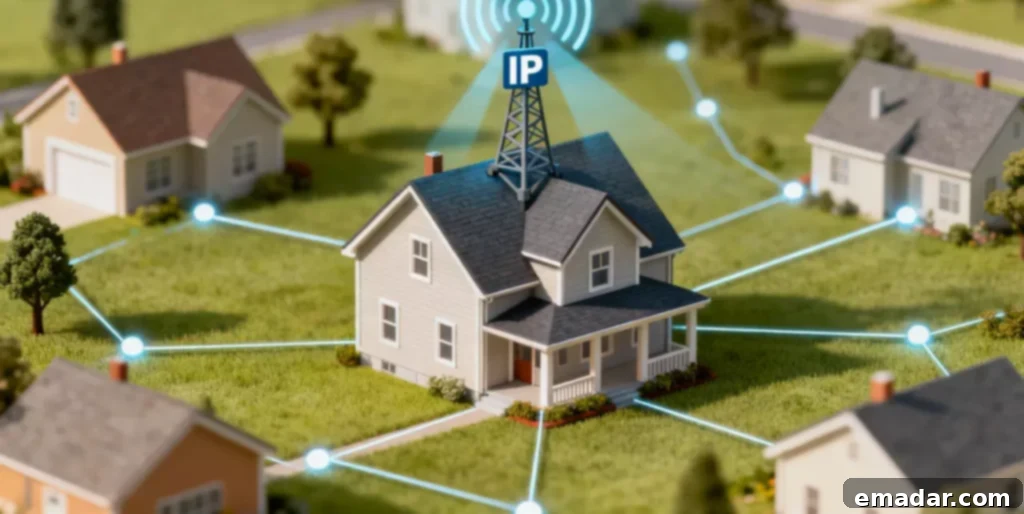
What Defines “Residential” and “Native” in a US Residential Proxy?
A US residential proxy refers to a residential-type IP address directly assigned by a local Internet Service Provider (ISP) in the United States, possessing genuine physical address attributes. Its core characteristics are embodied in two key dimensions: “nativeness” and “residential attribute.”
Nativeness: The IP address’s registration information, geographic location, and network identifier are directly linked to a local US ISP. It hasn’t undergone secondary transfers or virtual generation. This aligns perfectly with the home network IP attributes used by US residents daily, allowing it to be recognized by overseas platforms as a “genuine user network identity.” This inherent authenticity significantly enhances trust and reduces the likelihood of being flagged as suspicious.
Residential Attribute: The IP’s attributed location is a residential area (e.g., a US city residential district) rather than a data center or machine room. Its network behavior characteristics are more akin to ordinary users, reducing the probability of being flagged as an “abnormal IP” by platforms. This mimics real user behavior, further bolstering trust and minimizing disruptions.
The core difference from ordinary residential IPs lies in the fact that ordinary residential IPs may have issues such as ambiguous geographic locations and incomplete ISP information. “Nativeness” emphasizes the IP’s source legitimacy and information completeness, which is a key basis for platform trust determination. When choosing a proxy provider, it’s important to verify that they can provide true US Residential IPs, linked with the location you are targeting, such as New York, Los Angeles, Houston or any other city.
In simple terms, a US residential proxy is equivalent to a “US local resident’s home network IP.” Its network attributes are completely consistent with real users, which is the core reason why it can circumvent platform risk controls. It appears as a typical home user accessing the internet, making it nearly impossible to distinguish from legitimate traffic.
Why Are US Residential Proxies Gaining Popularity?
1. High Trustworthiness: A “Pass” for Platform Risk Control
Overseas platforms (such as e-commerce, social media, and payment systems) base their IP trust determination on the IP’s network attributes and usage history. US residential proxies, directly assigned by US ISPs, possess complete user network profiles and lack abnormal characteristics such as batch registration and high-frequency operations. The probability of being identified as “normal user access” by platforms is far higher than data center IPs or non-native residential IPs. This reduces the risk of your activities being seen as suspicious or bot-like.
High-quality proxy networks rigorously select US residential proxy resources. For example, IPFLY’s US residential proxies come from mainstream US ISPs, with complete registration information and geographic locations accurate to city blocks. Their high trustworthiness effectively reduces issues such as abnormal account logins, content traffic restrictions, and payment risk controls, making them suitable for business scenarios with high IP trust requirements. Using an IP address that has been verified as ‘clean’ ensures that your account or web browser is seen as safe and secure by the various platforms.
2. Low Association Risk: A “Safety Barrier” for Multi-Account Operations
The core pain point of multi-account operations is “account banning due to IP association.” The independence of US residential proxies can eliminate this risk at its source.
- Each IP corresponds to independent ISP registration information and a physical address, with no network attribute association between different IPs. This ensures a clean break between your various online personas.
- Supports a “one account, one IP” binding model, ensuring that each account’s network environment is completely independent, avoiding association judgments caused by IP sharing or geographic location crossover. Each account appears to be operating from a completely different location, reducing the chance of being linked.
- IP usage history is clean, with no bad history of multi-account co-use or violations, further reducing association risks. Keeping the IP clean and only using it for legitimate browsing further guarantees its safety.
3. High Stability: A “Guarantee Foundation” for Long-Term Business
The network links of US residential proxies directly connect to local US ISPs, with better transmission stability and continuity than virtual IPs or transfer IPs:
- In static mode, the IP address can be fixed long-term, ensuring the consistency of the account login environment and avoiding platform risk controls triggered by frequent IP changes. Consistency helps build trust and ensures that your accounts are seen as stable and reliable.
- During cross-border transmission, relying on the ISP’s native network links results in lower latency and packet loss, especially suitable for businesses that require long-term stable operations (such as store operation and social media content publication). Low latency is critical for fast-paced online operations.
US Residential Proxies vs. Other IPs: How to Choose Without Falling Into Pitfalls
| Comparison Dimension | US Residential Proxy | Ordinary Residential IP | Data Center IP |
|---|---|---|---|
| Source | Directly assigned by a local US ISP | Mixed ISP sources, may contain transfer IPs | Generated by a data center, no ISP association |
| Trustworthiness | High, platform identifies as genuine user IP | Medium, some platforms may mark as abnormal | Low, easily identified as a batch operation IP |
| Association Risk | Low, independent ISP information and physical address | Medium, IP sharing may exist | High, shared by multiple users, easy to associate |
| Stability | High, native link transmission | Medium, some IPs fluctuate | Medium-high, fast speed but insufficient trustworthiness |
| Suitable Scenarios | Cross-border e-commerce, social media operation, multi-account management | Ordinary overseas access, light cross-border business | Data collection, short-term access, batch operations |
As the comparison shows, the core advantages of US residential proxies are concentrated in “trustworthiness” and “independence,” especially suitable for businesses sensitive to platform risk controls. Data center IPs are more suitable for scenarios with low trust requirements and a pursuit of speed, while ordinary residential IPs fall in between, unable to meet the risk control needs of high-requirement businesses. Understanding your specific requirements and choosing the right proxy type is essential for success.
Where Are US Residential Proxies Most Effective?
1. Cross-Border E-Commerce Operations (US Market)
- Core Needs: Account security and stability, high platform trustworthiness, smooth payment process
- Application Value: Simulates a US local merchant network environment, avoiding account traffic restrictions or bans due to foreign IPs; improves the success rate of product listing, order processing, and payment docking. A verified US location enhances your brand image and builds trust with local customers.
- Usage Tips: Choose a US residential proxy consistent with the store’s registered region, use it long-term, and avoid frequent changes; pair it with a stable cross-border network. A high-quality proxy network optimizes cross-border transmission links in the US region, with low latency characteristics ensuring smooth store operations and high-purity IPs avoiding payment link risk controls. This enhances the overall customer experience and improves conversion rates.
2. Overseas Social Media Operations (Facebook/Instagram, etc.)
- Core Needs: Account traffic not restricted, content exposed normally, multi-account independent operation
- Application Value: The genuine user attributes of US residential proxies can increase the weight of social media accounts and reduce content traffic restrictions; multiple accounts using different IPs avoid association bans. Genuine-looking accounts are more likely to be followed and engaged with by other users.
- Usage Tips: Bind each social media account to an exclusive US residential proxy, simulate real user operation behavior (such as regular posting and natural interaction), adapt to the multi-terminal login needs of social media accounts, and ensure high IP trustworthiness, helping to expose content. Engaging with your audience through a US-based IP ensures your responses are perceived as more authentic and trustworthy.
3. Multi-Account Management (E-Commerce/Advertising/Social Media Accounts)
- Core Needs: Account isolation, anti-association, long-term stable operation
- Application Value: Assign an independent US residential proxy to each account, with no network attribute association between IPs, fundamentally avoiding platform association detection. This provides a clean break between each account and prevents them from being linked by algorithms.
- Usage Tips: Establish an “account-IP” correspondence table and bind them permanently; regularly check the IP status to ensure no bad usage history. Properly managing your IP addresses is essential for maintaining a smooth and secure multi-account operation.
4. Overseas Market Research and Data Collection (US Region)
- Core Needs: Data is real, access is unrestricted, avoid being identified by anti-crawler mechanisms
- Application Value: Simulate US local user access behavior to obtain real market data (such as product prices and user reviews); high-trustworthiness IPs reduce the probability of being banned by target website anti-crawler mechanisms. Accurate data is critical for informed decision-making and strategic planning.
- Usage Tips: Use in dynamic mode, set a reasonable IP rotation frequency, and avoid high-frequency mechanical access; for example, IPFLY’s US residential proxy pool has a huge scale, and the dynamic rotation mechanism can effectively disperse access pressure while ensuring the authenticity of the IPs, improving the success rate of data collection. Rotating IPs makes it more difficult for websites to identify and block your data collection activities.
Important Considerations When Using US Residential Proxies
1. Choose Real Native IPs, Reject “Pseudo-Native”
- Pitfalls: Some IPs claim to be “native residential IPs” but are actually transfer IPs or virtual generations, with no real ISP association
- Identification Methods: Verify whether the ISP information is a mainstream US service provider through IP query tools and whether the geographic location is accurate to the city; choose proxy networks with strict IP screening mechanisms. This ensures you’re getting the real deal and not a compromised or unreliable IP address.
2. Avoid IP Sharing, Prioritize Exclusive IPs
- Pitfalls: Sharing US residential IPs can easily lead to IP banning due to other people’s violations, involving your own account
- Recommendations: Prioritize using single-person exclusive IPs for core business accounts to ensure that the IP usage history is clean and there is no cross-contamination. Exclusive IPs provide a higher level of security and control over your online activities.
3. Match Scenarios to Choose Usage Mode
- Pitfalls: Using dynamic IPs in long-term operation scenarios leads to network environment fluctuations; using static IPs in high-frequency collection scenarios leads to IP banning
- Recommendations: Choose static IPs for long-term operations (such as stores and social media accounts) and dynamic IPs for batch collection and quick switching of multiple accounts; choose proxy networks that support flexible switching between the two modes to adapt to different scenario needs. Flexibility is key to maximizing the benefits of US Residential Proxies.
4. Do Not Abuse IPs, Simulate Real User Behavior
- Pitfalls: Even when using US residential proxies, high-frequency, mechanical operations can still be subject to platform risk controls
- Recommendations: Control the frequency of operations, add natural browsing and interaction behaviors, simulate real user operation rhythms, and avoid triggering platform anomaly detection. Mimicking human behavior is critical for staying under the radar.
The Core Value of US Residential Proxies: “Authenticity and Trust”
The core competitiveness of US residential proxies lies not in “changing IPs” but in “providing a real and trustworthy US local network identity,” which is the key to circumventing platform risk controls and ensuring business stability. Whether it’s cross-border e-commerce, social media operation, or multi-account management, their high trustworthiness, low association risk, and high stability can solve core pain points. Investing in reliable residential proxies protects your online identity and prevents costly disruptions.
IPFLY has 90 million+ high-quality IP resources worldwide, supporting:
- ✅ High-stability static residential IPs (customizable by country/city)
- ✅ Massive dynamic residential IPs, supporting automatic rotation
- ✅ High purity, strong anti-risk control capabilities
- ✅ Exclusive customer service IP environment configuration guidance
Register with IPFLY to let your account “hide” overseas and truly achieve safe operation!