
Shopee Local Store Closure: Why It Happens and How to Prevent It
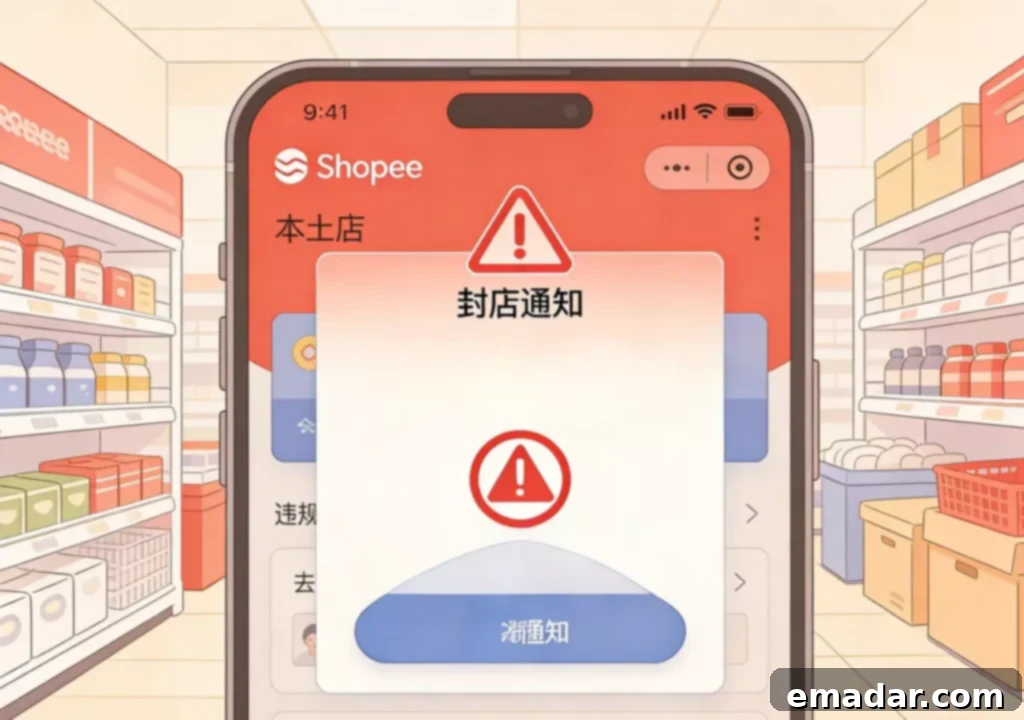
Many sellers experience the frustration of having their Shopee local store closed, and the initial reaction is often the same: “I didn’t engage in fake orders or sell counterfeit products, so why was my store shut down?”
However, the platform’s risk control system doesn’t solely focus on “what you did.” It primarily assesses: “Do you resemble a genuine local seller?”
This is precisely the aspect that many sellers overlook.
Common Reasons for Shopee Local Store Closure: Beyond Obvious Violations
Store Closure Often Arises from “Suspicious” Activities
In real-world cases of store closures, frequent triggers include:
- Registration environment inconsistent with local identity
- Abnormal fluctuations in login IP
- Unnatural store activity patterns
- Association with multiple stores
For example: If your account information indicates you are a US-based seller, but your login environment frequently exhibits characteristics of a non-residential network, this is a significant red flag within the system.
IP Address and Environment: The Primary Layers of Shopee’s Risk Control
Local Stores Must First “Appear Local”
Shopee operates under an implicit assumption for local stores: the network environment must align with the usage habits of genuine local sellers.
Common scenarios flagged as abnormal include:
- Using data center or public exit IPs
- IP address country is correct, but the attributes are unnatural
- Multiple stores associated with the same IP address
The platform doesn’t necessarily require you to be physically located in the area, but you must appear as if you are a local resident. Maintaining a consistent and believable online presence is crucial.
Shopee Local Store Closure: Often Caused by “Environmental Association”
Different Stores, Living in the Same “Shadow”
Even if you:
- Use different email addresses
- Use different phone numbers
- Provide different store information
If there exists:
- The same IP address or IP pool
- Similar browser fingerprints
- The same device environment
The system may still identify these as associated stores.
Therefore, many store closures are not due to single-point violations but rather collective liquidation.
Why Does “Simply Changing IP” Still Lead to Closure?
Because IP Address Is Just One Part of the Environment
Many sellers react to issues by immediately:
“I’ll just change the IP address and log in again.”
But if:
- The browser fingerprint remains unchanged
- The operating patterns remain unchanged
- The behavioral paths are highly consistent
The platform will perceive this as “evading identification,”
rather than a “normal environmental change.”
This is why many Shopee local stores, after repeatedly changing IP addresses, actually trigger closure even faster. It’s about creating a natural and organic online footprint.
Real-World Experience: Local Stores Should Avoid Appearing “Too Professional”
Excessive Smoothness Can Be a Sign of Anomaly
You might think this is a plus,
but the platform might find it suspicious:
- New store operation is overly skilled
- Product listing, pricing, and promotional activity are highly standardized
- Multiple stores exhibit nearly synchronized behavior
From a risk control perspective, this resembles a bulk operation model, rather than ordinary sellers. Shopee aims to support individual entrepreneurs and small businesses; therefore, overly sophisticated operations might raise concerns.
Why Is a Stable Local Network Environment More Important Than “Speed”?
Shopee Values Consistency Over Speed
In local store operation, the following characteristics are crucial:
- Long-term stable login IP address
- Network type closely resembles a real residential network
- Geographic location consistent with store registration information
Therefore, some sellers choose high-consistency residential network resources (such as IPFLY) during the environment setup phase. The goal isn’t to hide but to reduce subtle deviations that make you appear “unlike a local seller.”
For example, in account isolation and long-term login scenarios, some users employ solutions with residential attributes and high IP purity, allowing each store to maintain an independent and continuous network track, thereby reducing the probability of being misjudged by the system. This approach helps build a reliable and trustworthy online reputation.
Shopee Local Store: Which Actions Are Most Likely to Cause Immediate Suspension?
Several high-risk moments are worth reiterating:
- Frequent login switching within a short period after registration
- Inconsistent environment when modifying key information
- Intensive operations across multiple stores within the same timeframe
- Forcibly logging in with a changed environment immediately after suspension
These actions may seem like “remedies” from a human perspective, but the system interprets them as risk escalation.
How to Fundamentally Reduce the Probability of Shopee Local Store Closure?
The idea isn’t complex, but it requires diligence:
- Independent environment for each store
- Consistency between IP address, device, and behavior
- Operating patterns aligned with ordinary sellers
- Avoid introducing variables during critical moments
Some established teams differentiate account levels early on:
Core local stores are prioritized for environmental stability,
while testing and auxiliary operations use strategies with greater variability. Prioritize stability for your most valuable accounts.
Shopee Local Store Closure: Essentially a “Collapse of Trust”
The platform doesn’t decide to close your store overnight.
It gradually accumulates judgments through countless details.
Once the system determines: “This store doesn’t resemble a genuinely existing local seller,” all subsequent operations will be scrutinized under a magnifying glass. Earning and maintaining Shopee’s trust is essential for long-term success.
Summary: Shopee Local Store: It’s Not About Skills, It’s About “Being Human”
Local stores that truly thrive in the long run often share three common characteristics:
- Long-term environmental consistency
- Natural behavioral patterns
- Avoiding extreme operations
Store closure is never accidental.
It’s the result of repeatedly verified signals that you “don’t appear local.” Building a sustainable business on Shopee requires authenticity and adherence to the platform’s guidelines.
Frequently Asked Questions (FAQ)
- Can a Shopee local store closure be appealed? In some cases, yes, but the success rate is typically low for environment-related issues.
- Is it mandatory to use a residential IP for a local store? Not strictly mandatory, but it more closely resembles a genuine seller’s network characteristics.
- Can one IP address be used for multiple local stores? High risk, extremely likely to be flagged as associated.
- Is it helpful to immediately change the environment and log in again after being suspended? In most cases, it only exacerbates the anomaly.
- What is the most common store closure reason that beginners overlook? Environmental consistency and operational rhythm.
Unlock a seamless and secure e-commerce experience with dedicated IPs designed for multi-store management.
Explore IPFLY and seize exclusive offers to effortlessly control your overseas operations!