
Demystifying Internet Service Providers (ISPs): Your Key to Unlocking the Digital World
In our daily online activities, from loading a webpage and scrolling through short videos to logging into social media platforms, seemingly simple seconds are made possible by a crucial player behind the scenes: the Internet Service Provider (ISP). For many, the term “ISP” might initially seem perplexing. What exactly does ISP mean? What role does it play in the vast network of the internet? And why might slow internet speeds or high latency sometimes be linked to your ISP?
What is an ISP? A Comprehensive Definition
ISP stands for Internet Service Provider. In simpler terms, an ISP is a company or organization that provides you with internet access. If you want to go online, you need to go through them.
Consider this example: when you connect to Wi-Fi at home, the broadband provider behind that Wi-Fi connection (such as Verizon, Spectrum, Xfinity, or AT&T) is essentially your ISP. They are responsible for connecting your devices to the internet’s backbone network, enabling you to access various websites, applications, and cloud resources.
In essence, an ISP serves as a “bridge” connecting us to the internet. Without it, having a computer would be like having a car without fuel – you can’t go anywhere.
For example, IPFLY’s static residential proxy IP resources originate from authentic ISP-allocated networks. This approach allows businesses and international users to simulate a real residential environment, preventing them from being identified as server traffic, which leads to more stable data collection and account management.
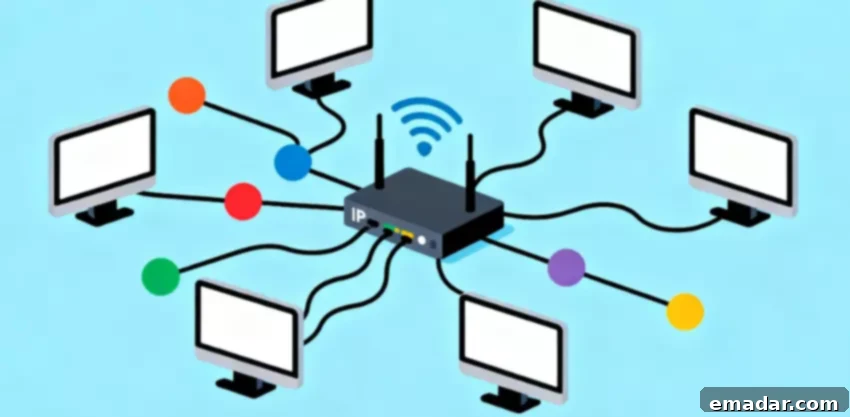
Core Functions of an ISP: Beyond Basic Connectivity
An ISP’s role goes far beyond merely providing internet access. It undertakes several vital functions:
- IP Address Allocation: Every device accessing the internet needs a unique IP address. ISPs dynamically or statically assign these addresses, enabling your devices to be identified on the internet. For example, the IP address assigned to your home Wi-Fi might change daily (dynamic IP), while businesses or servers typically use fixed IP addresses (static IP).
- Data Transmission and Network Routing: When you load a webpage, data travels through multiple network nodes. An ISP acts as an intermediary “transfer station,” efficiently and securely delivering data to its destination.
- Network Optimization and Bandwidth Management: Different ISPs offer varying bandwidths (internet speeds). They maintain network stability during peak hours by deploying infrastructure such as routers, switches, and fiber optic cables.
- Value-Added Services: Some ISPs provide additional services such as email, cloud storage, and security protection to create a more complete online experience for users.
The Interplay Between ISP and IP Address: Understanding the Connection
Many people often confuse ISPs and IP addresses. Think of it this way: an IP address is your “address,” while the ISP is your “landlord.”
ISPs possess a pool of legitimate IP addresses, which they allocate to users based on demand. Each time you go online, you are assigned an IP address to identify your device. When you visit a website, the website server uses this IP address to determine the origin of the request.
This explains why websites can sometimes identify your location – your IP address originates from a specific regional ISP network. For example, if an IP address belongs to Orange in France, it is highly likely that the device is located within France.
This “geographical characteristic” is the foundation of proxy IP services. Global proxy networks like IPFLY leverage residential IPs from real ISP allocations in over 190 countries, allowing users to mimic internet environments in various countries for a more secure and flexible online experience.
Types of ISPs: Catering to Diverse Needs
ISPs come in various forms, generally classified based on their target audience:
- Residential Broadband ISPs: Cater to individual households, such as Verizon, Spectrum, Xfinity, and AT&T.
- Enterprise ISPs: Offer high bandwidth and dedicated line access, suitable for businesses or data centers.
- Virtual ISPs: Do not deploy their own network infrastructure. Instead, they lease lines from other ISPs and resell them.
- Proxy ISPs: Focus on providing proxy services like residential IPs and data center IPs for cross-border access or data analysis.
In the realm of international business, proxy ISPs are particularly important. Platforms in different countries are extremely sensitive to login environments, and detecting a non-local IP address can trigger security protocols. Using IPFLY’s residential proxy IPs can effectively address this issue, allowing accounts to log in more naturally and stably.
Limitations of ISPs: Addressing the Challenges
While ISPs are the foundation of the internet, they also have limitations:
- Geographical Restrictions: ISP coverage, internet speed, and stability vary significantly between countries and regions.
- Privacy Concerns: ISPs can track user internet activity and may be required to provide data in certain situations.
- Pricing and Bandwidth Bottlenecks: Broadband costs can be high in some areas, especially for enterprise-grade dedicated lines.
This is why a growing number of businesses are choosing to use proxy IP services to bypass geographical or access restrictions and enhance global network connectivity. This allows for circumventing censorship, accessing geo-restricted content, and improving overall online performance.
The Future of ISPs and Proxy Services
The role of ISPs is continuously evolving. As the demand for higher bandwidth, lower latency, and enhanced security increases, ISPs are investing in new technologies like 5G and fiber optic networks to meet these needs. However, the limitations of ISPs, particularly concerning privacy and geographical restrictions, have spurred the growth of proxy services.
Proxy services provide an additional layer of security and flexibility, allowing users to bypass censorship, access geo-restricted content, and protect their online identity. The combination of robust ISP infrastructure and sophisticated proxy services is shaping the future of internet access, offering users a more customizable and secure online experience.
Furthermore, the rise of the Internet of Things (IoT) is placing even greater demands on ISPs. The proliferation of connected devices, from smart home appliances to industrial sensors, requires ISPs to handle massive amounts of data and ensure seamless connectivity. This is driving innovation in network management and optimization, as ISPs seek to efficiently manage the increasing volume of internet traffic.
The competition among ISPs is also intensifying, leading to lower prices and improved service quality. As consumers demand more from their internet providers, ISPs are striving to differentiate themselves through innovative offerings and superior customer service. This competition benefits consumers by providing them with more choices and better value for their money.
The development of new internet protocols and technologies is also impacting the role of ISPs. For example, the transition to IPv6 is addressing the shortage of IP addresses and enabling more devices to connect to the internet. ISPs are actively involved in the implementation of these new technologies, ensuring a smooth transition and maximizing the benefits for their customers.
In addition, the increasing importance of cloud computing is transforming the way businesses use the internet. ISPs are playing a crucial role in connecting businesses to cloud services and ensuring reliable access to critical data and applications. This is driving demand for high-bandwidth, low-latency internet connections that can support the needs of cloud-based workloads.
The legal and regulatory landscape surrounding ISPs is also evolving. Net neutrality rules, data privacy regulations, and cybersecurity laws are all shaping the way ISPs operate. ISPs must navigate these complex regulations to ensure compliance and protect the interests of their customers.
Conclusion: ISPs as Gatekeepers and the Importance of Flexibility
If the internet is a highway, the ISP is the company that builds the road, provides the vehicles, and collects tolls. Our ability to seamlessly access information worldwide largely depends on the network quality and allocation capabilities of ISPs.
As global business and digitalization accelerate, more and more companies are focusing on the flexibility and privacy of internet access.
In conclusion, understanding the role of ISPs is crucial for navigating the digital landscape. While they provide the essential infrastructure for internet access, their limitations highlight the importance of considering proxy services for enhanced security, flexibility, and global connectivity. The ongoing evolution of ISPs and the rise of proxy services are shaping the future of internet access, offering users a more customizable and secure online experience.
IPFLY Proxy:
- Stable nodes across 190+ countries and regions worldwide
- Instant connections for seamless operations, simulating real home broadband scenarios