
In the proxy ecosystem, HTTP/HTTPS proxies are the default choice for most web tasks. But when use cases go beyond simple web requests—covering email protocols, file transfers, real-time streams and even UDP traffic—application-layer HTTP proxies start to fall short. SOCKS5 proxy IPs provide a lower-level, more universal solution for those gaps. They are not meant to replace HTTP proxies but to complete the picture of network reachability where HTTP cannot reach.
To grasp the value of SOCKS5 proxy IPs, think beyond “another protocol.” SOCKS5 extends proxy capabilities to the system level—supporting operating systems, client software, database connections and any application that relies on TCP or UDP, not only browsers and scripts.
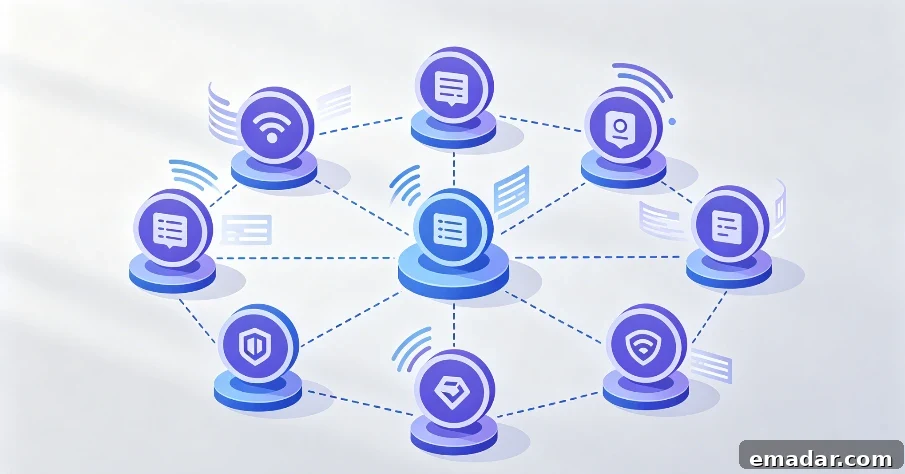
What is a SOCKS5 proxy IP: a protocol-layer universal forwarder
Works at the session layer, so it can forward almost anything
SOCKS5 operates at the session layer of the OSI model. It does not care what application-layer protocol is used; it simply establishes TCP or UDP connections between client and destination and transparently relays packets. That means HTTP, HTTPS, FTP, SMTP, POP3, database connections, WebSocket, DNS lookups, online gaming and VoIP media can all traverse SOCKS5 as long as the underlying transport is TCP or UDP.
Unlike HTTP proxies that require the target host to be declared in request headers, SOCKS5 uses a separate handshake phase for authentication and target negotiation. Once the connection is established, the client and target exchange data bidirectionally. This design makes SOCKS5 protocol-agnostic—no parsing or modification of application data—resulting in very high compatibility.
UDP support and authentication fix SOCKS4’s key limitations
Compared to SOCKS4, SOCKS5 adds two decisive features: UDP forwarding and enhanced authentication. UDP forwarding enables SOCKS5 to handle highly time-sensitive traffic—DNS queries, in-game positional updates, VoIP calls and streaming. Authentication lets public exit nodes enforce strict access control, preventing unauthorized use of resources.
Within IPFLY’s exit resource system, SOCKS5 is provided as a foundational capability alongside HTTP/HTTPS. Every address offered—residential or data center—exposes both HTTP/HTTPS and SOCKS5 ports and authenticates with the same username and password, so you don’t need different configurations for different protocols. This all-protocol compatibility lets teams switch between web scraping and lower-level communications using the same network identity, avoiding architectural trade-offs caused by protocol gaps.
Four forms of SOCKS5 proxy IPs: residential vs. data center, static vs. dynamic
Like HTTP proxy IPs, SOCKS5 proxy IPs can be categorized by IP source and rotation mode, producing four basic types. Each fits different operational rhythms and trust requirements.
| Proxy type | IP source | Rotation | Typical use case |
| Static residential SOCKS5 | Real residential | Fixed | Long-term game accounts, multi-account social management |
| Dynamic residential SOCKS5 | Real residential | Rotating on demand | Large-scale data collection, ad verification, SEO monitoring |
| Static data center SOCKS5 | Data center | Fixed | API calls, automated testing, CI workflows |
| Dynamic data center SOCKS5 | Data center | Rotating on demand | Low-sensitivity bulk tasks, traffic analysis, stress testing |
Residential SOCKS5: real identity with full-protocol coverage
Residential SOCKS5 inherits the trust advantage of residential IPs while unlocking more application potential through SOCKS5. When a game client needs UDP to sync state, or a social automation tool requires a TCP persistent connection, residential SOCKS5 can deliver full protocol coverage without compromising IP authenticity.
IPFLY’s global pool of over 90 million residential addresses includes SOCKS5 forwarding for each IP. That allows users to protect account security and simulate real user environments while running desktop software or automation scripts that require SOCKS5—without sourcing a separate pool of addresses for those tools.
Data center SOCKS5: a high-performance universal exit
Data center SOCKS5 proxies prioritize efficiency: low latency, high bandwidth and strong concurrency. They suit automation tasks that are insensitive to IP type but demand speed, such as bulk API stress tests or rapid data synchronization. Data center SOCKS5 can distribute large numbers of requests quickly and release resources promptly after connections end.
Key use cases for SOCKS5 proxy IPs
Mixed-protocol data collection
Not all valuable data sits behind web pages. Many resources are published via FTP, delivered through mail gateways, or streamed continuously. In non-HTTP scenarios, SOCKS5 is often the only choice for consistent forwarding. A data collection framework using a SOCKS5 exit can handle HTTP scraping, FTP downloads and WebSocket listening uniformly, reducing the maintenance burden of managing separate proxy channels for different protocols.
Game network optimization and process isolation
Online games typically use both TCP (login, transactions) and UDP (position and action sync). HTTP proxies cannot handle such mixed traffic, but SOCKS5 can take over all game client communications, improving latency and packet loss by routing through better exit nodes. For running multiple game clients, assigning each process a dedicated static residential SOCKS5 exit achieves IP-level isolation, lowering the risk of account linkage. IPFLY’s static residential SOCKS5 addresses remain stable during user allocation, providing persistent and trustworthy network identities for each game instance.
Social media automation and multi-account matrices
Social platforms have communication patterns beyond HTTP: desktop and mobile clients, emulators and automation scripts often use WebSocket push channels, UDP for media, or custom binary protocols. These require SOCKS5 exits. When a team manages many accounts across countries, SOCKS5’s full-protocol support is essential. IPFLY offers city-level targeting so each account can use a residential SOCKS5 exit matching its registered location, ensuring posts, replies and messages originate from a consistent geographic environment.
Enterprise API calls and IoT connectivity
Enterprise environments often route all outbound traffic through a single exit for security and auditing. API calls may mix HTTPS, MQTT and gRPC. SOCKS5 can centrally handle these flows at the OS or gateway level without per-protocol configuration. In IoT scenarios, firmware updates (FTP/TFTP), telemetry (MQTT/CoAP) and control channels (TCP persistent connections) can be unified through SOCKS5, enabling centralized access control and security management.
How to pick high-quality SOCKS5 proxy IPs
IP cleanliness is fundamental
No matter the protocol, if an exit IP is blacklisted by target platforms, its advantages are moot. Maintaining SOCKS5 IP cleanliness requires continuous screening and updates. IPFLY’s automated cleansing validates reachability before adding addresses to the pool, monitors success rates during operation, and removes problematic IPs immediately. This self-cleaning process ensures every SOCKS5 address delivered via API is highly available.
Latency and stability determine task success
Because SOCKS5 operates at a lower layer, it can be more sensitive to jitter and packet loss than HTTP proxies. In long-running games, a brief packet loss can cause teleporting or input errors; in collection tasks, unexpected disconnections can destroy session context. IPFLY’s private clusters and dedicated bandwidth deliver consistent connections with low jitter, maintaining a 99.9% uptime so SOCKS5 latency is reliably suitable for business needs.
Global coverage and precise geolocation
Many SOCKS5 use cases require precise geographic exit points. Whether validating ads from a specific city or accelerating game traffic to a regional server, exits must match city-level requirements. IPFLY covers over 190 countries and supports city-level targeting. When a user selects a city in the dashboard, the provided SOCKS5 addresses are verified for location to ensure geographic consistency with the exit.
Ease of integration and protocol compatibility
A good SOCKS5 resource platform should make integration simple. IPFLY’s unified API returns both HTTP/HTTPS and SOCKS5 addresses so users only need to specify protocol type in the request to receive the corresponding port and credentials. For non-HTTP applications like game clients or database tools, you simply enter the SOCKS5 address and authentication into network settings. IPFLY also supports IP whitelisting to bind exit usage to specific servers, reducing the risk of credential exposure and abuse.
Make protocol an enabler, not a limitation
The ultimate value of SOCKS5 proxy IPs is removing “protocol” as a constraint on what business teams can do. When a team no longer abandons an efficient workflow because “this tool only supports SOCKS5,” or builds a separate pipeline because “this data source uses FTP,” or fears network optimization because “the game requires UDP,” the network exit becomes a freely allocated infrastructure resource.
In IPFLY’s exit ecosystem, SOCKS5 is not an add-on but a core protocol alongside HTTP/HTTPS. From globally distributed city-level residential addresses to high-concurrency data center nodes, and from static identities to on-demand rotation, every exit delivers SOCKS5 as a default capability. This lets teams choose protocol, region and rotation strategy on a single platform without switching between multiple services.
If you need a high-availability network exit that supports web scraping, game optimization, social operations and API calls, IPFLY’s SOCKS5 proxy IP resources may be the missing piece. Create an account, extract your first SOCKS5 address, and let your network exits become enablers rather than limitations.