
Unlock Global Access: A Comprehensive Guide to Overseas Proxy IPs
Have you ever encountered these frustrating situations? Trying to view product prices on overseas e-commerce platforms, only to experience slow loading times or even complete access denial? Attempting to register for an international social media account, only to be greeted with a “Region Unavailable” message? Or, if you’re involved in cross-border e-commerce operations, constantly facing security verification triggers on multiple store accounts?
The root cause of these issues often lies in your network identity – specifically, your IP address revealing your true geographical location. Overseas proxy IPs are the key tool to solving these pain points, offering a solution to appear as if you are browsing from a different region.
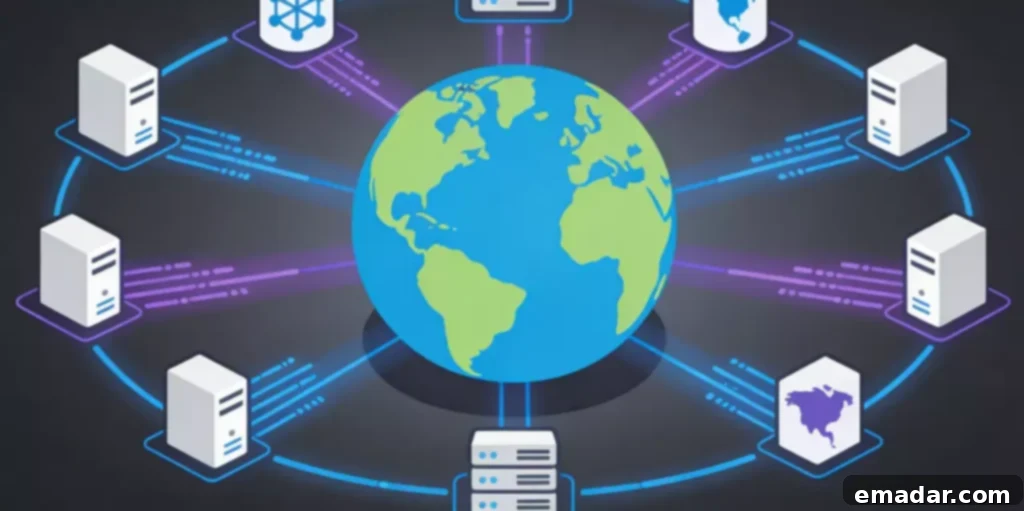
Understanding Overseas Proxy IPs: Essence and Core Value
An overseas proxy IP, in simple terms, is an IP address located in another country or region. It acts as an intermediary, relaying your network requests through a proxy server. This makes it appear to the target website that you are accessing it from that specific location. It’s important to distinguish this from ordinary network acceleration tools. Overseas proxy IPs provide a genuine network identity, not just simple traffic forwarding. For example, when you access Amazon through a US residential IP, the platform identifies you as a local US user, granting you access to the complete localized services and content.
The core value of overseas proxy IPs lies in three key areas:
- Geographical Breakthrough: Many international websites offer different services based on a user’s IP address, even completely blocking access from certain regions. By using an overseas proxy IP, you can obtain a local network identity in the target market, unlocking previously restricted content and functionality. This allows you to view content intended for that region and bypass restrictions that would otherwise prevent you from accessing it.
- Business Compliance: Legitimate commercial activities like cross-border e-commerce and international marketing require mimicking the network environment of a real, local user. This helps avoid account restrictions due to IP address anomalies, which are often triggered by using a non-localized IP address. Using a proxy IP ensures compliance with platform rules and regulations, protecting your accounts from suspension or banning.
- Efficiency Improvement: High-quality overseas proxy IPs can optimize network paths, reduce latency for international access, and improve operational response speeds. This is especially important for tasks requiring quick and reliable connections, such as data scraping or managing multiple accounts simultaneously. A faster connection leads to increased productivity and a smoother workflow.
Exploring the Main Types of Overseas Proxy IPs and How to Choose
The overseas proxy IP market offers three primary types, each with its own ideal use cases:
- Datacenter Proxy IPs: These IPs originate from cloud computing service providers. They are cost-effective but easily identifiable as proxy IPs. They are suitable for basic data collection tasks where IP quality isn’t a critical factor. Due to their shared nature and common use, they are more likely to be flagged or blocked by websites.
- Static Residential Proxy IPs: These IPs are directly assigned by Internet Service Providers (ISPs) and remain fixed over the long term. They are ideal for scenarios that require maintaining a stable network identity, such as cross-border e-commerce account management and long-term social media maintenance. Their stability and association with real residential addresses make them less likely to be detected as proxies.
- Dynamic Residential Proxy IPs: These IPs are based on real user devices worldwide and rotate periodically. They are well-suited for scenarios requiring frequent access and a high degree of anonymity, such as large-scale market research and advertising effectiveness verification. The rotating nature of these IPs makes it difficult to track and identify the user, providing a higher level of privacy.
When selecting an overseas proxy IP, several key factors require careful consideration:
- IP Purity: This determines the success rate. IPs that have been previously abused, even with correct configuration, may frequently trigger verifications or be blocked outright. A “clean” IP that has not been associated with suspicious activity is crucial for avoiding these issues.
- Geographic Location Accuracy: This impacts business effectiveness. Accurate positioning down to the city level is necessary to obtain genuine localized data. Using an IP from a different city or region within the target country can lead to inaccurate results.
- Network Stability: This guarantees business continuity. Frequent disconnections or IP changes can interrupt operational processes. A reliable and stable connection is essential for avoiding downtime and ensuring a smooth workflow.
- Supplier Service Capabilities: This is equally important, including technical support response speed, IP pool size, and the sophistication of management tools. A responsive and knowledgeable support team can quickly resolve any issues that may arise. A large and diverse IP pool provides greater flexibility and choice. User-friendly management tools simplify the process of configuring and managing your proxy IPs.
IPFLY boasts an industry-leading, vast IP resource library. It offers three major proxy IP types: static residential proxies, dynamic residential proxies, and datacenter proxies. Utilizing self-built servers and proprietary big data algorithms with multi-layered IP screening mechanisms, IPFLY selects high-quality global IP resources covering over 190 countries and regions. This ensures that every proxy link delivers exceptional success rates and security. Whether you need long-term, stable identity for cross-border e-commerce operations or highly anonymous market intelligence gathering, IPFLY can provide solutions tailored to your business needs.
Typical Applications of Overseas Proxy IPs
Cross-border e-commerce is one of the most mature application areas for overseas proxy IPs. Sellers need to manage multiple store accounts on overseas platforms, each requiring a separate, stable, local IP address to avoid being flagged as associated accounts and subjected to batch restrictions. By using static residential proxies, each store can be equipped with a fixed IP, simulating a real local merchant and establishing long-term platform credibility. This is essential for maintaining a positive reputation and avoiding account suspensions.
Overseas market research also heavily relies on overseas proxy IPs. Businesses need to monitor competitors’ pricing strategies, promotional activities, and inventory status in different countries. E-commerce platforms display differentiated content based on the visitor’s IP address. Only by using genuine residential IPs from the target market can companies obtain accurate market intelligence to inform their decision-making. This data is critical for understanding market trends and making informed business decisions.
Social media operations and ad verification are also frequent use cases. International social media platforms are sensitive to the geographic location of an account’s IP address. Frequent cross-border logins may trigger security reviews. Ad verification requires confirming the actual display effect of materials in the target market. Any access from a non-local IP may be filtered, leading to distorted verification results. Using a localized IP ensures that ads are displayed correctly and that verification results are accurate.
Important Considerations When Using Overseas Proxy IPs
Legal compliance is the paramount principle. Overseas proxy IPs should be used for legitimate commercial activities and personal needs, complying with the target platform’s terms of service and respecting data protection regulations. Avoid using proxy IPs for spamming, cyberattacks, or infringing on the rights of others. These actions not only violate the law but also pollute IP resources, affecting all users.
Quality monitoring cannot be ignored. Even after selecting a premium proxy service, it is essential to establish a continuous health check mechanism to monitor success rates, response speeds, and availability rates. Replace IPs promptly when quality deteriorates to avoid using problematic IPs in critical business processes. Maintain communication with the provider, report issues encountered during use, and seek technical support.
Cost control requires strategy. Different types of proxy IPs have significantly different prices. Resources should be allocated rationally based on business value. Use high-quality static residential proxies for core business operations and more cost-effective dynamic proxies or datacenter proxies for peripheral tasks. Periodically evaluate the business return on proxy investments and optimize the configuration plan.
Why is IPFLY’s solution recommended?
IPFLY helps users configure proxy IPs efficiently through the following technological advantages:
- Self-built server network: Covering major cities worldwide, ensuring high IP resource purity and avoiding “blacklist” issues.
- Dynamic IP allocation mechanism: Automatically rotating IPs, reducing the risk of long-term use of the same address.
- Multi-layered IP screening: Using big data algorithms to eliminate low-quality IPs, ensuring the success rate of proxy links.
👉Choose IPFLY for greater peace of mind. Claim your discount and get high-quality IPs now!