
The term “unlimited residential proxy” appears frequently on forums, service pages, and procurement documents. It promises a compelling but sometimes ambiguous benefit: routing large volumes of traffic through real home IP addresses without data caps, concurrency limits, or unexpected throttling. For teams that depend on large-scale data collection, ad verification, or multi-region market intelligence, a truly unrestricted residential proxy can feel like the missing piece of their infrastructure.
However, marketing language and operational reality do not always align. Many services that advertise “unlimited” apply hidden constraints. Some use large but finite bandwidth pools that reset monthly. Others allow high concurrency but throttle throughput after a certain threshold. Some claim unlimited rotation while routing most traffic through a narrow subset of IPs, producing repetitive patterns that anti-bot systems detect. Knowing what genuine unlimited access looks like—and which factors to evaluate before committing—is essential for any team building proxy-dependent workflows.
This article explains the concept of unlimited residential proxies, highlights the common points where limits appear, outlines the architecture needed to remove those limits, and shows how a well-designed network can deliver truly unrestricted access in daily operations.
Defining Unlimited Residential Proxies: What Should Be Unrestricted?
To judge whether a residential proxy service is truly unlimited, you must understand the dimensions where restrictions commonly appear. Bandwidth is the most visible metric, but it is just one of several. A service with no data caps but tight limits on concurrent threads will not support a distributed scraping cluster. Conversely, a service that permits thousands of sessions but pulls from a limited IP pool can quickly trigger bans due to repetitive address use.
A genuinely unlimited residential proxy network offers unrestricted bandwidth, high concurrency without throttling or queuing, an IP pool large enough to avoid overusing individual addresses, and full geographic coverage without gating high-demand regions behind extra fees. When these four dimensions are free of artificial constraints, the proxy layer becomes an invisible utility and teams can focus on their core data collection logic.
Why Conventional Proxy Plans Impose Hidden Limits
Understanding why most proxy services impose limits clarifies the engineering challenge. Residential IPs are finite and carry costs—sourcing, infrastructure, and compliance overhead. Providers that price residential proxies at flat rates must manage this scarcity somehow.
Bandwidth caps are the simplest control: they limit total data transfer to bound costs and protect the pool from a few high-volume users. Concurrency limits similarly prevent a single account from monopolizing available IPs. Those constraints make business sense but can become serious friction for teams whose needs grow or fluctuate.
Some plans also restrict access to premium regions. “Unlimited” traffic may apply only to a subset of the pool, while IPs in high-demand countries are reserved for higher-tier plans. For users who need consistent access to locations like Tokyo, London, or São Paulo, these carve-outs undermine the promise of unlimited access.
The Architecture Required for Genuinely Unlimited Access
Delivering genuinely unrestricted residential proxies requires more than marketing. It requires a scalable, horizontally designed network, a sustainable and voluminous IP sourcing model, and a routing layer engineered to handle massive concurrent throughput without latency spikes or packet loss.
The IP pool must be deep enough that no single address serves a significant share of requests, even under aggressive rotation. When a pool is measured in tens of millions of residential endpoints, a high-frequency rotation strategy can avoid repeating addresses in detectable patterns, reducing the risk of rate-limiting or bans. This pool depth is the first line of defense against IP exhaustion.
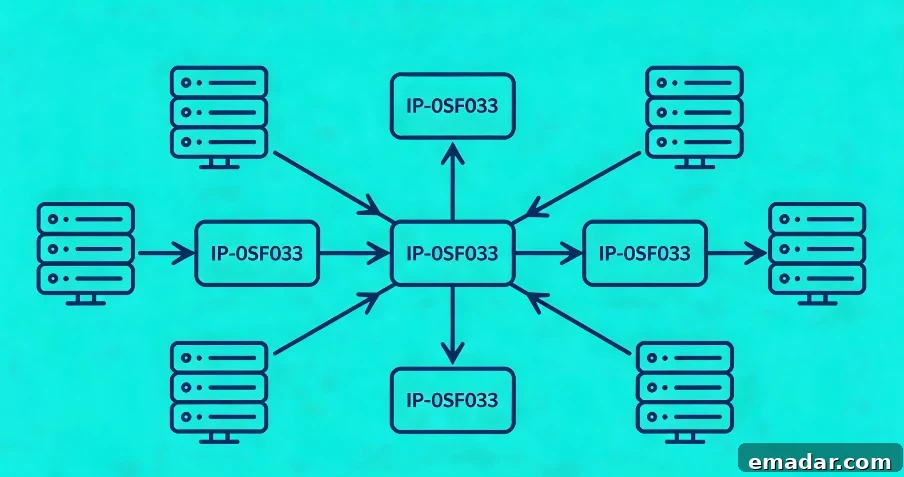
The routing infrastructure must support high concurrency without becoming a bottleneck. Gateways that rely on a small set of exit nodes can queue connections and increase latency when traffic surges. A distributed gateway architecture balances load across a global network so each session receives consistent latency and throughput regardless of overall activity, removing the need for artificial concurrency caps rooted in infrastructure limits.
The sourcing model must be sustainable and ethical. Residential proxies that rely on unreliable or unethical IP sourcing can lose endpoints to takedowns, blacklisting, or regulatory action. Ethically sourced networks built on consenting participants provide a stable, continuously refreshed supply of IPs, maintaining genuine scale over time.
Features That Support Unrestricted Use
Networks designed without arbitrary bandwidth or concurrency ceilings shift the user experience from constraint management to precision control. Key features include:
Large, Dynamic Pool and Broad Geographic Coverage
A large, dynamic IP pool continuously refreshes as devices connect and disconnect. For high-frequency rotation, this depth functions as an effectively unlimited supply of residential identities. Wide geographic spread, with city-level and ISP-level targeting, prevents concentration in a few regions and supports localized data collection without regional depletion.
No Hidden Bandwidth Throttles
Plans structured around enterprise-level data volumes should avoid hard throttling or hidden ceilings that interrupt campaigns. A gateway that forwards traffic without payload inspection and is backed by distributed capacity allows teams to budget proxy usage as predictable operational cost rather than a variable that can trigger downtime when a cap is reached.
High Concurrency Without Queuing
Proxy gateways built for parallelism process concurrent connections independently, avoiding internal queuing and the artificial latency it introduces. This lets teams scale thread counts quickly without plan upgrades or manual provisioning, maintaining steady request rates for target sites.
Flexible Session Control
Sticky sessions let users retain a single residential IP for configurable durations where persistence is required, such as authenticated workflows or multi-step transactions. Automatic rotation between sessions brings fresh IPs to avoid usage history buildup. This balance—persistence when needed, rotation when beneficial—keeps access patterns under user control and reduces detection risk.
Practical Scenarios Where Unlimited Access Matters
Unlimited residential proxies matter most where limits would cause direct business impact.
Large-Scale E-Commerce Data Collection
Price intelligence platforms that monitor millions of listings daily need their data cycles to finish in narrow windows. Bandwidth or concurrency caps that slow collection can delay insights and breach service-level commitments. With a deep pool and high concurrency support, large scraping jobs can rotate through fresh residential IPs and complete on schedule.
Cross-Region Ad Verification
Global brands verifying ad delivery across many countries require continuous, parallel checks in multiple markets. Concurrency limits stretch verification schedules and create audit gaps. City-level targeting combined with high concurrency support enables simultaneous verification sessions across regions.
SEO and SERP Monitoring
Search engines tightly police automated queries, and data center IPs are often blocked. SEO platforms tracking thousands of keywords need millions of residential IPs and unrestricted routing to query search engines from realistic city-level endpoints. A large rotating pool and unrestricted concurrency let platforms maintain fresh ranking data at scale.
Academic and Archival Research
Research that accesses geo-restricted public archives or streaming catalogs across many countries requires sustained, high-volume access. Bandwidth caps or concurrency limits can force researchers to stretch collection over weeks. With unrestricted access and geographic targeting, research teams can gather necessary data at a pace that meets project timelines.
IP Diversity and Rotation: The Real Keys
Bandwidth and concurrency are measurable, but pool health is equally critical. A massive, well-managed pool and dynamic rotation prevent IP reuse patterns that trigger blocks. The combination of size, rotation behavior, and geographic breadth creates the practical effect of “unlimited” for heavy, sustained, and precise workloads.
| Proxy Network Attribute | Typical Constraints in Limited Plans | Unlimited-Oriented Design |
| Pool size | Hundreds of thousands of IPs, leading to reuse | Tens of millions of residential IPs globally |
| Rotation behavior | Fixed intervals, quick reuse | Dynamic rotation with deep pool depth |
| Geographic availability | Premium regions restricted | City-level targeting across many countries |
| Concurrent sessions | Capped with queuing beyond the limit | High concurrency with no queuing |
| Session persistence | Rotation interrupts long sessions | Configurable sticky sessions for hours |
This comparison shows that true unlimited access depends on pool depth and flexible controls as much as on raw bandwidth. A large, well-operated pool enables residential proxies to serve heavy, sustained, and geographically precise workloads without forcing users to confront artificial limits.
Ethical Considerations of Scaling Without Limits
Unlimited routing through residential IPs carries legal and ethical responsibilities. Networks that impose no technical limits still require users to act responsibly. Ethical sourcing—gaining consent from contributors who are compensated for sharing bandwidth—avoids the risks associated with botnets or malware-based IPs and yields a stable supply of endpoints.
Responsible use includes targeting publicly accessible data, respecting robots.txt where appropriate, avoiding unauthorized collection of personal data, and setting request rates that do not overload target servers. Unlimited access is a capability, not permission for irresponsible behavior. When used ethically, it supports transparency, independent research, and fair competition.
Practical, Responsible Unlimited Access
“Unlimited residential proxy” can be either a marketing claim or an operational reality depending on the underlying architecture. Networks that combine deep, ethically sourced IP pools with distributed gateways, city-level targeting, and flexible session controls provide the practical freedom teams need. Such designs let proxy infrastructure be a stable utility rather than an ongoing constraint, so engineering and research teams can focus on the limits that truly matter: target-platform policies, legal constraints, and data quality requirements.
Ready to scale data collection without artificial barriers? Consider trialing a residential proxy configuration that provides deep IP diversity, predictable bandwidth handling, high concurrency, and geographic precision so your proxy layer becomes a reliable utility rather than a constraint.