
In the dynamic world of online data and digital presence, the ability to appear as a genuine user from virtually any location is a game-changer. This is precisely what residential proxies offer: a powerful digital disguise that leverages real IP addresses from everyday internet users, making your online activities look completely normal, human, and undetectable.
Imagine browsing the web from a friend’s Wi-Fi network. To any website you visit, your connection appears to originate from their home, presenting you as a genuine local user. This eliminates the tell-tale signs of a bot, a commercial entity, or an automated system attempting to access information discreetly. For instance, if you’re a market researcher in New York, you can seamlessly utilize a residential proxy from London to view the exact product prices a local Londoner would see. This not only bypasses geo-restrictions and potential blocks but also ensures you’re presented with region-specific, accurate data, free from any US-specific pricing biases.
Understanding Residential Proxies: Your Ultimate Digital Disguise

At its core, a residential proxy serves as an intermediary, routing your internet traffic through an authentic IP address provided by an Internet Service Provider (ISP) to a real home or mobile device. Without such a mechanism, your own IP address, assigned by your ISP, would immediately reveal your geographical location and potentially your identity, leading to blocks, inaccurate data, or restricted access when trying to perform critical tasks like competitor analysis or global market research.
The beauty of a residential proxy lies in its ability to seamlessly mask your original IP address. When you send an online request, it first travels to the proxy network, which then forwards your request using the IP of a genuine residential device located in your chosen region. To the target website, this request appears to come from a regular person browsing from their home computer or mobile phone in that specific city or country. This makes your online footprint highly trustworthy and incredibly difficult to detect, granting unparalleled access to geo-restricted content and invaluable local insights.
Before delving deeper into their operational mechanics and diverse applications, it’s crucial to understand how residential proxies differentiate themselves from other proxy types, particularly datacenter proxies. This brief overview highlights their core distinctions, offering a clearer perspective on when and why each type is preferred.
Residential Proxies vs Datacenter Proxies: A Side-by-Side Look
The following table provides a concise breakdown of the fundamental differences between these two prevalent proxy types:
| Feature | Residential Proxies | Datacenter Proxies |
|---|---|---|
| IP Source | Authentic ISPs (e.g., AT&T, Comcast, Vodafone) | Commercial Cloud/Hosting Companies |
| Authenticity & Trust | Exceptionally high (Mimics real user behavior) | Low (Easily identified as non-human or commercial traffic) |
| Block Rate | Very low, often negligible for legitimate uses | High (Frequently blacklisted or flagged) |
| Cost | Generally higher due to authentic sourcing | Lower, as they are easier and cheaper to generate |
| Best For | Scraping sensitive sites, ad verification, market research, brand protection, geo-targeting | High-speed, large-volume tasks on less stringent websites; general browsing where anonymity isn’t paramount |
Ultimately, the choice hinges on your priorities. You opt for residential proxies when blending in, achieving high anonymity, and accessing accurate localized data are your primary goals. For instance, conducting sentiment analysis on social media platforms or verifying competitor pricing on e-commerce giants demands the authenticity of residential IPs to avoid immediate detection and blocking. Conversely, for high-speed tasks on less protected sites, such as general data collection from public directories, faster and more cost-effective datacenter proxies might suffice.
The Unrivaled Power of Authenticity
The true “magic” and immense power of a residential proxy stem directly from its IP address source. Unlike datacenter proxies, which derive IPs from commercial server farms, residential IPs are genuinely assigned by ISPs to individual homes and mobile devices. This inherent authenticity is the bedrock of their effectiveness and reliability.
Modern websites and anti-bot systems have become incredibly sophisticated at identifying and blocking automated or suspicious traffic. IP addresses originating from data centers are typically the first to be flagged, monitored, and subsequently banned, often before any meaningful data can be gathered. Because residential IPs belong to real, everyday users, they naturally blend into the vast ocean of organic web traffic. This seamless integration drastically reduces the likelihood of detection, mitigating the risk of being blocked, challenged with CAPTCHAs, or fed deliberately inaccurate data designed to thwart scraping efforts.
A residential proxy’s greatest strength is its legitimacy. By utilizing an IP address assigned by an Internet Service Provider to a genuine home or mobile device, your online activities acquire a layer of credibility that is virtually impossible to replicate with any other proxy type. This allows businesses to operate with unparalleled stealth and access.
Key Characteristics and Undeniable Advantages of Residential Proxies
So, what specific attributes make residential proxies the preferred choice for a multitude of advanced online tasks? Their unique nature grants them several critical advantages that are indispensable for businesses operating in a data-driven world:
- High Anonymity and Undetectability: Residential proxies provide you with an authentic, genuine IP address, making your digital footprint indistinguishable from that of a local internet user. This is paramount for sensitive operations like competitive intelligence gathering, where discretion is key, and you certainly don’t want your rivals to know you’re meticulously analyzing their website and offerings.
- Precise Geo-Targeting Capabilities: These proxies empower you to select IP addresses from highly specific geographical locations—whether it’s a particular country, state, city, or even an ISP. This unparalleled precision allows you to view and interact with web content exactly as a local user would. For example, a global marketer based in New York can use a proxy in London to meticulously verify that their UK-specific ad campaigns are correctly displayed and reaching the intended audience.
- Significantly Lower Block Rates: Thanks to their authentic origin, residential IPs are far less likely to be detected, flagged, or blocked by target websites’ security systems. This low block rate is a monumental advantage for large-scale data gathering operations. Consider a travel aggregator needing to scrape thousands of flight prices across various airlines and regions; using residential IPs drastically reduces encounters with CAPTCHAs and prevents outright bans, ensuring continuous data flow.
This powerful combination of anonymity, precise geo-targeting, and exceptional reliability makes residential proxies indispensable for any business requiring consistent, undetected access to vast amounts of public web data. They are the ultimate tool for crucial tasks such as competitive price monitoring, comprehensive ad verification, in-depth market research, and brand protection—essentially, any scenario where appearing as a genuine, local customer is paramount for acquiring accurate, untainted information.
How Residential Proxies Function: A Technical Deep Dive
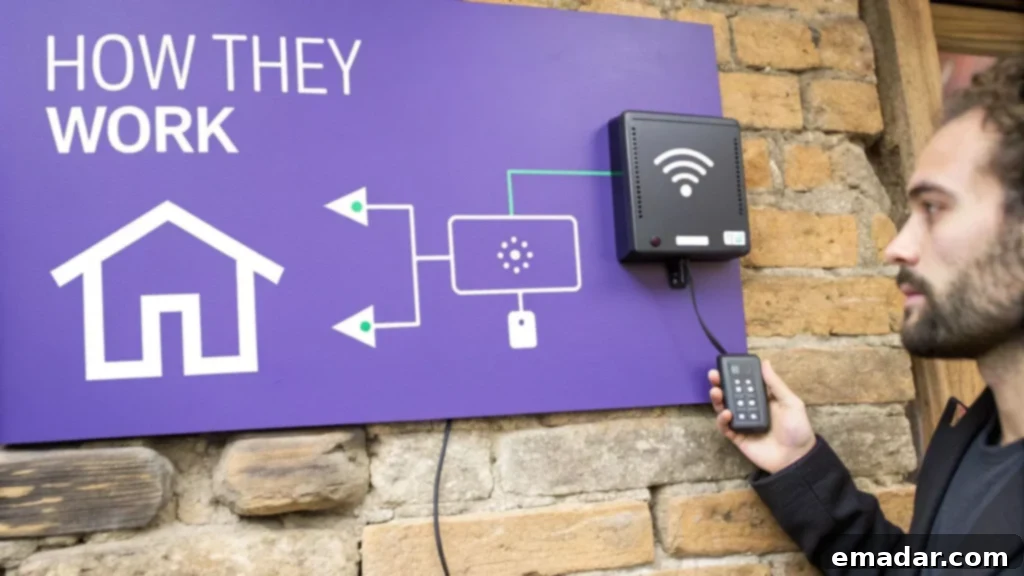
To truly grasp the power of residential proxies, it’s helpful to understand the sophisticated orchestration that happens behind the scenes every time you send a request. This intricate process ensures your activities are cloaked in legitimacy, allowing you to bypass web restrictions with ease.
Envision it as a highly secure, digital mail forwarding service. Instead of dispatching your online request directly from your computer, revealing your true IP address, you first send it to the residential proxy network. This network acts as a highly efficient and discreet middleman. Upon receiving your request, it intelligently selects an available IP address from its vast pool—an IP address tied to a real home internet connection in your desired geographical location. It then sends your request from that specific home’s IP address. To the receiving website, you simply appear as another regular person browsing from their living room, completely unsuspicious.
This ingenious rerouting is the core of their effectiveness. The target website encounters a genuine, everyday user, not a suspicious data center IP or an easily identifiable automated script, ensuring your entire visit appears perfectly natural and legitimate.
The Comprehensive Journey of a Data Request Through a Residential Proxy Network
Let’s meticulously trace the step-by-step mechanics of how a data request is processed through a residential proxy network. This entire, rapid sequence constructs an impenetrable layer of authenticity around your online actions, all transpiring in a fraction of a second.
- Initiation of the Request: Your objective is to scrape valuable product data from a popular e-commerce website. Instead of directing your scraping tool or browser directly to the target website, you configure it to channel all its requests through the residential proxy provider’s designated gateway.
- Proxy Network Intervention: The moment your request reaches the proxy network, it springs into action. Based on your pre-defined settings—for example, “use IPs from Berlin, Germany”—the network intelligently selects an available and active residential IP address from a real device located in Berlin. This selection is often optimized for speed and success rate.
- Secure Rerouting via a Genuine Device: Your request is then securely and privately routed through the chosen Berlin user’s device. Their local internet connection then forwards your request to the e-commerce website. It’s crucial to note that the end-user’s device is merely a conduit; their privacy is maintained, and your data remains secure.
- Website Response and Localized Data: The e-commerce website, receiving a request originating from a legitimate German IP address, perceives it as a genuine local shopper. Consequently, it responds by delivering the requested product page, complete with local pricing, regional promotions, and accurate availability specific to the German market.
- Data Return and Anonymity Maintained: The residential proxy device in Berlin then transmits this localized data back through the proxy network, which, in turn, delivers it directly to your scraping tool or browser. You effectively receive the accurate, geo-targeted information you sought, all without ever exposing your true IP address or organizational identity.
This sophisticated, multi-stage rerouting process is what fundamentally distinguishes residential proxies from other proxy types that rely on commercially sourced IPs from data centers. For a deeper understanding of these distinctions, exploring our comprehensive guide on datacenter proxies and their operational model can offer valuable comparative insights.
Advanced Features: IP Rotation and Session Management
One of the most powerful and strategic features offered by a premium residential proxy network is IP rotation. This mechanism automatically changes your IP address either with every new request or at predetermined intervals. This capability is paramount for sophisticated web scraping and avoiding detection, as continuous, high-volume activity from a single IP address is a clear indicator of automated behavior to any anti-bot or web security system.
Consider this scenario: attempting to scrape 10,000 product pages from a single, static IP address would almost certainly result in an immediate block within minutes. A robust, rotating residential proxy network, however, can assign a fresh, unique IP for every single request, effectively making it appear as if thousands of distinct individuals are visiting the target site, distributing the traffic and greatly enhancing success rates.
However, there are scenarios where maintaining a consistent online identity is crucial. This is where session management, often manifesting as “sticky sessions,” becomes indispensable.
Actionable Insight: Leading proxy providers offer “sticky sessions,” allowing you to retain the same residential IP address for an extended duration—typically ranging from a few minutes up to half an hour, or even longer depending on the provider. Utilize this feature for tasks that demand session continuity, such as managing a social media account, navigating a multi-page checkout process on an e-commerce site, or filling out lengthy online forms where an abrupt IP change would invariably lead to being logged out or crashing the session, forcing you to restart.
The Ethical Sourcing of Residential IP Addresses
A legitimate and frequently asked question concerns the origin of these millions of real home IP addresses. Reputable residential proxy providers adhere to strict ethical guidelines for sourcing their IPs. They acquire these addresses from real internet users who voluntarily and explicitly agree to share their device’s IP and a portion of their bandwidth.
This consensual participation is typically facilitated through attractive incentives. Users might opt-in by downloading a free premium application, subscribing to an ad-free service, or utilizing a VPN with integrated proxy functionality. In exchange for these perks, they consent to become a peer within the proxy network. For instance, a user might download a free VPN app that offers advanced features, implicitly agreeing to route a small portion of anonymous web traffic through their device as part of the service’s terms.
This consent-based model is fundamental to ethical proxy operations. It ensures that the network is built upon principles of transparency and mutual trust, with all participating users fully aware of the arrangement and retaining the absolute right to opt-out at any given moment. This commitment to ethical sourcing is a critical differentiator, separating legitimate, high-quality proxy services from illicit botnets that surreptitiously hijack devices without the owners’ knowledge or consent. By choosing a provider committed to these ethical standards, businesses ensure their operations are not only effective and secure but also responsible and legally compliant.
Why Modern Businesses Critically Depend on Residential Proxies

While understanding the mechanics of residential proxies is vital, truly appreciating why they have become an indispensable asset for contemporary businesses involves a deeper exploration of their strategic value. Their utility extends far beyond mere IP masking; it’s about unlocking unparalleled access to accurate, localized data, gaining a critical competitive advantage, and ultimately, empowering superior business intelligence and decision-making.
The core challenge faced by businesses performing automated online requests is the immediate perception of bot-like behavior. When thousands of requests emanate from a single, identifiable data center IP, it triggers every security alarm on a target website. Residential proxies expertly circumvent this by making every single action appear as if it originates from a regular person using their home internet connection. This isn’t merely a minor technical adjustment; it represents a profound shift that enables critical business operations to succeed where they would otherwise encounter insurmountable barriers.
Overcoming Obstacles for Superior Data Gathering
The most immediate and tangible benefit of residential proxies is their ability to facilitate the gathering of vast amounts of public web data without triggering detection or blocks. As websites continually enhance their anti-bot measures, automated traffic is increasingly scrutinized and blocked, often bringing vital data collection projects like competitive price monitoring, comprehensive market research, or trend analysis to a complete standstill. Residential proxies serve as the essential skeleton key, unlocking these heavily guarded digital gates.
Consider a practical scenario: an aggressive e-commerce company striving to maintain a real-time pulse on competitor pricing strategies. If they attempt to send thousands of data requests from their corporate office IP, they would be blocked almost instantaneously, rendering the effort fruitless. However, by intelligently routing these requests through a rotating residential proxy network, each individual request appears to originate from a different, legitimate home IP address. Suddenly, the activity appears as if thousands of distinct, individual shoppers are browsing the site, allowing the business to seamlessly pull all the required data without suspicion.
A business’s ability to gather accurate, real-time data is directly tied to its capacity to operate undetected. Residential proxies provide the necessary stealth and cover, transforming potential blockades into open, flowing pathways for critical market information and competitive intelligence.
Achieving an Authentic View with Localized Content
For any business with a global footprint or ambitions, perceiving online content precisely as local customers do is absolutely non-negotiable. This encompasses a range of critical tasks: verifying regional ad placements, scrutinizing local pricing models, and ensuring your website’s presentation is flawless for users in diverse countries or specific cities. Residential proxies make this geo-specific testing not only feasible but also remarkably precise and reliable.
For instance, a prominent global shoe brand launching a highly targeted digital ad campaign in Paris needs irrefutable confirmation that their advertisements are indeed appearing correctly for Parisian audiences. By deploying a residential proxy with a Parisian IP address, their marketing and ad verification teams can directly observe the exact ads, landing pages, and user experience a local resident would encounter. This capability is paramount for detecting ad fraud, ensuring campaign effectiveness, and preventing the wasteful expenditure of marketing budgets—a verification process that is utterly impossible from their headquarters located thousands of miles away.
This level of granular precision is crucial for numerous strategic tasks:
- Ad Verification: Meticulously confirming that paid advertisements are running in the correct geographical regions, on the intended platforms, and in the right format, thereby safeguarding against pervasive ad fraud and ensuring optimal ROI.
- Price Verification: Systematically ensuring that regionally specific pricing strategies, discounts, and promotional offers are accurately live and displayed on your e-commerce platforms and distribution channels.
- SEO Monitoring and Optimization: Proactively checking search engine rankings from various geographical locations to gain a comprehensive understanding of your local search performance and identify opportunities for geo-specific SEO enhancements.
Maintaining a Discreet Presence for Competitive Intelligence
Diligent monitoring of competitors is not just good business practice; it’s a strategic imperative. However, repeatedly visiting a competitor’s website from your own company’s identifiable IP address is akin to sending them a formal notification of your intentions. Residential proxies provide the indispensable stealth required to conduct robust and undetected competitive analysis.
Actionable Insight: A market research firm can leverage residential proxies to delve deeply into a competitor’s product portfolio, analyze customer reviews, scrutinize site architecture, and observe pricing changes—all without ever revealing their organizational identity. Each visit appears to originate from a random, organic user, allowing them to gather invaluable insights discreetly and formulate data-driven strategies built on comprehensive and untainted information.
The escalating reliance on these sophisticated tools is evident in market projections. The global Residential Proxies Service market was valued at approximately USD 670 million and is projected to surge to an impressive USD 913 million by 2031. Furthermore, it is highly significant that over 78% of Fortune 500 companies now routinely employ proxy networks for secure browsing, efficient data collection, and robust competitive analysis. For a deeper understanding of these trends, a comprehensive residential proxy market analysis provides the full picture.
Real-World Applications and Use Cases for Residential Proxies

Moving beyond the theoretical, it’s in the practical application that the true value of residential proxies becomes strikingly clear. These are not merely abstract technical tools for IT specialists; they are pragmatic, powerful solutions that provide businesses with a tangible competitive advantage across various sectors, including marketing, e-commerce, brand management, and beyond.
Let’s explore some concrete, everyday examples of how diverse businesses effectively deploy residential proxies to solve complex challenges and drive growth.
Verifying Ad Placements to Proactively Combat Fraud
Imagine your role as a marketing analyst for a prominent global fashion brand. You’ve just allocated a substantial budget to a digital advertising campaign, meticulously targeting specific, high-value cities across the globe—such as Tokyo, London, and New York. The crucial question arises: how do you definitively ensure your ads are correctly displayed and reaching the intended audiences in those diverse geographical locations?
Without the appropriate tools, this critical verification process would be a costly exercise in futility. This is precisely where residential proxies transform into an indispensable asset for any discerning marketer.
The analyst can strategically utilize a robust residential proxy network to route their internet connection through genuine IP addresses physically located in each of these target cities. By doing so, they gain the ability to browse the internet and interact with platforms exactly as a local user would, enabling them to:
- Confirm Ad Display and Format: Visually verify that advertisements are appearing on the intended websites, within the correct geographical boundaries, and adhering to the specified creative formats and placements.
- Detect Geo-Fencing Discrepancies: Instantly identify if ads are erroneously being shown outside their designated target areas, which represents a significant waste of precious advertising budget and diminished campaign effectiveness.
- Uncover and Mitigate Ad Fraud: Proactively identify unscrupulous publishers or platforms that falsely claim to serve ads in particular regions but are, in reality, failing to do so, thus protecting the brand’s investment.
The direct outcome of this meticulous verification is a demonstrably more transparent, efficient, and ultimately profitable advertising campaign, built on verifiable data rather than assumptions.
Gathering Comprehensive Market Sentiment from Social Media
Consider a data science team tasked with assessing public opinion about an innovative new consumer gadget prior to its official launch. Their objective is to analyze thousands of public social media posts, comments, and interactions from various global regions to capture an honest, unbiased pulse on nascent public sentiment. This qualitative data is invaluable for refining product features, optimizing marketing messages, and anticipating market reception.
The inherent challenge lies in the fact that social media platforms are notoriously vigilant and highly protective against automated data collection. Any attempt to scrape such vast quantities of information from a single server IP address will almost certainly result in immediate detection and a swift ban, halting the research prematurely.
By intelligently deploying a rotating residential proxy network, the data team can effectively distribute their data requests across an enormous pool of diverse, real residential IP addresses. This strategy ensures their activity appears to originate from thousands of distinct individuals browsing naturally, making it virtually impossible for social media platforms to identify and block the automated collection process. This allows them to gather massive volumes of critical public data without triggering security alarms, thereby creating a rich, authentic dataset ripe for in-depth analysis.
This sophisticated approach provides unbiased, real-world insights into consumer perception, enabling companies to strategically refine their marketing messages, adjust product features, or even pivot their launch strategy based on genuine public feedback. This dramatically increases the probability of a successful product introduction and market penetration.
The demand for these advanced tools is experiencing explosive growth. The Residential Proxy IP Network Market was recently valued at approximately USD 1.2 billion and is forecast to skyrocket to an astonishing USD 4.5 billion by 2033. This exponential growth is primarily driven by businesses that fundamentally rely on reliable, anonymous, and geo-targeted data access for an extensive range of activities, from sophisticated web scraping and comprehensive market research to crucial ad verification and brand protection. For a more detailed examination of these market dynamics, further reading on the residential proxy market growth offers deeper insights.
Safeguarding Brands from the Threat of Counterfeit Products
Here’s another profoundly impactful application: proactive brand protection. A dedicated brand manager for a luxury handbag company faces a relentless and continuous battle against the proliferation of counterfeit products appearing on myriad online marketplaces. These illicit fakes not only result in significant revenue loss but also inflict severe and often irreparable damage to the brand’s meticulously built reputation and perceived exclusivity.
Manually searching for these counterfeit listings across vast online platforms is an overwhelmingly inefficient and ultimately losing proposition, particularly given that counterfeiters often employ tactics to block IP addresses they suspect belong to brand protection teams. This common impediment is a significant hurdle for companies engaged in large-scale data scraping aimed at monitoring global online stores for illicit items.
By leveraging residential proxies, the brand manager can automate the systematic scanning of these marketplaces from a multitude of diverse geographical locations. Each automated search query appears to originate from a regular, individual shopper, effectively allowing them to bypass typical blocks and uncover counterfeit listings that would otherwise remain hidden and undetectable. This provides a systematic, efficient, and proactive method to rapidly identify, document, and report fraudulent sellers, thereby protecting the brand’s integrity and intellectual property.
Further Actionable Use Cases Highlighting Versatility
The expansive utility of residential proxies extends even further, encompassing a wide array of mission-critical business scenarios. Here are additional common applications where residential proxies prove indispensable:
- Granular SEO Auditing: Professional SEO specialists utilize proxies to accurately check search engine rankings, keyword performance, and local search results from various cities and countries worldwide. For example, they can precisely ascertain if their client ranks #1 for “best pizza” in Chicago versus #5 in New York, furnishing them with highly actionable insights for localized SEO strategy and optimization.
- Dynamic Travel Fare Aggregation: Leading online travel sites continually scrape vast amounts of data from airline and hotel websites globally to present users with the most competitive real-time prices. Residential proxies are absolutely critical for gathering this sensitive, frequently updated data without encountering immediate blocks or being served inaccurate cached information.
- E-commerce Price Monitoring: Online retailers are in a constant state of vigilance, tracking competitor prices across thousands of products to maintain a competitive edge. Proxies enable them to automate this intricate process accurately, discreetly, and at scale, facilitating the implementation of smart, dynamic pricing strategies that react swiftly to market changes.
In each of these diverse use cases, the fundamental, overarching benefit remains consistent: the unparalleled ability to access public web data while appearing as a genuine, local user. This core capability unlocks access to critical, time-sensitive information, empowering businesses to make smarter, faster, and ultimately more profitable strategic decisions in a highly competitive digital landscape.
Choosing the Right Residential Proxy Provider: A Critical Decision
Selecting the optimal residential proxy provider is far more than a routine technical choice; it is a strategic decision that can profoundly impact the success or failure of your entire project. In a market saturated with numerous services and often flashy marketing claims, the key is to cut through the noise and meticulously focus on the factors that genuinely define a high-quality, trustworthy, and effective service.
Think of this process akin to choosing a crucial business partner for a mission-critical operation. You require a partner who is unfailingly reliable, absolutely transparent in their practices, and impeccably equipped to meet your demands. The wrong provider can lead to a litany of issues: persistent IP blocks, agonizingly slow performance, compromised data integrity, or even unforeseen legal and reputational complications. Conversely, partnering with the right provider ensures your operations run seamlessly, ethically, and without a single hitch, providing the robust infrastructure necessary for success.
Evaluating the IP Pool and Geographic Coverage
The paramount consideration when assessing a proxy provider is undoubtedly the strength and diversity of its IP pool. The sheer size, inherent quality, and geographical spread of their network are what fundamentally imbue it with power and resilience. A larger, more geographically expansive, and diverse pool significantly enhances your probability of acquiring the precise IP addresses required for your specific task, while drastically minimizing the risk of encountering IPs that have already been flagged, abused, or blacklisted by target websites.
When you’re meticulously evaluating a potential provider, resist the temptation to merely accept impressive IP count numbers at face value. It’s imperative to delve deeper and pose probing questions:
- How many truly unique IPs are actively maintained within your network? A consistently high and verified number here is a strong indicator of a healthy, robust, and continuously refreshed network.
- What is the granular geographic targeting capability you offer? Can your service precisely pinpoint IPs down to a specific country, state, city, or even a particular Internet Service Provider (ISP)? This level of detail is absolutely crucial for highly localized tasks, such as regional ad verification, localized SEO performance analysis, or geo-specific content testing.
- What is your ethical IP sourcing methodology? Any provider worthy of consideration will demonstrate complete transparency regarding their IP acquisition process. They must be able to unequivocally confirm that every IP address owner has provided clear, explicit, and informed consent for their connection to be utilized within the proxy network.
Actionable Insight: Before making any commitment, rigorously test the provider’s advertised geo-targeting capabilities. If your project specifically demands IP addresses within a niche city like Omaha, Nebraska, request a trial or demonstration to confirm they possess a genuinely reliable and active pool of IPs in that exact location, rather than merely offering a broad “US” pool.
A vast and highly varied IP pool offers unparalleled resilience: if a few IPs encounter blocks or become compromised, an extensive reserve of millions more are readily available to step in, ensuring uninterrupted operation. This robust fault tolerance is precisely the kind of stability and scalability required for any ambitious, large-scale online operation.
Examining Session Control and Operational Flexibility
Following the IP pool, your next critical consideration should be how you intend to utilize these proxies. Different operational objectives necessitate distinct types of sessions. A truly capable and versatile provider will offer both rotating and sticky session options, providing you with the essential flexibility to proficiently handle any conceivable scenario your projects might present.
Rotating proxies are the epitome of digital dynamism; they furnish you with a brand-new, unique IP address for every single request or after a very short, predefined interval. This characteristic makes them exceptionally suited for massive web scraping endeavors where the goal is to mimic the behavior of thousands of disparate individuals, making your automated activity virtually undetectable. An e-commerce analyst, for instance, tasked with scraping 10,000 product pages from a heavily protected site, would overwhelmingly rely on rotating IPs to effectively fly under the radar of sophisticated anti-bot systems.
Sticky sessions, alternatively known as static residential proxies for their ability to maintain a consistent IP, allow you to retain the same IP address for a significantly longer duration—typically ranging from one minute up to 30 minutes, or even several hours with some premium offerings. This functionality is absolutely vital for any online task that demands a stable, consistent online identity to maintain session integrity. This includes activities such as managing multiple social media accounts concurrently, progressing through a multi-step online checkout process, or filling out complex forms. In such scenarios, an abrupt IP change mid-session would almost certainly trigger security alerts, force a log-out, or invalidate the session, compelling you to restart.
Assessing Performance Metrics and Network Reliability
When it comes to proxy services, speed and unwavering uptime are absolutely non-negotiable performance attributes. A slow, sluggish, or unreliable proxy network will inevitably introduce severe bottlenecks, significantly delay your projects, lead to script failures, and cause substantial operational inefficiencies. It is paramount to partner with a provider that can consistently guarantee high performance and robust infrastructure.
Here are the key performance metrics you should diligently scrutinize:
- Success Rate: What is the demonstrable percentage of your requests that successfully pass through the proxy network and reach the target without being blocked or failing? You should rigorously seek a provider that can consistently deliver a success rate of 99% or, ideally, even higher.
- Uptime Guarantee: Does the provider offer a legally binding Service Level Agreement (SLA) that explicitly guarantees their network will remain online and operational? The widely accepted industry standard for such guarantees is a 99.9% uptime commitment, signifying exceptional reliability.
- Connection Speed: While it is generally true that residential proxies will inherently be slightly slower than their datacenter counterparts due to the nature of their sourcing, a top-tier provider will have meticulously optimized their network infrastructure to deliver the best possible speeds without compromising authenticity.
The colossal demand for this level of quality and reliability is clearly reflected in market statistics. Residential proxies command a massive 44% share of all proxy traffic, with over 5.5 million distinct residential IPs actively utilized at any given moment. For those interested in a more granular examination of these figures and broader market trends, further insights can be gleaned from comprehensive reports on the proxy server market share.
Prioritizing Ethical Sourcing and Responsive Customer Support
Finally, and perhaps most importantly, never underestimate or overlook the critical importance of ethical IP sourcing practices and the quality of customer support. An ethical provider meticulously acquires its IP addresses from real, legitimate users who have provided clear, explicit, and informed consent to share their internet connection. This fundamental commitment to ethical sourcing is your primary safeguard against the severe legal liabilities, significant reputational damage, and inherent instability associated with using IP addresses derived from illicit botnets or other dubious, non-consensual sources. Always press a potential provider to transparently and thoroughly explain their precise IP sourcing methodology.
Furthermore, exceptional customer support serves as your indispensable safety net. Issues and technical challenges are an inevitable part of any complex online operation. When they do arise, you absolutely need access to a highly responsive, knowledgeable, and dedicated support team available 24/7 to assist you in promptly troubleshooting and resolving problems. A provider’s unwavering dedication to outstanding support is a definitive indicator of their overall quality and long-term reliability. Naturally, the cost of such premium service needs to be factored into your budget planning, and you can thoroughly compare various plans and features by exploring our detailed residential proxy pricing models.
Common Mistakes to Avoid When Using Residential Proxies
Maximizing the efficacy and return on investment from residential proxies isn’t solely about correct setup; it’s equally about skillfully navigating and sidestepping common pitfalls that can completely derail your projects. A few seemingly minor slip-ups can lead to substantial financial waste, persistent task failures, and in severe cases, even result in your entire proxy IP pool being blacklisted across critical target sites. By adopting a proactive and informed approach, you can ensure your operations run smoothly, efficiently, and effectively right from the outset.
One of the most pervasive mistakes is the erroneous assumption that all proxies are fundamentally interchangeable. A business might, for instance, attempt to reduce costs by opting for cheaper datacenter proxies for a task that unequivocally demands the highest level of authenticity—such as systematically scraping a heavily protected e-commerce platform. This cost-saving measure almost invariably culminates in failure, as easily detectable datacenter IPs are routinely blocked on sight, leading to a significant depletion of both valuable time and financial resources.
Ignoring Rate Limits and Employing Overly Aggressive Request Patterns
The temptation to accelerate your data collection scripts to their maximum theoretical speed is often immense, but this approach is a guaranteed pathway to immediate detection and flagging. Websites are meticulously designed to monitor the frequency and volume of requests emanating from individual IP addresses within specific timeframes. Firing off hundreds of requests in rapid succession from a single residential IP address looks entirely unnatural and represents a glaring red flag for any sophisticated anti-bot system.
This aggressive, unthrottled approach is a fast-track to widespread IP bans and an onslaught of CAPTCHAs, which inevitably brings your entire data collection project to a grinding halt. The truly effective solution lies in emulating human-like browsing behavior.
Actionable Insight: Systematically integrate realistic and randomized delays between your individual requests. A randomized delay, for instance, ranging between 2 to 5 seconds, makes your traffic appear significantly more organic and less predictable than a fixed, uniform interval. This single, simple adjustment can dramatically elevate your success rate and actively preserve the long-term health and integrity of your proxy pool.
Selecting Providers with Dubious or Unethical IP Sourcing Practices
Another critically grave error is to hastily engage with a proxy provider without meticulously investigating and understanding their IP sourcing methodologies. Certain illicit services construct their networks by surreptitiously tricking unsuspecting users into installing malware or by employing other deceptive, non-consensual tactics, essentially creating an illegal botnet. Utilizing such a service is not merely a significant security vulnerability; it exposes your business to severe legal repercussions, irreparable reputational damage, and profound ethical compromises.
To decisively steer clear of this perilous pitfall, you must unequivocally prioritize transparency. Always demand direct and unequivocal answers from potential providers regarding the precise origin of their IP addresses:
- How do you obtain explicit consent from your end-users? A truly legitimate and ethical provider will possess a clear, well-documented, and verifiable process where users knowingly and voluntarily agree to share a portion of their IP and bandwidth, often in exchange for a tangible benefit such as an ad-free application experience or other premium perks.
- Do users have a simple and transparent mechanism to opt-out of the network at any time? Ethical services invariably offer an easily accessible and straightforward method for individuals to withdraw their consent whenever they choose.
Neglecting this fundamental due diligence constitutes an enormous risk. A provider operating with sketchy or unethical practices is inherently unreliable, prone to sudden disappearance, and could leave your ongoing projects, and indeed your entire operation, in a precarious and compromised state. By diligently selecting a partner who is unequivocally committed to the highest ethical standards, you are making a crucial investment in long-term operational stability, legal compliance, and responsible business conduct.
Frequently Asked Questions About Residential Proxies
To conclude our comprehensive guide, let’s address some of the most common questions that typically arise when individuals and businesses first begin to explore the capabilities and nuances of residential proxies. Gaining a clear understanding of these fundamental aspects will provide you with the essential confidence and knowledge required to effectively and responsibly utilize these powerful tools.
Are Residential Proxies Legal to Use?
Yes, the use of residential proxies is generally considered completely legal in the vast majority of jurisdictions worldwide. However, this legality is contingent upon one critically important condition: you must employ them exclusively for legitimate, lawful, and ethical activities.
The legality of proxy usage fundamentally boils down to two key factors: the method by which the provider acquires its IP addresses, and the specific purposes for which you, the user, deploy them. A reputable and ethical proxy provider will invariably obtain clear, explicit consent from device owners to route internet traffic through their connections, thereby ensuring that the entire network infrastructure is built upon a solid, legally compliant, and ethical foundation.
Where legal issues can arise is when proxies are utilized for illicit activities such as hacking into private systems, unauthorized theft of private data, or systematically scraping copyrighted content or protected information in direct violation of a website’s terms of service. As long as your usage adheres strictly to ethical business tasks—such as gathering publicly available web data for market research, verifying legitimate ad placements, or conducting competitive intelligence within legal bounds—you are operating within the clear boundaries of legality.
Key Takeaway: The proxy itself, as a technological tool, is legal. Its legality in practical application hinges entirely on its responsible and ethical deployment—a journey that begins with conscientiously selecting a provider who demonstrates absolute transparency regarding user consent and ethical sourcing.
Static vs. Rotating Residential Proxies: What’s the Fundamental Difference?
The primary distinction between static and rotating residential proxies centers entirely on session control and identity persistence. It represents a strategic choice between maintaining a singular, consistent online identity or continuously changing it, with the optimal choice being dictated by the specific requirements of the task at hand.
- Rotating Proxies (Dynamic Proxies): These are the undisputed masters of digital disguise and anonymity. They automatically swap out your IP address with every new HTTP request you initiate, or after a very short, predefined time interval (e.g., a few minutes). This characteristic makes them perfectly suited for large-scale web scraping operations because it creates the impression that your activity is originating from thousands of different, distinct individuals, making your actions incredibly difficult to track, correlate, or block by target websites. Example Use Case: Systematically scraping 50,000 product reviews or news articles from a major e-commerce platform or news aggregator.
- Static Proxies (Sticky Proxies): Sometimes also referred to as non-rotating residential proxies, these enable you to maintain and utilize the same residential IP address for a significantly longer duration, often up to 30 minutes, several hours, or even longer depending on the provider and your subscription. This capability is an absolute necessity for any task that demands a stable, consistent, and persistent session to maintain online identity. This includes activities such as managing multiple social media accounts from a single device, filling out a multi-page online form, or navigating a complex online checkout process without the disruption of an unexpected IP change leading to a session timeout or log-out. Example Use Case: Successfully managing the login, posting, and interaction across several Instagram accounts from a single software interface.
Can Websites Detect That I’m Using a Residential Proxy?
From the perspective of a target website, detecting a high-quality, ethically sourced residential proxy is an extremely challenging endeavor. This is because these proxies leverage genuine IP addresses that are legitimately assigned by Internet Service Providers (ISPs) to actual residential homes or mobile devices. Consequently, they blend in perfectly and seamlessly with regular, organic internet traffic, making them virtually indistinguishable from an everyday user’s connection.
To a web server on the receiving end, a request originating from a residential proxy appears precisely the same as a request from any other legitimate home user. This inherent characteristic is their single most significant advantage over datacenter proxies, whose IP addresses originate from commercial server farms and are relatively easy for websites to identify, flag, and subsequently block based on their known commercial subnet ranges.
While it is crucial to understand that no method of online anonymity is ever 100% foolproof, a diligently managed residential proxy obtained from a trusted and reputable provider represents the closest you can get to operating entirely under the radar and maintaining undetectable online activity for your critical business tasks.
Are you ready to experience the unparalleled capabilities of a robust network built on authentic, high-performance proxies? IPFLY offers you privileged access to a vast global network comprising over 90 million ethically sourced residential IP addresses. This empowers you to reliably gather the precise and accurate data you need for your business, all without raising any red flags or triggering automated detection systems. Explore our comprehensive range of residential proxy solutions and get your vital projects started with confidence and security today!