
In the vast, interconnected digital realm of today, data is king. Businesses across every sector depend heavily on access to real-time, accurate web data for strategic decision-making, market analysis, and maintaining a competitive edge. However, navigating the internet at scale often presents formidable challenges: websites implement sophisticated anti-bot measures, geo-restrictions block access to crucial localized information, and IP blacklists can quickly halt operations. This is where advanced proxy solutions become indispensable. Among the array of available options, the backconnect proxy service stands out as a powerful, dynamic, and highly effective tool, celebrated for its automatic IP rotation capabilities and unparalleled access potential. But what exactly defines a backconnect proxy, and in what scenarios does it prove to be the ultimate solution?
This comprehensive guide delves deep into the core mechanics, significant advantages, diverse applications, and essential best practices for leveraging backconnect proxies to their full potential. We’ll explore how these services enable businesses to bypass limitations, ensuring seamless and undetected web operations.
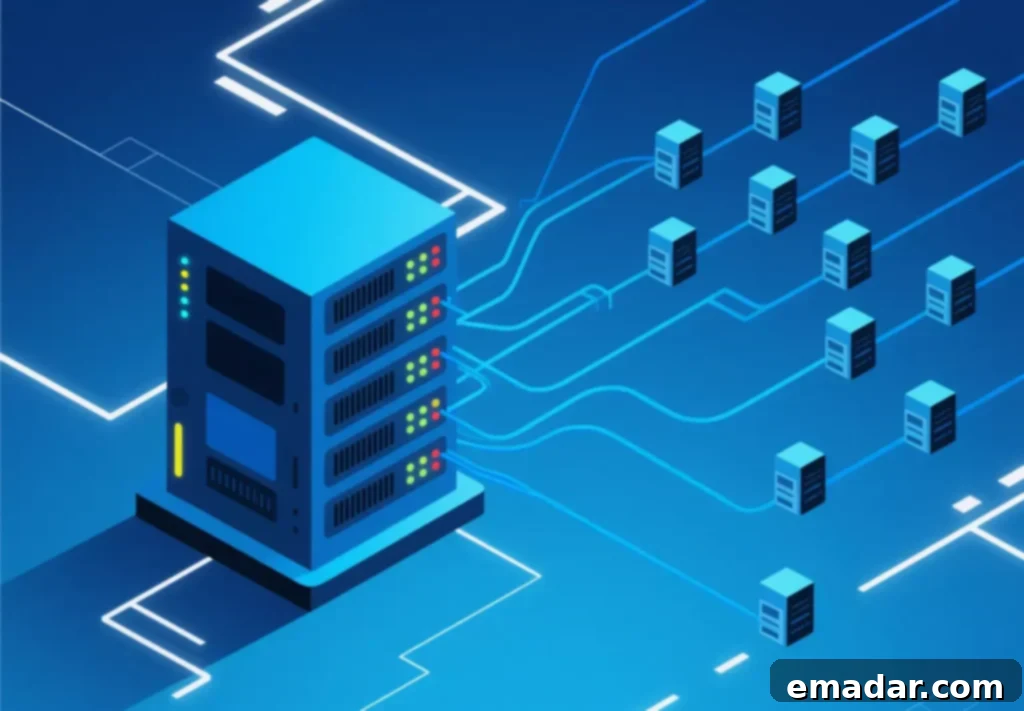
Understanding the Backconnect Proxy Service
At its essence, a backconnect proxy service represents an advanced type of proxy network engineered to automatically rotate your outgoing IP address. Unlike traditional static proxies where you connect to a single, fixed IP, a backconnect proxy routes your requests through a sophisticated gateway server. This gateway dynamically assigns a different IP address from a vast pool—often comprising legitimate residential or mobile IPs—before forwarding your request to the target website. This dynamic assignment occurs either at regular, predefined intervals or with every new connection request, effectively presenting a fresh identity for each interaction.
The core distinction from conventional proxy setups can be summarized by several key characteristics:
- Continuous IP Rotation: Your IP address changes frequently and automatically. This constant refresh is crucial for evading sophisticated detection systems and preventing IP bans, as your activity never appears to originate from a single, static source.
- Expansive IP Pools: Backconnect proxy networks boast access to incredibly large pools of IP addresses, often ranging from thousands to millions. This sheer volume ensures a high diversity of IPs, significantly reducing the likelihood of encountering blacklisted or compromised addresses.
- Centralized Gateway Connection: Users interact with a single, stable gateway endpoint. All the complex routing, IP selection, and rotation management are handled seamlessly by the service provider behind the scenes, simplifying integration and management for the end-user.
This architectural design makes backconnect proxies exceptionally suitable for high-volume tasks demanding stringent anonymity, extensive IP diversity, and uninterrupted access to geo-restricted online content. They are the go-to solution for operations that require mimicking natural user behavior across various digital platforms.
How Backconnect Proxies Operate: A Detailed Workflow
The operational mechanism of a backconnect proxy service is ingeniously designed for maximum efficiency and stealth. Instead of providing you with a list of individual, static proxy IPs to manage, the provider furnishes you with a single, dedicated gateway address. When your application, web scraping script, or browser sends a request through this gateway, the backconnect service orchestrates the following process:
- Request Initiation: Your client (e.g., a web scraper, browser) sends an HTTP/S request to the backconnect gateway.
- Dynamic IP Selection: The gateway server, powered by intelligent algorithms, instantly selects an available IP address from its enormous pool. This selection can be random, geographical, or optimized based on IP health and performance metrics.
- Request Forwarding: The selected IP address is then used to forward your request to the target website. To the destination server, the request appears to originate directly from this chosen IP, not from your original location or the gateway.
- Response Routing: The target website processes the request and sends a response back to the assigned proxy IP. The backconnect gateway then receives this response and forwards it securely back to your client.
- IP Rotation: After a predetermined condition is met (e.g., a specific number of requests, a set time limit like 10 minutes, or upon explicit command for a new session), the system automatically discards the previously used IP and assigns a fresh one for subsequent requests. This continuous rotation is the hallmark of a backconnect service.
This sophisticated mechanism offers two paramount advantages that are critical for modern web operations:
Bypassing Rate Limits and Access Restrictions: With IPs rotating consistently, your requests appear to originate from a constantly changing set of legitimate users. This makes it incredibly difficult for websites to identify and block your activity based on request volume from a single IP, effectively bypassing API rate limits, access caps, and other automated restrictions.
Superior Evasion of Detection and Blocking: Target websites employ various techniques to detect bot activity, including IP fingerprinting, behavioral analysis, and blacklist checks. Because your requests come from diverse, constantly changing IPs (especially residential or mobile IPs), it becomes exceedingly challenging for sophisticated anti-bot systems to flag or block your operations. Your traffic blends seamlessly with organic user traffic, ensuring high success rates.
Crucially, backconnect proxy networks predominantly consist of residential IPs. These IPs are assigned by Internet Service Providers (ISPs) to actual homes and mobile devices, making them inherently more trusted and thus significantly harder to detect and block compared to datacenter proxies, which are often easily identified as belonging to commercial hosting providers.
Key Benefits of Integrating Backconnect Proxies into Your Workflow
The strategic advantages offered by backconnect proxies are numerous, making them an invaluable asset for businesses operating in data-intensive environments:
Scalable IP Rotation for Uninterrupted Operations
One of the most compelling benefits is the inherent scalability of IP rotation. Rather than manually managing vast lists of proxies, dealing with expiring IPs, or implementing complex rotation logic, backconnect proxies automate this entire process. This hands-off approach makes them perfectly suited for large-scale operations such as extensive web scraping, continuous data harvesting, or automated crawling, where the volume of requests can quickly overwhelm manual proxy management systems. The service ensures a fresh IP for every critical interaction, maintaining flow without human intervention.
Enhanced Anonymity and Drastically Reduced Blocking Rates
The core strength of backconnect proxies lies in their ability to provide exceptional anonymity. By leveraging a pool predominantly composed of residential or mobile IPs, requests appear to originate from genuine internet users. This significantly reduces the likelihood of triggering suspicious activity alerts, CAPTCHAs, or outright IP bans. Anti-bot mechanisms, which are often designed to detect and block traffic from commercial datacenters or known proxy networks, are far less effective against the diverse and organic-looking traffic generated by backconnect services. This leads to higher success rates in data acquisition and smoother operations.
Unrivaled Geo-Flexibility and Localized Access
Many advanced backconnect proxy services offer precise geo-targeting capabilities, allowing users to select IP addresses from specific countries, cities, or even particular regions. This granular control is invaluable for tasks requiring localized access. For instance, businesses can conduct market research specific to a certain city, verify ad placements in different states, monitor competitor pricing in various countries, or access region-locked content and services. This geo-flexibility ensures that your data collection and verification efforts accurately reflect local market conditions and user experiences.
Streamlined Management and Reduced Operational Overhead
The simplicity of connecting to a single gateway endpoint significantly streamlines the entire proxy management process. Instead of configuring and continuously updating hundreds or thousands of individual proxy settings, users only need to integrate with one stable entry point. The complexities of IP health checks, blacklist monitoring, and rotation scheduling are entirely handled by the provider. This drastically reduces the technical and engineering overhead for businesses, freeing up valuable resources to focus on core data analysis and strategic initiatives rather than proxy infrastructure management.
Improved Data Quality and Accuracy
Frequent blocking and detection lead to incomplete or erroneous data, diminishing the value of web scraping efforts. By ensuring consistent access and reduced blocking, backconnect proxies contribute directly to higher data quality and accuracy. This means fewer missing data points, more reliable information for analysis, and ultimately, better-informed business decisions.
Versatile Use Cases for Backconnect Proxy Services
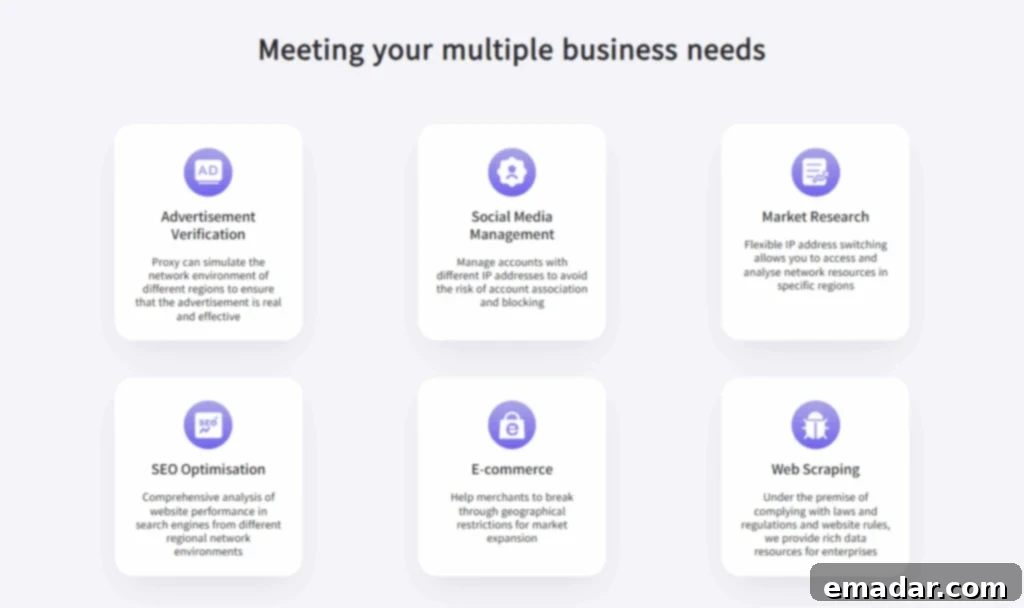
The dynamic capabilities of backconnect proxies make them indispensable across a wide array of business applications:
Large-Scale Web Scraping and Data Collection
For businesses reliant on gathering vast amounts of data from public websites—including search engines, e-commerce platforms, travel aggregators, and social media sites—backconnect proxies are a game-changer. They enable high-volume data extraction without triggering sophisticated anti-bot countermeasures, ensuring continuous and uninterrupted collection of competitive intelligence, product information, sentiment analysis data, and more.
Precise Ad Verification and Campaign Monitoring
Digital advertisers and agencies require meticulous ad verification to ensure campaigns are displayed correctly, targeting the right audiences, and appearing in brand-safe environments across different geographical regions. Backconnect services facilitate this by allowing users to simulate traffic from various locations, effectively auditing ad placements from local perspectives, detecting ad fraud, and confirming compliance with campaign specifications.
Real-Time Market Intelligence and Competitive Price Monitoring
In today’s highly competitive markets, real-time market intelligence is paramount. Retailers, aggregators, and financial institutions use backconnect proxies to continuously monitor competitor pricing strategies, product availability, and promotional offers. The rotating IPs ensure that these monitoring activities remain undetected, providing accurate and unbiased data for dynamic pricing models and strategic market positioning.
Robust Brand Protection and Intellectual Property Monitoring
Protecting a brand’s integrity and intellectual property online is a constant battle. Backconnect proxies assist in tracking down counterfeit listings, identifying unauthorized resellers, and detecting trademark infringements across numerous marketplaces and online platforms. By appearing as diverse users, businesses can efficiently scour the web for violations without revealing their monitoring activities, helping to enforce brand guidelines and combat illicit activities.
Secure Account Management and Social Media Automation
Businesses managing multiple accounts on platforms like Instagram, LinkedIn, Amazon, or other marketplaces greatly benefit from the IP diversity offered by backconnect proxies. Each account can appear to operate from a unique IP address, minimizing the risk of account linking, mass bans, or other punitive actions often associated with multiple accounts operating from a single IP. This enables safer automation and scalable account management.
Advanced SEO Monitoring and Local SERP Tracking
For SEO professionals, understanding search engine rankings from different geographic locations is crucial. Backconnect proxies enable precise local SERP (Search Engine Results Page) tracking by allowing requests to be sent from specific cities or countries. This helps in monitoring keyword performance, identifying local competitors, and optimizing content for regional audiences, providing invaluable insights for international or localized SEO strategies.
Selecting the Optimal Backconnect Proxy Provider
The effectiveness of your backconnect proxy strategy heavily relies on choosing a high-quality provider. Not all services offer the same level of performance, reliability, or features. Here are critical factors to evaluate when making your selection:
- Size and Quality of the IP Pool: Prioritize providers offering vast pools of primarily residential or mobile IPs. Residential IPs are significantly more valuable for evading detection and bans than readily identifiable datacenter IPs. A larger pool means greater diversity and less chance of encountering previously flagged IPs.
- Rotation Control and Flexibility: A premium service offers granular control over IP rotation. Look for options that allow you to set time-based rotations (e.g., change IP every 5 minutes), request-based rotations (e.g., change IP after every N requests), or even sticky sessions where an IP remains assigned for a specific duration for tasks requiring session persistence.
- Speed, Stability, and Uptime: Proxy speed directly impacts your data collection efficiency. Test latency and success rates rigorously. A reliable provider should offer high uptime, low latency, and consistent performance across their network to ensure uninterrupted operations.
- Comprehensive Geo-Targeting Options: For tasks requiring location-specific data, robust geo-targeting capabilities are essential. The best providers allow you to specify IPs by country, region, city, and sometimes even by ISP, offering maximum flexibility for localized research.
- Security and Privacy Protocols: Ensure the provider employs strong security measures, including encrypted traffic (SSL/TLS support), secure authentication methods (username/password or IP whitelisting), and adheres to strict privacy policies regarding your data and usage patterns.
- Customer Support: Responsive and knowledgeable customer support is vital for troubleshooting, configuration assistance, and maximizing your proxy investment.
This is precisely where IPFLY’s robust infrastructure and advanced offerings deserve special mention. While IPFLY may not market a product explicitly named “backconnect proxy service,” its cutting-edge dynamic residential proxy service performs identical functions with exceptional efficiency and reliability. Boasting access to an astonishing over 90 million IPs across 190+ countries, including both residential and high-performance datacenter options, IPFLY delivers flexible proxy tools perfectly suited for enterprise-scale operations. Its smart rotation algorithms, high success rates, and extensive global coverage make it an outstanding choice for any task that typically demands the capabilities of a backconnect setup, providing the dynamic IP rotation, anonymity, and geo-flexibility that businesses need to thrive.
Best Practices for Maximizing Backconnect Proxy Effectiveness
To harness the full power of a backconnect proxy service and ensure optimal performance, consider implementing these strategic best practices:
- Strategically Use Session Persistence: While IP rotation is often desired, some tasks—such as logging into accounts, submitting forms, or maintaining a shopping cart—require a consistent IP address for a certain duration. Utilize session control options or “sticky IPs” when available from your provider to maintain a stable IP for a defined period, ensuring session integrity.
- Avoid Overloading Single Targets: Even with dynamic IP rotation, sending an excessively high volume of requests to a single domain within a very short timeframe can still raise suspicion. Distribute your requests intelligently across time, vary delays between requests, and, if possible, target different subdomains or pages to mimic natural browsing patterns.
- Continuously Monitor Performance Metrics: Regularly track key performance indicators such as request success rates, average latency, and the frequency of blocks or CAPTCHAs. Use this data to refine your proxy configuration, adjust rotation settings, and identify potential issues with your target websites or scraping logic.
- Always Respect Robots.txt and Terms of Service (TOS): Ethical scraping and responsible automation are not just good practice but are critical for long-term operational success. Always consult a website’s `robots.txt` file and adhere to its terms of service. Abusive scraping practices can lead to IP blacklists, legal repercussions, and damage to your brand reputation.
- Vary Request Headers and User-Agents: Beyond IP rotation, websites also analyze request headers (e.g., `User-Agent`, `Referer`, `Accept-Language`). Rotate different `User-Agent` strings (e.g., various browser versions, mobile vs. desktop) and other headers to further disguise your automation and mimic diverse user environments.
- Implement Smart Retry Logic and Error Handling: Design your applications to gracefully handle connection errors, temporary blocks, or CAPTCHA challenges. Implement retry mechanisms with exponential back-off delays, allowing the proxy network to rotate to a fresh IP or for the target site’s defenses to reset before retrying a failed request.
Limitations and Considerations
While backconnect proxies offer significant advantages, it’s important to acknowledge certain limitations. They are not a universal panacea, and understanding their drawbacks helps in making informed decisions:
- Potentially Slower Connection Speeds: Routing requests through residential IPs, which are inherently consumer-grade connections, can sometimes result in slightly slower connection speeds compared to direct connections or high-speed datacenter proxies. This is due to additional network hops and the variability of home internet bandwidths.
- Shared Network Environments: Since many users share the same vast IP pool, there is a possibility of IP reuse. While providers strive to maintain fresh IPs, during peak times or for highly targeted operations, you might occasionally encounter an IP that has recently been used by another user, potentially leading to a higher detection risk.
- Higher Cost Structure: Residential and mobile IP proxies, especially those with advanced rotation and geo-targeting features, tend to be more expensive than static datacenter options. This higher cost reflects the complexity of maintaining a large network of legitimate, diverse, and high-quality IPs.
- Data Transfer Limits: Many residential proxy providers implement data transfer limits or bandwidth caps. Users must carefully monitor their data usage to avoid unexpected overage charges or service interruptions, especially during extensive scraping campaigns.
However, these potential limitations can be substantially mitigated by selecting a high-quality provider known for transparent routing policies, robust infrastructure, and intelligent IP pool segmentation. Investing in a premium service often translates to better performance, fewer issues, and greater overall value.
Conclusion: The Indispensable Role of Backconnect Proxies in the Digital Age
In an increasingly data-dependent and security-conscious online world, a backconnect proxy service emerges as an extraordinarily powerful and strategic tool for any organization requiring secure, scalable, and region-diverse web access. Its inherent value stems from its core functionalities: dynamic IP rotation, massive scalability, and superior anonymity. Whether the objective is large-scale web scraping, comprehensive ad verification, in-depth market intelligence, robust brand protection, or seamless account automation, backconnect proxies provide the essential infrastructure to navigate the web unimpeded.
By effectively bypassing geo-restrictions, evading anti-bot systems, and ensuring continuous access to vital online resources, backconnect-style proxy solutions empower businesses to gather critical data with unmatched efficiency and reliability. Integrating such a solution into your workflow is not just a tactical advantage; it is a strategic imperative for sustained success in the competitive digital landscape.

Ready to revolutionize your data acquisition and streamline your proxy strategy? Discover how IPFLY’s cutting-edge dynamic proxy offerings can deliver enterprise-grade performance, featuring effortless integration, extensive global coverage, and consistently reliable results. Explore the future of web access by visiting https://www.ipfly.net to learn more about their powerful solutions.