
In today’s hyper-connected global landscape, the ability to access information freely and maintain digital privacy is paramount. For individuals and businesses looking to tap into the vibrant digital world of Japan, a Japan proxy server emerges as an indispensable tool. Whether your goal is to stream exclusive Japanese content, conduct in-depth market research, rigorously test applications for Japan-based users, or simply enhance your online anonymity, a high-quality Japan proxy server provides the gateway to reliable and secure connections. As we look ahead to 2025, understanding what a Japan proxy server is, how it operates, and its myriad applications becomes crucial for navigating the internet effectively. Let’s embark on a comprehensive exploration to unlock the full potential of Japanese proxies.

Understanding What a Japan Proxy Server Is
At its core, a Japan proxy server acts as an intermediary, routing your internet traffic through a server located physically within Japan. Instead of your device directly connecting to a website or online service, your requests are first sent to this proxy server. The proxy then forwards your request to the intended destination, but crucially, it does so using its own Japanese IP address. From the perspective of the website or service you’re accessing, it appears as though your connection is originating directly from Japan, regardless of your actual geographical location. This fundamental mechanism allows users to virtually “relocate” themselves to Japan in the digital realm.
This capability makes Japan proxies exceptionally valuable for a wide array of online activities. From bypassing geo-restrictions that block content outside Japan to enabling businesses to conduct precise market research tailored to the Japanese audience, or empowering developers to test applications under local network conditions, the strategic use of a Japan proxy server opens up unprecedented opportunities for unrestricted digital access and enhanced online privacy.
How a Japan Proxy Server Works: A Step-by-Step Breakdown
The operational process of a Japan proxy server is straightforward yet incredibly effective in masking your true online identity and location. Here’s a detailed look at the stages involved:
- Initiating the User Request: When you attempt to access a website, stream a video, or use an application that is geo-restricted to Japan, your device generates a request. Ordinarily, this request would carry your real IP address, revealing your actual location.
- The Proxy Intermediary Takes Over: Instead of sending your request directly to the target server, it is first rerouted through your chosen Japan proxy server. This server acts as a crucial middleman, intercepting your outgoing traffic.
- IP Masking and Location Spoofing: Upon receiving your request, the Japan proxy server effectively “masks” your original IP address. It replaces it with one of its own Japanese IP addresses. To the destination website, it now appears that the request is coming from a user located in Japan. This step is vital for bypassing geo-blocks and maintaining anonymity.
- Server Response and Data Forwarding: The Japanese website or service processes the request, believing it originated from Japan. It then sends its response back to the Japan proxy server. The proxy, in turn, forwards this data securely and efficiently back to your device.
This entire process occurs in real-time, often within milliseconds, creating a seamless browsing experience that gives the illusion of being physically located within Japan. The speed and efficiency depend heavily on the quality and proximity of the proxy server infrastructure.
Key Benefits of Leveraging a Japan Proxy Server
The advantages of integrating a Japanese proxy server into your online toolkit are numerous and impactful for both individuals and organizations:
- Bypass Geo-Restrictions and Access Exclusive Content: This is arguably one of the most popular uses. Japan is home to a wealth of unique digital content, including streaming services like U-NEXT, AbemaTV, or TVer, region-locked anime libraries, gaming servers, and local news portals. A Japan proxy allows you to circumvent geographical blocks, gaining unfettered access to this exclusive content as if you were a local resident.
- Strategic Market Research and Competitive Analysis: For businesses eyeing the lucrative Japanese market, a proxy server is invaluable. It enables detailed analysis of local consumer trends, monitoring competitor strategies, observing product pricing, and viewing advertisements exactly as they appear to users within Japan. This granular insight is critical for developing effective localization and marketing strategies.
- Precise Ad Verification and Campaign Optimization: Marketers and advertising agencies can utilize Japan proxies to ensure their ad campaigns are displaying correctly, targeting the intended audience, and adhering to local regulations within the Japanese market. This verification process helps optimize ad spend and campaign effectiveness, preventing costly errors.
- Enhanced Online Privacy and Security: Proxies add a robust layer of anonymity by concealing your real IP address. This protects your actual location from being tracked by websites and potential malicious entities, significantly enhancing your digital privacy. While not a full security solution like a VPN, it offers a crucial first line of defense against direct IP tracking.
- Thorough Application Testing and Development: Developers can rigorously test how their applications, websites, and online services perform under real-world Japanese network conditions. This includes assessing latency, load times, user experience, and localization accuracy, ensuring seamless deployment for a Japanese user base.
- SEO Monitoring and Localized Search Results: SEO professionals can use Japan proxies to track search engine rankings and observe keyword performance from a Japanese perspective. This reveals how local search algorithms operate and helps tailor SEO strategies for maximum impact within Japan, as search results can vary significantly by location.
Exploring Different Types of Japan Proxy Servers
Not all proxy servers are created equal. Understanding the distinctions between various types is essential for choosing the right solution for your specific needs:
Residential Japan Proxies
Residential proxies are IP addresses assigned by Internet Service Providers (ISPs) to genuine residential users in Japan. Because these IPs belong to real homes and devices, they appear highly legitimate to websites. They are incredibly difficult for websites to detect and block, making them ideal for tasks requiring high anonymity and stability, such as large-scale data scraping, managing multiple social media accounts, accessing highly restricted content, or avoiding CAPTCHAs. Their authenticity significantly reduces the risk of being flagged or banned.
Datacenter Japan Proxies
Datacenter proxies originate from servers hosted in large data centers, rather than from actual residential devices. They are generally faster and more cost-effective per IP than residential proxies. However, because their IPs are known to belong to data centers, they are easier for sophisticated websites and anti-proxy systems to detect and block. They are best suited for tasks where speed is a priority and the risk of detection is lower, such as general browsing, speed-sensitive data collection from less protected sites, or high-volume, low-risk requests.
ISP (Static Residential) Japan Proxies
ISP proxies, also known as static residential proxies, offer a compelling hybrid solution. These are IP addresses provided by ISPs but are hosted on servers, offering the speed and stability of datacenter proxies combined with the authenticity and trustworthiness of residential IPs. They are not tied to an individual home internet connection but are still registered as residential IPs, making them less prone to detection than traditional datacenter proxies. ISP proxies are excellent for long-term projects requiring consistent, high-speed, and reliable connections, such as managing long-term social media accounts, streaming high-definition content without interruption, or continuous e-commerce monitoring.
Common Use Cases for Japan Proxy Servers in 2025
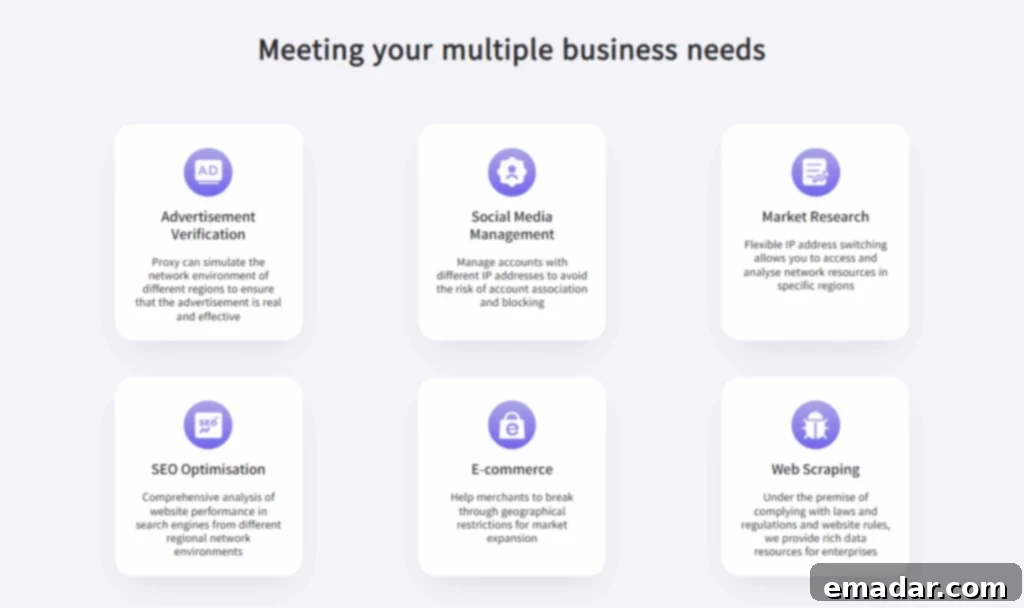
As we advance into 2025, the applications of Japan proxy servers are becoming increasingly sophisticated and integral to various digital strategies:
- Immersive Streaming of Japanese Content: Enthusiasts can access a vast library of Japanese anime, dramas, variety shows, and live TV channels that are typically restricted outside Japan. This includes services like U-NEXT, Hulu Japan, AbemaTV, TVer, and region-locked content on platforms like Netflix or YouTube.
- Strategic Cross-Border E-Commerce Operations: E-commerce businesses can meticulously monitor product listings, competitive pricing, customer reviews, and localized sales strategies on major Japanese marketplaces such as Rakuten, Yahoo! Shopping, and Amazon Japan. This provides a critical competitive edge and informs product localization.
- Advanced SEO Monitoring and Localized Optimization: SEO professionals can simulate being a user in Tokyo, Osaka, or other Japanese cities to accurately track search engine rankings, analyze local keyword performance, and identify localized search trends, ensuring their Japanese SEO efforts are precisely targeted and effective.
- Efficient Social Media Management for Japanese Audiences: Marketing teams and social media managers can safely and effectively manage multiple Japanese social media accounts (e.g., Twitter, LINE, Instagram) without triggering security warnings or account suspensions, facilitating localized content distribution and community engagement.
- Robust Cybersecurity & Application Testing: Cybersecurity analysts can simulate traffic originating from Japan to test website vulnerabilities, assess the resilience of security systems against localized threats, and gather crucial threat intelligence. Developers can also conduct performance and localization testing for apps targeting Japanese users.
- Data Collection for Academic and Business Research: Researchers can gather vast amounts of public data from Japanese websites for academic studies, trend analysis, sentiment analysis, and various business intelligence purposes, all while maintaining anonymity and bypassing access restrictions.
Are Japan Proxy Servers Legal to Use?
In the vast majority of cases, using a Japan proxy server is entirely legal, provided that your activities do not involve illegal actions. Legitimate uses include market research, ad verification, application testing, and accessing publicly available content. Businesses, developers, and individuals regularly rely on proxies for these ethical purposes.
However, it is paramount for users to always adhere to the terms of service (ToS) of the specific websites or platforms they are accessing. While the act of using a proxy itself isn’t illegal, some platforms explicitly prohibit proxy or VPN usage, and violating their ToS could lead to account suspension or access restrictions. It is also crucial to avoid any activities that could be deemed illegal in Japan or your own country, such as hacking, fraud, copyright infringement, or piracy, regardless of proxy usage.
Navigating the Challenges of Using Japan Proxy Servers
While Japan proxies offer substantial advantages, users should be aware of potential challenges and considerations:
- Detection Risks and IP Blocking: Sophisticated websites and online services employ advanced detection systems designed to identify and block proxy traffic. They use techniques like IP blacklisting, behavioral analysis, and CAPTCHA challenges. Residential and ISP proxies generally offer better stealth, but persistent efforts might still lead to detection.
- Potential Speed and Latency Issues: Routing your internet traffic through an intermediary server, especially one far from your physical location, can introduce latency and potentially reduce browsing speeds. The quality of the proxy server, its bandwidth, and the distance between you and the proxy server (and the proxy server and the target website) all play a role in overall performance.
- Higher Cost Factors for Quality Proxies: High-quality, reliable residential and ISP Japan proxies, particularly those with large, diverse IP pools and excellent uptime, can be more expensive than basic datacenter proxies or free alternatives. The cost is often justified by increased success rates, stability, and lower risk of bans.
- Data Security and Privacy Concerns with Free Proxies: Free Japan proxy servers often come with significant risks. Many free services lack proper encryption, may log your data, inject advertisements, or even harbor malware. They can compromise your privacy and security, making premium, reputable providers a safer and more reliable choice for any sensitive activity.
- Limited IP Pool and Geo-Diversity: Some providers might offer a limited number of Japanese IPs or concentrate them in a few urban centers. For highly granular geo-targeting or large-scale data collection, a diverse IP pool spread across different Japanese regions is essential to mimic genuine user behavior and avoid patterns that lead to detection.
Best Practices for Effective Japan Proxy Usage in 2025
To maximize the efficacy and reliability of your Japan proxy server endeavors, consider adopting these best practices:
- Select the Optimal Proxy Type: Carefully assess your needs. Choose residential proxies for maximum stealth and for tasks sensitive to detection, such as account management or extensive data scraping. Opt for datacenter proxies when speed and cost-effectiveness are paramount for less sensitive, high-volume tasks. ISP proxies strike an excellent balance, offering reliability and speed for consistent, long-term operations.
- Implement IP Rotation Strategies: For large-scale data collection, web scraping, or managing numerous accounts, using rotating proxies is crucial. IP rotation cycles through a pool of different IP addresses, making your requests appear to come from various users and locations, significantly reducing the risk of IP bans and detection.
- Integrate with Complementary Tools: For business-critical applications, pair your Japan proxies with specialized tools. This includes web scraping frameworks like Scrapy or Puppeteer, advanced SEO tracking suites, automation software, or browser extensions designed to manage proxy settings efficiently. This integration enhances efficiency and capabilities.
- Conduct Regular Testing and Monitoring: Proactively verify that your proxy IPs are functioning correctly with the specific websites or services you intend to access. Regularly monitor proxy performance, latency, and success rates. This helps in identifying and resolving issues promptly, ensuring uninterrupted access and preventing disruptions to your workflows.
- Maintain Ethical Usage: Always adhere to the terms of service of the websites you interact with. Avoid engaging in activities that are illegal or unethical, such as spamming, hacking, or mass account creation without consent. Responsible proxy usage protects your reputation and helps maintain a healthy online ecosystem.
Choosing Reliable Providers for Japan Proxy Servers
The success of your proxy operations hinges heavily on selecting a trustworthy and high-quality provider. Relying on free proxy services is generally ill-advised due to inherent risks concerning security, privacy, reliability, and speed. Professionals consistently turn to established proxy networks that offer robust infrastructure and dedicated support.
For instance, providers like IPFLY stand out in the market by supplying a comprehensive range of Japan proxy servers, including residential, datacenter, and ISP options. Their commitment to maintaining a proprietary proxy network ensures superior reliability, dedicated bandwidth, and a significantly lower risk of IP blacklisting or bans. Users benefit from stable, high-performance access to a diverse pool of Japanese IPs, ideally suited for demanding tasks such as precise market research, rigorous e-commerce testing, and secure, anonymous browsing. Such dedicated infrastructure means businesses can achieve their objectives with greater confidence and efficiency, benefiting from consistent uptime and strong security protocols.
Alternatives to Japan Proxy Servers: A Comparative View
While Japan proxies are highly versatile, other tools offer similar capabilities, each with distinct advantages and disadvantages:
- Virtual Private Networks (VPNs): VPNs encrypt all your internet traffic and route it through a server in a chosen location (e.g., Japan). They offer comprehensive privacy and security across your entire device. However, VPNs are typically less scalable for business tasks requiring hundreds or thousands of rotating IPs, as they usually assign a single IP per connection. They’re excellent for general personal use and device-wide geo-unblocking.
- Smart DNS Services: Smart DNS reroutes your DNS queries through a server in a different country, allowing access to geo-restricted streaming content. They offer fast speeds because they don’t encrypt traffic. However, they do not mask your IP address or provide any anonymity or security benefits, making them unsuitable for tasks requiring privacy or IP-based data collection.
- Tor Network: The Tor Network provides extreme anonymity by routing your traffic through multiple relay servers worldwide, encrypting it at each step. While excellent for privacy, Tor’s multi-layered encryption significantly slows down connection speeds, making it impractical for high-speed browsing, streaming, or most business applications that require efficiency and stability.
Each of these alternatives has its niche, but for scalable, precise, and business-oriented tasks demanding targeted geo-location and specific IP types, Japan proxy servers remain the preferred and most effective solution.
Final Thoughts: Empowering Your Digital Journey in Japan

In 2025, a Japan proxy server is unequivocally a powerful and indispensable tool for anyone seeking unfettered access to Japanese online content, data, or networks. From businesses meticulously verifying their advertising campaigns and conducting vital market research to individuals desiring to stream exclusive Japanese shows or engage with local communities, proxies offer unmatched flexibility, security, and precision. While the landscape of online access presents its own set of challenges, strategically choosing the appropriate proxy type and partnering with a reputable provider ensures smooth, reliable performance and significantly mitigates potential risks.
Whether your ambition is to expand your commercial footprint into the dynamic Japanese market, conduct academic research, or simply enjoy a rich and authentic digital experience of Japan, proxy servers stand out as one of the most effective and versatile solutions available. Embrace the power of Japan proxies to navigate the digital world with confidence and unlock a wealth of opportunities.
👉 Stay updated with the latest proxy insights, best practices, and expert tips by joining the IPFLY Telegram channel.