
Have you ever wondered if your online activities are truly private when you browse the web? Perhaps you’re already using a proxy service, believing your internet usage is perfectly concealed. However, there might be a hidden “informant” at play: a DNS leak. Today, we’ll delve deep into understanding what a DNS leak is, how to perform effective DNS leak detection for international connections, and robust strategies to prevent this pervasive privacy threat.
Understanding DNS Leaks: A Critical Threat to Your Online Privacy
The Domain Name System (DNS) is often referred to as the internet’s “phonebook.” Its fundamental role is to translate human-friendly website addresses (like example.com) into machine-readable IP addresses (like 192.0.2.1) that computers use to locate and connect to websites. Under normal circumstances, when you type a website address into your browser, your device sends a query to a DNS server, requesting the corresponding IP address.
A DNS leak occurs when, despite using a proxy service or a Virtual Private Network (VPN) to encrypt and reroute your internet traffic, your DNS queries are still sent through your local Internet Service Provider (ISP)’s DNS servers, rather than through the secure DNS servers associated with your proxy or VPN. This situation is akin to trying to make a private phone call, only for your next-door neighbor to inadvertently overhear the entire conversation.
Consider a practical example: A user, let’s call him Alex, is using a proxy to access a foreign website. He believes all his network traffic is being routed securely through the proxy server. However, unbeknownst to him, his DNS queries are still being sent to his local ISP’s DNS servers. Consequently, even if the website content is transmitted through the proxy, the DNS query records expose that he visited specific websites, revealing his online activities to his local ISP and potentially other entities.
The Paramount Importance of International DNS Leak Detection
For users who frequently access international websites, DNS leak detection is exceptionally crucial. This significance is highlighted in several key areas:
- Enhanced Privacy Protection: DNS leaks directly undermine your privacy by exposing your actual browsing history. Even with a proxy or VPN in place, your true network activity footprint remains visible to your ISP, negating the primary purpose of using such services for anonymity. This can lead to unwanted surveillance or data collection by third parties.
- Effective Geo-Restriction Bypassing: Many online services, streaming platforms, and websites impose geographical restrictions. If your DNS queries leak, servers can identify your true geographical location, even if your IP address appears to be from another region. This can prevent you from accessing region-locked content and services, rendering your proxy or VPN ineffective for bypassing these restrictions.
- Mitigating Cybersecurity Risks: A DNS leak can significantly increase your cybersecurity risks. By exposing your browsing habits and possibly your real IP address, malicious actors or state-sponsored surveillance programs can more easily track your online behavior. This information can then be used for targeted phishing attacks, identity theft, or other forms of cybercrime, making you a more vulnerable target.

Methods for Performing DNS Leak Detection
Detecting a DNS leak is a straightforward process, and several methods are available, catering to different levels of technical expertise. Regularly checking for leaks is a vital step in maintaining your online privacy.
Method One: Utilizing Online Detection Tools
The simplest and most accessible method is to use specialized online DNS leak detection tools. These web-based services typically display comprehensive information about your current DNS servers, including:
- The IP addresses of the DNS servers your device is currently using.
- The geographical location associated with those DNS servers.
- A clear indication of whether a DNS leak risk is present.
Detection Steps:
- Ensure you are connected to your proxy service or VPN.
- Navigate to a reputable DNS leak detection website (e.g., DNSLeakTest.com, IPLeak.net).
- Click the “Start Detection” or “Extended Test” button.
- Carefully review the detection results. If you see DNS server IP addresses that belong to your local ISP or are located in your actual geographical region, it indicates a DNS leak. Ideally, all listed DNS servers should belong to your proxy/VPN provider and reflect the location you’ve chosen through their service.
Method Two: Command-Line Detection
For users with more technical proficiency, command-line tools offer a precise way to diagnose DNS leaks. This method allows you to directly query DNS servers and observe the responses.
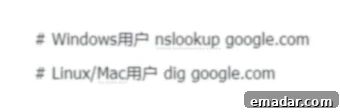
For Windows users: Open Command Prompt and type: `nslookup google.com`
For Linux/macOS users: Open Terminal and type: `dig google.com`
When performing these commands while connected to your proxy or VPN, you should expect to see the IP address of the DNS server used by your proxy or VPN service. If the returned “Server” IP address corresponds to your local ISP’s DNS server, or an IP address not associated with your proxy/VPN, it definitively indicates a DNS leak. You might also see multiple DNS servers listed; if any of them are your ISP’s, you have a leak.
Method Three: Browser Extension Detection and Control
Certain browser extensions are designed to monitor DNS requests in real-time or to actively block specific types of leaks, such as WebRTC. These extensions can provide immediate alerts about potential leaks and offer options to mitigate them. By installing and configuring a reliable privacy-focused browser extension, users can gain an additional layer of defense and a more immediate understanding of their browser’s DNS behavior.
Common Scenarios Leading to DNS Leaks
Understanding the common causes of DNS leaks can help you implement more targeted prevention strategies:
1. IPv6 Leaks: This is one of the most prevalent types of DNS leaks. Even if your IPv4 traffic is successfully routed through a proxy or VPN, your operating system might default to using local DNS servers for IPv6 queries. This can happen if your proxy or VPN client isn’t fully configured to handle IPv6 traffic, leading to your real location and ISP being revealed through IPv6 DNS requests.
2. WebRTC Leaks: WebRTC (Web Real-Time Communication) is a technology built into modern web browsers that enables real-time voice, video, and data communication without plugins. While beneficial, WebRTC can, under certain circumstances, bypass VPNs or proxies to directly reveal your real IP address and DNS information to websites. This happens because WebRTC allows for direct peer-to-peer connections, and browsers might use your local network interfaces to establish these connections, bypassing your secure tunnel.
3. Improper Proxy/VPN Configuration: Software configuration errors, either within the proxy client, VPN software, or your operating system’s network settings, can lead to partial or complete DNS leaks. This could include issues like split-tunneling misconfigurations, kill-switch failures, or simply not having the “DNS leak protection” feature enabled in your chosen service. An incorrectly set up proxy might only route web traffic but leave DNS queries to the default system settings.
Comprehensive Strategies to Prevent DNS Leaks
Proactive prevention is key to safeguarding your online privacy. By adopting the following strategies, you can significantly reduce the risk of DNS leaks:
1. Utilize Reliable Proxy or VPN Services with DNS Protection: The cornerstone of DNS leak prevention is selecting a high-quality proxy or VPN provider. Ensure your chosen service explicitly advertises and provides robust DNS leak protection, dedicated DNS servers, and ideally, a strict no-logs policy. Services that tunnel all DNS requests through their own encrypted servers effectively prevent your ISP from seeing your queries. IPFLY, as a reputable proxy provider, offers significant advantages in IP and environment isolation, ensuring your DNS queries are securely handled.
2. Configure Custom DNS Servers Manually: You can enhance your privacy by manually configuring your device to use trusted, privacy-focused public DNS servers instead of your ISP’s defaults. Popular and secure options include:
- 8.8.8.8 (Google DNS): A widely used and reliable public DNS resolver.
- 1.1.1.1 (Cloudflare DNS): Known for its speed and strong commitment to user privacy.
- 9.9.9.9 (Quad9 DNS): Focuses on cybersecurity by blocking known malicious domains.
By routing your DNS queries through these independent servers, you bypass your ISP’s logging, even if a leak occurs in your proxy tunnel. Instructions for changing DNS settings are readily available for Windows, macOS, Linux, and mobile devices.
3. Disable IPv6 (If Not Required): If you do not actively need or use IPv6 functionality, temporarily disabling it on your operating system can be an effective way to mitigate IPv6-related DNS leaks. While not a permanent solution, as IPv6 adoption grows, it can serve as a stopgap measure if your proxy/VPN service lacks full IPv6 support. Remember to re-enable it if your network environment requires it.
4. Implement DNS over HTTPS (DoH) or DNS over TLS (DoT): These advanced protocols encrypt your DNS queries, making them much harder to intercept or monitor. DoH encapsulates DNS queries within HTTPS traffic, making them indistinguishable from regular web traffic. DoT encrypts DNS queries using TLS, similar to how secure websites communicate. Enabling DoH or DoT in your browser (e.g., Firefox, Chrome) or operating system adds a crucial layer of security, significantly enhancing the privacy of your DNS lookups and protecting against various forms of surveillance.
DNS Leak Protection for Cross-Border Business Operations
For individuals and businesses engaged in cross-border e-commerce, digital marketing, or international data collection, international DNS leak detection and prevention are not just about personal privacy; they are critical for operational stability and competitive advantage. DNS leaks can lead to severe consequences for business activities:
- Increased Account Association and Linking Risks: Many online platforms and social media sites use advanced anti-fraud and anti-spam systems to detect suspicious activity, including IP address and DNS inconsistencies. A DNS leak can reveal your true location, leading to accounts being flagged, linked, or even suspended, especially when managing multiple accounts or operating from a different geographical region than your target market.
- Failure to Overcome Geo-Restrictions: Businesses often need to access geographically restricted content, services, or market data for competitive analysis, content localization, or targeted advertising. DNS leaks can prevent access to these vital resources, hindering market research, content distribution, and the ability to test localized services effectively.
- Competitor Tracking and Business Model Exposure: Without proper DNS protection, your online activities, including visits to competitor websites, supplier portals, or specific market research sites, can be traced back to your real location. This information could be exploited by competitors to track your strategies, identify your interests, and anticipate your next moves.
- Negative Impact on Advertising Effectiveness: For businesses running international advertising campaigns, accurate geo-targeting is crucial. If DNS leaks expose your true location, advertising platforms might misinterpret your target audience or location, leading to inefficient ad spending, poor campaign performance, and wasted resources.
IPFLY’s residential proxies are specifically designed to offer stable and reliable DNS protection, providing a secure and consistent online environment essential for successful cross-border business operations. Their infrastructure ensures that your DNS queries remain within the secured proxy tunnel, aligning with the geographical location of your chosen proxy IP.
Conclusion: Embracing a Proactive Stance on Online Privacy
While DNS leaks may seem like a highly technical issue, their implications directly impact the privacy and security of every internet user. By consistently performing international DNS leak detection and integrating reliable proxy services with robust prevention methods, we can effectively safeguard our online privacy and digital footprint in an increasingly interconnected world.
It is crucial to remember that online security is not a one-time setup but an ongoing process that demands continuous attention and maintenance. A thorough understanding of DNS leak principles and effective prevention strategies is indispensable for protecting your privacy and data security within the complex and ever-evolving digital landscape.
Whether you are an individual user valuing personal privacy or a business professional protecting critical operations, incorporating DNS leak detection into your routine cybersecurity practices is paramount. In this digital era, protecting your privacy is synonymous with protecting yourself and your assets.
IPFLY is dedicated to ensuring the stability and security of your cross-border operational accounts by specializing in the proxy IP market, offering:
- ✅ Over 90 million residential IP resources globally, covering 190+ countries.
- ✅ Support for dedicated static residential IPs and rotating dynamic residential IPs.
- ✅ High purity, native ISP IPs, with datacenter options available.
- ✅ Multi-protocol support: HTTP/SOCKS5/HTTPS, ensuring strong platform compatibility.
- ✅ API integration and compatibility with anti-detect browsers for smooth business workflow.
👉Register now to quickly establish a highly trusted cross-border environment!