
In the current data-driven era of cross-border business, the strategic utilization of proxy IPs has become an indispensable component for various automated web scraping and data collection systems. Enterprises globally face significant challenges when tasked with large-scale access and acquisition of content from international websites, often encountering geographical restrictions, IP blocks, and sophisticated anti-bot measures. The critical question for many technical teams revolves around how to consistently and rapidly overcome these access limitations to ensure uninterrupted data flow. This comprehensive article delves into the technical characteristics, operational advantages, and crucial considerations for deploying dynamic HTTP crawler proxy IPs. Our goal is to equip readers with a practical understanding, enabling them to make informed decisions when selecting an effective proxy IP solution for their specific needs.
Understanding Dynamic HTTP Crawler Proxy IPs
At its core, a proxy IP acts as an intermediary server, effectively masking a user’s real IP address and presenting an alternative IP to the target website. This mechanism is fundamental for maintaining anonymity and bypassing access restrictions. Dynamic HTTP proxies represent an advanced form of this technology, characterized by their ability to automatically change their outbound IP address after a certain time interval or a predefined number of requests. Crucially, these proxies are often derived from residential IP addresses, meaning they originate from genuine home internet connections. This inherent characteristic grants them superior stealth capabilities and a significantly higher success rate when interacting with target websites, as they mimic legitimate user traffic.
Compared to static proxies, which maintain a fixed IP address for extended periods, dynamic proxies offer several distinct advantages:
- Higher IP Change Frequency: This proactive rotation prevents a single IP from being flagged or blocked due to repetitive access patterns, making it ideal for continuous, high-volume scraping tasks.
- Enhanced Anti-Blocking Capabilities: Since dynamic residential IPs originate from real user networks, they are far less likely to trigger sophisticated anti-bot detection systems that often target datacenter IPs. This greatly reduces the probability of hitting risk control rules.
- Optimized for Distributed Crawler Systems: Dynamic proxies seamlessly integrate with distributed web scraping architectures, allowing for the dynamic distribution of requests across a vast pool of changing IPs. This effectively simulates genuine user behavior from diverse locations, making the scraping process more robust and resilient.
The Critical Role of Proxy IP Quality in Crawler System Efficiency
While the market for proxy IP resources appears vast and diverse, it is imperative to understand that not all proxies are created equal, particularly when addressing the demands of high-intensity data acquisition tasks. The efficiency and success of your web scraping operations are directly proportional to the quality of the dynamic HTTP proxies you employ. High-quality dynamic HTTP proxies must exhibit excellence in several key areas to deliver optimal performance:
- Diverse and Widely Distributed IP Resources: An extensive IP pool covering numerous countries and geographical regions is essential. This diversity enables crawlers to simulate user behavior from multiple locales, crucial for geo-targeted data collection, price comparisons across different markets, and accessing region-specific content. Without this, your scraping efforts might be limited to a single geographical perspective.
- Exceptional Stability: A high connection success rate and minimal downtime are paramount for ensuring the continuity and integrity of your data extraction processes. Unstable proxies lead to dropped connections, incomplete data sets, and wasted computing resources, significantly hindering overall project efficiency. Stability implies robust infrastructure and reliable uptime guarantees from the provider.
- Rapid Response Speed: Latency is a critical factor in web scraping. Fast response times directly translate to reduced request delays, accelerating the overall data acquisition process. In high-volume scraping, even milliseconds of delay per request can add up to hours or days of difference over an entire project, impacting timely data delivery and operational costs.
- Robust Anonymity: The primary purpose of a proxy is to conceal the crawler’s identity. Strong anonymity ensures that target websites cannot easily detect or identify the scraping agent, thereby preventing blocks, CAPTCHAs, or other anti-bot measures. This involves not just changing the IP, but also ensuring that no identifiable headers or other fingerprints leak through.
Consider IPFLY as an exemplary provider in this domain. Their dynamic residential proxy solution is built upon a global network of genuine IP resources spanning over 190+ regions. IPFLY leverages its proprietary, self-built server infrastructure combined with a multi-layered screening mechanism. This sophisticated setup meticulously filters and validates each proxy link, guaranteeing a high level of security, reliability, and success rate for every request. In practical applications, whether the task involves gathering critical data from social media platforms or performing intricate price monitoring on e-commerce sites, IPFLY’s dynamic proxy IPs consistently demonstrate superior adaptability and formidable resistance to blocking, making them a trusted choice for demanding scraping operations.
Strategic Selection: How to Choose the Right Dynamic HTTP Proxy IP Service
For any technical team involved in data acquisition, the process of selecting a proxy IP service transcends a simple procurement decision; it is, in essence, a critical architectural choice that will significantly impact the success and scalability of their web scraping initiatives. A well-chosen proxy provider can act as a force multiplier, while a poorly chosen one can introduce significant bottlenecks and compliance risks. Here are several key recommendations to consider when evaluating potential service providers:
- IP Pool Scale and Update Frequency: Assess the size and diversity of the provider’s IP pool. A large pool is essential for supporting high-concurrency access requests without quickly exhausting available IPs. Equally important is the IP rotation mechanism – how frequently do IPs change? A robust, frequent rotation mechanism is vital to prevent IP flagging and maintain anonymity over prolonged scraping sessions. Look for providers that offer genuine, large-scale residential IP pools, not just repackaged datacenter IPs.
- Protocol Support: Ensure the service fully supports both HTTP and HTTPS protocols. HTTP and HTTPS are the standard protocols for web communication, and compatibility with these is crucial for seamless integration with existing scraping frameworks and systems. Some advanced users might also look for SOCKS5 support, though HTTP/HTTPS are generally sufficient for web scraping.
- Bandwidth and Response Speed: These metrics directly determine the efficiency and stability of your data extraction. High bandwidth allows for faster data transfer, especially when dealing with image-heavy or complex web pages. Low latency and fast response times are critical for high-volume scraping, as they minimize delays between requests and reduce the overall time required to complete a scraping project. Providers should offer transparent metrics on their network performance.
- Advanced Control Mechanisms: Look for sophisticated features that allow for granular control over your proxy usage. This includes the provision of robust API interfaces for programmatic integration, enabling automation of proxy selection and rotation. Critical control features also include geographical filtering options (e.g., country, state, city level) for targeted data collection, as well as customizable scheduling capabilities for more complex and nuanced scraping tasks.
- Compliance and Service Support: Verify the legitimacy and ethical sourcing of the proxy IPs. Reputable providers maintain strict compliance standards, ensuring their IP sources are legitimate and legally obtained. Furthermore, evaluate the quality and responsiveness of their technical support team. Reliable 24/7 technical assistance is invaluable for troubleshooting issues, optimizing performance, and providing guidance in complex scraping scenarios.
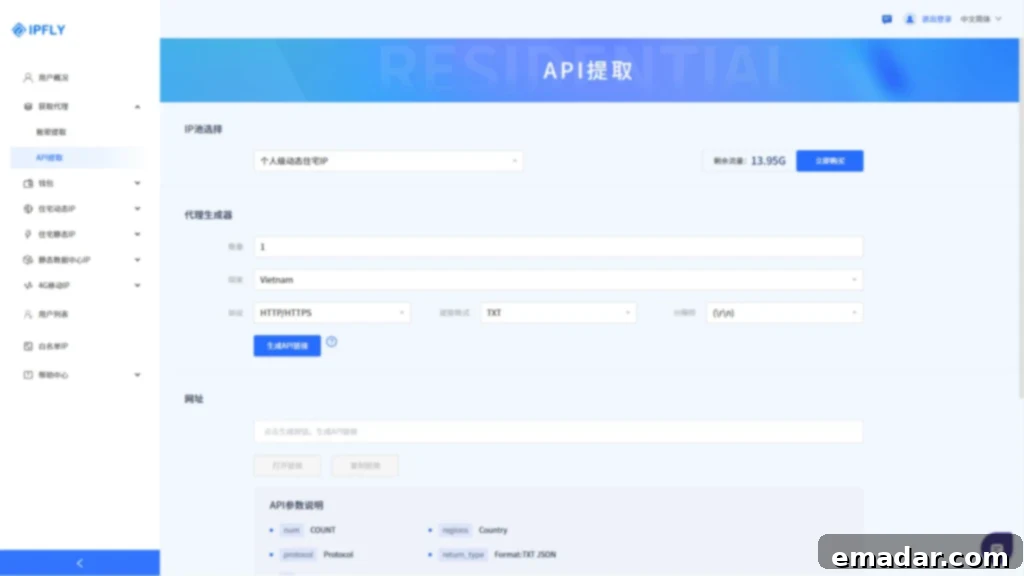
IPFLY, for instance, distinguishes itself through its independently developed control algorithms and a sophisticated data scheduling platform. This empowers users with precise control, offering features such as API integration, granular country and city-level filtering, and real-time monitoring. By supporting industry-standard HTTP(S) protocols and ensuring compatibility with leading crawler frameworks, IPFLY significantly lowers the deployment barrier for technical teams, allowing them to focus on data strategy rather than proxy infrastructure management.
Dynamic HTTP Proxies in Action: Typical Application Scenarios
The versatility and efficacy of dynamic HTTP proxies make them invaluable across a multitude of practical applications, particularly within the realm of cross-border business and competitive intelligence. Here are some typical scenarios where dynamic proxies deliver significant strategic advantages:
- E-commerce Price Monitoring: Businesses can leverage global IP nodes to access product pricing information from e-commerce websites across various countries and regions. This enables real-time price comparison analysis, competitive benchmarking, and dynamic pricing strategies, crucial for staying ahead in a global marketplace where prices often vary by geography. Dynamic proxies circumvent geo-restrictions and IP-based price discrimination.
- Search Engine Crawler Optimization: When collecting data from search engine results pages (SERPs), dynamic IP rotation is instrumental in preventing 403 Forbidden errors, CAPTCHAs, and temporary IP bans. By continuously rotating IPs, crawlers can gather a more comprehensive and unbiased view of search results, track keyword rankings across different locations, and analyze competitor SEO strategies without detection. This is vital for maintaining up-to-date SEO intelligence.
- Social Media Content Analysis: Dynamic proxies are critical for navigating the complex anti-bot measures of social media platforms, including login verification, rate limits, and frequency controls. They enable the automated extraction of publicly available data such as comments, user engagement metrics, trending topics, and sentiment analysis. This data is invaluable for market research, brand monitoring, and understanding consumer behavior on a global scale.
- Cross-border Advertising Placement Monitoring: Advertisers and agencies can utilize dynamic proxies to monitor the display and performance of their advertising campaigns in different geographical regions. This involves checking ad creatives, landing page consistency, and ensuring proper ad delivery across various platforms and local markets. Proxies help in verifying campaign transparency, detecting ad fraud, and monitoring competitor ad strategies globally.
In each of these critical application scenarios, dynamic HTTP proxies do more than just enhance operational efficiency; they significantly mitigate the risks associated with sophisticated anti-bot systems. By leveraging a robust pool of rotating, genuine residential IPs, businesses can conduct their data acquisition activities with greater stealth and resilience. IPFLY, with its rich array of proxy resources and intelligent scheduling capabilities, has become a trusted partner for numerous cross-border technical teams, empowering them to execute complex data strategies effectively and reliably.
Stable, Secure, and High-Performance Proxy IPs: The Foundational Pillar for Data Acquisition
In today’s fiercely competitive digital landscape, where data serves as the new oil, the implementation of a high-quality proxy IP solution is not merely a technical advantage; it is a fundamental determinant of a web crawler’s efficacy and, by extension, a cross-border business’s ability to acquire critical intelligence. Dynamic HTTP proxies, with their inherent flexibility, high stealth, and robust anti-blocking capabilities, are rapidly becoming the preferred tool for technical professionals seeking to navigate the complexities of global web data extraction.
Choosing a service platform like IPFLY Proxy, which offers a comprehensive blend of advanced technology and extensive IP resources, provides a distinct competitive edge. Such a partnership not only resolves common technical hurdles like unstable connections, frequent IP blocks, and slow response times but also ensures the seamless and secure flow of vital business data within a dynamic and often unpredictable cross-border environment. Investing in a reliable dynamic proxy solution is an investment in uninterrupted data intelligence, allowing businesses to thrive and innovate on a global scale.