
In the vast and dynamic landscape of proxy solutions, the spotlight often falls on the agility and anonymity offered by rotating IP addresses. Businesses frequently leverage these dynamic proxies to cycle through millions of IPs, facilitating large-scale data scraping, market research, and anonymity-driven tasks. However, a significant segment of online operations demands precisely the opposite: an unyielding, consistent digital identity. This is where the static IP proxy emerges as an indispensable cornerstone for modern businesses and individuals alike, offering stability in an ever-changing online world.
Unlike its frequently changing counterpart, a static IP proxy provides a singular, unwavering IP address designed for long-term, consistent use. This comprehensive guide will delve deep into the essence of a static IP proxy, elucidating its fundamental nature, drawing clear distinctions from rotating proxies, highlighting the critical scenarios where its consistent identity delivers unparalleled advantages, and outlining the key attributes to seek in a reputable provider. Understanding the nuanced benefits of a static IP is crucial for operations prioritizing security, trust, and uninterrupted access.
What is a Static IP Proxy? Unveiling the Power of Consistent Online Identity
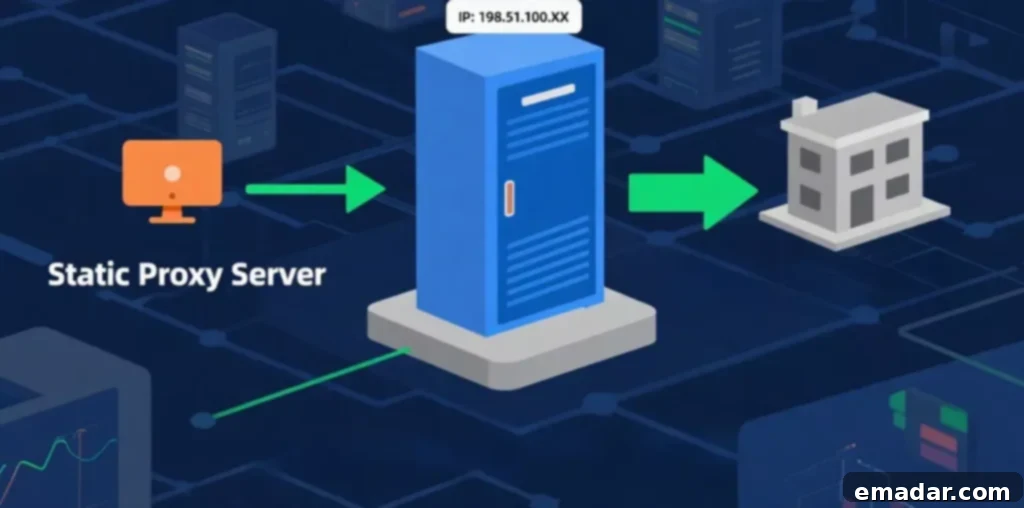
At its core, a static IP proxy, often referred to as a fixed or dedicated IP proxy, acts as a permanent intermediary server, assigning you a singular, unchanging IP address. This means that every online request you initiate, every browsing session you commence, and every login attempt you make will consistently originate from this identical IP address. This unwavering consistency is not merely a technical specification; it is a foundational attribute that fosters trust and predictability in the digital realm.
To grasp the concept more vividly, consider these analogies:
- A rotating proxy can be likened to using a different anonymous public phone booth for every single call you make. Your calls cannot be easily traced back to one specific origin point, prioritizing anonymity and evasiveness.
- Conversely, a static IP proxy is akin to owning a dedicated, private phone line that is exclusively yours. It always presents the same identifiable number, fostering a history of recognition and building trust with the recipients of your calls. This consistent presence is invaluable in interactions where identity and reliability are paramount.
This steadfast consistency is the pivotal advantage that elevates static proxies from a mere technical tool to an indispensable asset for a diverse array of professional and personal online tasks. It provides a stable digital footprint, allowing users to establish a reputation, bypass frequent security checks, and maintain uninterrupted access to critical online resources.
Static vs. Rotating Proxies: Navigating the Choice for Optimal Online Performance
The decision between employing a static IP proxy and a rotating proxy hinges entirely on your specific objectives and the nature of your online activities. These two proxy types are architecturally designed to serve fundamentally different purposes, each excelling in distinct operational environments.
| Feature | Static IP Proxy | Rotating IP Proxy |
| IP Address Behavior | Fixed and unvarying; it remains constant for the duration of your usage. | Dynamically changes with each request, at specified intervals (e.g., every 5 minutes), or after a certain number of connections. |
| Core Benefit | Establishes consistency, builds trust with target servers, enhances reliability, and enables persistent sessions. | Provides anonymity, facilitates large-scale data collection without IP blocks, enables ban evasion, and distributes traffic load. |
| Ideal Use Cases | Secure account management, accessing IP-whitelisted networks, consistent geo-testing, online banking, maintaining a stable online presence. | Extensive web scraping, market research, ad verification, SEO monitoring across various locations, bypassing rate limits. |
| Session Type | Suited for long-term, persistent sessions where a stable connection and identifiable origin are critical. | Best for short-term, discrete requests where a new IP for each interaction is advantageous. |
| Security Implications | Higher perceived trust by target websites, reducing security flags and CAPTCHA challenges. | Designed for anonymity, but frequent IP changes can sometimes trigger security alerts if not managed carefully by the target site. |
You unequivocally require a static IP proxy when the online service, platform, or network you intend to interact with places significant value on a consistent, recognizable, and trustworthy identity. This includes scenarios where authentication, persistent sessions, and a predictable digital footprint are paramount to successful and secure operations.
The Indispensable Advantages: Top Use Cases for a Static IP Proxy
While rotating proxies are meticulously engineered for the demanding task of large-scale data harvesting and anonymous operations, static proxies are purpose-built for scenarios demanding stringent account management, secure access, and unwavering operational consistency. Here are the leading applications where a static IP proxy demonstrates its unparalleled value:
1. Fortifying Social Media and Critical Online Account Management
In today’s digital economy, platforms such as Instagram, Facebook, X (formerly Twitter), Google, and Amazon rigorously monitor login locations and access patterns. Accessing multiple business accounts, or even a single high-value personal account, from a constantly shifting array of IP addresses is a significant red flag that can immediately trigger stringent security protocols. These measures can range from intrusive CAPTCHA challenges and mandatory two-factor authentication requests to temporary account suspensions or even permanent locks. A static IP proxy provides a dedicated, consistent point of origin for all your login activities. This establishes a verifiable history of legitimate access from a trusted location, effectively mitigating security alerts, reducing the likelihood of account restrictions, and streamlining your social media management workflows for agencies and businesses alike.
2. Enabling Secure Access to IP-Whitelisted Networks and Servers
Many enterprises, academic institutions, government agencies, and secure online services implement IP whitelisting as a foundational layer of their cybersecurity architecture. This robust security mechanism dictates that only a pre-approved, static list of IP addresses is granted permission to access their internal networks, sensitive databases, remote desktop environments, or proprietary web applications. A static IP proxy is absolutely essential in this context, providing you with a fixed and verifiable address that can be submitted to network administrators for whitelisting. This guarantees you secure, uninterrupted, and authorized remote access, making it invaluable for remote teams, consultants, and anyone requiring access to highly protected digital resources.
3. Enhancing Security for Online Banking and E-commerce Transactions
Financial institutions, payment gateways, and e-commerce platforms employ sophisticated fraud detection systems that continuously analyze user behavior and access patterns. Logging into your bank account, PayPal, or other financial services from an IP address that frequently changes, or appears to jump geographically in a short span, is a colossal red flag. This inconsistent behavior is often indicative of potential account compromise or fraudulent activity, leading to immediate transaction blocks, account freezes, or even investigations. By utilizing a static IP proxy for these highly sensitive financial transactions, you ensure that your access patterns remain consistently trusted and predictable, significantly reducing the risk of triggering fraud alerts and providing peace of mind for your online financial activities.
4. Ensuring Consistent Website Testing and Quality Assurance (QA)
For web developers, QA engineers, and marketing teams, accurately testing the functionality, user experience (UX), and localized content of websites and applications is paramount. This often requires simulating a consistent user experience from a specific geographical location over an extended period. A static IP proxy delivers a stable, unchanging baseline for these critical testing environments. This eliminates the variable of a fluctuating IP address, allowing for reliable testing of geo-specific features (e.g., localized pricing, language variations, region-specific advertisements), A/B tests, user flow analysis, and general application performance. It ensures that test results are repeatable, accurate, and truly reflect the intended user experience, accelerating development cycles and improving product quality.
5. Sustaining Gaming and Specialized Software Access
Beyond traditional business uses, static IP proxies are also beneficial for online gaming and access to certain specialized software. Many online games, particularly MMORPGs, monitor IP addresses to detect botting or account sharing. A consistent IP address can help maintain the appearance of legitimate single-user access, reducing the risk of bans. Similarly, some enterprise-level software or subscription services might tie access to a specific IP range for security or licensing purposes. A static IP ensures seamless and authorized access to these applications, preventing interruptions due to unexpected IP changes.
Selecting a Reliable Static IP Proxy Provider: Key Considerations
The efficacy and security of your static IP proxy solution are directly correlated with the quality and reliability of your chosen provider. Diligence in selection is paramount. Here’s a comprehensive checklist of what to prioritize when evaluating potential static IP proxy services:
- IP Type: Datacenter vs. Residential Proxies:
- Static Datacenter Proxies: These are fast, cost-effective, and ideal for tasks that require high speed and stable access, such as accessing IP-whitelisted corporate networks or rapid testing. They originate from commercial data centers and are generally suitable when the target website doesn’t have aggressive anti-proxy measures.
- Static Residential Proxies: Often considered the gold standard for trust and account management. These IPs are legitimate, ISP-provided addresses assigned to real households. They mimic ordinary users, making them virtually undetectable by sophisticated anti-bot systems. This makes them perfect for sensitive applications like social media account management, online banking, and e-commerce, where a real, trusted identity is crucial to avoid detection and bans.
- Exclusivity and Dedication: It is absolutely critical to ensure that the static IP address provided is exclusively dedicated to you and your operations. Shared static IPs can lead to a “bad neighbor effect,” where the actions of other users on the same IP can negatively impact your reputation and lead to bans or blocks, regardless of your own legitimate activities. A truly dedicated IP offers unparalleled control and maintains your pristine online identity.
- Uptime Guarantees and Blazing Speed: Look for providers that offer robust Service Level Agreements (SLAs) with high uptime guarantees (ideally 99.9% or higher). Frequent downtime can severely disrupt your operations, leading to lost productivity and potential security risks. Furthermore, high-speed connections are non-negotiable for efficient workflows, ensuring your data transfers are swift and your applications remain responsive.
- Geographical Location Options: Depending on your use cases (e.g., geo-specific testing, accessing region-locked content), the ability to select static IPs from various geographical locations is vital. A reputable provider will offer a diverse pool of IPs across different countries and cities.
- Scalability and Flexibility: As your business grows, your proxy needs may evolve. Choose a provider that offers scalable solutions, allowing you to easily add more static IPs or upgrade your plan without complex migrations. Flexible pricing models (e.g., monthly, yearly subscriptions) are also a plus.
- Responsive Customer Support: Even the most reliable services can encounter issues. Access to prompt, knowledgeable, and reliable customer support is crucial for resolving any technical difficulties quickly and minimizing operational downtime. Look for providers offering 24/7 support through multiple channels.
- Security Features: Inquire about the security measures implemented by the provider, such as strong encryption protocols, secure authentication methods, and clear privacy policies regarding your data.
When your tasks demand the absolute highest level of trust and a consistent, unblemished digital identity, such as managing high-value social media profiles or accessing sensitive financial portals, sourcing your proxy from a top-tier provider is paramount. Services like IPFLY exemplify this standard, offering premium high-quality static residential proxies. These robust solutions provide the perfect synergy of a consistent, unchanging IP address with the inherent legitimacy of a real ISP-provided identity, making them impeccably suited for critical applications where security, trust, and a stable digital footprint are non-negotiable requirements.
Whether you’re undertaking complex cross-border e-commerce testing, managing intricate overseas social media operations, or implementing sophisticated anti-block data scraping strategies, the first pivotal step is to select the right proxy service on IPFLY.net. Beyond selection, you’re invited to join the thriving IPFLY Telegram community! Here, industry professionals converge to share invaluable, real-world strategies for optimizing proxy efficiency and resolving common “proxy inefficiency” challenges, ensuring you get the most out of your proxy investment.

In conclusion, a static IP proxy is far more than a simple network tool; it is a specialized, strategic asset meticulously designed for a digital environment where unwavering trust, predictable identity, and consistent access are paramount. While rotating proxies excel as the primary weapon for anonymous, large-scale data acquisition, the inherently stable, reliable, and trustworthy nature of a static IP is the definitive key to securely managing critical online accounts, gaining authorized entry to restricted networks, and ensuring uncompromised operational stability across diverse business applications. By judiciously selecting the appropriate type of static proxy tailored to your specific needs, you can cultivate a resilient and trusted digital identity that safeguards your valuable online assets, bypasses unnecessary security hurdles, and ensures your access remains consistently uninterrupted and secure.