
Unveiling the Truth About Residential IPs: Separating Fact from Fiction
Misconceptions surrounding residential IPs often stem from a lack of clear understanding of their fundamental attributes and how they are intended to be used. Many individuals mistakenly equate residential IPs with static IPs, view them as impenetrable security shields, or exaggerate their capabilities. These misunderstandings can lead to incorrect choices and inefficient applications.
The key to dispelling these myths lies in grasping the core principle that the primary strengths of residential IPs are their authenticity and adaptability, rather than absolute security or universal effectiveness. Once this central logic is understood, most misunderstandings can be easily avoided.
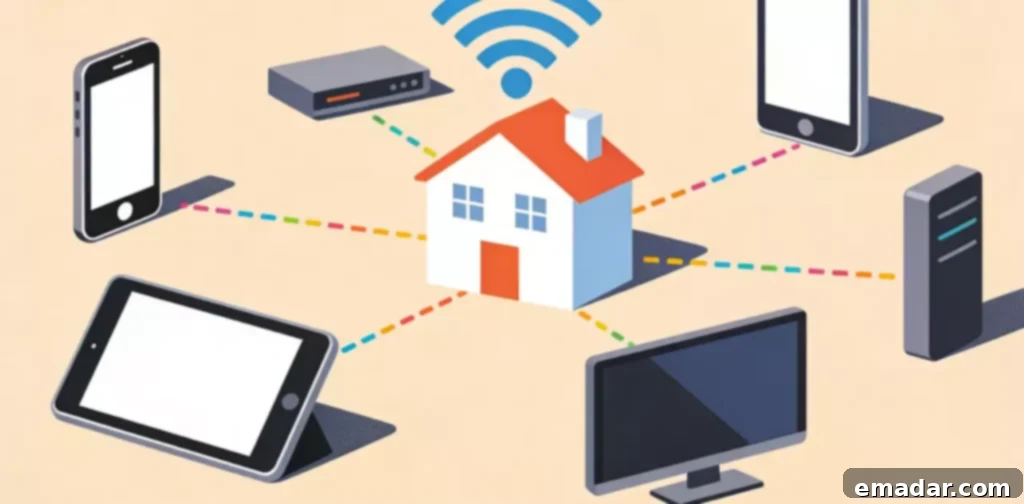
Understanding the Core Attributes of Residential IPs
Myth 1: “Residential IPs are inherently static and unchanging.”
Residential IPs and static IPs are distinct concepts categorized along different dimensions. Residential IPs are defined by their network origination, specifically within residential or home environments. Static IPs, on the other hand, are classified based on their permanence – whether they remain constant over time. It’s important to note that residential IPs can be either static or dynamic. Static residential IPs maintain a consistent address, while dynamic residential IPs change periodically, typically when the network connection is re-established.
Many home broadband users are assigned dynamic residential IPs, meaning their IP address changes each time they restart their router or re-establish their internet connection. Conversely, some users, often for specific purposes like remote work, may request a static residential IP from their Internet Service Provider (ISP). Therefore, it’s inaccurate to assume that all residential IPs are static. When selecting an IP, it’s crucial to clearly differentiate between static and dynamic options based on the specific requirements of the intended use case. For scenarios requiring long-term stability, a static residential IP is preferable, while dynamic residential IPs are suitable for short-term or temporary applications.
Myth 2: “Residential IPs are immune to platform detection and guarantee unrestricted access to any online service.”
While residential IPs offer greater compatibility with online platforms compared to data center IPs, they are not completely immune to detection and restrictions. Platform anti-fraud systems consider multiple factors, including IP type, user behavior, account information, and device characteristics. If a residential IP is used for activities such as bulk operations, policy violations, or suspicious account activity, the platform may still flag the user, leading to access limitations.
The primary benefit of residential IPs is to reduce the likelihood of detection, not to bypass all security measures. When using a residential IP, it’s essential to adhere to platform rules and maintain normal online behavior. For instance, using a residential IP to register multiple accounts or repeatedly post advertisements can still trigger a platform’s detection mechanisms and result in restrictions.
Myth 3: “Residential IPs are inherently more secure than other IP types and provide complete privacy protection.”
The perceived “security” of a residential IP does not come from the IP type itself, but rather from the source from which it is obtained and the protective measures implemented. If a genuine residential IP is acquired or used through unofficial channels, it may expose the user’s online activity information. In contrast, reputable proxy services offering residential IPs typically employ encryption and other technologies to ensure privacy and security. Conversely, legitimate non-residential IPs from reliable sources can also provide adequate security through robust protective measures.
The key difference between residential IPs and other IP types lies in their “location context” rather than their inherent “security level.” The crucial factor for online privacy is choosing a reputable IP source and implementing security measures such as encrypted transmission. For example, selecting residential IPs from trusted proxy services like IPFLY can protect online activity privacy through encryption, while using residential IPs from unknown sources may pose a privacy risk.
Avoiding Ineffective Practices When Selecting and Using Residential IPs
Myth 4: “The more expensive the residential IP, the better its quality.”
The quality of a residential IP is not directly proportional to its price. A high price does not necessarily guarantee superior quality. The critical quality indicators for residential IPs are authenticity, stability, and geo-location accuracy, not cost. Some high-priced residential IPs may simply reflect high marketing expenses rather than superior quality, while other cost-effective residential IPs may effectively meet the requirements of most usage scenarios.
When selecting a residential IP, prioritize core quality indicators instead of simply opting for the most expensive option. Use IP testing tools to evaluate the IP’s authenticity, stability, latency, and other relevant metrics. Choose an IP that aligns with your specific requirements rather than blindly trusting the price. For example, if you need a residential IP for accessing local resources, there’s no need to select a high-priced, high-quality overseas residential IP. A cost-effective IP that matches your geographic location will suffice.
Myth 5: “Any residential IP will work perfectly for any application.”
The suitability of a residential IP is context-dependent and not universally applicable. Different scenarios have varying requirements for the IP’s geographic location, stability, and type (static or dynamic). A residential IP that performs well in one context may be unsuitable for another. For example, an overseas residential IP used for cross-border communication cannot be used for accessing local resources within a specific country. Similarly, a dynamic residential IP is unsuitable for academic research requiring long-term stable access.
When choosing a residential IP, consider the specific needs of your intended use case and select an IP that meets those requirements. Don’t assume that “any residential IP will do.” Clearly define the key requirements for your scenario. If geographic accuracy is crucial, focus on the location attribute. If long-term stability is required, prioritize the static property. Ensure that the IP is accurately matched to the scenario. For example, IPFLY offers residential IP resources tailored to different application requirements, avoiding a “one-size-fits-all” approach to IP provision and ensuring better compatibility.
Myth 6: “Using a residential IP proxy guarantees complete anonymity online.”
The main function of a residential IP proxy is to hide your real IP address and simulate a specific network identity, not to provide complete anonymity. If you disclose your account information, device information, or behavioral patterns while using a residential IP proxy, your true identity may still be traced. Achieving full anonymity requires a combination of IP proxy, encrypted transmission, and removal of online traces. Relying solely on a residential IP proxy is insufficient.
Don’t assume that you are completely anonymous when using a residential IP proxy. If you need to enhance your privacy protection, use encryption tools, clear your browser cache and cookies, and avoid using your real account information. Also, choose a proxy platform (such as IPFLY) that offers encrypted transmission services to further improve privacy protection. However, you should still be mindful of your own online behavior and take precautions to protect your privacy.
Embrace “Authentic Adaptability + Contextual Matching”
Having addressed the common misconceptions, the core logic for correctly understanding and using residential IPs is to embrace “authentic adaptability + contextual matching.” This principle can be broken down into the following steps:
1. Understand the Core Advantages of Residential IPs
The core strengths of residential IPs are their authenticity and adaptability to specific usage scenarios. They reduce the probability of detection by online platforms and are well-suited to individual user contexts, but they are not a guarantee of absolute security or a universal solution.
2. Choose IP Metrics Based on Scenario Needs
Select residential IP attributes such as geographic location, stability, and type (static/dynamic) based on the core requirements of your specific scenario. Ensure that the IP accurately matches the context, rather than making a random selection.
3. Prioritize Acquiring IPs from Reputable Sources
Obtain residential IPs from reliable and reputable channels to ensure the IP’s authenticity and quality. Also, implement necessary protective measures such as encrypted transmission to ensure privacy and security.
4. Adopt a Rational Approach to the Relationship Between Price and Quality
Focus on the core quality indicators of the IP, rather than simply prioritizing price. Choose a cost-effective IP that meets the needs of your usage scenario, avoiding unnecessary overspending.
5. Adhere to Platform Rules During Usage
Maintain normal online behavior and comply with the rules and guidelines of the platforms you use. Avoid policy violations that could lead to IP restrictions and leverage the adaptability advantages of residential IPs.
Accurate Understanding is the Foundation for Effective Use of Residential IPs
Many misconceptions about residential IPs stem from a lack of attention to their core attributes and proper usage practices. A residential IP is not simply a synonym for a static IP, a universal “anti-detection tool,” or a commodity where higher price always equates to better quality. Its core value lies in its authenticity and suitability for specific scenarios.
Only by building a correct understanding and making targeted choices and usage practices based on the needs of the scenario can you maximize the benefits of residential IPs.
Utilizing IPFLY Residential Proxy IPs
IPFLY employs self-built servers combined with big data filtering systems, providing only:
- Residential IPs Authentically Assigned by ISPs
- Clean, Unpolluted IP Ranges, Non-Shared, With No History of Abuse
- Support for IP Detection, Location Filtering, and Multi-Country Switching
For anti-detection and risk control, use IPFLY to achieve IP isolation!