
In the dynamic world of online gaming and software development, encountering geographical restrictions or network performance bottlenecks is a common challenge. For users of the massive Steam platform, the concept of a Steam proxy emerges as a powerful solution. Whether you’re a dedicated gamer eager to explore region-locked titles, a developer rigorously testing global market conditions, or simply someone looking to optimize their connection, understanding how a Steam proxy works and when to leverage it is invaluable. This comprehensive guide will delve into the intricacies of Steam proxies, exploring their functionality, diverse applications, potential risks, and the benefits of robust proxy solutions like those offered by IPFLY, which empower users with greater control and security over their online Steam experience.

Understanding the Mechanics: What Exactly is a Steam Proxy?
At its core, a Steam proxy acts as an intermediary server that routes your internet traffic before it reaches Steam’s official servers. Instead of your device connecting directly to Steam, your data first travels through this proxy server. The key advantage here is that the proxy server can be located in a different geographical region, possessing an entirely different IP address from your own. This fundamental re-routing mechanism is what unlocks a multitude of possibilities for Steam users.
This sophisticated setup empowers users to:
- Mask Their True Location: By connecting through a proxy in another country, users can effectively appear as if they are accessing Steam from that specific region, circumventing geo-restrictions.
- Bypass Network Limitations: Proxies can often help in navigating various forms of network interference, such as restrictive firewalls in schools or workplaces, or even Internet Service Provider (ISP) imposed throttling.
- Simulate Global Market Access: For developers, publishers, or even avid gamers, a proxy offers the ability to test how Steam content, pricing, and services behave in different geographical markets.
- Enhance Anonymity and Privacy: While not a full privacy solution like a VPN, a proxy does add a layer of anonymity by obscuring your original IP address from Steam’s servers, isolating specific game-related traffic.
- Optimize Connection Routes: In certain scenarios, routing your traffic through a strategically located proxy server can actually provide a more stable or faster connection to Steam by avoiding congested direct routes.
The Driving Force: Why Gamers, Developers, and Businesses Opt for a Steam Proxy
The motivations behind using a Steam proxy are diverse, ranging from enhancing a casual gaming experience to facilitating critical development work. Let’s explore the primary reasons that make a proxy an attractive solution for the Steam ecosystem.
Accessing Region-Exclusive Content and Deals
Perhaps the most prevalent reason for utilizing a Steam proxy is to gain access to region-restricted content. Due to licensing agreements, varying market strategies, or local regulations, certain game titles, downloadable content (DLCs), special promotions, or even entire game releases may be limited to specific countries or regions. For instance, a game might launch earlier in one region, or offer unique pricing structures elsewhere. A proxy allows users to temporarily assume an IP address from the desired region, effectively “teleporting” their virtual location and unlocking these geographical barriers.
Bypassing ISP Throttling and Network Restrictions
Internet Service Providers (ISPs) sometimes engage in bandwidth throttling, where they intentionally slow down specific types of internet traffic, often targeting high-bandwidth activities like online gaming or large downloads. If your ISP is hindering your Steam performance, routing your connection through a proxy server can sometimes encrypt or disguise your traffic, making it harder for the ISP to identify and throttle it. Additionally, proxies are excellent for bypassing local network restrictions, such as firewalls in schools, offices, or public Wi-Fi networks that might block access to gaming platforms.
Enhancing Privacy and Anonymity Online
While not its primary function, a proxy does contribute to online privacy by masking your real IP address from the websites and services you visit, including Steam. This adds a layer of anonymity, making it more challenging for third parties to track your online activities directly linked to your physical location. For users who prioritize their digital footprint, a proxy offers a simple yet effective means to achieve a degree of separation.
Network Behavior Testing for Developers and Researchers
For game developers, quality assurance testers, or market researchers, a Steam proxy is an indispensable tool. It enables them to simulate user experiences from various geographical locations. This is crucial for:
- Localization Testing: Ensuring that regional pricing, language packs, and local content are displayed correctly.
- Latency Analysis: Understanding how network latency affects gameplay for users in different parts of the world.
- Content Delivery Network (CDN) Performance: Verifying that game updates and downloads are delivered efficiently from regional CDN nodes.
- Compliance Checks: Confirming that their game adheres to regional legal and age-rating restrictions.
Improving Connection Stability and Latency in Specific Cases
In certain uncommon scenarios, a direct connection to Steam servers might be suboptimal due to congested internet routes or poor peering agreements between your ISP and Steam’s network. By rerouting your traffic through a well-chosen proxy server, especially one located strategically closer to Steam’s servers or on a less congested network path, you might surprisingly achieve a more stable connection and potentially even lower ping, enhancing your online gaming experience.
Navigating Steam’s Policies: Detection and Consequences of Proxy Use
While the benefits of using a Steam proxy are clear, it’s vital to approach its use with an understanding of Steam’s policies. Steam’s Terms of Service (ToS) do not explicitly forbid the use of proxies in all contexts. However, they do strictly prohibit any attempts to manipulate pricing, circumvent regional restrictions in bad faith, or exploit vulnerabilities for financial gain. The platform employs sophisticated detection methods to identify and flag suspicious behavior.
Steam’s detection mechanisms include, but are not limited to:
- IP Geolocation: Matching your current IP address with the registered region of your account.
- Login Patterns: Frequent, rapid, or inconsistent changes in login locations can raise red flags.
- Payment Methods: Using a payment method from a different region than your current IP or account origin.
- Gift Card Region Locking: Many Steam gift cards are region-locked, and attempts to redeem them from an incompatible region can trigger warnings.
- Behavioral Analysis: Anomalous purchasing patterns or engagement with region-locked content can be indicators.
Using a proxy might not immediately trigger punitive action, especially if done for legitimate testing or for enhancing privacy. However, repeated attempts to abuse regional features, such as purchasing games at lower regional prices and then gifting them to users in higher-priced regions, could lead to severe penalties. These include:
- Account Warnings: Initial notifications from Steam regarding suspicious activity.
- Restrictions on Trading or Purchasing: Temporary or permanent limitations on market interactions.
- Temporary Account Suspensions: Preventing access to your account for a defined period.
- Permanent Account Bans: In severe and repeated cases of policy violation, an account can be permanently closed, leading to the loss of all purchased games and content.
Therefore, users must exercise caution and adhere to Steam’s guidelines, ensuring their proxy usage remains within ethical and acceptable boundaries.
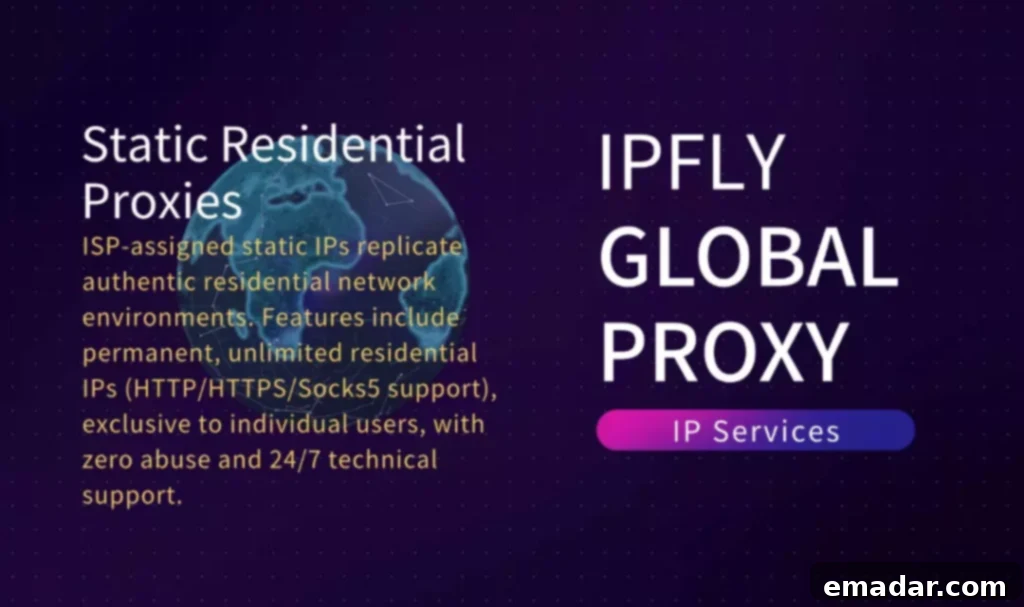
The Cornerstone of Reliability: Static IPs and Premium Proxy Solutions
For individuals and organizations considering a Steam proxy, the choice of proxy type is paramount. Public or shared proxies are often unreliable, slow, and easily detected, making them unsuitable for platforms like Steam. This is where the superiority of static residential proxies becomes evident, particularly solutions like those offered by IPFLY.
Understanding Proxy Types: A Brief Overview
- Rotating Proxies: These proxies assign a new IP address from a pool with each request or at set intervals. While great for large-scale data scraping, their constantly changing nature can be highly suspicious to platforms like Steam.
- Shared Proxies: Multiple users share the same IP address. This significantly increases the risk of the IP being flagged or blacklisted due to the actions of other users.
- Dedicated/Static Proxies: You are assigned a unique, fixed IP address that only you use. This offers consistency and reduces the risk of detection.
- Residential Proxies: These proxies use IP addresses assigned by real Internet Service Providers (ISPs) to residential homes. They are indistinguishable from regular home internet connections, making them far less likely to be detected as proxies.
Why Static Residential Proxies are Superior for Steam
Combining the benefits of both static and residential IPs, static residential proxies offer a gold standard for Steam usage. Unlike their rotating or shared counterparts, static residential IPs provide a consistent, clean, and authentic identity tied to a real device and a legitimate ISP. This critical stability significantly reduces the likelihood of detection by Steam’s advanced algorithms, which are designed to flag erratic IP changes or suspicious patterns associated with data centers or public proxies. By maintaining a consistent IP, your access patterns closely mimic those of a genuine user, improving session stability and minimizing interruptions—a crucial factor for platforms that closely monitor user access consistency.
Introducing IPFLY’s Static Residential Proxy Solutions
IPFLY specializes in delivering high-quality static residential proxy solutions tailored for demanding applications like Steam. With IPFLY, users gain the power to select residential IPs from an extensive network of specific countries and cities, offering incredibly fine-grained control over geolocation. This level of precision is exceptionally beneficial for tasks such as:
- Accurate Market Availability Testing: Ensuring that games and content are displayed as intended for users in precise locations.
- Seamless Regional DLC Downloads: Accessing and downloading region-specific content without interruption or detection.
- Consistent Gaming Sessions: Enjoying a stable, low-latency connection that enhances the online gaming experience.
IPFLY’s commitment to providing dedicated, clean, and reliable static residential IPs makes them an ideal choice for anyone seeking a robust and undetectable proxy solution for their Steam-related needs.
Crucial Security Considerations When Choosing a Steam Proxy
The internet is fraught with risks, and the world of proxies is no exception. Not all proxies are created equal, especially concerning security. When dealing with a platform like Steam, where personal login credentials, payment information, and sensitive financial details are handled, security must be the paramount concern. Using an unsecured or malicious proxy can expose you to significant dangers.
The Dangers of Free or Unknown Proxies
Public or free proxy services are a notorious security risk. They often:
- Lack Encryption: Your data travels unencrypted, making it vulnerable to interception by third parties.
- Log User Data: Many free proxies log your browsing activity, IP address, and other personal data, which can then be sold or exploited.
- Inject Malware: Some free proxies are designed to inject advertisements or even malware into your browsing session.
- Offer Unreliable Performance: They are typically overcrowded, slow, and prone to frequent disconnections.
Entrusting your Steam traffic to such services is akin to handing over your personal information to strangers.
What to Look For in a Reputable Proxy Provider
When selecting a proxy for Steam, prioritize these security features:
- Strong Encryption Protocols: Ensure the service supports HTTPS (for web traffic) or SOCKS5 (for more general application traffic), which encrypts your data.
- “No-Logs” Policy: A trustworthy provider will explicitly state that they do not log your online activities or personal data.
- Dedicated or Private Proxies: Avoid shared IPs where possible, as others’ actions could compromise your security.
- Reputation and Reviews: Research the provider’s history, customer reviews, and their commitment to privacy and security.
- Reliable Uptime and Speed Guarantees: While not a direct security feature, a professional service indicates a well-maintained and secure infrastructure.
- Customer Support: Responsive support can be crucial if you encounter any issues.
IPFLY’s Commitment to Security
IPFLY addresses these crucial security needs head-on by offering private static residential proxies. These solutions are built with security and privacy in mind, utilizing robust infrastructure and prioritizing user data protection. By choosing IPFLY, users can rest assured that their Steam-related activities are routed through secure, dedicated, and uncompromised channels, making them ideally suited for even the most sensitive use cases involving login credentials and financial transactions.
When to Reconsider Using a Proxy with Steam
Despite the numerous advantages, using a proxy with Steam is not always the optimal or necessary choice. There are specific scenarios where you might want to avoid it, either due to potential drawbacks or when the benefits simply don’t outweigh the risks or inconveniences.
- Downloading Large Game Files: Proxies, by their very nature, add an extra hop in your network connection. While premium proxies minimize this impact, free or low-quality proxies can significantly slow down download speeds. For massive game downloads or updates, a direct, high-bandwidth connection is usually preferable.
- When No Regional Restrictions Exist: If you’re not attempting to bypass region-locked content, access regional pricing, or test geo-specific behaviors, adding a proxy merely introduces an unnecessary layer of complexity and potential latency.
- Concerns About Violating Steam’s Terms of Service: If you are particularly risk-averse regarding your Steam account, or if your intended use case falls into a grey area of Steam’s ToS (e.g., trying to exploit pricing differences), it might be safer to avoid proxies altogether.
- Increased Latency for Fast-Paced Online Games: While some proxies can improve routing, many will introduce additional latency (ping). For competitive multiplayer games where every millisecond counts, this added latency can be detrimental to your performance.
- Cost Considerations: High-quality, secure static residential proxies come with a subscription cost. If your need for a proxy is infrequent or purely for casual browsing, a paid service might not be economically justified.
Always balance the potential convenience and functionality a proxy offers against compliance with platform rules, potential performance impacts, and the associated costs and security considerations.
Exploring Alternatives to Proxies for Steam
Depending on your specific goals and risk tolerance, there may be alternative methods to achieve similar outcomes to using a Steam proxy. It’s important to understand the distinctions and choose the tool that best fits your needs.
- Virtual Private Networks (VPNs):
- Pros: VPNs encrypt all your internet traffic and route it through a server in a chosen location, effectively masking your IP address. They offer full-device rerouting and robust encryption, enhancing overall privacy and security. They are generally easier to set up for an entire system.
- Cons: Many VPNs, especially cheaper ones, use IP addresses that are easily identified as belonging to VPN services, making them easier for platforms like Steam to detect and block. They can also introduce significant latency if the server is far away or overloaded, potentially impacting gaming performance.
- Remote Desktop Access (RDA) to a Device in Another Country:
- Pros: This involves accessing a computer physically located in your target region (e.g., a friend’s PC, a cloud-hosted virtual machine). Your Steam activity originates from a genuine IP in that region, making it highly effective for bypassing geo-restrictions without directly using a proxy or VPN on your local machine.
- Cons: It’s often more complex to set up and manage. Performance can be dependent on your internet speed and the speed of the remote connection. It’s not a practical solution for active gaming sessions due to latency from the remote desktop connection itself.
- Cloud Services or Local ISPs with IPs in Your Target Region:
- Pros: This involves setting up a cloud-hosted server (e.g., AWS, Google Cloud, Azure) in a specific region and installing Steam on it, or even using a virtual machine provided by an ISP in the target country. This provides a native, legitimate IP address from that region.
- Cons: This is a highly technical and often more expensive solution. It requires significant configuration and maintenance, making it impractical for the average user.
While VPNs offer broader encryption and ease of use for general purposes, proxies (especially high-quality static residential ones) often provide better speed and more targeted routing for specific applications like Steam, particularly when configured to minimize detection risks. For developers and serious testers, the precision and reliability of a dedicated proxy often surpass other alternatives.
Conclusion: Harnessing the Power of Steam Proxies Responsibly

A Steam proxy stands as a remarkably versatile and powerful tool within the digital landscape of online gaming and software development. Whether your objective is to delve into region-locked titles, rigorously simulate market access for development projects, stabilize a fluctuating network route, or simply enhance your online privacy, the strategic deployment of the right proxy setup can make a profound difference. However, the efficacy and safety of this tool are directly proportional to the wisdom of its selection and use. It is paramount to choose your proxy solution carefully, prioritize robust security measures, and maintain a clear understanding of Steam’s terms of service to ensure a smooth and penalty-free experience.
For those who demand unwavering stability, precise geo-targeting, and uncompromising reliability for their Steam-related tasks, IPFLY’s static residential proxies represent a premium choice. Our solutions offer unparalleled performance, flexible location options spanning across the globe, and robust privacy protections designed to meet the most stringent requirements. Perfect for everything from gaining seamless access to specific gaming regions to conducting comprehensive regional testing, IPFLY empowers you to navigate the Steam ecosystem with confidence, control, and peace of mind.