
In the vast, interconnected world of the internet, every device, from your smartphone to a complex web server, communicates using unique identifiers known as IP addresses. These digital labels are fundamental to how information travels across networks. While most casual internet users operate with dynamic IP addresses that periodically change, there exists a more stable and predictable alternative: static IP addresses. Unlike their dynamic counterparts, a static IP address remains constant, offering a distinct set of advantages crucial for businesses, developers, dedicated gamers, and anyone requiring unwavering, predictable network access.
This comprehensive guide delves into the essence of static IPs, unraveling what they are, their operational mechanics, and the compelling benefits and potential drawbacks associated with their use. We’ll explore scenarios where opting for a static IP is not just a preference but a necessity, and how specialized proxy providers can deliver static IP solutions that masterfully blend stability with enhanced security and privacy.
What Exactly Is a Static IP Address?
At its core, a static IP address is an Internet Protocol address that, once assigned, does not change over time. It is a fixed, permanent identifier for a specific device or server on a network. Imagine it like a permanent street address for your home – once you have it, it stays the same, allowing mail to be delivered reliably to that exact location. In the digital realm, this permanence ensures that other devices and services can consistently locate and connect to your device without interruption.
This inherent stability is what primarily differentiates static IPs from dynamic IPs. Dynamic IP addresses are allocated by a DHCP (Dynamic Host Configuration Protocol) server, which automatically assigns an IP address from a pool of available addresses. These dynamic assignments are temporary and can change frequently – for instance, every time you connect to the internet, restart your router, or after a specific lease period expires. While convenient for general browsing and typical home use, this variability can introduce significant challenges for certain applications and services.
Internet Service Providers (ISPs) can assign static IPs to customers upon request. While these dedicated addresses typically come at a higher cost than the standard dynamic IP service, their consistent accessibility makes them invaluable for a wide array of critical applications, including hosting various services, facilitating robust remote connections, and bolstering the efficacy of specific network security configurations. Understanding this fundamental difference is the first step in determining whether a static IP is the right choice for your needs.
How Static IP Addresses Function Within a Network
The operational mechanism of static IP addresses is fundamentally different from dynamic ones. Instead of being automatically assigned by a DHCP server, static IPs are manually configured on a device, server, or router. This manual assignment means the address is permanently fixed, offering unparalleled consistency:
- Unwavering Persistence: The IP address remains the same, irrespective of how often the device reconnects to the network, reboots, or if the internet connection is temporarily lost and restored. This eliminates the unpredictability associated with dynamic address changes.
- Consistent Accessibility: External systems, services, and users can always locate and connect to the device using the identical, unchanging IP address. This is critical for any service that needs to be discoverable from the internet, such as a website server or a remote access point.
- Optimized Configuration for Reliability: Manual configuration allows for precise fine-tuning of network settings, particularly for services like DNS (Domain Name System). With a static IP, DNS records, which translate human-readable domain names into IP addresses, only need to be set up once, ensuring maximum uptime and reducing administrative overhead.
Because of their non-changing nature, static IP addresses are the preferred choice in scenarios where precise and persistent addressing is absolutely essential. Common applications include dedicated web servers, email servers, FTP servers, networked printers within an office environment, advanced surveillance systems, and specialized industrial IoT devices that require constant, predictable connectivity for monitoring and control. The ability to guarantee a fixed network location simplifies troubleshooting, enhances reliability, and forms the bedrock for stable online operations.
Key Advantages of Leveraging a Static IP Address
The stability offered by a static IP translates into a multitude of significant benefits, particularly for advanced users, businesses, and specific applications:
1. Enhanced Reliability for Remote Access
For individuals or organizations that frequently access computers or network resources remotely, a static IP address is a game-changer. It eradicates the constant need to track or update dynamic DNS services to find your home or office computer’s current IP. This consistent address is paramount for IT administrators managing remote servers, employees working from home, or businesses providing technical support and needing reliable access to client systems. Whether you’re using Remote Desktop Protocol (RDP), Virtual Network Computing (VNC), Secure Shell (SSH), or establishing a Virtual Private Network (VPN) connection, a static IP ensures a direct and uninterrupted link, boosting productivity and minimizing frustration.
2. Optimal Performance for Hosting Services
Hosting any kind of internet service—be it websites, FTP servers, email servers, or custom application servers—benefits immensely from a consistent IP address. With a static IP, DNS records (specifically A records) that link your domain name (e.g., yourwebsite.com) to your server’s IP address don’t need to be updated whenever the IP changes. This means zero downtime due to IP shifts, ensuring your online presence is always accessible and reliable. For game servers, a static IP offers players a stable address to connect to, guaranteeing a smoother and more consistent gaming experience for the community.
3. Superior Email Deliverability and Reputation
Email deliverability is heavily influenced by the sender’s IP address reputation. Dynamic IP addresses are often assigned from large pools shared among many users. If another user on the same shared IP address has engaged in spamming or other malicious activities, that IP can end up on blacklists, leading to your legitimate emails being flagged as spam or outright rejected. A dedicated static IP allows you to establish and maintain a clean, trustworthy sending reputation. This is critical for businesses sending transactional emails, marketing campaigns, or even standard corporate communications, ensuring higher inbox placement rates and avoiding potential communication breakdowns.
4. Increased Stability for Online Gaming and VoIP Communications
For avid online gamers, especially those involved in competitive play, and for users relying on Voice over IP (VoIP) services for critical communications, latency and connection stability are paramount. Dynamic IP changes can lead to sudden disconnections, lag spikes, or dropped calls. A static IP address provides a consistent and often more direct route to game servers or VoIP platforms, helping to reduce latency, minimize packet loss, and prevent unexpected interruptions. This translates to a smoother, more responsive gaming experience and crystal-clear, reliable voice and video calls.
5. Streamlined Network Management and Security Configuration
In complex business or advanced home networks, a static IP simplifies a wide range of administrative tasks. Configuring firewalls, setting up specific port forwarding rules, establishing access control lists (ACLs), or creating secure VPN tunnels becomes much more straightforward when device IP addresses are fixed. Network devices, servers, and services can be reliably identified and authorized by their unchanging addresses, significantly enhancing network security and making troubleshooting more efficient. This fixed addressing scheme is vital for maintaining a robust and easily manageable network infrastructure.
6. Enhanced Geolocation Accuracy and Service Reliability
While dynamic IP addresses can sometimes cause geolocation services to inaccurately place your location, a static IP, particularly one associated with a specific geographic region, can offer more consistent and accurate geolocation data. This is beneficial for services that rely on location-based content delivery, targeted advertising, or region-specific access. Furthermore, some online services may impose stricter access controls or rate limits on dynamic IPs, viewing their frequent changes as potentially suspicious. A static IP, representing a fixed and known entity, often leads to greater trust and fewer service interruptions.
Potential Drawbacks of Employing Static IPs
Despite their numerous benefits, static IP addresses also come with certain trade-offs that users must consider:
- Higher Cost: ISPs typically charge a premium for assigning a static IP address. This additional fee covers the administrative overhead, resource allocation, and the specialized support often associated with maintaining a fixed IP for a customer. For casual users, this extra cost might not justify the benefits.
- Reduced Privacy: Because your IP address never changes, your online activity becomes easier to track. Websites, advertisers, and various online services can more readily build a profile of your browsing habits linked to that specific, unchanging IP. This can raise privacy concerns for users who prefer a higher degree of anonymity online.
- Increased Security Risks: A static IP provides a constant, fixed target for potential hackers and malicious actors. Unlike dynamic IPs, which change and therefore offer a moving target, a static IP allows attackers to repeatedly probe and attempt to exploit vulnerabilities on the same address. This necessitates the implementation of exceptionally robust security measures, including advanced firewalls, intrusion detection systems, and vigilant network monitoring.
- Manual Configuration Complexity: While beneficial for control, the manual configuration of a static IP can be more complex for novice users compared to the plug-and-play simplicity of DHCP for dynamic IPs. Incorrect settings can lead to network connectivity issues.
When Is a Static IP Address Absolutely Necessary?
Deciding whether to opt for a static IP depends heavily on your specific needs and how you interact with the internet. You should strongly consider a static IP if you:
- Host a Website or Business Server: For reliable web hosting, email servers, FTP servers, or any application server, a static IP ensures your services are always discoverable and accessible to users worldwide.
- Provide Remote Access for Employees or Clients: If you or your team need consistent, direct access to office networks, specific computers, or resources from remote locations, a static IP simplifies connectivity and enhances reliability.
- Require Stable VPN Connections: Hosting your own VPN server or requiring extremely stable site-to-site VPN tunnels for business operations benefits significantly from a fixed endpoint.
- Run Services Like Security Cameras or IoT Devices: Smart home devices, surveillance systems (CCTV), or specialized Internet of Things (IoT) gadgets that need to be accessed consistently from outside your local network will function more reliably with a static IP.
- Operate a Dedicated Gaming Server: To provide a stable and easily identifiable server for online multiplayer games, a static IP is the preferred choice for a seamless player experience.
- Need Consistent Geolocation or IP Reputation: For businesses that rely on region-specific content delivery, advertising, or maintaining a pristine IP reputation for email marketing.
- Are a Developer or IT Professional: For setting up development environments, testing network configurations, or managing complex internal and external network services.
Conversely, if your primary internet activities revolve around casual browsing, streaming entertainment, or playing online games without hosting a server, a dynamic IP address will likely be entirely sufficient and more cost-effective. The key is to weigh the benefits of stability against the associated costs and security considerations.
IPFLY and Advanced Static IP Services via Proxies
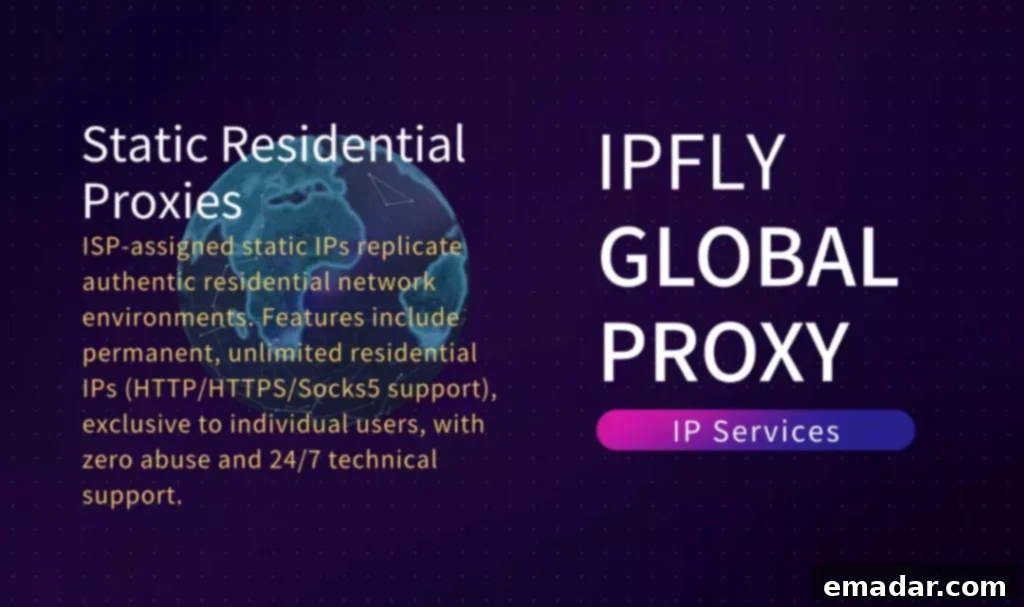
While traditional ISPs offer static IP allocations, these often come with limitations in terms of flexibility, geographic choice, and can be relatively expensive. Moreover, directly exposing your network with an ISP-provided static IP can carry inherent security and privacy risks. This is where specialized proxy providers like IPFLY offer a compelling and more versatile approach.
IPFLY provides robust static IP solutions through secure proxy networks, often utilizing high-quality ISP proxies that mimic residential IP addresses but remain fixed. This sophisticated setup allows you to harness all the advantages of a static IP – consistent accessibility, improved reliability, and enhanced service performance – while simultaneously masking your real IP address. By routing your internet traffic through their proxy servers, IPFLY adds a crucial layer of privacy and security, shielding your actual location and network from direct exposure to the internet.
IPFLY’s static IP services are particularly well-suited for:
- Businesses Hosting Global Applications: Ensuring consistent performance and accessibility for services accessed by an international user base, with IPs strategically located in various global data centers.
- Market Researchers and Data Scientists: Conducting location-specific data collection, SEO monitoring, or ad verification without being blocked or flagged due to constantly changing dynamic IPs or easily detectable datacenter IPs.
- Users Needing Consistent Access to Region-Restricted Services: Bypassing geo-blocks or maintaining access to services that are sensitive to IP changes, with the added benefit of a dedicated, stable IP from a specific country or region.
- Enhanced Security and Anonymity: For users who require a static IP for their services but also prioritize keeping their underlying network infrastructure private and protected from direct attacks.
By offering static IPs through a proxy architecture, IPFLY effectively decouples the benefits of a fixed address from the direct exposure of your origin network, providing a powerful tool for modern internet users and businesses. For the latest updates, promotions, and expert technical guidance on their services, you can also follow their Telegram channel.
Essential Security Best Practices for Static IP Users
Given that a static IP presents a consistent target on the internet, implementing strong security measures is not just recommended but absolutely critical. If you choose to use a static IP, consider these indispensable practices:
- Implement a Robust Firewall: Configure a hardware or software firewall to strictly block all unauthorized incoming and outgoing traffic. Only open ports that are absolutely necessary for your services, and employ stateful packet inspection to enhance security.
- Enable Strong Encryption for All Remote Access Tools: Always use encrypted protocols like SSH, RDP over VPN, or HTTPS for all remote connections and web-based management interfaces. Avoid unencrypted protocols like Telnet or unencrypted FTP.
- Regularly Monitor Network Logs for Suspicious Activity: Proactively check firewall logs, server logs, and router logs for any unusual connection attempts, failed logins, or unauthorized data transfers. Intrusion detection systems (IDS) can automate this process.
- Work with a Reputable Provider for Secure Routing and DDoS Protection: If using a proxy service, choose a provider like IPFLY that emphasizes security, offers DDoS protection, and maintains a secure network infrastructure to safeguard your traffic.
- Utilize Strong, Unique Passwords and Multi-Factor Authentication (MFA): All administrative accounts, server logins, and connected services should be protected with complex, unique passwords and, wherever possible, multi-factor authentication to prevent unauthorized access.
- Keep All Software and Firmware Updated: Regularly patch and update your operating systems, applications, router firmware, and any other network devices to protect against known vulnerabilities that attackers might exploit.
- Implement Network Segmentation: If hosting multiple services, consider segmenting your network to isolate critical servers or devices, limiting the potential damage if one segment is compromised.
Conclusion: The Strategic Value of a Static IP Address

The decision to utilize a static IP address can significantly transform the reliability, performance, and manageability of your networked activities, spanning from critical server hosting to seamless remote work and advanced online gaming. It offers a level of predictability and control that dynamic IPs simply cannot match, making it an indispensable tool for businesses and serious individual users alike.
However, the key to successfully leveraging a static IP lies in striking a crucial balance: maximizing the inherent benefits of a constant network address while rigorously implementing robust security and privacy measures. Solutions offered by innovative providers such as IPFLY exemplify this balance, allowing users to enjoy the unwavering stability and performance advantages of a static IP, fortified with the enhanced protection and anonymity provided by advanced proxy technology. By carefully evaluating your needs and adhering to best practices, a static IP can become a powerful asset in your digital toolkit, ensuring reliable and secure connectivity in an ever-evolving online landscape.