
In today’s fast-paced digital landscape, accurate and timely business data is the lifeblood of successful lead generation, market analysis, and strategic planning. Companies across various sectors constantly seek efficient ways to gather vital information about potential clients, competitors, and industry trends. However, the manual collection of this data from publicly available sources, such as Google Maps, can be an incredibly time-consuming and labor-intensive process, often proving to be a significant bottleneck for growth.
This is where specialized tools come into play, streamlining the process and enabling businesses to focus on analysis and strategy rather than tedious data entry. One such innovative solution that has garnered considerable attention is the Google Maps Scraper by Spylead. Designed with efficiency in mind, this powerful data extraction tool automates the collection of publicly listed business information directly from Google Maps, empowering users to quickly compile comprehensive lists of contact data without the endless hours typically spent on manual copy-and-paste tasks.
This comprehensive guide will delve into the intricacies of how the Spylead Google Maps Scraper functions, exploring its capabilities, understanding its limitations, and highlighting the responsible ways in which professionals leverage its power. Furthermore, we will critically examine the pivotal role of proxies in optimizing the scraping process, particularly when interacting with dynamic and sophisticated platforms like Google Maps, ensuring smooth, uninterrupted data flow for larger-scale operations.
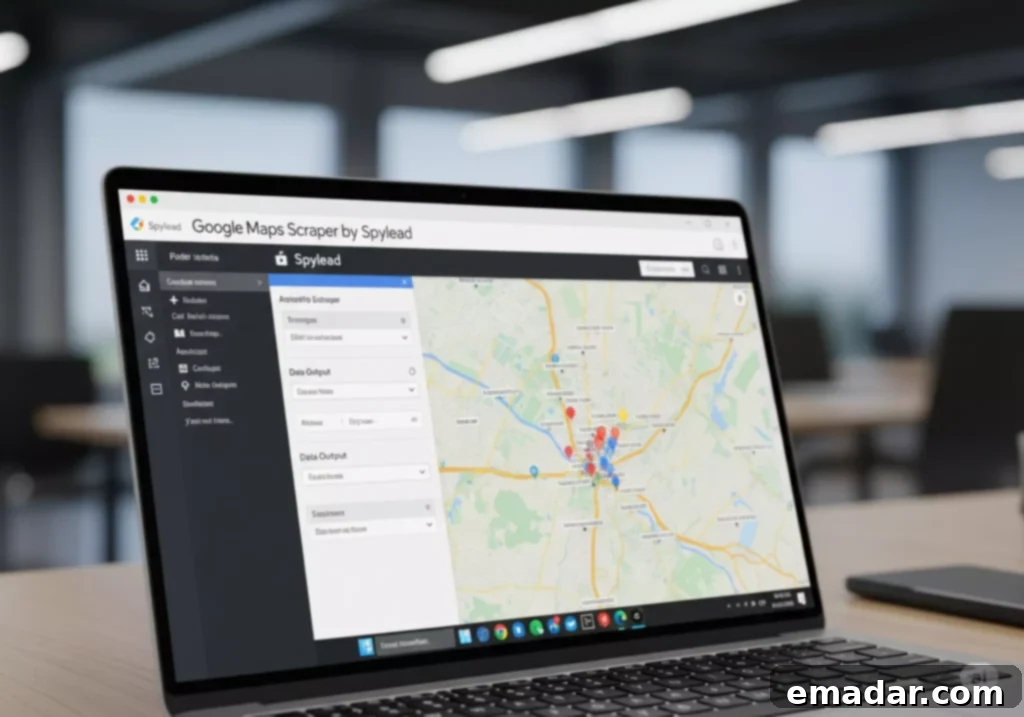
Understanding the Google Maps Scraper by Spylead: Your Gateway to Local Business Data
The Google Maps Scraper by Spylead stands out as a sophisticated yet user-friendly data extraction tool specifically engineered to automate the collection of publicly accessible business details from Google Maps. It acts as a digital assistant, meticulously navigating through Google Maps listings to pinpoint and extract critical information that would otherwise require painstaking manual effort. The tool focuses on visible data points crucial for business intelligence, lead generation, and market analysis, transforming scattered information into structured datasets.
Key data points typically targeted by this powerful Google Maps data extraction tool include:
- Business Names: Essential for identification and categorization.
- Physical Locations and Addresses: Crucial for geo-targeting, logistical planning, and local marketing strategies.
- Phone Numbers: Direct contact information for sales outreach and customer service.
- Website URLs: Gateways to more detailed business information, services, and online presence.
- Email Addresses: When publicly displayed, these provide a direct channel for digital communication and marketing campaigns.
- Industry Categories: Allows for segmentation and analysis of businesses within specific sectors, aiding competitive research.
- Ratings and Reviews: Insights into customer sentiment and business reputation (where available).
- Operating Hours: Practical information for planning interactions or services.
The fundamental advantage of Spylead’s scraper lies in its ability to bypass the repetitive chore of manually browsing through hundreds or even thousands of individual listings. Instead, users simply input their desired keywords and geographical location (e.g., “Italian Restaurants in Manhattan” or “Electricians in Seattle”), and the tool efficiently processes the request, delivering a clean, structured, and immediately usable list of results. This automation significantly reduces the time and resources required to build robust business databases, offering a substantial competitive edge.
Who Benefits from Google Maps Scrapers? Diverse Applications Across Industries
The utility of a Google Maps lead scraper extends across a broad spectrum of professional fields, empowering various teams and individuals to achieve their objectives with greater efficiency. The data collected serves multiple strategic purposes, from identifying new market opportunities to refining sales territories.
This kind of data scraping tool is highly valued by:
- Sales Teams: For generating highly targeted local business leads. Sales professionals can quickly identify potential clients within specific geographic areas or industries, populating their CRM systems with qualified prospects and streamlining their outreach efforts.
- Marketing Agencies: To conduct competitive research and develop localized marketing campaigns. Agencies can analyze competitors’ presence, identify gaps in the market, and build databases for hyper-local advertising strategies.
- Startups and Entrepreneurs: Looking to build foundational location-based databases for new services, validate business ideas, or map out potential partnership opportunities in specific regions.
- Recruiters: For mapping out niche industry networks and identifying potential talent pools within specific geographic locations, especially for roles requiring local presence.
- Data Analysts and Researchers: Working on geo-based business insights, urban planning studies, or economic trend analysis. The structured data provides a rich foundation for comprehensive analytical projects.
- Real Estate Professionals: To identify potential commercial properties, assess local business density, or find service providers for their clients.
- Logistics and Delivery Services: For optimizing routes, identifying new service areas, and understanding the concentration of businesses in different zones.
Crucially, the primary purpose behind using such tools is not to engage in spamming or exploiting private information. Instead, it is to gather publicly visible business data more efficiently and on a larger scale, facilitating legitimate business development, research, and outreach initiatives while respecting data privacy norms.
The Spylead Workflow: Seamless Data Extraction Explained
Spylead has meticulously designed its Google Maps Scraper to offer an intuitive and straightforward user experience. The process typically unfolds through a user-friendly, web-based interface, eliminating the need for complex coding or technical scraping expertise. Users initiate the data extraction by entering their specific search queries, much like they would directly on Google Maps, but with the added benefit of automated data collection.
For instance, a user might input queries such as “Cafes in Brooklyn, NY” to target coffee shops in a specific borough, or “Plumbers in Chicago, IL” to find service providers in a major city. Once the query is submitted, the Spylead scraper intelligently mimics natural user behavior on Google Maps. It navigates through search results, clicks on individual listings, and systematically extracts all available public details from each business profile. This includes everything from contact numbers and websites to operating hours and even publicly listed email addresses.
The efficiency of this process is remarkable. Rather than spending hours clicking through pages and manually copying information, users receive a comprehensive dataset in a fraction of the time. The final output is typically presented in a highly organized and structured format, most commonly downloadable in popular spreadsheet formats like CSV (Comma Separated Values) or Excel (XLSX). This immediate usability means the data can be directly imported into CRM systems, marketing platforms, or analytical tools without extensive post-processing.
While the process is generally fast and user-friendly, requiring no prior technical scraping knowledge, users are always advised to exercise caution. It’s important to be mindful of automation limits imposed by platforms like Google, which are designed to prevent excessive automated requests and ensure fair usage for all. Understanding these limitations is key to responsible and effective scraping.
Acknowledging the Boundaries: Limitations of the Google Maps Scraper
While the Google Maps Scraper by Spylead offers tremendous value, it operates within certain technical and ethical boundaries. Understanding these limitations is crucial for managing expectations and ensuring responsible usage:
- Access to Public Data Only: A fundamental principle of responsible scraping is adhering to publicly available information. The Spylead scraper, by design, only accesses data that is publicly listed and visible on Google Maps. It cannot retrieve private or non-public listings, nor can it bypass paywalls or access proprietary business information. This ensures compliance with ethical data collection practices.
- Google Maps Rate Limits and Anti-Bot Measures: Google, like any large online platform, employs sophisticated rate limits and anti-bot mechanisms to detect and mitigate automated access. Excessive requests from a single IP address can lead to temporary restrictions, CAPTCHA challenges, or even IP bans. While effective, these measures can temporarily interrupt or slow down scraping tasks if not properly managed.
- Dependence on Search Term Accuracy: The quality and relevance of the scraped results are heavily dependent on the precision of the user’s search terms and location parameters. Vague or overly broad queries might yield irrelevant data, while highly specific and well-defined inputs lead to more actionable outcomes. Users must invest time in refining their search strategies.
- Challenges in Email Address Retrieval: While the scraper aims to extract email addresses, finding them consistently can be a challenge. Many businesses do not publicly display their email addresses directly on their Google Maps listings. The tool will only capture email addresses if they are explicitly visible on the profile, making it a less reliable data point compared to phone numbers or website URLs.
- Data Protection and Legal Compliance: Users must always be mindful of data protection laws such as GDPR (General Data Protection Regulation) in Europe and CCPA (California Consumer Privacy Act) in the US, as well as Google’s Terms of Service. The tool should be used in a manner that respects local regulations and platform policies, especially when it comes to the subsequent use of collected contact information.
The Imperative Role of Proxies in Large-Scale Google Maps Scraping
When undertaking small-scale Google Maps scraping projects, such as collecting fewer than 100 business listings, users might typically proceed without encountering significant technical hurdles. However, as the scope of data collection expands to larger projects—involving thousands or even hundreds of thousands of entries—the limitations of direct IP access become glaringly apparent. This is precisely where IP restrictions, rate limits, and persistent CAPTCHA blocks can transform an efficient scraping task into a frustrating, time-consuming ordeal. This is the critical juncture where proxies become not just beneficial, but absolutely essential.
A proxy server acts as an intermediary for requests from clients seeking resources from other servers. In the context of web scraping, a proxy reroutes your connection through a different IP address, effectively masking your real IP. Among various types of proxies, a residential proxy stands out as the gold standard for robust and undetectable web scraping, especially on platforms as vigilant as Google Maps. Unlike datacenter proxies, which often originate from commercial server farms and are easily identifiable as automated traffic, residential IPs are assigned by Internet Service Providers (ISPs) to real homes and mobile devices. This makes traffic originating from them appear legitimate and human-like, drastically reducing the chances of being flagged, blocked, or challenged by Google’s anti-bot systems.
Providers like IPFLY specialize in offering high-quality residential proxies that significantly enhance the reliability and smoothness of the scraping process. IPFLY’s dynamic residential proxies, for example, are particularly well-suited for tools like Spylead because they offer a continuously rotating pool of real IP addresses. This rotation ensures that each request to Google Maps comes from a different, legitimate-looking IP address, preventing any single IP from hitting Google’s rate limits. Furthermore, these proxies support precise location targeting, allowing users to select IPs from specific countries, regions, or even cities. This feature is invaluable for improving both the speed of data retrieval (by routing requests closer to the target server) and the accuracy of geo-targeted search results within the Google Maps scraper.
In essence, integrating proxies into your scraping workflow, especially for large-scale operations, is paramount for:
- Circumventing IP Bans: Distributing requests across many IPs prevents any single IP from being blacklisted.
- Bypassing CAPTCHAs: appearing as a regular user reduces the likelihood of being challenged by security checks.
- Ensuring Scalability: Allows for collecting vast amounts of data without interruption.
- Maintaining Anonymity: Protects your real IP address and privacy during scraping activities.
- Improving Accuracy of Geo-Targeting: By using local IPs, you get results relevant to that specific geographic location, mirroring what a local user would see.
Therefore, for any serious or extensive Google Maps scraping endeavor, a reliable residential proxy solution is an indispensable component of the tech stack.
Best Practices for Effective and Ethical Google Maps Scraping
To maximize the benefits of a tool like the Google Maps Scraper by Spylead while adhering to ethical and legal guidelines, it’s essential to adopt a set of best practices. These guidelines ensure both the efficiency of your data collection and the integrity of your operations:
- Always Scrape Responsibly and Respectfully: Approach data extraction with caution. Avoid overwhelming Google’s servers with excessively rapid or high-volume requests, which can trigger anti-bot protections and lead to temporary bans. Aim for reasonable data volumes within a given timeframe, simulating human browsing patterns as much as possible. This “good netizen” approach helps maintain access and ensures fair usage for all.
- Leverage Precise Location Targeting: To ensure the relevance and accuracy of your data, always utilize the scraper’s location targeting features effectively. Specifying countries, states, cities, or even specific neighborhoods helps narrow down the relevant businesses and filters out extraneous noise, providing cleaner, more actionable data tailored to your specific market needs.
- Combine with Verified and Rotating Proxies: For any significant scraping project, integrating high-quality residential proxies is non-negotiable. Using a rotating proxy network, especially dynamic residential proxies, minimizes the risk of scraping errors, IP bans, and rate limiting. This strategy ensures uninterrupted data flow, scalability, and long-term viability of your scraping operations.
- Prioritize Legal Compliance and Ethical Considerations: Before initiating any large-scale data collection, thoroughly understand and comply with relevant data protection laws such as GDPR, CCPA, and similar regulations applicable in your target regions. Be acutely aware of Google Maps’ Terms of Service. If your scraped data involves contacting businesses, ensure your outreach methods are compliant with unsolicited communication laws and privacy policies. Always aim to use publicly available data ethically and avoid any actions that could be perceived as invasive or illegal.
- Implement Robust Data Cleaning, Validation, and Structuring: Raw scraped data, while valuable, often contains inconsistencies, duplicates, or formatting issues. It is crucial to have a post-scraping process for cleaning, validating, and structuring your collected information. This includes removing redundant entries, correcting errors, enriching data with additional sources if necessary, and formatting it for seamless integration into your CRM, marketing automation platforms, or analytical tools. High-quality, clean data is far more actionable and reliable.
When to Consider Pairing IPFLY with Spylead for Optimal Performance
For businesses and professionals engaged in consistent, high-volume, or geographically diverse Google Maps scraping tasks, the synergy between the Spylead Google Maps Scraper and a robust proxy provider like IPFLY becomes a game-changer. While Spylead excels at extracting data, IPFLY fortifies the extraction process, ensuring reliability and access on a global scale.
Here are key scenarios where integrating IPFLY with Spylead offers significant advantages:
- Consistent High-Volume Scraping: If your lead generation or market research efforts require regular extraction of thousands or millions of business listings, IPFLY’s vast pool of over 90 million residential IPs worldwide ensures that your scraping operations remain undetected and unblocked. This scale is virtually impossible to achieve with a single IP address.
- Global or Geo-Targeted Data Needs: IPFLY’s unparalleled global coverage allows users to select specific countries, regions, or even cities for their proxy IPs. This feature is critically important for geo-targeted business lead generation, competitive analysis across different markets, or localized service mapping, providing results that are genuinely relevant to the intended geographical context.
- Avoiding Rate Limits and CAPTCHAs: Frequent scraping from the same IP will inevitably trigger Google’s anti-bot mechanisms. IPFLY’s dynamic and rotating residential proxies automatically handle IP rotation, making each request appear to originate from a unique, legitimate user, thereby drastically reducing the incidence of rate limits, CAPTCHAs, and temporary bans.
- Enhanced Speed and Accuracy: By using proxies located geographically closer to the target data centers, IPFLY can often improve data retrieval speeds. Furthermore, the ability to obtain geo-specific results enhances the accuracy and relevance of the data collected by Spylead.
- Market Research and Competitive Analysis: For agencies and businesses conducting deep dives into various markets, IPFLY provides the infrastructure to collect diverse data sets without detection, allowing for a clearer, unbiased view of the competitive landscape in different regions.
IPFLY’s infrastructure is specifically engineered to support demanding use cases such as extensive market research, large-scale data scraping, and social media monitoring. This makes its residential proxy network perfectly compatible with the operational environment of Spylead’s Google Maps scraper, creating a powerful, resilient, and highly efficient data collection ecosystem.
Conclusion: Empowering Your Business with Smart Data Collection
The Google Maps Scraper by Spylead represents a significant leap forward in local business data collection, offering an exceptionally fast and efficient pathway for marketers, recruiters, sales teams, and lead generation specialists to acquire valuable information. By automating the extraction of publicly available details such as business names, locations, contact information, and industry categories, it transforms a typically cumbersome process into a streamlined operation, freeing up valuable resources for strategic implementation and analysis.

However, as with any automated tool operating on a global scale, the ultimate success and sustained efficiency depend not only on the power of the scraper itself but also on how thoughtfully and responsibly it is deployed. Crucially, the capability of your technical infrastructure to support the volume and geographic breadth of your data collection goals plays a defining role.
For any organization planning larger-scale scraping projects, aiming for consistent data flow, or seeking to entirely circumvent the challenges of rate limiting and IP blocks from platforms like Google Maps, integrating a robust and reliable residential proxy solution like IPFLY is not merely an option—it’s a strategic imperative. The combination of Spylead’s precise data extraction capabilities with IPFLY’s extensive network of high-quality residential proxies creates a formidable toolkit, ensuring that your business intelligence efforts are both comprehensive and consistently successful.