
In today’s interconnected digital landscape, Socks5 proxy IP services are critical tools for businesses navigating various online operations. However, the market presents a distinct stratification in quality, ranging from free public proxies to bespoke enterprise-grade solutions. The disparities in resource quality, stability, and security across these offerings are immense. Without a systematic evaluation framework, businesses are prone to falling into low-price traps, encountering severe operational issues, or overspending due to an excessive pursuit of performance.
Free public Socks5 proxies typically originate from readily available open proxy servers discovered through network scans, shared bandwidth resources from individual users, or trial nodes provided by service providers for lead generation. Characterized by high sharing rates, extensive abuse histories, and frequent failure rates, these resources are only suitable for temporary, low-sensitivity use cases. Enterprise-level applications relying on free resources will inevitably face unstable connections, IP blockages, data breaches, and even significant legal and compliance risks.
Low-quality commercial services often prioritize price competitiveness, yet they frequently compromise on crucial metrics. Common issues include the deceptive use of datacenter IPs disguised as residential IPs, small IP pools leading to high reuse rates, server overload causing latency fluctuations, and a lack of technical support that leaves problems unresolved. Recognizing these inherent quality defects necessitates the establishment of a robust and systematic evaluation metric system.
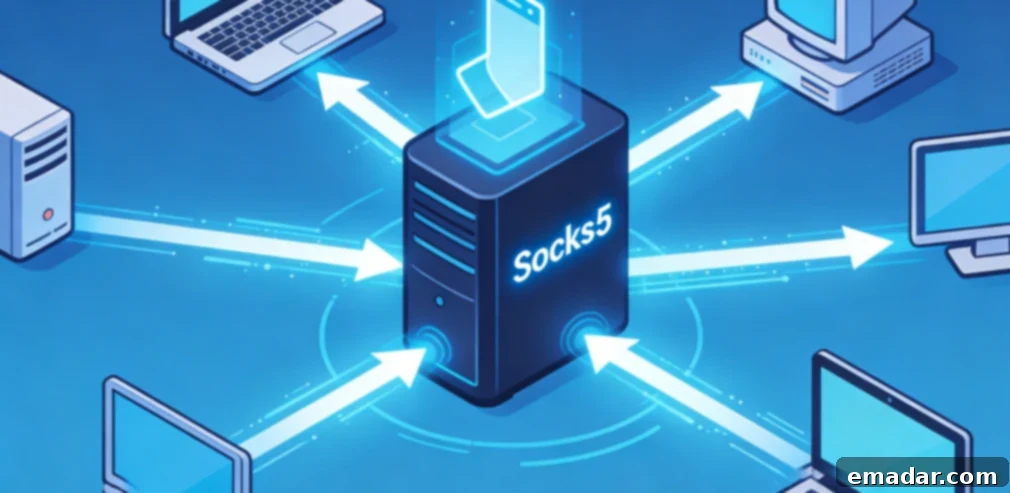
Core Evaluation Dimensions for Selecting Socks5 Proxy IP Services
For businesses selecting Socks5 proxy IP services, it is imperative to establish a comprehensive evaluation framework spanning five critical dimensions: IP resource quality, service stability, security and compliance, technical support capabilities, and overall cost-effectiveness. A holistic approach ensures that the chosen solution aligns perfectly with operational needs and strategic objectives, mitigating potential risks and maximizing return on investment.
Dimension One: IP Resource Quality
IP resource quality is the foundational value proposition of any Socks5 proxy service. A thorough assessment includes:
- Authenticity of IP Type: Verifying whether the service genuinely provides residential IPs or if datacenter IPs are merely masquerading as such. **Verification Method:** Query the IP’s Autonomous System Number (ASN) ownership. True residential IPs should be attributed to Internet Service Providers (ISPs) like Comcast or Verizon, not cloud service providers such as Amazon or DigitalOcean.
- IP Purity: Assessing whether the IP has a clean history, meaning it has not been previously implicated in abusive activities like spamming, web scraping, or fraudulent schemes. **Verification Method:** Consult reputable IP blacklist databases (e.g., Spamhaus, AbuseIPDB). A high purity score indicates a lower risk of immediate blocking by target websites.
- IP Exclusivity: Determining if the IP is dedicated to your sole use or shared among multiple users. Shared IPs carry inherent risks, as the actions of other users can adversely impact the IP’s reputation and lead to undeserved blocks. Exclusive IPs offer greater control and reliability.
- IP Geolocation Accuracy: Confirming that the IP’s geographical location is precise, ideally down to the city level, rather than merely country-level accuracy or exhibiting significant geographical drift. Accurate targeting is crucial for localized content access and market research.
IPFLY’s static residential proxies excel in the dimension of IP quality. They are active static IPs directly allocated by ISPs, perfectly replicating a genuine residential network environment. These are authentic ISP residential proxy IP addresses, offered as personal, dedicated, and pure resources, strictly preventing misuse. Every IP undergoes rigorous business-level selection to ensure exceptionally high purity and precise geolocation accuracy, making them ideal for sensitive applications.
Dimension Two: Service Stability
The stability of Socks5 proxy services directly impacts business continuity and operational efficiency. Key evaluation metrics include:
- Availability Commitment (SLA): The promised monthly uptime percentage stated in the Service Level Agreement. Premium providers should guarantee availability upwards of 99.9% to minimize downtime and ensure continuous operation.
- Connection Success Rate: The actual success rate observed during testing for Socks5 handshake completion and data transmission. A low success rate leads to retries, increased latency, and wasted resources.
- Latency Performance: The additional delay introduced by the proxy layer. Top-tier providers should maintain latency within 50ms for same-continent connections and under 150ms for intercontinental connections, crucial for time-sensitive applications.
- Throughput Assurance: The guaranteed bandwidth capacity for both single connections and aggregate traffic. Ensuring that the service won’t be overloaded or throttled due to other users is vital for high-volume data transfers.
- Fault Recovery Time: The speed of automatic failover in the event of a proxy node failure and the response time for human intervention. Rapid recovery minimizes service interruptions.
IPFLY commits to an impressive 99.9% uptime, supported by dedicated high-performance servers capable of handling massive concurrent requests. This infrastructure ensures high-speed and stable Socks5 connections, offering millisecond-level response times that guarantee fluid business operations. Furthermore, a 24/7 technical support team is always on standby to quickly address any potential faults or issues, ensuring maximum reliability.
Dimension Three: Security and Compliance
As Socks5 proxies facilitate data transit, security and compliance considerations are paramount. Overlooking these aspects can lead to severe data breaches, regulatory penalties, and reputational damage:
- Transmission Encryption: While Socks5 itself doesn’t inherently encrypt data, a robust service provider should offer additional TLS/SSL encapsulation options to secure data in transit, protecting it from interception.
- Authentication Mechanisms: Evaluating support for strong authentication methods, such as IP whitelisting or two-factor authentication (2FA), rather than relying solely on simple username/password combinations which are more vulnerable.
- Logging Policy: Understanding the service provider’s policy on user traffic logging, including retention periods and access permissions. Transparent logging practices are essential for auditing and privacy.
- Compliance Certifications: Checking for industry-recognized security certifications like ISO 27001, SOC 2, and adherence to data protection regulations such as GDPR. These certifications demonstrate a commitment to stringent security standards.
- Privacy Protection: Clear commitments from the provider not to sell user data and the presence of independent privacy audits are critical for protecting sensitive business information and maintaining trust.
IPFLY implements high-standard encryption technologies to prevent data breaches and supports various robust security authentication mechanisms. We strictly adhere to all relevant data protection regulations. For enterprise clients, Non-Disclosure Agreements (NDAs) can be signed to further safeguard commercial secrets, reinforcing our commitment to data security and privacy.
Dimension Four: Technical Support Capability
Enterprise-grade applications demand professional and responsive technical support. This dimension involves evaluating:
- Support Channels and Availability: Whether 24/7 support is offered and the diversity of support methods (e.g., phone, email, ticketing systems, instant messaging). Comprehensive access to support ensures issues can be resolved promptly, regardless of time zone.
- Response Speed: The guaranteed response times for different priority levels of issues. Rapid response to critical problems is essential to minimize operational impact and downtime.
- Technical Depth: The expertise of the support team in network protocols, proxy technologies, and understanding specific customer business requirements. A knowledgeable team can provide more effective and tailored solutions.
- Customization Capabilities: The provider’s willingness and ability to offer customized development or configuration optimizations to meet unique client needs, which is invaluable for complex deployments.
- Knowledge Base Resources: The completeness and accessibility of documentation, tutorials, and best practice guides. A rich knowledge base empowers users to troubleshoot minor issues independently and learn more efficiently.
IPFLY provides a 24/7 professional support team, offering enterprise-level technical assistance round the clock. Dedicated account managers are assigned to cater to enterprise client needs, while technical experts assist with optimizing configurations for complex scenarios. Additionally, a comprehensive knowledge base empowers clients to get started quickly and resolve common queries efficiently.
Dimension Five: Cost-Benefit Analysis
Cost evaluation must transcend a simple comparison of unit prices, focusing instead on the Total Cost of Ownership (TCO). This holistic view accounts for all direct and indirect expenses, alongside potential hidden benefits:
- Direct Costs: This includes the subscription fees for proxy services, traffic charges, and costs associated with the number of IPs. Ensure all pricing models (e.g., pay-per-GB, pay-per-IP, subscription tiers) are clearly understood.
- Indirect Costs: These are often overlooked but can be substantial. They include business losses incurred due to proxy failures, time invested by internal IT teams in troubleshooting and managing proxies, and other operational overheads.
- Hidden Benefits: Factors that positively impact your bottom line but aren’t immediately apparent. Examples include reduced losses from IP blocks due to high IP quality, improved operational efficiency from superior stability, and savings on training costs thanks to professional technical support.
The most cost-effective solution often lies within the mid-to-high price range for professional services, rather than opting for the absolute cheapest or most expensive options. These providers typically strike a better balance between quality, reliability, and support, leading to a lower TCO in the long run.
Residential IP vs. Datacenter IP: Choosing Your Socks5 Proxy Type
One of the most pivotal decisions in Socks5 proxy IP selection is choosing the IP type: residential or datacenter. These two categories exhibit significant differences in resource characteristics, applicable scenarios, and cost structures.
Static Residential Proxies: Authenticity and Reputation
Static residential proxies are active static IPs directly assigned by Internet Service Providers (ISPs), perfectly replicating a genuine residential network environment. These authentic ISP residential proxy IP addresses are permanent, offer unlimited traffic, and support all protocols (Socks5/HTTP/HTTPS). They provide personal, dedicated, and pure resources, effectively eliminating misuse and ensuring unparalleled reliability.
Core Advantages:
- Highest Credibility: Target websites identify these IPs as originating from real home users, significantly minimizing the trigger rate for fraud detection and security mechanisms. This is crucial for maintaining account integrity.
- Long-Term Stability: A fixed IP address allows for the establishment of a trustworthy online identity, which can be beneficial for applications requiring consistent access or profile management.
- Full Protocol Support: Socks5, when combined with residential IPs, meets the most stringent platform requirements, making them versatile for a wide range of sensitive tasks.
Applicable Scenarios:
- Cross-border E-commerce Platform Account Management: Essential for managing multiple accounts on platforms like Amazon, eBay, and Shopify, where IP reputation directly impacts account health.
- Social Media Multi-Account Operations: Managing numerous profiles on platforms such as YouTube, Instagram, and TikTok without triggering anti-bot or suspension mechanisms.
- Ad Verification and Market Research: Simulating real user environments to ensure ad campaigns are displayed correctly and gather accurate localized market intelligence.
- Financial Service Access: Navigating the stringent fraud prevention systems of banks and payment platforms for secure and uninterrupted access.
Cost Characteristics: Static residential proxies typically come with a higher per-unit cost. However, their lower blocking rates and superior stability can translate into a better long-term Total Cost of Ownership (TCO) by reducing operational disruptions and manual interventions.
Dynamic Residential Proxies: Scale and Flexibility
Dynamic residential proxies are powered by a global pool of real user devices, offering dynamic, rotating residential IP addresses. These IPs can change periodically or upon each request, drawing from a vast pool of over 90 million high-quality, genuine residential proxy IPs. They support all protocols (Socks5/HTTP/HTTPS), deliver millisecond-level response times for uninterrupted operations, and are backed by 24/7 technical support.
Core Advantages:
- Massive Resources: A colossal IP pool of over 90 million IPs supports large-scale concurrent requests and frequent IP rotation, ideal for high-volume tasks.
- Global Coverage: Access to IPs from over 190 countries and regions, providing precise geolocation capabilities for targeting specific geographical markets.
- Dynamic Scheduling: Intelligent IP switching based on business needs, adapting seamlessly to complex scenarios that require varied IP origins.
Applicable Scenarios:
- Large-scale Data Collection: Powering distributed web crawlers and circumventing sophisticated anti-scraping measures on target websites.
- Ad Effectiveness Verification: Testing ad displays across multiple geographical locations and IP addresses to ensure optimal visibility and performance.
- Market Intelligence Gathering: Conducting competitor analysis, monitoring prices, and collecting extensive market data to inform strategic decisions.
- SEO Optimization: Gathering search engine results from various geographical regions to analyze ranking fluctuations and optimize SEO strategies.
Cost Characteristics: Typically billed based on traffic consumption or the number of requests. This model is highly suitable for high-concurrency, large-scale applications where IP rotation is frequent and volume is high.
Static Datacenter Proxies: Performance and Cost-Effectiveness
Static datacenter proxies are exclusive IP addresses allocated by service providers, combining the benefits of high speed, stability, and robust anti-blocking capabilities. They provide a completely dedicated pool of high-purity IPs, supporting all protocols (Socks5/HTTP/HTTPS). These are permanent, unlimited-traffic static IPs, offering exceptional anonymity and superior cost-effectiveness. Backed by 24/7 technical support, they represent one of the largest proxy pools on the market with global location options.
Core Advantages:
- High Speed and Low Latency: Datacenter network infrastructure inherently offers superior performance compared to residential broadband, leading to faster connections and lower latency.
- Cost-Effectiveness: Compared to residential IPs, the unit cost of datacenter proxies is significantly lower, making them an attractive option for budget-conscious operations.
- Large-Scale Concurrency: Server-grade resources provide robust support for a high volume of concurrent connections, essential for applications requiring substantial parallel processing.
Applicable Scenarios:
- Automated Testing and CI/CD Pipelines: Ideal for scenarios where speed is critical and IP type requirements are more lenient, such as continuous integration and deployment processes.
- Backend Data Processing: Efficiently handling API calls, data synchronization, and other backend operations that prioritize performance over IP authenticity.
- Gaming Acceleration: Optimizing UDP traffic and meeting low-latency demands for online gaming, providing a smoother and more responsive experience.
- Enterprise Security Gateways: Performance-centric scenarios where the primary goal is secure and fast network routing for internal enterprise systems.
Cost Characteristics: Datacenter proxies generally offer the lowest unit price, providing outstanding value. They are an excellent choice for budget-sensitive or very large-scale applications where the authenticity of a residential IP is not the primary concern.
Hybrid Strategy: Collaborative Deployment of Multi-Type Socks5 Proxies
Sophisticated enterprises often adopt a hybrid deployment strategy, leveraging multiple types of Socks5 proxies to match the optimal resource with specific scenario characteristics. This approach maximizes efficiency and cost-effectiveness while enhancing operational resilience.
Layered Proxy Architecture Design
A layered architecture allows for intelligent routing and resource allocation. At the core, an application layer interacts with a proxy scheduling layer, which dynamically selects the most appropriate proxy type based on predefined rules. This design ensures that each business operation receives the optimal proxy type without manual intervention.
┌─────────────────────────────────────────┐
│           Application Layer (Business Systems)      │
│  E-commerce |  Scraping   | Game Accel. | Office Net.  │
└─────────┴─────────┴─────────┴─────────┘
           │           │           │           │
┌─────────┴─────────┴─────────┴─────────┐
│           Proxy Scheduling Layer (Intelligent Routing) │
│    Select proxy based on target domain, business type, priority  │
└─────────────────────────────────────────┘
           │           │           │
    ┌──────┴──┐   ┌──┴───┐   ┌───┴────┐
    │ Static   │   │ Dynamic│   │ Datacenter │
    │ Residential│   │ Residential│   │ Proxy Pool │
    │ Proxy Pool │   │ Proxy Pool │   │ (General   )│
    │ (Core Accts)│   │ (Scraping) │   │ Use       )│
    └─────────┘   └──────┘   └────────┘
This architectural model allows for fine-grained control over proxy usage, ensuring that high-value operations like managing core e-commerce accounts utilize highly credible static residential IPs, while high-volume data collection can leverage dynamic residential IPs, and general-purpose tasks benefit from the performance and cost-efficiency of datacenter proxies.
Scheduling Strategy Examples
The following table illustrates how different business scenarios can be matched with specific proxy types and scheduling strategies:
| Business Scenario | Target Characteristics | Scheduling Strategy | Proxy Type |
| Amazon Seller Backend | Residential IP, fixed region | Static residential proxy, fixed IP per account | Static Residential |
| Competitor Data Scraping | High-frequency rotation, multi-region | Dynamic residential proxy, switch per request or interval | Dynamic Residential |
| Internal API Calls | High concurrency, low latency | Datacenter proxy, connection pool reuse | Datacenter |
| YouTube Uploads | Residential IP, long-term stability | Static residential proxy, dedicated IP | Static Residential |
| Gaming Servers | UDP, low latency | Datacenter proxy, nearest node selection | Datacenter |
IPFLY offers a unified management platform for all three proxy types, supporting API-driven intelligent scheduling. This empowers enterprises to automate the operational management of their hybrid proxy strategies, seamlessly integrating diverse proxy resources into their existing workflows for optimal performance and efficiency.
Socks5 Proxy IP Performance Optimization Practices
After selecting a high-quality Socks5 proxy service, performance optimization becomes critical to fully unlock the value of your chosen resources. Implementing best practices can significantly enhance speed, reliability, and efficiency.
Connection Management Optimization
Efficient connection management is fundamental for maximizing proxy performance:
- Connection Pool Reutilization: Avoid the overhead of frequently creating and destroying Socks5 connections. Instead, maintain a pool of long-lived connections that can be reused for subsequent requests, reducing setup time and resource consumption.
- Concurrency Control: Set a reasonable upper limit for concurrent connections, carefully balancing the capabilities of the proxy server with the tolerance of the target website. Overloading either can lead to connection failures or temporary bans.
- Timeout Configuration: Implement fine-grained timeout settings for connection establishment, read operations, and write operations. This prevents applications from waiting indefinitely for unresponsive proxies, allowing for quicker failover or retry attempts.
DNS Strategy Optimization
Socks5 proxies support two primary DNS resolution modes: local and remote:
- Local Resolution: The client resolves the domain name locally and then sends the IP address to the proxy server. The advantage is lower load on the proxy server; the disadvantage is that it exposes the client’s DNS query behavior.
- Remote Resolution: The client sends the domain name to the proxy server, which then performs the DNS resolution. The advantage is hiding the client’s DNS activity, enhancing privacy; the disadvantage is increased load on the proxy server and potentially higher latency.
Recommendation: Use remote resolution for privacy-sensitive scenarios. For performance-sensitive applications, local resolution combined with efficient DNS caching on the client side is often the better choice.
UDP Forwarding Optimization
When enabling the Socks5 UDP ASSOCIATE feature, which is crucial for applications like gaming or streaming, specific optimizations are necessary:
- Firewall Configuration: Ensure that the proxy server’s firewall has an adequate range of UDP ports open (e.g., a common recommendation is 16384-65535) to handle the incoming and outgoing UDP traffic.
- UDP Session Timeout: Set a reasonable timeout for UDP sessions. This balances the need for resource reclamation (closing inactive sessions) with maintaining active sessions for prolonged interactions.
- Load Balancing for High Concurrency: For high-concurrency UDP applications, consider distributing traffic across multiple proxy nodes to prevent any single node from becoming a bottleneck, ensuring robust performance.
Failover Mechanism
Building a highly available Socks5 proxy architecture is essential for business continuity:
- Primary and Backup Proxy Pools: Maintain distinct primary and backup proxy pools. Continuously monitor the health status of the primary pool in real-time.
- Connection Failure Retry Strategy: Implement an intelligent retry strategy where, upon a single IP failure, the system automatically switches to a backup IP from the designated pool.
- Circuit Breaker Pattern: Adopt a circuit breaker pattern to temporarily remove continuously failing proxy nodes from active rotation, preventing cascading failures and allowing problematic nodes to recover.
- Regular Health Checks: Proactively perform regular health checks on the entire proxy pool. This helps in early detection of potential issues, allowing for preventative maintenance or replacement before they impact operations.
Risk Control: Compliance Boundaries for Socks5 Proxy Usage
Enterprises utilizing Socks5 proxy IPs must establish clear compliance boundaries to mitigate legal and platform rule risks. Proactive risk management is crucial to avoid severe consequences.
Legal Compliance Red Lines
Adherence to legal frameworks is non-negotiable when using proxy services:
- Cross-border Data Transfer: Ensure that proxy usage aligns with data export security assessment requirements. Sensitive data, especially personal identifiable information (PII), should not be transmitted through foreign proxies without proper legal safeguards and consent.
- Association with Cybercrime: Under no circumstances should proxies be used for illegal activities such as cyberattacks, fraud, money laundering, or any other criminal enterprise. Such actions can lead to severe legal penalties and reputational damage.
- Intellectual Property Rights: When collecting data via proxies, always respect the intellectual property rights and terms of service of target websites. Unauthorized scraping of copyrighted content or proprietary data can result in legal action.
Platform Rule Adherence
Respecting the rules of target platforms is vital for sustained access and operation:
- Terms of Service: Thoroughly read and comply with the terms of service of target platforms. Explicitly prohibited actions, such as reverse engineering or unauthorized data mining, must be strictly avoided.
- Frequency Limits: Adhere to the target website’s robots.txt file and access frequency limits. Do not engage in aggressive or excessive data collection that could be perceived as a denial-of-service attack or abuse.
- Account Security: Refrain from using proxies for activities that violate platform policies, such as account sharing, bulk account registration, or any actions that undermine the platform’s security or fair-use policies.
Internal Audit Mechanism
Implementing a robust internal audit system can significantly enhance compliance and accountability:
- Proxy Usage Logging: Establish comprehensive logs for proxy usage, recording details such as the user, target address, usage time, and data volume transferred. This provides an audit trail for accountability.
- Regular Compliance Audits: Periodically audit proxy usage for compliance, identifying any unusual patterns or deviations from established policies. This helps in early detection of potential misuse.
- Dual Authorization for Sensitive Operations: For highly sensitive operations involving proxies, implement a dual approval process or require authorization from management to ensure proper oversight and reduce the risk of unauthorized activity.
Decision Framework for Socks5 Proxy IP Selection
The selection of Socks5 proxy IP services is a crucial decision for an enterprise’s network infrastructure, demanding a systematic approach to evaluation and implementation. A structured decision framework ensures that all critical aspects are considered, leading to an optimal choice.
Recommended Decision Process:
- Requirements Analysis: Clearly define your business scenarios, specific protocol requirements (e.g., Socks5 only, HTTP/Socks5 hybrid), desired IP types (residential, datacenter, static, dynamic), expected scale of operations, and budgetary constraints.
- Vendor Screening: Based on the five core evaluation dimensions (IP quality, stability, security, support, cost-effectiveness), screen potential vendors. Look for providers that demonstrate strong capabilities across all these areas.
- Proof of Concept (POC) Testing: Conduct small-scale pilot tests with shortlisted vendors. This hands-on evaluation helps verify real-world performance, stability, and compatibility with your existing systems and target applications.
- Cost Modeling: Calculate the Total Cost of Ownership (TCO) for different solutions, considering both direct and indirect costs, as well as potential hidden benefits. Select the solution that offers the best balance of price and value.
- Deployment and Implementation: Implement the chosen solution in phases. Start with non-core business operations to validate its effectiveness and stability, then gradually migrate core business functions.
- Continuous Optimization: Regularly monitor key performance indicators (KPIs) related to proxy usage, such as success rates, latency, and block rates. Periodically re-evaluate proxy strategies and dynamically adjust configurations to maintain optimal performance and adapt to evolving business needs.
IPFLY’s comprehensive range of three proxy types (static residential, dynamic residential, static datacenter) is designed to fully cover all enterprise Socks5 proxy requirements. We provide end-to-end services, from selection consultation and POC testing to deployment implementation and continuous optimization, ensuring a full lifecycle of support for your proxy solutions.

Optimize Your Network Infrastructure with Professional Socks5 Proxy Services
The selection of Socks5 proxy IP services is a far-reaching decision that profoundly impacts your network infrastructure. Opting for a top-tier service provider is synonymous with securing access to reliable IP resources, ensuring stable connection performance, benefiting from expert technical support, and gaining long-term service assurance. This strategic choice empowers businesses to operate with confidence and efficiency in today’s demanding digital environment.
IPFLY stands as a leading professional provider of enterprise-grade Socks5 proxy IP services. Our extensive product line is meticulously designed to meet your diverse needs. Our static residential proxies deliver authentic residential IPs directly assigned by ISPs, making them ideal for scenarios demanding the highest IP reputation and trustworthiness. For large-scale concurrent operations and intelligent IP rotation, our dynamic residential proxies leverage a vast global pool of over 90 million IPs. When performance and cost-effectiveness are paramount, our static datacenter proxies offer exceptional value. Critically, all IPFLY products provide full support for the Socks5 protocol, alongside HTTP and HTTPS protocols, ensuring maximum compatibility and flexibility for your operations.
IPFLY’s service excellence is evident in every detail. We commit to a 99.9% uptime guarantee, ensuring uninterrupted service for your critical operations. Our millisecond-level response times and dedicated high-performance servers are engineered to effortlessly support massive concurrent requests, delivering speed and reliability. Data security is paramount, which is why we employ high-standard encryption to protect your valuable information. Furthermore, our 24/7 professional technical support team is always ready to respond, providing expert assistance whenever you need it. Our dedicated solution architects are prepared to assist you through every stage: from initial selection assessment and Proof of Concept (POC) testing to robust architecture design and deployment optimization. This comprehensive support ensures that your investment in Socks5 proxies yields maximum returns, aligning perfectly with your strategic objectives.
Contact the IPFLY team today to receive a customized Socks5 proxy solution quote. Allow us to underpin your business innovation with professional proxy network services, providing a solid and dependable network infrastructure. With IPFLY, every Socks5 connection you make will be efficient, secure, and reliable, empowering your business to thrive in the digital age.