
In today’s interconnected digital world, where online privacy, unrestricted access to global content, and efficient data operations are paramount, you’ve likely encountered the term SOCKS5. For many, this powerful internet protocol might sound intimidatingly technical, but in reality, it stands as one of the most versatile and robust tools available for navigating the online landscape with enhanced security, anonymity, and efficiency.
This comprehensive guide aims to demystify SOCKS5, breaking down its core functionalities, explaining precisely how it operates, and illuminating the compelling reasons why a growing number of businesses and individual users are increasingly relying on its capabilities. We will delve into its practical applications across various industries and personal uses, conduct a detailed comparison with other prevalent proxy types, and underscore how cutting-edge modern proxy providers are expertly delivering SOCKS5 solutions tailored to meet real-world demands and challenges.
Understanding SOCKS5: A Foundation of Flexible Proxying
At its fundamental level, SOCKS5 (Socket Secure 5) is an advanced internet protocol designed to route network traffic between a client application (such as your web browser, gaming client, or specialized software) and a destination server, all facilitated through an intermediary proxy server. What truly sets SOCKS5 apart from its predecessors and other proxy types, like traditional HTTP proxies, is its remarkable versatility. While HTTP proxies are inherently limited to handling web traffic (specifically HTTP/HTTPS requests), SOCKS5 boasts the ability to manage virtually any type of network traffic. This includes both TCP (Transmission Control Protocol) and UDP (User Datagram Protocol) connections, making it an incredibly adaptable solution for a wide array of online activities.
This unparalleled flexibility means that SOCKS5 isn’t confined to simple web browsing. Its capabilities extend to supporting high-bandwidth activities like seamless video streaming, competitive online gaming, efficient peer-to-peer file sharing (such as torrenting), Voice over IP (VoIP) calls, and even complex enterprise-level automation tasks. Its all-purpose nature and protocol independence make it an indispensable and highly popular choice within modern proxy networks, empowering users with greater control and anonymity over their online interactions.
How SOCKS5 Proxies Operate: A Technical Walkthrough
The operational mechanism of SOCKS5, while sophisticated under the hood, can be understood through a straightforward sequence of events that effectively masks your identity and location. Here’s a detailed breakdown of the process:
- Initial Connection Request: When you configure an application or your operating system to use a SOCKS5 proxy, your client first establishes a connection with the designated SOCKS5 proxy server. This initial handshake verifies the client’s request and any authentication credentials (like a username and password) provided.
- Traffic Forwarding: Upon successful authentication and establishment of the connection, the SOCKS5 proxy server acts as a relay. It takes your outbound network traffic—whether it’s a request to load a webpage, join a game server, or download a file—and forwards it directly to the intended destination website or application server.
- IP Address Masking: Crucially, to the destination server, the incoming request appears to originate from the IP address of the SOCKS5 proxy server, not your actual IP address. This critical step effectively masks your real geographical location and online identity, providing a significant layer of anonymity and privacy.
The primary benefit of this system is that your real IP address remains hidden from external servers, while simultaneously granting you immense flexibility in how your various applications connect to the internet. Unlike some HTTP proxies that might modify the headers of your data packets, SOCKS5 operates at a lower level, acting as a “tunnel” for your data without altering its content. This preserves data integrity, reduces the likelihood of miscommunication or errors, and often results in faster and more reliable connections, especially for non-web tasks like secure video conferencing, large file transfers, or interactive peer-to-peer sharing applications.
Distinctive Features and Advantages of SOCKS5 Proxies
SOCKS5 proxies offer a compelling set of features that contribute to their widespread adoption:
- Unmatched Versatility Across Protocols: SOCKS5 is not limited to a specific internet protocol or service. Its ability to handle TCP and UDP traffic means it seamlessly integrates with virtually any internet-enabled application. This includes web browsers, email clients, FTP software, VoIP applications, torrent clients, online gaming platforms, and various enterprise tools, making it a truly universal proxy solution.
- Enhanced Data Integrity and Fewer Errors: Since SOCKS5 operates by simply routing data packets rather than rewriting them (as HTTP proxies often do), it significantly reduces the risk of data corruption or interpretation errors between the client and the destination server. This ‘transparent’ tunneling approach ensures that your data arrives at its destination in its original form, leading to more stable and error-free connections, particularly vital for sensitive data transfers or real-time applications.
- Superior Performance and Speed: The minimalist nature of SOCKS5—lacking the overhead of data encryption (like a VPN) or complex packet modification—often translates into better performance. When paired with a high-quality, high-speed proxy provider, SOCKS5 proxies can deliver remarkably low latency and high throughput, which is crucial for bandwidth-intensive activities like 4K streaming, competitive online gaming, and rapid data scraping.
- Robust Authentication Options: SOCKS5 protocol inherently supports various authentication methods, including username and password authentication. This adds a crucial layer of security, ensuring that only authorized users can access and utilize the proxy server. This feature is particularly important for businesses and individuals who need to secure their proxy resources against unauthorized access and maintain control over their network traffic.
SOCKS5 Compared: Navigating the Proxy Landscape
Understanding the differences between SOCKS5 and other common proxy protocols is essential for making an informed decision:
- SOCKS4: This is an older version of the SOCKS protocol. Its primary limitations include a lack of support for UDP connections and the absence of authentication features. SOCKS5 represents a significant and clear upgrade, offering vastly improved functionality, security, and broader application support, making SOCKS4 largely obsolete for modern use cases.
- HTTP Proxy: HTTP proxies are specifically designed to handle web traffic (HTTP and HTTPS). They work by understanding HTTP headers and can even cache web content. While excellent for basic web browsing and certain web scraping tasks, their protocol-specific nature makes them unsuitable for non-web applications like online games, email clients, or peer-to-peer file sharing, as they cannot route TCP/UDP traffic outside of HTTP.
- VPN (Virtual Private Network): VPNs offer the highest level of security by encrypting *all* network traffic from your device and routing it through a secure tunnel. This comprehensive encryption provides robust privacy and security, but it often comes at the cost of speed due to the encryption/decryption overhead. SOCKS5, by contrast, does not inherently encrypt data. This means SOCKS5 can offer faster speeds for direct connections but requires users to place greater trust in the proxy provider for privacy, or to use SOCKS5 in conjunction with SSL/TLS for secure communication. VPNs typically operate at the operating system level, affecting all applications, while SOCKS5 can be configured on an application-by-application basis.
In summary: if your goal is unparalleled flexibility across a diverse range of applications and devices, alongside enhanced anonymity without the performance overhead of full encryption, SOCKS5 is often the optimal and most flexible choice.
Common and Powerful Use Cases for SOCKS5 Proxies
The versatility of SOCKS5 makes it invaluable for a multitude of personal and professional applications:
- Bypassing Geo-Restrictions and Content Blocks: One of the most popular uses for SOCKS5 proxies is to circumvent geographical content limitations. Whether you wish to access a streaming platform exclusive to the US, a specific online store only available in Europe, or news content blocked in your region, configuring a SOCKS5 proxy with an IP address from the desired country makes this access seamlessly possible. This is crucial for global market research and staying informed.
- Enhanced Privacy for File Sharing (P2P/Torrenting): Peer-to-peer (P2P) applications and torrent clients often integrate smoothly with SOCKS5 proxies. By routing your traffic through a SOCKS5 server, your real IP address is concealed from other peers in the network, significantly improving your privacy while sharing or downloading files. This adds a layer of protection without compromising download speeds.
- Optimizing Online Gaming Experiences: Gamers frequently leverage SOCKS5 proxies for several strategic advantages. They can use proxies to reduce latency and ping times by connecting to game servers via a closer proxy, bypass frustrating IP bans, or access region-specific game servers and content that might otherwise be unavailable in their location. The high speed and low overhead of SOCKS5 are particularly beneficial for real-time gaming.
- Boosting Business Automation and Data Intelligence: For businesses, SOCKS5 proxies are a cornerstone of various automation tasks. Companies utilize them for vital market research, enabling them to gather competitive intelligence and analyze trends from different geographical perspectives. They are also indispensable for managing multiple social media accounts securely, executing large-scale web scraping operations, and enhancing SEO optimization by monitoring search engine rankings from diverse locations without being blocked or flagged.
- Secure Remote Access and Network Management: SOCKS5 can facilitate more secure remote access to internal company networks, acting as a gateway that allows authorized personnel to connect to specific resources without exposing the entire network to the public internet. This offers a granular level of control compared to broader VPN solutions.
IPFLY and SOCKS5 Proxies: A Partnership for Performance
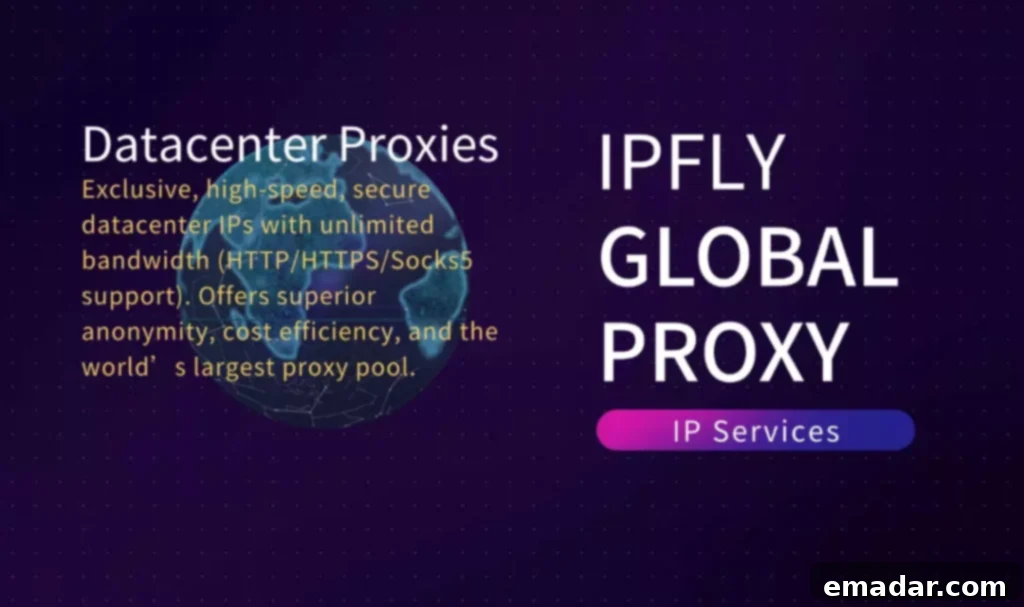
While the SOCKS5 protocol is undeniably powerful and versatile, its actual reliability, speed, and effectiveness depend almost entirely on the quality and infrastructure of the proxy provider you choose. This is precisely where a leading provider like IPFLY distinguishes itself and shines.
IPFLY offers unparalleled access to an expansive network of 90M+ global IPs, meticulously distributed across more than 190 countries worldwide. This vast pool includes a strong and diverse presence in both residential and highly optimized datacenter IP categories. For users specifically seeking robust SOCKS5 solutions, IPFLY’s dedicated datacenter proxies are exceptionally popular and highly recommended for their outstanding performance:
- Blazing Speed and Ultra-Low Latency: IPFLY’s datacenter proxies are engineered and rigorously optimized for minimal latency and maximum throughput. This makes them the ideal choice for demanding applications such as high-definition streaming, competitive online gaming where every millisecond counts, and rapid, large-scale data collection tasks.
- Unwavering Stability and Reliability: A cornerstone of IPFLY’s offering is its robust, self-built server infrastructure. By owning and operating their hardware, IPFLY ensures superior control over network performance, guaranteeing strong uptime, consistent connectivity, and unmatched reliability for all your proxy needs.
- Exceptional Flexibility for Diverse Operations: Businesses across various sectors leverage IPFLY’s comprehensive SOCKS5 support for a multitude of critical tasks. These include accurate ad verification, intricate market research and competitor analysis, secure social media management, and sophisticated automation routines that demand high volumes of stable, anonymous connections.
Given that SOCKS5 does not encrypt traffic by default, the level of trust placed in your proxy provider is paramount. IPFLY’s cutting-edge infrastructure, coupled with stringent security screening and transparent operational practices, instills confidence, allowing businesses to scale their digital operations securely and without compromise.
Key Considerations for Choosing the Right SOCKS5 Proxy Provider
Selecting the ideal SOCKS5 proxy provider is a critical decision that can significantly impact your online operations. When evaluating potential partners, consider the following crucial factors:
- Extensive Location Coverage: Does the provider offer a wide and diverse range of IP addresses in the specific countries and regions you require? Strategic location coverage is vital for bypassing geo-restrictions, conducting targeted market research, and testing localized content effectively.
- Guaranteed Speed and Unwavering Reliability: Assess whether the provider’s infrastructure is robust enough to handle your specific workload requirements. Look for evidence of low latency, high bandwidth, and consistent uptime. Factors like dedicated servers, optimized routing, and ample bandwidth contribute to superior performance.
- Flexible Authentication Methods: Verify the authentication options supported by the provider. Support for both username/password authentication (for secure individual access) and IP-based whitelisting (for stable, automated access from known servers) offers greater flexibility and security management.
- Strong Reputation and Industry Trust: Research the provider’s standing within the industry. Are they trusted by businesses in sectors like e-commerce, digital marketing, or cybersecurity? Positive reviews, transparent policies, and responsive customer support are indicators of a reputable and reliable service.
- Scalability and Pricing Models: Consider whether the provider can accommodate your future growth. Do they offer flexible pricing models (e.g., pay-as-you-go, monthly subscriptions, volume discounts) that align with your budget and usage patterns? Scalability is crucial for businesses with evolving needs.
For demanding enterprise-level applications, providers like IPFLY consistently stand out due to their massive global IP pool, commitment to performance, and specialized solutions tailored for various use cases, ensuring businesses have the resources they need to thrive.
Understanding Risks and Best Practices with SOCKS5 Proxies
While SOCKS5 proxies are incredibly powerful and versatile tools, it’s essential for both beginners and experienced users to understand their inherent limitations and adopt best practices for secure and effective use:
- No Encryption by Default: The most significant distinction to remember is that SOCKS5, by itself, is a routing protocol, not an encryption protocol. Unlike VPNs, SOCKS5 does not automatically encrypt your data traffic. If you’re transmitting sensitive information, it’s crucial to ensure that your application or the destination website uses SSL/TLS encryption (e.g., HTTPS for web browsing) to secure your data in transit. For activities requiring maximum privacy, combining SOCKS5 with a VPN can offer both speed and encryption.
- The Paramount Importance of Provider Trust: Since your internet traffic passes directly through the SOCKS5 proxy server, the proxy provider effectively sees all the data you transmit (unless it’s encrypted by SSL/TLS). Therefore, choosing a provider with a transparent privacy policy, a strong reputation for ethical operation, and reliable customer support is absolutely critical. A compromised or malicious proxy server can expose your activities.
- Matching Use Cases to Functionality: Not every online activity requires a SOCKS5 proxy. For casual, general web browsing where privacy is a moderate concern, a well-regarded VPN might be a simpler solution. However, for specialized business applications like web scraping, multi-account management, or specific tasks requiring high speed and IP diversity without encryption overhead, SOCKS5 proxies are often the smarter and more efficient choice. Understand your specific needs to select the right tool.
- Ethical and Legal Use: Always ensure that your use of SOCKS5 proxies complies with local laws, the terms of service of the websites or services you access, and ethical online practices. Misusing proxies for illegal activities can lead to severe consequences.
Conclusion: Embracing the Power of SOCKS5 for the Modern Web

SOCKS5 is far more than just a fleeting buzzword in the complex world of proxy technologies. It represents a flexible, highly efficient, and universally applicable internet protocol that underpins a vast array of diverse applications—from enhancing personal online privacy during streaming and optimizing competitive gaming experiences to powering sophisticated enterprise automation and critical data intelligence operations.
Whether you are an individual aiming to seamlessly bypass geographical restrictions to access global content or a business dedicated to scaling digital operations with enhanced anonymity and reliability, SOCKS5 offers the unparalleled adaptability and performance you need to succeed in today’s dynamic online environment. And with highly reliable and reputable providers like IPFLY, you can confidently ensure that your SOCKS5 proxy connections remain consistently stable, exceptionally fast, and unequivocally trustworthy, empowering your every online endeavor.
📢Want to stay at the forefront of proxy technologies and gain invaluable industry insights? Join IPFLY’s Telegram channel today to learn more, engage with experts, and connect with a thriving community of individuals and businesses exploring the vast potential of SOCKS5 and beyond.