

The global e-commerce landscape has been a whirlwind of uncertainty for cross-border sellers, particularly those heavily invested in the U.S. market. Recent shifts in tariff policies, characterized by unpredictable fluctuations, have sent shockwaves through the supply chain, leaving many businesses scrambling for stability. The sentiment among sellers is clear: inaction is not an option. Faced with the prospect of escalating costs and shrinking margins, the quest for viable alternatives has become paramount for survival and growth.
For merchants primarily operating on U.S. platforms, the specter of high tariffs looms large, forcing difficult decisions. While many have initially resorted to price increases to offset mounting expenses, this strategy offers only a temporary reprieve. Consumers are increasingly discerning, and inflated prices can quickly lead to diminished demand and lost competitiveness. Consequently, the focus has unequivocally shifted towards identifying and penetrating new, more stable markets. This strategic pivot represents a critical juncture for countless e-commerce businesses.
A recent industry survey, conducted by Hugo Cross-border among U.S.-centric e-commerce sellers, highlighted this emerging trend. The findings revealed that nearly half of the respondents had already implemented price adjustments to mitigate tariff-related losses. However, this measure is largely perceived as a stop-gap. More significantly, a resounding majority – over sixty percent of sellers – are actively preparing to redirect their efforts toward the European market. This substantial exodus could significantly alter the dynamics of international trade, potentially leaving U.S. market shelves less stocked with diverse imported goods.
As sellers contemplate this major geographical shift, it’s imperative to acknowledge that the success of cross-border e-commerce hinges on a robust and reliable digital infrastructure. Expanding into Europe, a complex and diverse market, necessitates a stable and secure online presence. This is where a dependable static residential IP service becomes indispensable. For navigating the intricacies of the European digital landscape, solutions like IPFLY offer the essential connectivity needed to thrive.

Global Supply Chain in Turmoil: Shipping Companies Face Unprecedented Challenges
The U.S. tariff policies have created a profound ripple effect across the global supply chain, with the shipping industry bearing the brunt of the instability. Freight forwarders and ocean carriers are reporting a dramatic downturn, as container orders plummet. The prevailing policy uncertainty has instilled a deep sense of caution among cargo owners, who are hesitant to commit to shipments, fearing unexpected tariff impositions that could erode their profit margins. U.S. importers, in particular, have been forced to cancel or postpone orders, leading to a cascade of booking cancellations within freight forwarding agencies. This volatile environment has caused significant disruptions across the entire international logistics network.
Data from Vizion starkly illustrates the severity of this contraction. In just a single week, container orders destined for the U.S. plummeted by an astounding 67%, falling from 516,000 TEU (Twenty-foot Equivalent Units) to a mere 169,000 TEU. Similarly, freight volumes on the critical Asia to U.S. West Coast routes experienced a steep decline, from 148,000 TEU to 54,000 TEU. The Ningbo Shipping Exchange’s freight rate index also reflected this downturn, with U.S. West Coast routes seeing a 2.3% weekly drop and U.S. East Coast routes falling by 0.5%. These figures underscore the immense pressure on shipping companies to maintain profitability amidst declining demand.
In a desperate attempt to stabilize falling freight rates, shipping lines have announced significant capacity reductions, with a 30% cut across trans-Pacific routes. However, even these drastic measures are struggling to counteract the precipitous drop in cargo volumes. The unpredictable nature of tariff policies has led to widespread pauses in U.S.-bound shipments. Industry insiders reveal that nearly 40% of cargo originating from China for the U.S. market has been put on hold due to the new tariff implementations, indicating a substantial disruption in trade flows.
The air freight market has also been severely impacted. To circumvent the prohibitively high cumulative tariff costs, which can reach up to 125% for certain goods, air cargo prices have soared. The standard air freight rate from Los Angeles to Shanghai, for instance, surged from an average of $0.5-$0.8 per kilogram to $2 per kilogram, requiring advance booking. Last-minute bookings have seen prices exceed $5 per kilogram, with some East Coast routes reaching an astonishing $11 per kilogram. The core issue is no longer just the tariff rates themselves, but the erratic and unpredictable policy shifts from the U.S. government, which create an environment of extreme uncertainty.
A senior logistics project manager at Amazon Global Selling noted that approximately 90% of e-commerce goods shipped from China to the U.S. typically utilize sea freight. However, the latest tariff policies are expected to have a disproportionately greater impact on air freight volumes. This is because air freight often carries higher-value goods, making them more vulnerable to significant cost increases. For example, a tariff increase from 10% to 25% on an air-shipped package valued at $100,000 (such as a batch of iPhones) would incur an additional $15,000 in duties, severely eroding profit margins and making many shipments unfeasible.
The European Horizon: A Promising Alternative for Displaced E-commerce Sellers
With the U.S. market becoming increasingly unstable due to ongoing tariff disputes, the search for a “second market” has transformed from a strategic option into an urgent necessity for cross-border sellers. Europe, with its vast consumer base, stable regulatory environment, and mature e-commerce ecosystem, has emerged as the most compelling alternative. The collective sigh of relief and renewed optimism among sellers contemplating this shift is almost palpable.
Chinese sellers constitute a significant portion of the Amazon marketplace, representing half of its merchant base. Shenzhen alone boasts over 100,000 registered Amazon merchants, collectively generating an annual revenue of approximately $35.3 billion. This substantial presence underscores the profound impact that restrictive trade policies can have on a vital segment of the global e-commerce industry. As tariffs tighten their grip, the pressure on these sellers to find new avenues for growth has intensified.
One anonymous seller from Shenzhen shared their predicament, expressing how their aspiration to build a fortune selling Bluetooth speakers in the U.S. market has been thwarted by tariffs that relentlessly devour their profits. Prices for their U.S.-bound inventory have already seen an increase of 30%, a burden that is increasingly difficult to pass on to consumers without losing market share. Such anecdotes are becoming increasingly common, highlighting the urgent need for market diversification.
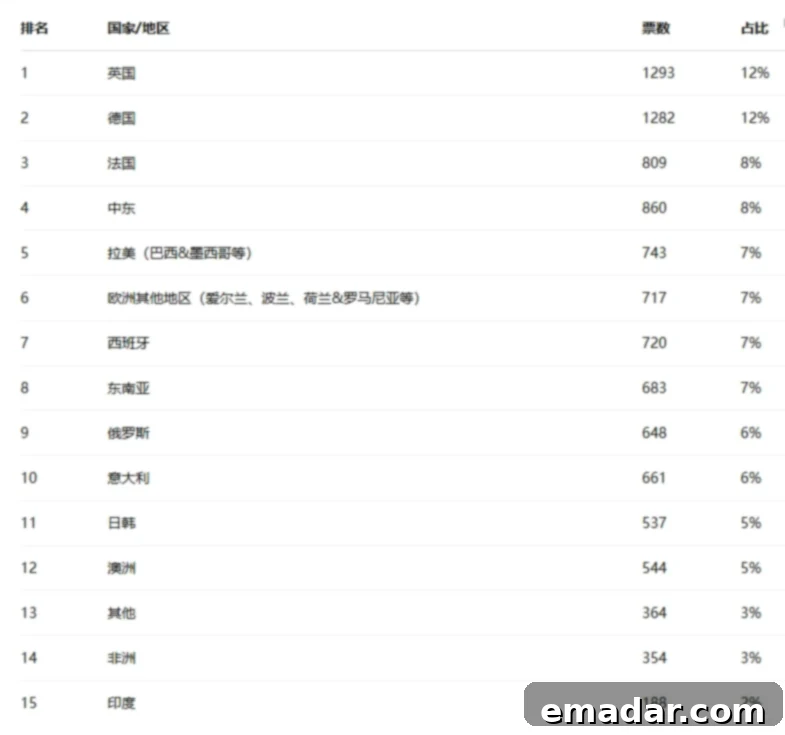
The Hugo Cross-border survey confirmed this trend, revealing that 61% of sellers are now actively focusing their expansion efforts on Europe. This represents a significant migration of e-commerce capital and strategy, akin to a major shift in trade routes. Among European nations, the United Kingdom and Germany have emerged as the most popular destinations, likely due to their established e-commerce infrastructure, large economies, and high consumer spending power.
Crucially, successful entry and sustainable operation in the European market demand specific technological infrastructure. A robust static residential IP service, such as those offered by IPFLY, is an absolute prerequisite. Unlike dynamic IPs, which are frequently flagged and blocked by sophisticated European e-commerce platforms and services due to their association with bots or suspicious activity, static residential IPs provide stability and authenticity. This ensures that sellers can conduct critical operations like market research, competitor analysis, account management across multiple regions, and seamless product listings without encountering frustrating geo-restrictions or account suspensions. No seller wants to invest significant effort in product sourcing and preparation, only to have their operations curtailed by a simple IP-related issue.
To ensure a smooth transition and successful integration into the European e-commerce landscape, sellers must undertake thorough preparation and strategic planning. Key considerations include:
- Refined European Operations: The European market, while promising, often presents a higher barrier to entry compared to the U.S. Initial order growth may be slower, requiring a more nuanced approach. Success often comes from coordinated multi-site operations, leveraging the interconnectedness of European nations. However, this environment typically features less intense competition and offers potentially higher profit margins for well-executed strategies.
- Critical Localized Keywords: Effective product discoverability in Europe hinges on deep localization of keywords. This is especially vital in markets like Germany, where direct translation from U.S. listings is often insufficient. Sellers must conduct extensive research into local search habits, cultural nuances, and specific terminology used by target consumers to optimize their product listings for maximum visibility.
- Multi-Site Operation Strategy: To maximize reach and resilience, sellers are strongly advised to actively expand their presence across multiple European marketplaces, including the UK, Germany, France, Italy, and Spain. Furthermore, leveraging Amazon’s Pan-European FBA program can significantly streamline logistics, consolidate inventory, and stabilize order volumes across these diverse regions.
While the European market does present its own set of challenges, particularly concerning market access regulations and complex tax structures, these are often more predictable and manageable compared to the erratic tariff policies plaguing the U.S. The lower competitive pressure and higher potential profit margins in many European niches remain significant advantages, making it an attractive destination for businesses seeking stability and growth.
IPFLY’s static residential IP solutions are specifically designed to overcome the common hurdles faced by cross-border sellers. With a focus on stability, security, and a high success rate, IPFLY empowers businesses to operate confidently in new territories. Our infrastructure relies on proprietary servers, self-developed data algorithms, and a meticulously designed IP screening mechanism, ensuring unparalleled reliability. With coverage in over 190 countries and regions, IPFLY offers tailored solutions for virtually any market expansion.
Shifting away from the U.S. market is not an end, but rather a strategic redirection towards new opportunities. With the dependable support of IPFLY’s static residential IPs, sellers can confidently navigate the unique network restrictions and operational demands of the European market, paving the way for the successful expansion of their e-commerce empire.