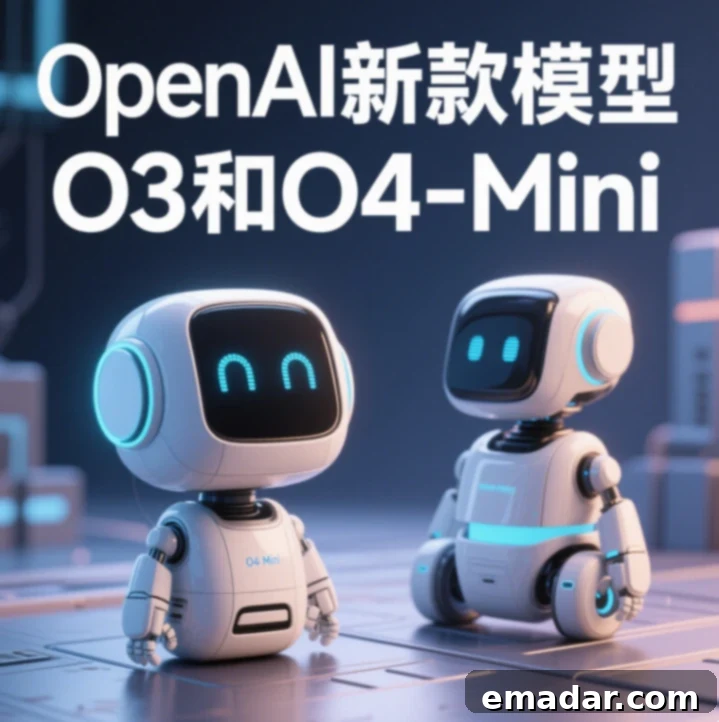
OpenAI has once again captivated the tech world with the release of its groundbreaking language models: o3 and o4-mini. These new iterations represent a significant leap forward in AI capabilities, promising enhanced performance, unparalleled efficiency, and greater ease of use for developers and enthusiasts alike. The excitement is palpable, with many eager to integrate these powerful tools into their projects. However, despite their impressive advancements, users have quickly discovered that accessing and fully leveraging these models in real-world scenarios can present a series of unexpected challenges.
The Transformative Power of OpenAI’s New Models: o3 and o4-mini
At their core, o3 and o4-mini are engineered to push the boundaries of what’s possible with artificial intelligence, inheriting the robust foundation of the GPT series while introducing several key enhancements that redefine industry standards. These models are not just incremental updates; they represent a paradigm shift in how we interact with and utilize AI.
- Enhanced Understanding and Nuance: The new models boast a significantly improved comprehension ability, allowing them to tackle complex text analysis with greater accuracy and discern subtle emotional cues within natural language. Imagine feeding it a intricate legal document, and instead of merely summarizing, it can pinpoint underlying intentions and potential ambiguities. Or, consider asking it to analyze a classic literary piece; it can not only identify themes but also delve into the symbolic meanings and emotional landscapes embedded within the text, providing insights that go beyond surface-level interpretation. This deep contextual understanding makes them invaluable for tasks requiring sophisticated linguistic processing, from sentiment analysis to advanced research.
- Unprecedented Speed and Responsiveness: One of the most noticeable improvements is the dramatic reduction in response times. What previously might have taken several seconds for an AI to process and generate a reply now happens almost instantaneously. This “real-time” interaction capability is a game-changer for applications that demand immediate feedback, such as live chatbots, interactive virtual assistants, or dynamic content generation platforms. The fluid, seamless conversational experience fosters greater user engagement and opens doors for entirely new categories of AI-powered services that were previously hindered by latency.
- Cost-Efficiency for Broader Adoption: Optimizations in the underlying model architecture have led to a substantial reduction in computational resource consumption. This translates directly into lower operational costs for developers and businesses utilizing the OpenAI API. For startups, SMEs, and large enterprises alike, this cost reduction makes advanced AI more accessible and economically viable, enabling wider integration into various products and services. It empowers innovators to experiment more freely and deploy AI solutions at scale without prohibitive expenses, ultimately democratizing access to cutting-edge artificial intelligence.
- Optimized Deployment and Accessibility: The o4-mini model, in particular, stands out due to its smaller footprint. This compact design makes it exceptionally well-suited for deployment in environments with limited computing resources, such as edge devices, mobile applications, or embedded systems. This means that powerful AI capabilities are no longer confined to high-performance servers; they can now be brought closer to the end-user, enabling intelligent applications on a broader range of hardware, even when top-tier device performance isn’t available. This flexibility significantly expands the potential reach and practical applications of OpenAI’s models.
Navigating the Obstacles: Challenges in Accessing OpenAI’s Advanced AI
While the capabilities of o3 and o4-mini are undeniably exciting, the path to fully harnessing their power is often fraught with practical hurdles. Many users and developers encounter significant obstacles that prevent them from achieving seamless integration and consistent access, largely due to a combination of regional policies, OpenAI’s stringent risk control strategies, and network infrastructure limitations. These challenges can severely impact productivity and the overall user experience.
- Persistent Connectivity Issues: Users frequently report encountering connection timeouts, unexpected disconnections, and general instability when attempting to access OpenAI’s API. These erratic connection patterns can severely disrupt workflows, especially for tasks requiring continuous data exchange or long-running AI operations. The frustration of an interrupted query or a failed API call can quickly negate the efficiency gains promised by the new models, leading to lost time and decreased operational reliability.
- Rigorous IP Address Restrictions: OpenAI, like many major online services, employs sophisticated IP filtering mechanisms to prevent abuse, enforce geographical restrictions, and maintain service integrity. This means that certain IP address ranges, particularly those associated with data centers, VPNs, or regions under specific regulatory frameworks, may be blocked or severely throttled. Consequently, legitimate users attempting to access the new models from these restricted IP addresses can find themselves completely unable to connect, facing error messages or outright rejection, effectively locking them out of the service.
- Elevated Account Security Risks: Consistent, high-frequency access to OpenAI’s API from a single IP address, or from an IP perceived as “suspicious” due to its origin or history, can trigger automated security protocols. This can lead to your account being flagged for unusual activity, temporary suspensions, or in severe cases, permanent banning. Protecting your account integrity is paramount, as a ban can mean losing access to valuable models, saved work, and potentially incurring significant operational setbacks. These security measures, while intended to safeguard the platform, often become a bottleneck for legitimate power users and developers.
These issues act like an impenetrable fog, obscuring the true potential of OpenAI’s latest innovations and making it challenging for ambitious explorers to truly appreciate and utilize the powerful capabilities of the new models.
Residential Proxies: Your Gateway to Uninterrupted OpenAI Access
So, is there a reliable method to navigate these complex challenges and ensure consistent, secure access to OpenAI’s o3 and o4-mini models? Absolutely. This is precisely where residential proxies emerge as the indispensable solution, acting as a crucial compass to guide you through the regulatory and technical mists.
To put it simply, imagine your device as a small vessel attempting to reach a distant, treasure-rich island – the OpenAI servers. The waters are treacherous, with strong winds and unpredictable currents threatening to capsize your journey. Residential proxy IPs function as a network of sturdy lighthouses, each representing a safe, legitimate route that guides your ship, minimizes risks, and ensures a smooth passage to your destination.
The core principle behind **residential proxy IPs** is elegant in its simplicity: they reroute your internet traffic through IP addresses assigned to real, legitimate residential users by Internet Service Providers (ISPs). This makes your requests appear to originate from a typical home user, effectively camouflaging your actual location and identity. By mimicking ordinary user behavior, residential proxies can effortlessly bypass most geographical restrictions, IP blocks, and stringent risk control strategies implemented by services like OpenAI.
In what scenarios do residential proxy IPs prove to be invaluable?
- Bypassing Geo-Restrictions and Accessing Global Features: If OpenAI’s services or specific features are restricted in your geographical region, or if you need to simulate access from diverse global locations, using a residential proxy allows you to instantly adopt an IP address from a permitted area. This grants you seamless entry and ensures you can leverage all functionalities without being hindered by location-based blocking. This is crucial for global development teams or businesses targeting specific markets.
- Fortifying Account Security and Preventing Bans: High-volume requests from a single IP address can quickly trigger security alerts. By routing your requests through a rotation of different residential IP addresses, you can simulate multiple distinct users accessing OpenAI. This distributed access significantly reduces the risk of your account being flagged, throttled, or even banned due to suspicious activity, ensuring the long-term integrity and availability of your OpenAI access.
- Ensuring Connection Stability and Reliability: Premium residential proxy networks are built on robust infrastructure, offering superior stability compared to direct connections that might be subject to local network congestion or ISP throttling. By routing through a reliable proxy, you can significantly reduce the likelihood of connection timeouts, disconnections, and other instabilities, thereby improving the consistency and efficiency of your interactions with OpenAI’s models.
Consider a practical example:
Let’s say you are a data scientist tasked with conducting large-scale market research using OpenAI’s new models for sentiment analysis across millions of data points. Directly making numerous, high-frequency API calls from your corporate IP address could quickly lead to your IP being restricted or your account flagged. However, by integrating a residential proxy solution into your workflow, you can programmatically assign a different residential IP address to each batch of requests. This strategy creates the illusion of organic, distributed access, allowing you to perform your extensive data analysis without interruption, ensuring your research progresses smoothly and efficiently, free from the constraints of API rate limits or IP bans.
Selecting the Optimal Residential Proxy for Your OpenAI Endeavors
Choosing the right residential proxy provider is akin to selecting the perfect tool for a critical task; it requires careful consideration of several key factors to ensure optimal performance, security, and reliability for your OpenAI integrations.
- Authenticity and Quality of IP Addresses: The paramount factor is ensuring that the IP addresses provided are genuinely residential, meaning they are assigned to real households by ISPs, rather than originating from data centers or Virtual Private Servers (VPS). Authentic residential IPs are significantly less likely to be detected and blocked by sophisticated platforms like OpenAI, offering superior reliability and longevity.
- Expansive Global Coverage: A high-quality residential proxy service should offer a vast pool of IP addresses spanning numerous countries and regions. This extensive coverage is crucial for overcoming various geographical restrictions, enabling you to simulate access from virtually any location worldwide, and providing flexibility for diverse use cases and market targeting.
- Blazing-Fast and Consistent Connection Speeds: While the new OpenAI models offer incredible speed, the effectiveness of your interaction still hinges on the proxy’s connection speed. A stable, high-speed connection through your proxy is essential to fully leverage the rapid response times of o3 and o4-mini, ensuring a seamless user experience and preventing any bottlenecks in your data transfer.
- Robust Security and Privacy Protocols: Data security and user privacy should never be compromised. Opt for a residential proxy provider that offers strong encryption protocols and adheres to strict privacy policies. This ensures that your sensitive data remains protected during transit and that your online activities remain anonymous, safeguarding your intellectual property and operational integrity.
Enter IPFLY, a leading residential proxy provider that meticulously addresses all these critical selection criteria. IPFLY boasts an extensive and continually expanding IP resource pool, offering a versatile range of solutions including static residential proxies, dynamic residential proxies, and robust data center proxies. With unparalleled coverage across over 190 countries and regions worldwide, IPFLY is expertly positioned to effectively resolve the myriad access challenges encountered when interacting with OpenAI’s latest models, guaranteeing a smooth, secure, and uninterrupted exploration journey.
IPFLY distinguishes itself through its entirely self-built server infrastructure and proprietary big data algorithms, which work in tandem to meticulously filter and select only the highest quality IP resources. This sophisticated approach ensures that every single proxy link provided by IPFLY delivers exceptional success rates and uncompromising security. With IPFLY, you can confidently unlock and harness the full power of OpenAI’s o3 and o4-mini models without any apprehension about connectivity issues, IP blocks, or account security risks.
The release of OpenAI’s o3 and o4-mini models truly heralds a new era of possibilities in artificial intelligence. And with IPFLY’s superior residential proxy solutions, you are equipped with the essential key to unlock these boundless opportunities. By mastering the use of this key, you can seamlessly integrate and leverage OpenAI’s powerful functionalities, confidently paving your way to explore the infinite future of AI.
Register with IPFLY today and start enjoying exclusive benefits!