Unlocking Online Anonymity and Security: A Comprehensive Guide to Proxies
In today’s hyper-connected world, where digital footprints are constantly tracked and cyber threats loom large, safeguarding your online privacy and enhancing security has become more critical than ever. This is precisely where **proxies** step in as indispensable tools for individuals, businesses, and organizations alike. A **proxy server** acts as a sophisticated intermediary, establishing a crucial buffer between your device and the vast expanse of the internet. Its primary function is to mask your true **IP address**, thereby providing a significant layer of anonymity and control over your online presence.
Whether your goal is to seamlessly access geo-restricted content from across the globe, fortify your digital defenses against malicious attacks, or conduct extensive **web scraping** for invaluable market research and data analysis, proxies offer an incredibly versatile and powerful solution. This in-depth guide aims to demystify the world of proxies, meticulously exploring their fundamental nature, diverse classifications, profound benefits, and intricate operational mechanisms. By understanding these core aspects, you’ll be empowered to navigate the complex digital landscape with unwavering confidence, ensuring both privacy and efficiency in your online endeavors.

Decoding Proxy Types: Finding the Perfect Fit for Your Needs
The world of proxies is rich and diverse, offering a spectrum of options tailored to specific requirements and levels of anonymity. Understanding the different **proxy types** is crucial for making an informed decision. Here’s a breakdown of the most common classifications and their unique attributes:
Residential Proxies
Considered the gold standard for high anonymity, **residential proxies** utilize real IP addresses assigned by Internet Service Providers (ISPs) to genuine residential users. This means that websites perceive traffic from these proxies as coming from legitimate home users, making them extremely difficult to detect and block. They are ideal for sensitive tasks requiring the highest level of trust and stealth, such as advanced **web scraping**, market research, ad verification, and managing multiple social media accounts without triggering red flags. Their authenticity drastically reduces the risk of IP bans, ensuring uninterrupted operations.
Datacenter Proxies
In contrast to residential proxies, **datacenter proxies** are IP addresses hosted in large data centers. They are typically faster and cheaper than residential proxies, making them suitable for tasks where speed is paramount and the risk of detection is less critical. While they offer anonymity by hiding your real IP, their origin from a data center is often identifiable to sophisticated anti-bot systems, making them less effective for highly sensitive or aggressive data collection. They are commonly used for general browsing, accessing less protected geo-restricted content, or basic data fetching.
Shared and Dedicated Proxies
Proxies can also be categorized by their usage:
- Shared Proxies: These IPs are utilized by multiple users simultaneously. While more cost-effective, the actions of other users can potentially affect your experience, including increased chances of IP bans if one user misuses the proxy.
- Dedicated Proxies: An IP address exclusively assigned to a single user. This offers greater control, higher reliability, and better performance, as you’re not sharing bandwidth or risking the consequences of others’ actions. They are preferred for critical applications where consistent performance and exclusivity are essential.
Protocol-Based Proxies
Beyond the source of the IP, proxies also vary by the communication protocols they support:
HTTP Proxy: Specifically designed for handling web traffic, an **HTTP proxy** facilitates communication for websites and web-based applications. It’s an excellent choice for tasks like accessing geo-blocked content (e.g., streaming services, regional news) or performing basic **web scraping**. However, a key limitation is its lack of encryption, meaning data transmitted between your device and the proxy server is not secured. This makes it less suitable for activities involving sensitive personal or financial information.
HTTPS Proxy: Representing a significant advancement over the standard HTTP proxy, the **HTTPS proxy** incorporates an essential layer of encryption. It secures the data exchange between your device and the proxy server using SSL/TLS protocols, ensuring confidential browsing. This enhanced security makes it the preferred option for activities that demand high data integrity, such as online banking, e-commerce transactions, or accessing confidential business data.
SOCKS Proxy: Offering unparalleled versatility compared to HTTP and HTTPS proxies, **SOCKS proxies** (commonly SOCKS4 and SOCKS5) are protocol-agnostic. This means they can handle any type of network traffic, including TCP and UDP, beyond just HTTP requests. They operate at a lower level of the network stack, making them harder to detect and providing a higher degree of anonymity. **SOCKS5 proxies** are particularly favored for tasks requiring advanced anonymity and compatibility with various applications, including peer-to-peer file sharing (torrenting), online gaming, and specialized data transfers.
The optimal **proxy type** for you will ultimately depend on your specific use case, desired level of anonymity, security requirements, and budget. For maximum stealth and reliability, residential proxies are often the superior choice.
The Multifaceted Advantages of Utilizing Proxies
Incorporating proxies into your online toolkit unlocks a multitude of advantages, transforming your digital experience in profound ways. These benefits make proxies an indispensable asset for a wide array of online activities:
- Unparalleled Online Anonymity and Privacy: In an era of pervasive online surveillance and data tracking, proxies serve as your primary defense. By effectively masking your real **IP address**, they prevent websites, advertisers, and third parties from identifying your location, tracking your browsing habits, and compiling detailed profiles of your online behavior. This profound level of anonymity safeguards your privacy, allowing you to browse the internet without leaving a discernible digital footprint.
- Fortified Internet Security: Proxies can function as a formidable digital firewall, adding a crucial layer of security to your internet connection. They can filter out malicious content, block suspicious websites, and offer protection against various cyber threats, including phishing attempts and certain types of malware. This is particularly vital when connecting to public Wi-Fi networks, which are often vulnerable to snooping and Man-in-the-Middle attacks. A secure **proxy server** encrypts your traffic, safeguarding your sensitive data from potential eavesdroppers.
- Seamless Access to Geo-Restricted Content: One of the most popular applications of proxies is their ability to bypass geographical restrictions. Many online services, streaming platforms, news outlets, and e-commerce sites limit access to their content based on your physical location. By routing your connection through a **proxy server** located in a different country, you can effectively trick these platforms into believing you are browsing from that region, thereby unlocking a world of content previously unavailable in your area. This includes international streaming libraries, region-specific sales, and localized news.
- Optimized Performance and Bandwidth Efficiency: Certain proxies come equipped with caching capabilities. This means they store copies of frequently accessed web pages and resources. When you request a page that has already been cached, the proxy can deliver it directly from its local storage, significantly speeding up load times and reducing the amount of data transferred from the original server. This not only enhances your browsing experience but also helps in conserving bandwidth, which can be particularly beneficial for users with limited data plans or in areas with slower internet connections.
- Enhanced Control and Content Filtering: For businesses and parents, proxies offer powerful tools for content filtering and control. Organizations can use proxies to restrict employee access to non-work-related websites, enhancing productivity and security. Parents can deploy proxies to filter out inappropriate content for children, ensuring a safer online environment.
These comprehensive benefits collectively underscore why proxies are an invaluable tool for anyone seeking to enhance their online experience, combining greater privacy, robust security, and unparalleled access to global content.
Diverse Applications: Common Use Cases for Proxies
The versatility of proxies means they are employed across a vast spectrum of scenarios, catering to both personal convenience and complex professional requirements. Here are some of the most prominent applications:
- Advanced Web Scraping and Data Collection: For businesses, researchers, and data analysts, proxies are the backbone of effective **web scraping**. They enable the automated collection of vast amounts of data from websites without triggering anti-bot measures, CAPTCHAs, or IP bans. This is absolutely crucial for tasks such as competitor analysis (monitoring prices, products, and services), sentiment analysis, news aggregation, and lead generation. Utilizing a diverse pool of **residential proxies** ensures that scraping activities appear organic and are less likely to be detected or blocked.
- In-depth Market Research and Competitive Intelligence: Proxies empower companies to conduct precise and localized market research. By accessing websites from different geographical locations, businesses can gather region-specific data on consumer behavior, local trends, product availability, and pricing strategies of competitors. This localized insight is invaluable for developing targeted marketing campaigns, optimizing product offerings, and understanding global market dynamics.
- Bypassing Internet Censorship and Geo-Blocks: In regions with stringent internet regulations or pervasive government censorship, proxies provide a vital lifeline for users to access blocked websites, social media platforms, and online services. They facilitate freedom of information by allowing users to circumvent national firewalls and access content that is otherwise restricted, ensuring access to a global, uncensored internet.
- Precise Ad Verification and Campaign Optimization: Marketers and advertising agencies heavily rely on proxies to ensure their advertisements are displayed correctly and performing optimally across different geographical regions and demographics. By simulating user locations, they can verify ad placement, detect click fraud, ensure compliance with local regulations, and monitor competitor ad strategies, ultimately optimizing campaign performance and return on investment.
- Social Media Management and Account Protection: For social media managers and businesses handling multiple accounts, proxies are essential. They allow the management of numerous profiles without triggering platform restrictions or bans, which can occur if multiple accounts are accessed from the same IP address. Proxies provide each account with a unique IP identity, enhancing security and legitimacy.
- Testing and Quality Assurance (QA): Developers and QA teams use proxies to test websites and applications as if they were accessed from different geographic locations or under various network conditions. This helps identify regional issues, ensure localization accuracy, and verify performance for users worldwide before deployment.
These diverse use cases underscore the critical role proxies play in enabling a more open, secure, and data-rich internet experience for both personal and professional users.
The Mechanics Behind the Mask: How Proxies Work
To truly grasp the power of proxies, it’s helpful to understand the underlying mechanics. Imagine your internet connection as a direct line between your computer and a website. When you use a **proxy server**, you’re essentially adding an intelligent middleman to this connection. Think of it like this:
Instead of sending a letter directly to its recipient (the website) with your return address (your real **IP address**) clearly visible, you send it to a trusted post office (the **proxy server**). This post office then takes your letter, places it in a new envelope with *its own* return address, and forwards it to the intended recipient. When the recipient replies, the letter goes back to the post office, which then removes its envelope and delivers the original reply to you.
In the digital realm, this process translates as follows:
- Your Request Initiates: When you type a website address into your browser or initiate any online request, instead of going directly to the target website, your device first sends this request to the configured **proxy server**.
- Proxy Processes and Forwards: The **proxy server** receives your request. At this stage, it can perform several actions: it can log the request, filter out malicious content, apply security policies, or check for cached versions of the content. Crucially, it then forwards your request to the target website using *its own IP address*.
- Website Responds to Proxy: The target website receives the request and, from its perspective, it appears to originate from the **proxy server’s IP address**, not yours. It then sends its response (e.g., the website’s content) back to the **proxy server**.
- Proxy Delivers to You: The **proxy server** receives the website’s response. It may again perform checks (like content filtering) and then forwards the response back to your device.
This seamless redirection means that your real **IP address** remains concealed from the target website, ensuring your anonymity. The proxy acts as a buffer, preventing direct communication and adding layers of control, security, and anonymity to your online interactions. Different proxy protocols (HTTP, SOCKS) handle this forwarding process at various levels of the network stack, offering different degrees of flexibility and anonymity.
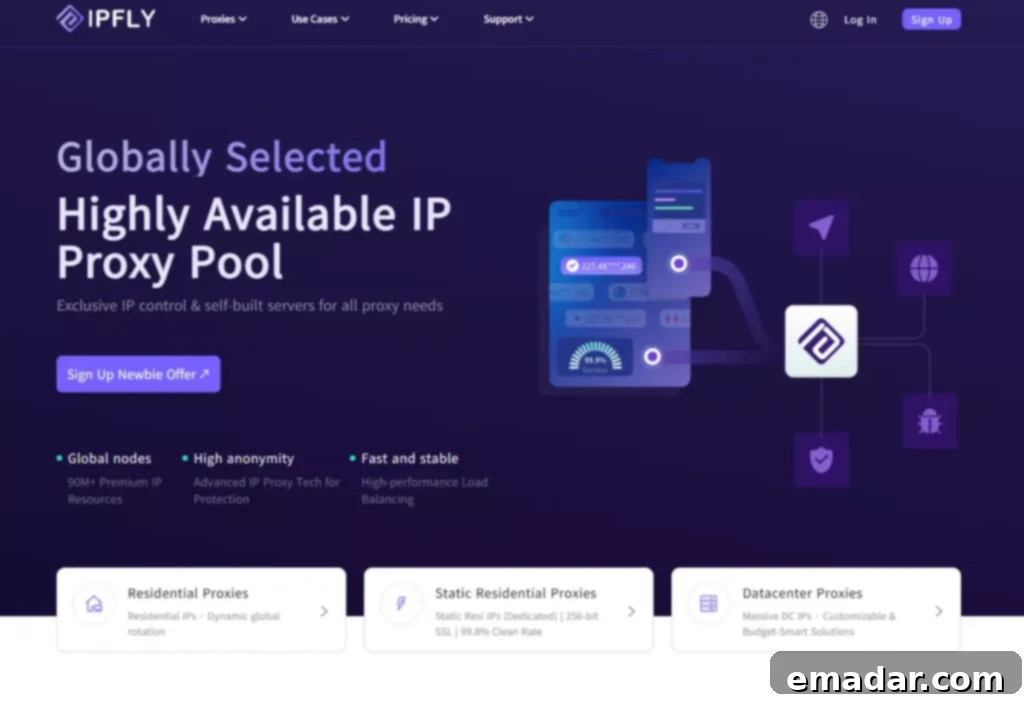
Selecting the Optimal Proxy Service: Why IPFLY Stands Out
Choosing a reliable and efficient **proxy service** is paramount to achieving your online objectives, whether they involve enhanced security, extensive data gathering, or unrestricted access. A subpar service can lead to slow connections, frequent disconnections, and compromised anonymity. When it comes to top-tier **proxy solutions**, **IPFLY** emerges as a leading provider, meticulously crafting a range of services designed to meet diverse and demanding needs.
IPFLY specializes in offering an expansive network of **residential proxies**, which are widely recognized for their authenticity and unparalleled anonymity. Sourced from over 190 countries and countless cities worldwide, IPFLY’s residential IPs are virtually indistinguishable from regular user traffic. This crucial characteristic translates to significantly higher success rates for complex tasks like intensive **web scraping**, precise market research, and reliably accessing geo-restricted content, all while minimizing the risk of detection and IP bans. The sheer scale and global distribution of their **IP address** pool ensure that users can target virtually any location with extreme precision.
Key features that underscore IPFLY’s commitment to excellence include:
- Extensive Global Coverage: IPFLY provides access to a colossal pool of residential IPs spanning more than 190 countries. This unparalleled global reach enables users to precisely geo-target specific regions, cities, or even ISPs, which is essential for accurate localized data collection, competitive intelligence, and bypassing country-specific restrictions.
- Advanced Automatic IP Rotation: To ensure uninterrupted operations and maintain a high level of anonymity, IPFLY incorporates intelligent **automatic IP rotation**. This feature seamlessly switches your IP address at predefined intervals or after each request, making it incredibly difficult for target websites to identify and block your activity. This is critical for sustained data collection and avoiding IP exhaustion.
- Flexible and Scalable Plans: Recognizing the varied needs of its clientele, IPFLY offers highly flexible pricing models. Whether you’re an individual user with occasional proxy needs or a large enterprise requiring vast proxy resources, you can choose from convenient pay-as-you-go options or robust subscription models. This adaptability ensures that clients only pay for the bandwidth they consume, aligning costs with specific project requirements and budget constraints.
- Exceptional 24/7 Customer Support: The complexity of proxy usage can sometimes lead to technical challenges. IPFLY addresses this with dedicated, round-the-clock customer support. Their team of experts is readily available to provide timely assistance, troubleshoot issues, and offer guidance, ensuring that users can leverage their proxy solutions effectively and without prolonged interruptions.
- High Anonymity and Reliability: With its focus on high-quality **residential proxies**, IPFLY guarantees superior anonymity and a significantly lower detection rate compared to other proxy types. Their infrastructure is built for stability and speed, ensuring consistent performance and minimizing downtime for critical operations.
Whether you are a casual internet user prioritizing privacy, a small business seeking market insights, or a large corporation engaged in global data intelligence, IPFLY’s comprehensive **proxy service** offers the unwavering reliability, crucial flexibility, and advanced features required to conquer today’s most demanding digital challenges. Investing in a robust **proxy service** like IPFLY is an investment in your digital freedom and operational efficiency.

Conclusion: Empowering Your Digital Journey with Proxies
In summation, **proxies** are far more than mere tools for masking your IP address; they represent a fundamental gateway to a safer, more private, and ultimately more accessible internet. By thoroughly understanding the distinct **proxy types**, their profound benefits, and the intricate ways in which they operate, you are empowered to make intelligent and informed decisions regarding your online activities and digital strategy.
Whether your primary objective is to effortlessly bypass geo-restrictions and unlock global content, bolster your online security against emerging threats, or undertake data-intensive tasks such as comprehensive **web scraping** and market research, proxies offer a powerful, adaptable, and essential solution. They provide the control and flexibility needed to navigate the complexities of the modern digital landscape effectively.
For those seeking a trusted, high-performance, and incredibly reliable provider in the competitive proxy market, **IPFLY** distinguishes itself with its extensive global network of **residential proxies**, advanced features like automatic IP rotation, and unwavering commitment to customer support. Take the proactive step to explore the transformative world of proxies today and seize complete control of your online presence, ensuring both privacy and operational excellence.
To discover more about secure, efficient, and reliable **proxy solutions** tailored to your unique needs, we encourage you to visit IPFLY’s official website.