
Managing Cloudflare IP Ranges: Operational Best Practices for DevOps Teams
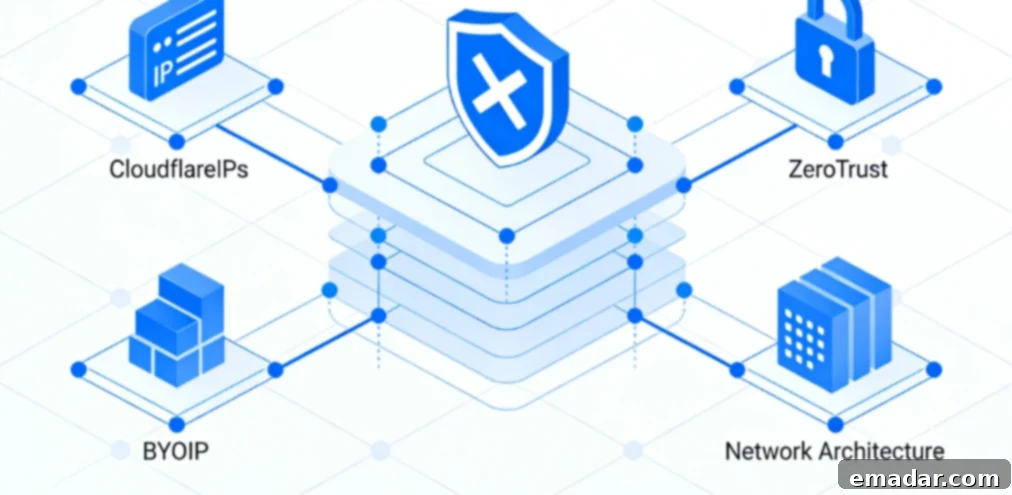
Cloudflare’s IP ranges are essential for routing traffic and ensuring security. However, these ranges are not static. They evolve as new anycast locations are deployed, address space is allocated, and older ranges are eventually deprecated. This dynamic nature poses a significant challenge for infrastructure teams responsible for maintaining explicit whitelists across diverse systems – firewalls, load balancers, security groups, and Web Application Firewall (WAF) rules.
Manually managing Cloudflare IP ranges is a cumbersome and error-prone process that doesn’t scale efficiently. A typical organization might need to maintain Cloudflare whitelists across various platforms, including:
- AWS security groups for origin servers
- Azure Network Security Groups (NSGs) for API gateways
- On-premise firewall Access Control Lists (ACLs)
- Content Delivery Network (CDN) edge configurations
- Third-party Software as a Service (SaaS) integrations
Whenever Cloudflare introduces a new IP range, each of these systems requires an update. Failure to update even a single system can lead to connectivity issues, where traffic randomly drops as new anycast IPs get blocked. This unpredictable behavior can be frustrating to troubleshoot and can negatively impact user experience.
Automation Strategies for Cloudflare IP Range Management
To overcome the challenges of manual IP range management, organizations need to adopt automation strategies. These strategies aim to streamline the process, reduce errors, and improve overall efficiency.
API-Driven Synchronization
Cloudflare provides API endpoints that expose current IP ranges in JSON format. Automated systems can periodically poll these endpoints, detect changes, and automatically propagate updates across the infrastructure. This approach ensures consistency and reduces the risk of human error.
However, implementing API-driven synchronization requires careful change management. Unexpected IP range additions should not automatically be pushed to production environments without proper validation and testing windows. This prevents potential disruptions caused by unforeseen compatibility issues or security vulnerabilities.
Infrastructure as Code (IaC)
Infrastructure as Code (IaC) tools like Terraform, Pulumi, and CloudFormation provide a declarative approach to managing IP ranges. Cloudflare IP lists can be incorporated into version-controlled configuration files, allowing changes to be reviewed and approved through standard Git workflows before being applied to the infrastructure.
Terraform’s http data source can dynamically fetch Cloudflare IPs:
However, this approach introduces plan-time dependencies. If Cloudflare’s endpoint is unavailable during a Terraform run, the process will fail. To mitigate this risk, a more robust architecture involves separating IP fetching from infrastructure application. Using Continuous Integration/Continuous Deployment (CI/CD) pipelines to update variable files, which Terraform then consumes, decouples these processes and improves reliability.
AWS Prefix Lists
For organizations heavily invested in the AWS ecosystem, managed prefix lists offer a centralized solution for IP range management. Instead of updating multiple security groups directly, teams maintain prefix lists that are referenced by security group rules. Any updates to the prefix list automatically propagate to all referencing resources, simplifying the management process and ensuring consistency.
Validation and Testing of IP Range Changes
Automated management of Cloudflare IP ranges requires rigorous validation to ensure that updates do not disrupt connectivity or introduce security vulnerabilities. Thorough testing helps to identify and address potential issues before they impact production environments.
Synthetic Monitoring
Synthetic monitoring involves continuously probing origin servers from Cloudflare’s network to validate the effectiveness of whitelists. Tools like Pingdom, UptimeRobot, or custom scripts running on Cloudflare Workers can be used to test connectivity patterns. Alerts triggered by these monitoring tools can often point to IP whitelist discrepancies as the root cause of connectivity issues.
For comprehensive validation, synthetic monitoring should simulate diverse connection paths. Using a residential proxy network provides authentic geographic diversity, allowing testing of origin accessibility from numerous countries as real users would experience it. Static residential proxies maintain consistent testing endpoints, enabling the detection of regional routing issues or geographic IP blocking that could affect specific user segments.
Data center proxies can complement residential proxies with high-throughput testing capabilities. They verify that the origin infrastructure can handle expected load volumes without connection limits or performance degradation. Fast response times and high uptime provide reliable baseline measurements for capacity planning and performance optimization.
Staged Rollouts
Implementing IP range changes through staged rollouts minimizes the risk of widespread disruptions. Changes should be propagated through environments progressively, starting with development environments (where the impact of failure is minimal), followed by staging environments (for integration validation), and finally production environments (with well-defined rollback procedures in place).
Blue-green deployment strategies enable rapid reversion to a previous state if issues arise during the rollout process. This approach allows for quick recovery and minimizes the impact on end-users.
Monitoring and Observability
Continuous monitoring and observability are crucial for maintaining the health and security of infrastructure protected by Cloudflare. By monitoring connection patterns, error codes, and other relevant metrics, teams can quickly detect and respond to potential issues.
Connection Source Analysis
Origin server logs should provide insights into connection patterns. Any deviations from expected Cloudflare IP ranges warrant investigation. Such deviations could indicate bypass attempts, misconfigurations, or even indicators of compromise if unexpected IPs appear in the logs.
Log aggregation systems (such as ELK, Splunk, and Datadog) can be configured to alert on anomalous source IPs, triggering automated responses or notifying the security team for further investigation.
Error Code Correlation
Cloudflare-specific error codes provide valuable information about infrastructure health. 521 errors (Web Server Is Down) typically indicate origin unavailability or firewall blocking. 522 and 523 errors suggest connection timeouts or unreachable origin conditions. 524 errors signal origin processing timeouts.
Correlating these errors with infrastructure changes, such as IP whitelist updates, firewall rule modifications, or certificate rotations, accelerates incident resolution. For example, a spike in 521 errors immediately following firewall changes strongly suggests a causal relationship.
Incident Response
Despite proactive automation and monitoring, incidents can still occur. Having well-defined incident response playbooks ensures that teams can quickly and effectively address issues when they arise.
Standard playbooks should address the following aspects:
- Scope Assessment: Determine whether all origins are affected or specific regions. Ascertain whether all Cloudflare IPs are impacted or only specific ranges. Tools like residential proxy networks facilitate rapid testing from diverse geographic perspectives, enabling determination of whether issues are global or regional.
- Rollback Procedures: Automated systems should support rapid reversion to known-good IP lists. Infrastructure as Code facilitates
terraform applyof previous states; API-driven systems should maintain historical configurations. - Communication: Status page updates, internal notifications, and Cloudflare support tickets require coordination. Clear runbooks reduce the mean-time-to-resolution (MTTR) during high-pressure situations.
The Future: Beyond IP Management
Modern architectures are increasingly moving away from manual IP range management altogether. Cloudflare Tunnel establishes outbound connections from origins, eliminating the need for inbound firewall rules. Cloudflare Pages and Workers allow code to be deployed directly to Cloudflare’s edge, eliminating the need for origin servers for suitable workloads.
However, hybrid architectures, which combine cloud and on-premise environments, legacy and modern systems, will likely require IP management for the foreseeable future. Maintaining operational discipline in automation, validation, and monitoring ensures that these transitional architectures remain secure and highly available.
Operational Excellence in Cloudflare IP Range Management
Effective Cloudflare IP range management requires a combination of automation, validation, and observability. Infrastructure as Code minimizes manual toil; synthetic monitoring ensures that changes do not disrupt connectivity; and comprehensive logging enables rapid incident response.
For organizations relying on traditional IP-based security, these operational practices are crucial for differentiating professional infrastructure management from fragile, failure-prone configurations. By adopting these best practices, DevOps teams can ensure the security, reliability, and performance of their Cloudflare-protected infrastructure.

Managing Cloudflare IP ranges across diverse infrastructure requires robust testing capabilities to validate that your automation actually works. Reliable proxy infrastructure is essential for comprehensive validation of your Cloudflare-protected systems. Utilize residential proxies to test connectivity from various geographic locations, ensuring that your whitelists properly handle global traffic patterns. Deploy data center proxies for high-throughput load testing, verifying that origin capacity can meet demand without connection limits. Benefits include unlimited concurrency for large-scale validation, millisecond response times for performance testing, high uptime for reliable monitoring, and technical support.
Whether you’re automating IP synchronization, validating IaC changes, or troubleshooting mysterious connectivity issues, the right proxy infrastructure provides the network diversity and reliability your operations demand. Incorporate professional-grade testing infrastructure into your Cloudflare management workflow to maintain a secure and efficient environment.