
In today’s interconnected world, the digital landscape is far from a free and open space for everyone. Users frequently encounter various barriers designed to restrict access to web content. These can range from corporate firewalls and educational institution content filters to government-imposed geo-blocks and specific access policies. Such restrictions can prevent individuals from viewing certain websites, utilizing online services, or accessing critical information. This is precisely where solutions like Node Unblockers step in. They act as sophisticated intermediaries, facilitating a seamless connection between the user and the internet, effectively bypassing these restrictions. Whether you’re navigating strict network policies at school or work, or attempting to circumvent regional content limitations, a Node Unblocker can provide a pathway to the content you need.
But what exactly defines a Node Unblocker, and how do these tools empower both businesses and individual users to reclaim their digital autonomy? In this comprehensive guide, we will delve deep into the mechanics of this technology, explore its diverse applications across various sectors, and understand why it has emerged as such a pivotal and frequently discussed topic in the realm of web access solutions. We’ll examine its advantages, limitations, and compare it with other popular unblocking methods, ultimately revealing when and why a more robust solution might be necessary.
Understanding the Node Unblocker: A Gateway to Unrestricted Web Access
At its core, a Node Unblocker is a specialized web application, typically engineered using the Node.js runtime environment, that operates on a proxy-based model. Its primary objective is to reroute a user’s web traffic through its own dedicated servers. By doing so, it serves two crucial functions: first, it effectively masks your original IP address, making your browsing activity appear to originate from the unblocker’s server; and second, it adeptly circumvents various content filters or network blocks imposed by local networks or geographic restrictions. Unlike more traditional proxy servers or comprehensive Virtual Private Networks (VPNs), Node Unblockers are often distinguished by their design philosophy, prioritizing rapid deployment and exceptional ease of use, commonly presenting themselves through a user-friendly web interface that requires minimal setup.
These innovative tools initially soared in popularity among students, employees, and general internet users who sought to access popular websites and online platforms—such as YouTube, Reddit, social media sites, or online gaming services—from networks where these services were typically banned or heavily restricted. Imagine trying to catch up on a lecture series on YouTube at school or accessing a crucial research paper blocked by your university’s firewall; a Node Unblocker could provide that immediate, convenient access. However, their utility and applicability extend far beyond mere casual browsing, proving invaluable in a multitude of professional and personal scenarios where unrestricted access is paramount.
The Mechanics Behind Node Unblockers: How They Operate
Node Unblockers function by acting as an intermediary, strategically intercepting a user’s outbound web request and then discreetly rerouting it through a separate, dedicated server. This process is surprisingly straightforward yet highly effective. Here’s a simplified, step-by-step breakdown of how this ingenious mechanism works:
- User Initiates a Request: The process begins when a user attempts to access a specific website or online resource that is currently blocked or restricted on their local network. For example, they might type a URL into the unblocker’s interface or click a link.
- Request Interception and Forwarding: Instead of the user’s device connecting directly to the blocked website, the Node Unblocker receives this request. It then acts on the user’s behalf, forwarding the request to the intended website through its own servers. This means the actual request to the target website originates from the unblocker’s server, not the user’s device.
- Content Retrieval and Delivery: Once the target website responds, the content (web page, video, image, data, etc.) is first retrieved by the Node Unblocker’s server. The unblocker then processes this content, often making minor adjustments to ensure it functions correctly within its own interface, and subsequently delivers it back to the user through its web-based interface.
This clever redirection is what makes Node Unblockers so effective. Because all the traffic appears to originate from the unblocker’s server—a server that isn’t subject to the local network’s restrictions—any blocks based on the user’s original IP address or deep packet inspection content filters are successfully bypassed. The local network only sees a connection to the unblocker, not the restricted site, thus allowing for unhindered access.
Diverse Applications: Common Use Cases of Node Unblockers
While often associated with casual use, Node Unblockers are far from being mere tools for students looking to stream videos during a lunch break. They offer genuine, practical value across various industries and personal scenarios, addressing a widespread need for unrestricted digital access. Here are some of the most prominent use cases:
1. Corporate Network Access and Productivity
Many businesses implement strict network policies, restricting access to certain websites on office networks to enhance productivity and security. However, these filters can sometimes be overzealous, mistakenly blacklisting legitimate tools, industry news sites, or crucial reference materials that employees need for their work. In such cases, employees may discretely use Node Unblockers to access these mistakenly blocked resources, ensuring they can perform their tasks without unnecessary hindrance. This can include accessing competitor websites for analysis, industry forums for insights, or even specific software documentation hosted on external platforms.
2. Facilitating Global Market Research and Analysis
Professionals engaged in international market research, competitive analysis, or trend monitoring frequently encounter geo-restrictions. Websites often display different content, pricing, or product availability based on the visitor’s geographical location. Node Unblockers can be invaluable here, allowing researchers to simulate user behavior from various regions. By bypassing geo-blocks, they can access region-locked content, observe localized marketing campaigns, analyze market trends specific to different countries, and gather crucial data that would otherwise be inaccessible, providing a truly global perspective.
3. Empowering Educational and Academic Endeavors
In educational institutions, students and researchers require unrestricted access to a vast ocean of information to support their learning and academic pursuits. Unfortunately, many institutional networks impose arbitrary limits on website access, often blocking legitimate academic sources, research databases, educational video platforms, or external reference materials under broad content filtering policies. A Node Unblocker can effectively circumvent these academic blockades, opening up access to vital scholarly articles, online libraries, educational forums, and global knowledge repositories that are otherwise inaccessible, fostering a more open and productive learning environment.
4. Bypassing Government Censorship and Promoting Information Flow
In countries with stringent internet regulations and pervasive government censorship, access to unbiased news, international media, and global content can be severely restricted. Node Unblockers offer a discreet and relatively accessible method for individuals to bypass these state-imposed firewalls. By providing a pathway to uncensored information, they can play a critical role in promoting freedom of speech and access to diverse perspectives. However, it is crucial to acknowledge that using such tools in heavily censored environments often carries significant legal and ethical considerations, and users should be aware of the potential risks depending on their region’s specific laws.
5. Personal Entertainment and Information Access
Beyond professional and academic uses, Node Unblockers are widely used by individuals for personal reasons. This includes accessing geo-restricted streaming services, playing online games that are blocked in certain regions or on specific networks, or simply catching up on social media and news sites that might be filtered by an employer or school network. For many, it’s about maintaining a seamless and unhindered personal internet experience, free from arbitrary content limitations.
Node Unblockers vs. Proxies and VPNs: A Comparative Overview
While Node Unblockers share functional similarities with other web access tools, particularly traditional proxy servers, there are crucial distinctions that set them apart. Understanding these differences is vital for choosing the right solution for your specific needs, especially when considering factors like security, performance, and ease of use.
| Feature | Node Unblocker | Proxy Server | VPN (Virtual Private Network) |
| Setup Complexity | Web-based, typically no local configuration needed; paste URL | Often requires manual browser/OS configuration or specific client software | Requires dedicated application installation or OS network configuration |
| Ease of Use | Very high; simple web interface, ‘plug and play’ | Moderate to high, depending on the proxy type and client | Moderate, once the app is installed and configured |
| Connection Type | HTTP/HTTPS traffic redirection for web content | Can handle various protocols (HTTP, HTTPS, SOCKS5, FTP) | Encrypts all network traffic at the OS level, not just web |
| Speed & Performance | Generally fast for basic web browsing and streaming; depends on server load | Varies significantly based on server quality, proximity, and load | Can introduce noticeable latency due to strong encryption and routing |
| Anonymity Level | Moderate; masks IP but may not hide all browser fingerprints or DNS requests | Varies greatly from low (transparent) to high (elite) | High; provides strong anonymity, often with no-log policies |
| Bypass Ability | Good for basic IP-based blocks and simple content filters | Good for static IP blocks, geo-restrictions; effectiveness varies by type | Best for comprehensive bypassing of firewalls, geo-blocks, and censorship |
| Security & Encryption | Basic HTTPS support (traffic between user and unblocker is encrypted, but not always end-to-end with target site) | Varies; some offer basic encryption, others none; depends on implementation | Strong, end-to-end encryption for all data; robust security protocols (e.g., OpenVPN, WireGuard) |
| Data Logging | Often unclear or minimal for free services; can log user activity | Depends entirely on the provider’s policy and trustworthiness | Reputable providers often have strict ‘no-log’ policies |
| Suitability for Sensitive Data | Not recommended due to variable security and lack of encryption assurances | Not ideal unless a trusted, secure proxy with encryption is used | Highly recommended for sensitive data due to strong encryption and privacy |
As the table highlights, while Node Unblockers excel in simplicity and quick access, they are not engineered for handling sensitive data or providing the robust, comprehensive level of security and privacy that dedicated proxies or full-fledged VPNs offer. For demanding business-grade operations—such as large-scale web scraping for market intelligence, managing multiple e-commerce accounts, or conducting precise ad verification campaigns—the inherent limitations of Node Unblockers make them less suitable. In these scenarios, more robust, secure, and scalable proxy solutions become not just advisable, but absolutely essential to ensure data integrity, operational efficiency, and sustained performance.
The Resurgence of Popularity: Why Node Unblockers Are a Go-To Solution
The enduring popularity of Node Unblockers can be attributed to a confluence of compelling factors, primarily centered around their accessibility, simplicity, and the widespread availability of free options. These characteristics make them an attractive entry point for individuals seeking quick and easy ways to navigate internet restrictions:
- Unparalleled Accessibility: One of the most significant advantages is their universal accessibility. Virtually anyone with an internet connection and a standard web browser can utilize a Node Unblocker. There are no cumbersome software installations, no complex network configurations, and often no permissions required from system administrators. This “browser-only” access makes them ideal for environments where software installations are prohibited or difficult, such as public computers, school networks, or corporate workstations.
- Remarkable Simplicity: The user experience for Node Unblockers is designed to be as straightforward as possible. Users typically don’t need any technical expertise or prior knowledge of networking concepts. The process often involves nothing more than pasting the URL of the blocked website into a dedicated input field on the unblocker’s web interface and pressing a “Go” or “Unblock” button. This ‘point-and-click’ simplicity means that even novice internet users can quickly and effectively bypass restrictions without a steep learning curve.
- Prevalence of Free Options: A substantial number of Node Unblockers are available at no cost, especially within the vibrant open-source development communities. This cost-free entry barrier makes them particularly appealing to individuals who only require occasional access or cannot afford premium proxy or VPN services. The open-source nature also fosters continuous development and iteration, albeit with varying levels of quality and maintenance.
However, it is imperative to acknowledge that these appealing advantages often come with notable trade-offs. Free and easily accessible tools, by their very nature, frequently compromise on stability, speed, security, and dedicated support. This is precisely where the value proposition of professional, high-quality proxy services becomes evident, offering a more reliable and secure alternative for serious users and businesses.
Recognizing the Limitations of Node Unblockers
Despite their undeniable utility and widespread popularity, Node Unblockers are not a panacea for all web access challenges. They come with a distinct set of caveats and limitations that can significantly impact their effectiveness, especially for users with more stringent requirements concerning security, reliability, and performance:
- Limited Compatibility and Detection: The digital arms race between unblockers and blocking mechanisms is ongoing. Many sophisticated websites and online services now employ advanced anti-proxy and anti-bot detection techniques. These can include detecting unusual browsing patterns, analyzing IP addresses for common proxy footprints, identifying non-standard HTTP headers, or even utilizing JavaScript-based checks. Consequently, many Node Unblockers, particularly the free and less maintained ones, can be quickly detected and blocked, rendering them ineffective against modern, robust filtering systems.
- Lack of Robust Encryption and Security Risks: Unlike VPNs, most Node Unblockers do not offer the same level of comprehensive, end-to-end encryption for all your internet traffic. While they may support HTTPS for the connection between your browser and the unblocker, the connection between the unblocker and the target website, or even the overall data flow, might not be fully encrypted or secured. This lack of strong encryption poses significant security risks, especially when operating on public Wi-Fi networks where data interception is easier, potentially exposing your personal information, login credentials, and browsing activity to malicious actors.
- Unstable Uptime and Unreliable Performance: Free or self-hosted Node Unblocker services often suffer from inconsistent uptime and variable performance. They may not be regularly maintained, leading to unexpected downtimes, slow loading speeds, or complete service interruptions. This instability can be incredibly frustrating for casual users and detrimental for anyone relying on consistent access for critical tasks, such as market research, data collection, or continuous monitoring.
- Scalability Challenges: For operations requiring access to a vast number of websites simultaneously, or needing to process large volumes of data, Node Unblockers are simply not designed to scale. Their infrastructure is typically limited, making them unsuitable for enterprise-level data scraping, ad verification at scale, or managing multiple online accounts with high reliability.
- Data Privacy Concerns: The operators of free Node Unblockers often have unclear or non-existent privacy policies. There’s a inherent risk that they might log user activity, collect personal data, or even inject ads into the content you view. This compromises user privacy and can lead to unexpected data breaches.
For organizations and power users with more serious needs—such as reliably accessing restricted platforms, extracting structured data at scale, ensuring consistent uptime for automated tasks, or operating multiple social media accounts without detection—these limitations underscore the necessity of a more robust and professional solution. A dedicated proxy service, designed for reliability and security, is far more suitable for such demanding applications.
A Smarter Alternative: High-Quality Proxy Networks for Professional Needs
While Node Unblockers serve as a convenient and quick option for lightweight, casual web access, those with professional demands and critical operational needs require a significantly more sophisticated and resilient infrastructure. The limitations of free or basic unblockers become starkly apparent when reliability, security, speed, and scalability are paramount.
This is precisely why specialized proxy service providers, such as IPFLY, have become indispensable partners for modern digital operations. These providers offer access to extensive networks of high-quality proxy IPs, meticulously designed to meet the rigorous demands of enterprise-level applications. For instance, IPFLY boasts a vast pool of over 90 million IPs distributed across more than 190 countries, enabling businesses to achieve unparalleled geographical reach and circumvent even the most stringent geo-restrictions. They deliver reliable, high-speed proxy solutions meticulously tailored for a wide array of enterprise uses, including:
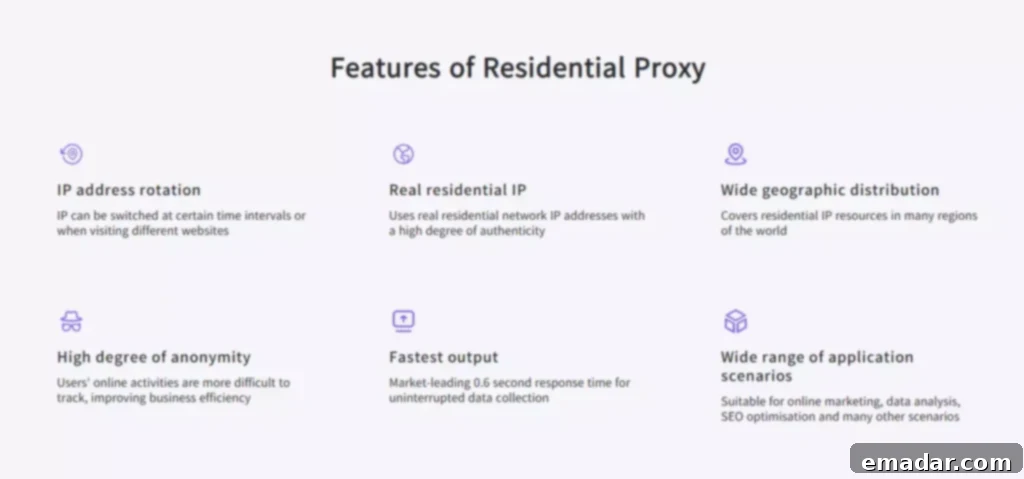
- Dynamic Residential Proxies: These proxies utilize real IP addresses from genuine internet service providers (ISPs) and home users. They are highly effective for tasks requiring authenticity and frequent IP rotation, making them ideal for web scraping, ad verification, market research, and accessing geo-restricted content without triggering detection mechanisms. IPFLY’s dynamic residential proxies ensure that your requests appear to come from legitimate users, drastically reducing the risk of blocks.
- ISP-Level Static Proxies: Offering the stability and speed of a data center proxy combined with the authenticity of a residential IP, ISP proxies are perfect for tasks that require session persistence and high trust. These proxies are provided directly by internet service providers, making them extremely difficult to detect as proxy IPs. They are invaluable for managing multiple social media accounts, e-commerce operations, or any scenario where maintaining a consistent, trusted IP address over an extended period is crucial.
- Data Center Proxies: While less ‘human-like’ than residential or ISP proxies, data center proxies offer unparalleled speed and cost-effectiveness for tasks that don’t require high anonymity but demand high throughput, such as large-scale data harvesting from less protected sites or rapid content delivery networks.
Today, many online platforms—including major social media networks, e-commerce marketplaces, and streaming services—are employing increasingly sophisticated IP detection mechanisms, bot identification, and anti-fraud algorithms. These systems are designed to identify and block suspicious traffic, including requests originating from low-quality proxies or unblockers. A robust, clean, and continuously verified proxy network, like those meticulously offered by IPFLY, ensures significantly higher success rates for your operations and drastically minimizes the risk of bans, access denials, or CAPTCHA challenges. This level of reliability and stealth is simply unattainable with basic Node Unblockers.
Final Thoughts: Choosing the Right Web Access Solution
Node Unblockers represent an excellent starting point for understanding the fundamental principles of how internet restrictions can be bypassed. Their simplicity, accessibility, and often cost-free nature make them highly effective for everyday, casual use, and for individuals seeking immediate, hassle-free access to blocked content. They are a valuable tool for learning about web proxying and for overcoming basic censorship.
However, when your needs evolve beyond simple casual browsing—when factors such as speed, unwavering stability, ironclad security, and absolute privacy become paramount—a more reliable, scalable, and professional solution becomes not just beneficial, but absolutely necessary. For serious users, businesses, and developers, the limitations of Node Unblockers quickly become apparent, hindering crucial operations and potentially compromising data.
That’s precisely where professional proxy services make a profound difference, offering the advanced infrastructure, dedicated support, and robust features required for demanding digital endeavors.
Ready to Go Beyond the Limitations of Node Unblockers?

If you are actively seeking unparalleled control, unwavering reliability, and superior flexibility in how you access and interact with the web—whether your objectives involve sophisticated data scraping, precise ad verification, comprehensive SEO tracking, protecting your brand online, or managing complex global operations—then IPFLY offers powerful, enterprise-grade proxy solutions meticulously engineered for businesses and discerning power users. Our extensive network and diverse proxy types are designed to overcome any digital barrier.
👉 Discover the full potential of our residential, ISP, and data center proxies. Visit IPFLY.net today and revolutionize your online access, empowering your digital strategy with a truly unhindered connection.