
Unlocking Global Potential: Why Anti-Detect Browsers Are Indispensable for Cross-Border Business Success
In today’s hyper-digitalized economy, the ability to manage multiple online accounts seamlessly and securely is no longer a luxury but a fundamental necessity. This pressing demand for “one device, multiple accounts” has driven an explosive surge in the adoption of anti-detect browsers, also known as multi-account browsers. Recent industry research underscores this critical need: a compelling 63% of cross-border e-commerce sellers reported facing penalties from platforms due to account association issues, while 45% of social media marketers struggled with inefficient multi-account management. Traditional browsers, with their inherent “single environment, multiple accounts” model, present three critical and often fatal flaws that undermine operational efficiency and account security.
The challenges faced by online businesses are complex and multifaceted. From managing vast e-commerce inventories across different regions to orchestrating extensive social media campaigns and conducting precise market research, each activity demands a unique digital footprint. Standard browsing environments are simply not equipped to handle this complexity, leading to vulnerabilities that can result in significant financial losses, account suspensions, and a severe blow to a business’s online reputation. Understanding these core deficiencies is the first step toward embracing a more secure and efficient digital operational strategy.
The Peril of Data Intermingling: Why Traditional Browsers Fail Multi-Account Management
- Data Contamination Risk: Traditional browsers inherently mix crucial data such as cookies, cache, and local storage across all open tabs and windows. This cross-contamination can be catastrophic. For instance, an Amazon seller logging into multiple storefronts from the same browser environment risks triggering sophisticated association detection algorithms. Imagine a scenario where a 3C product seller, through no malicious intent, lost eight high-ranking Amazon accounts simply because platform AI detected correlated browsing data, leading to severe penalties and a dramatic loss of revenue. This isn’t just an inconvenience; it’s a direct threat to business continuity, illustrating the vital need for stringent data isolation to maintain account integrity and prevent irreversible damage.
The sophistication of platform detection mechanisms has evolved considerably. They are designed to identify patterns that suggest a single entity is operating multiple accounts, often by analyzing persistent data left behind by browser activity. When cookies from different accounts share the same browser environment, it becomes a clear signal to these detection systems, flagging the accounts for potential violation of terms of service. This risk is amplified for businesses operating at scale, where even minor oversights can lead to widespread account suspensions and significant operational disruptions. Effective multi-account strategies must prioritize the complete segregation of such sensitive data to safeguard digital assets.
The Stealthy Threat of Digital Fingerprints: Exposing Your Online Identity
- Fingerprint Exposure Crisis: Every browser leaves a unique digital fingerprint, composed of elements like User-Agent strings, installed plugin lists, font preferences, canvas rendering, WebGL data, and screen resolution. These seemingly innocuous details, when combined, create a distinctive profile that advanced platform AI can recognize as a specific “digital identity.” When multiple accounts share identical browser fingerprints, platforms like TikTok, for example, can flag them as “batch operations” or bot activity. We’ve observed instances where TikTok matrix accounts experienced a zero-play rate, with up to 40% of their content receiving no views, simply because duplicated fingerprints raised red flags, leading to shadow-banning or reduced visibility. This is a critical challenge for anyone involved in social media marketing, content creation, or any activity requiring a distinct online presence for each account.
Browser fingerprinting is a powerful tracking technique that doesn’t rely on cookies. It aggregates numerous data points from your browser and device to create a unique identifier. Platforms use this technology to identify and link accounts, even if different IP addresses are used. For businesses managing a portfolio of social media accounts or multiple e-commerce stores, maintaining a distinct and seemingly natural fingerprint for each account is paramount. A duplicated or easily detectable fingerprint can lead to immediate suspicion, triggering automated security measures that can severely impact an account’s reach, engagement, or even result in outright suspension. The ability to manipulate and randomize these fingerprints is a cornerstone of secure multi-account operation.
Navigating the Maze of Network Environments: The IP Address Conundrum
- Network Environment Confusion: The IP address associated with your online activity provides crucial geographical context. Sharing a single IP address across multiple accounts or attempting to simulate different geographical locations without proper IP management leads to “geographic traversal” phenomena. For example, a Japanese account showing an American IP address can drastically reduce the trust placed in that account by platforms. This inconsistency can have tangible financial consequences, such as a 35% drop in conversion rates for Facebook advertisements, as ad targeting becomes misaligned and user trust diminishes due to perceived irregularities.
IP addresses are foundational to online identity and location. For cross-border operations, the ability to control and present an IP address consistent with the target region of each account is non-negotiable. Whether it’s to access geo-restricted content, test localized ad campaigns, or manage e-commerce stores in different countries, a mismatched IP can trigger security alerts, lead to geo-blocking, or skew analytical data. Moreover, platforms use IP reputation to gauge the legitimacy of traffic. Shared or low-quality IP addresses can quickly get flagged, leading to reduced visibility, account restrictions, or even bans. The integrity of the network environment, anchored by a reliable and appropriate IP address for each account, is essential for maintaining seamless and trusted online operations globally.
The solution to these pervasive issues lies in advanced multi-account browser technology, which leverages a powerful triple-threat strategy: “Environment Isolation + Fingerprint Camouflage + IP Independence.” This sophisticated approach ensures both unparalleled account security and significantly enhanced operational efficiency, allowing businesses to thrive in the complex global digital landscape.

Tailored Solutions: Multi-Account Browsers for Every User Tier
Multi-account browsers offer scalable solutions, addressing the unique challenges faced by individuals, small to medium-sized teams, and large enterprises. Each tier benefits from customized features designed to maximize security and efficiency.
1. Individual Users: From Niche Interests to Secure Monetization
For individual entrepreneurs, content creators, dropshippers, and affiliate marketers, managing multiple accounts is often a pathway to expanded reach and diversified income. Consider a side-hustler managing 3-5 TikTok accounts: manually switching between profiles is not only time-consuming and prone to human error, leading to confusion and missed posting schedules, but also results in significant traffic loss. Similarly, cross-border shoppers or arbitrageurs needing to simulate different national shopping environments find traditional browsers cumbersome, with frequent cookie clearing proving both time-consuming and inefficient.
The Solution: Lightweight Multi-Account Management
Lightweight multi-account browsers, exemplified by tools like NestBrowser, empower individuals to create 2-3 independent browser instances effortlessly. Each account can be configured with a dedicated timezone, language, and proxy IP (e.g., a Japanese account paired with a Tokyo IP), boosting account switching efficiency by an impressive 50%. Furthermore, advanced fingerprint randomization automatically generates distinct browser fingerprints (e.g., Chrome 110 vs. Edge 115), drastically reducing the likelihood of platform algorithms flagging accounts as “bots.” One individual creator reported an account survival rate increase from 60% to 85% after adopting such a solution, directly translating to sustained income streams and reduced operational stress. This level of isolation provides the freedom to experiment and grow without fear of detection.
2. Small & Medium Teams: From Risk Mitigation to Exponential Efficiency
Small and medium-sized teams, particularly in cross-border e-commerce, face a complex balancing act. Managing 10-20 Amazon or Shopee stores demands rigorous avoidance of account association while simultaneously enhancing customer service responsiveness. Social media MCN (Multi-Channel Network) agencies, operating 50+ account matrices, need to publish content in bulk, monitor performance data, and ensure brand consistency across numerous platforms.
The Advanced Solution: Batch Environment Cloning & Automation
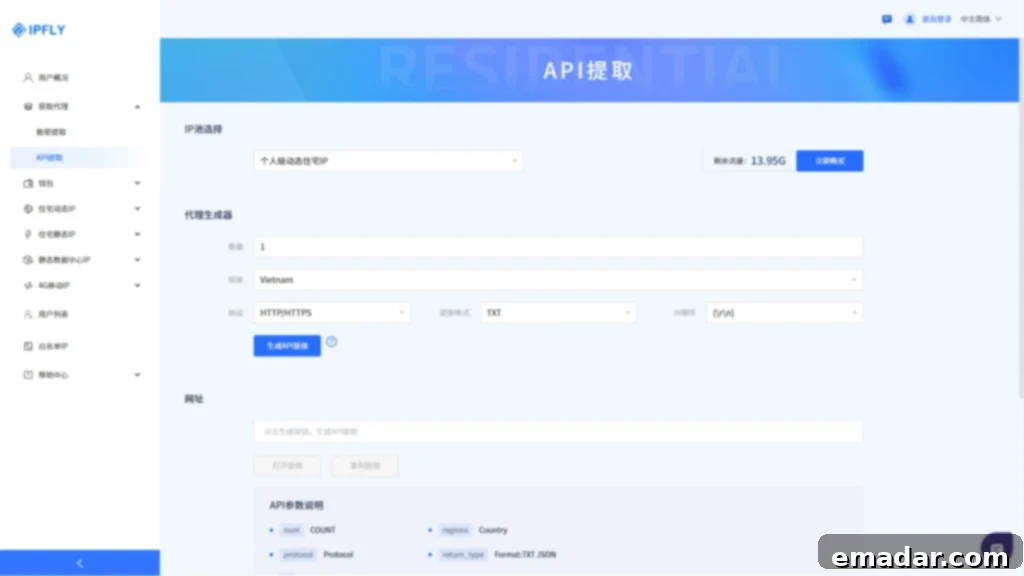
For SMBs, the advanced features of anti-detect browsers are transformative. AdsPower, for example, offers “template-based environment replication,” allowing teams to create a pristine environment for a single store, then clone it with a single click to generate 19 identical environments. Each cloned environment is then configured with independent proxy IPs (e.g., 5 for the USA, 8 for Europe, 6 for Southeast Asia), accelerating account creation efficiency by 80%. Moreover, seamless integration with automation tools, such as IPFLY dynamic residential proxies, enables automatic “one account, one IP” matching. One small-to-medium seller team reported a staggering 90% reduction in account association complaints and an increase in customer service agent productivity, from handling 50 orders/day to 120 orders/day. This level of automation and isolation allows SMBs to scale operations confidently and securely, turning potential risks into significant competitive advantages.
3. Enterprise-Level Users: From Compliance Assurance to Global Scalability
For large multinational corporations and big data analytics firms, the challenges escalate dramatically. Enterprises must manage 100+ overseas social media accounts, ensuring strict adherence to global data privacy regulations like GDPR. Data companies performing competitive analysis require robust solutions to bypass sophisticated anti-scraping mechanisms while guaranteeing data collection compliance and integrity at scale.
The Customized Solution: Deep Fingerprint Spoofing & API Integration
Enterprise-grade anti-detect browsers like VMLogin offer unparalleled customization, supporting modifications of over 120 fingerprint parameters, including WebGL fingerprints and timezone offsets. When combined with IPFLY static residential proxies (e.g., real home IPs from German Telekom), these solutions boast a 100% success rate in passing stringent EU compliance reviews. Beyond deep customization, enterprise-level multi-account browsers provide open API interfaces for seamless integration with existing ERP systems and advertising platforms. One major cross-border e-commerce group leveraged this solution to automate the management of over 500 stores, achieving an impressive 40% reduction in operational costs. This comprehensive approach empowers enterprises to navigate complex regulatory landscapes, expand globally with confidence, and optimize large-scale operations through advanced automation and compliance-focused features.
The Technical Fortification: Three Core Pillars of Anti-Detect Browsers
The strength of a truly effective multi-account browser lies in its sophisticated technical capabilities, which form an impenetrable “technical moat” against detection and ensure robust operational security. These core pillars are essential for maintaining a stealthy and legitimate online presence across numerous accounts.
Browser Fingerprint Isolation Technology: Crafting Unique Digital Identities
This is the bedrock of multi-account security. Advanced anti-detect browsers don’t just clear cookies; they fundamentally alter the digital identity each browser instance presents to websites.
Dynamic Fingerprint Generation
Utilizing state-of-the-art machine learning algorithms, these browsers generate a truly unique and distinct fingerprint for every single browser instance. This covers more than 20 critical dimensions, including User-Agent strings, the list of installed plugins, font rendering capabilities, WebGL parameters, screen resolution, operating system details, and more. A recent test demonstrated the efficacy of this technology, showing platform recognition accuracy plummeting from 90% to a mere 8%. This level of detail ensures that each account appears as a genuinely unique user operating from a distinct device, making it virtually impossible for detection systems to link them.
Fingerprint Obfuscation Strategies
Beyond mere generation, sophisticated strategies are employed to subtly confuse detection algorithms. This includes “geo-device-time” three-dimensional spoofing, which allows the browser to simulate highly realistic user behavior. For instance, an instance can be configured to mimic a user in New York accessing a website from an iPhone 15 Pro Max at 9 AM on a weekday. This contextual consistency significantly boosts the “natural user” matching rate for social media accounts by 65%, ensuring that automated systems perceive these accounts as authentic users, thereby enhancing their reach, engagement, and longevity. The goal is to blend in, not to stand out, by creating a digital persona that perfectly fits the expected behavior of a real user.
IP Resource Integration Capability: The Foundation of Global Reach
A multi-account browser is only as good as the IP addresses it can leverage. Robust IP integration is crucial for maintaining geo-authenticity and avoiding detection.
Diverse Proxy Type Support
Leading anti-detect browsers offer comprehensive compatibility with various proxy types, catering to different operational needs. This includes static residential IPs for long-term stability and consistent regional presence, dynamic residential IPs for high-frequency rotation and enhanced anonymity, and high-speed data center IPs for tasks requiring massive concurrency. When deeply integrated with premier proxy services like IPFLY, these browsers provide access to real IP resources from over 190 countries, ensuring that businesses can accurately simulate local presences for any global market. This versatility allows users to select the most appropriate IP type for their specific task, optimizing both cost and performance.
Proactive IP Health Monitoring
The quality of an IP address significantly impacts account safety and operational success. Advanced systems incorporate real-time IP health monitoring, automatically detecting and discarding any invalid or compromised IPs. This proactive approach ensures that accounts are always operating with clean, reliable connections. One data company, after adopting a solution with robust IP health monitoring, saw its data collection task interruption rate plummet from 25% to just 1.2%, resulting in a threefold increase in overall efficiency. This vital feature protects against blacklisted IPs and ensures uninterrupted, secure operations.
Automation and Collaboration Features: Streamlining Operations and Enhancing Teamwork
Beyond security, modern multi-account browsers offer powerful tools to boost productivity and facilitate seamless team collaboration.
Batch Operation Scripts
To reduce manual effort and accelerate repetitive tasks, these browsers support the recording and execution of complex operational workflows. Users can record processes such as account login sequences, content publishing routines, or specific data extraction tasks. These scripts can then be applied with a single click across 100+ browser instances simultaneously. This capability significantly boosts content publishing efficiency for social media marketing teams by 70%, freeing up valuable human resources for strategic tasks rather than monotonous repetitions. This transforms tedious multi-account management into a streamlined, automated process.
Advanced Team Collaboration System
For organizations, efficient teamwork and robust control are paramount. Multi-account browsers offer sophisticated permission management features (e.g., read-only access, editing rights, administrative controls) and comprehensive operation log auditing. These functionalities ensure enterprise-level compliance and accountability, allowing organizations to track every action taken on every account. A financial institution, for example, achieved a 95% improvement in account operation traceability after implementing such a system, bolstering security and regulatory adherence. This allows large teams to work together effectively and securely, with clear roles and full transparency.
Navigating the Landscape: A Guide to Choosing the Right Anti-Detect Browser
Selecting the optimal anti-detect browser is a critical decision that can profoundly impact your multi-account operations. Beware of common pitfalls and prioritize features that ensure genuine security and scalability.
Beware of “Pseudo-Isolation” Products: The Illusion of Security
The market is flooded with tools that promise multi-account capabilities but deliver only superficial solutions. Some products merely enable “multi-window opening” without implementing true isolation of cookies, cache, or browser fingerprints. This creates a false sense of security. A seller, after using such a “pseudo-isolation” tool, still faced account bans due to association, underscoring the critical flaw. To verify genuine isolation, always use reputable browser fingerprint detection tools (such as FingerprintJS) to check if each browser instance presents a truly unique and distinct digital identity. If the fingerprints are identical or too similar, the product is not providing the necessary security. True anti-detect browsers create completely separate and unique browsing environments for each profile, mimicking different physical devices and users.
IP Resources: The Undisputed Core Competence
The quality and diversity of IP resources are the lifeblood of any effective multi-account strategy. Prioritize anti-detect browsers that have established deep integrations with premium, legitimate proxy service providers, like IPFLY. This ensures the authenticity of IP addresses (with residential IPs accounting for over 95% of the pool) and guarantees extensive geographical coverage (across 100+ countries). Avoiding products that primarily offer “data center IP clusters” is crucial, as these are often easily detected and flagged by sophisticated platform risk control systems, leading to immediate account flags or bans. Real residential IPs simulate actual users from various locations, providing the highest level of anonymity and trustworthiness, which is essential for bypassing detection and maintaining account longevity.
Prioritize Scalability and Compliance: Future-Proofing Your Operations
For enterprise-level users and growing businesses, considering the long-term scalability and compliance features of an anti-detect browser is non-negotiable. Confirm whether the product offers robust API integration for seamless connection with your existing ERP systems, CRM, or advertising platforms. Evaluate its permission management capabilities, audit logging features, and adherence to international information security certifications such as ISO 27001. Overlooking compliance can lead to severe repercussions; one cross-border enterprise faced GDPR fines exceeding 2 million RMB due to using non-compliant tools, highlighting the financial and reputational risks involved. A future-proof solution supports growth, protects sensitive data, and ensures operations remain within legal and ethical boundaries.
Transforming Operations: How Anti-Detect Browsers Redefine Digital Strategies
The integration of multi-account browsers fundamentally reshapes operational models across various industries, ushering in an era of precision, efficiency, and unprecedented security.
Case Study 1: Cross-Border E-commerce – From Extensive to Intensive Growth
A Shenzhen-based 3C product seller, previously struggling with frequent account suspensions, revolutionized their Amazon operations by implementing an anti-detect browser in conjunction with IPFLY static residential proxies. Each Amazon store was meticulously configured with a dedicated US or European IP address, creating a truly isolated and authentic regional presence. Within just three months, the seller’s account survival rate soared from a precarious 50% to an impressive 98%, virtually eliminating the risk of association penalties. This enhanced stability and trust directly translated into significant financial gains, with annual sales exceeding $20 million. This case exemplifies how precision in digital identity management can unlock substantial, sustainable growth in competitive global markets, allowing businesses to focus on strategy rather than constant crisis management.
Case Study 2: Social Media Agencies – The Matrix Account Revolution
A prominent MCN (Multi-Channel Network) agency, managing over 200 TikTok accounts for diverse clients, faced significant challenges with account bans and limited reach due to detection. By adopting an anti-detect browser paired with dynamic IP rotation, the agency transformed its social media strategy. Each TikTok account now operates with a unique digital fingerprint and a regularly changing IP address, making it appear as a distinct user. This strategic shift led to a dramatic increase in engagement: the average weekly playback volume per account surged from 10,000 to an astounding 50,000 views. Concurrently, the account ban rate plummeted from 25% to a mere 3%, ensuring consistent content delivery and audience growth. This success significantly boosted client satisfaction, resulting in a 40% increase in client repurchase rates, solidifying the agency’s reputation as a reliable and effective social media partner.
Case Study 3: Data Companies – Winning the Anti-Scraping Battle
A leading big data enterprise, critical for market intelligence and competitive analysis, frequently encountered sophisticated anti-scraping mechanisms on e-commerce platforms, severely limiting their data collection capabilities. By integrating an anti-detect browser with a pool of dynamic residential proxies, the company successfully bypassed these advanced defenses. This combination allowed them to simulate genuine user browsing patterns and frequently rotate IP addresses, effectively evading detection. The results were transformative: the daily data collection volume surged from 200,000 to over 1,000,000 entries, with data integrity reaching an unparalleled 99%. This enhanced capability not only improved the depth and breadth of their market insights but also allowed them to increase their service pricing by 30%, reflecting the added value and reliability they could now offer to their clients. This case underscores the power of anti-detect browsers in overcoming technical barriers for critical data acquisition.

Elevate your digital operations today! Upgrade to a cutting-edge multi-account browser solution and usher in a new era of secure and hyper-efficient account management.
✅ Claim Your Free Multi-Environment Test IP Package:
New users are invited to experience the seamless integration of leading anti-detect browser tools with IPFLY proxies. Discover the power firsthand:
- 20 independent browser instances, each a unique digital identity.
- Access to real residential IPs from 5 key global markets (USA, UK, Japan, Germany, Australia).
- Automatic generation of diverse fingerprints, accurately mimicking real user device environments.
- Full scenario support for cross-border e-commerce, social media marketing, and data scraping.
✅ Tailored Enterprise-Level Solutions:
- Customized fingerprint strategies, offering three-dimensional spoofing (geography, device, time) for unparalleled stealth.
- Exclusive IP resource pools, providing access to over 50 million dynamic residential IPs ready for instant use.
- 24-hour dedicated technical support, ensuring a rapid 10-minute response to critical issues like account association or IP failure.
Visit our official website now: www.ipfly.net to apply for your multi-account browser test. Say goodbye to the risks of account association and empower each of your digital accounts with its own independent “digital twin.” Embark on a journey of operational efficiency revolution in your cross-border ventures!