

The landscape of cross-border e-commerce is continually evolving, presenting immense opportunities alongside complex challenges. As more merchants venture into international markets, a common hurdle emerges: effectively managing multiple accounts across various platforms and regions. To boost operational efficiency, mitigate risks, and ensure sustained growth, the adoption of **multi-account browsers** has become a pivotal trend. In this sophisticated digital environment, the strategic application of **network proxies** is not merely beneficial—it’s absolutely essential.
Optimizing Cross-Border E-commerce: Leveraging Multi-Account Browsers for Seamless Platform Management
In the dynamic realm of cross-border e-commerce, merchants frequently find themselves juggling numerous platform accounts to simultaneously operate in diverse markets. For instance, a single merchant might be actively managing separate storefronts on global giants like Amazon, eBay, and Shopify, or overseeing multiple specialized shops within a single platform such as Shopee or Etsy. This multi-faceted approach, while expanding market reach, traditionally introduced significant operational complexities, primarily the constant logging in and out, which consumed valuable time and was prone to errors. This is where a **multi-account browser** emerges as a game-changer, offering a straightforward yet highly effective solution.
By utilizing a multi-account browser, merchants can maintain simultaneous active sessions for all their accounts, each within its own isolated browser environment. This eliminates the tedious process of repeatedly entering credentials or clearing cookies, dramatically streamlining workflows and significantly enhancing productivity. The immediate benefits are palpable:
- Simultaneous Account Operation: Merchants can effortlessly manage and switch between multiple accounts without the need for repeated logins, saving precious time and reducing friction in daily operations. This allows for real-time monitoring and management of diverse storefronts or market segments.
- Comprehensive Market Management: The ability to track the performance of each individual store or platform in real-time empowers merchants to make data-driven decisions. They can monitor sales, inventory, customer interactions, and market trends across all their ventures from a single, organized interface.
- Significant Reduction in Operational Errors: Manual switching between accounts often leads to human errors, such as posting to the wrong account or mismanaging inventory. Multi-account browsers create distinct, isolated environments for each login, thereby minimizing the likelihood of such costly mistakes and ensuring smoother, more accurate operations.
- Enhanced Scalability: As businesses grow, managing an increasing number of accounts manually becomes unfeasible. Multi-account browsers provide the infrastructure to scale operations efficiently, allowing merchants to expand their global footprint without proportional increases in complexity.
- Improved Team Collaboration: These tools also facilitate better team management, where different team members can be assigned specific accounts or tasks within the multi-account setup, enhancing accountability and coordination across the e-commerce operation.
However, while multi-account browsers solve a significant portion of the efficiency puzzle, the simultaneous operation of multiple accounts, especially in a cross-border context, introduces another critical element: the underlying network identity. This is precisely where the role of **network proxies** becomes paramount. Ensuring the efficiency and stability of these multi-account operations, particularly when dealing with sensitive cross-border data and platform security protocols, is a challenge that merchants must address with careful consideration.

The Indispensable Role of Network Proxies in Secure Multi-Account Browser Operations for Cross-Border E-commerce
**Network proxies**, particularly specialized proxy IP services, are an indispensable asset for cross-border e-commerce merchants seeking to maximize operational efficiency, bolster account security, and navigate the complexities of international online commerce. Merchants frequently need to bypass geographical restrictions, safeguard account privacy, and conduct extensive data collection and market research across various regions. **Utilizing network proxies** empowers businesses to overcome geo-blocks, mask their true IP addresses, significantly enhance account security, and crucially, mitigate the risk of account suspensions that often arise from using multi-account browsers without proper IP management.
Let’s delve deeper into why network proxies are fundamental for successful multi-account cross-border e-commerce operations:
- Preventing IP Blacklisting and Account Suspension: E-commerce platforms employ sophisticated security algorithms designed to detect and prevent fraudulent activities. When multiple accounts are frequently accessed from the same IP address, especially within a short timeframe, it triggers these security mechanisms. This pattern is often flagged as suspicious, potentially leading to warnings, temporary account freezes, or even permanent bans. By integrating **network proxies**, merchants can assign a unique, distinct IP address to each browser window or account. This strategic allocation makes each account appear as if it’s being accessed by a different, individual user from a separate location, effectively bypassing platform security triggers and preventing large-scale IP blocking. This ensures that legitimate business operations are not misidentified as malicious activity.
- Boosting Data Collection and Market Research Efficiency: Cross-border e-commerce demands meticulous market analysis and competitor intelligence. Merchants often need to collect vast amounts of data—from competitor pricing and product trends to customer reviews and supply chain information—from various international markets. **Network proxies** provide a stable and diverse pool of IP resources, enabling merchants to bypass regional content restrictions and rapidly access global market data. This is particularly vital when gathering information from geographically diverse markets (e.g., the United States, Europe, Asia), as proxies allow access to region-specific content. The ability to switch IPs means data collection can proceed uninterrupted, at high speed, and with a significantly reduced risk of being blocked by target websites.
- Enabling Strategic Account Regional Management and Targeted Marketing: To truly excel in cross-border e-commerce, merchants often need to implement highly localized strategies. This could involve running targeted marketing campaigns in specific regions or simulating user behavior from particular countries to test new products or services. By leveraging **network proxies**, merchants can easily switch to IP addresses from different geographical locations. This allows them to simulate local user experiences, execute region-specific marketing campaigns, test localized website versions, and ensure that their marketing efforts are precisely tailored and maximally effective for each target market. This level of geographical control is crucial for optimizing conversion rates and building stronger regional brand presence.
- Fortifying Account Privacy and Operational Security: In any online operation, security remains a paramount concern, and cross-border e-commerce is no exception. **Network proxies** serve as a critical shield by masking the merchant’s real IP address, thereby preventing the exposure of personal or corporate account information. This protective layer is vital for safeguarding privacy during sensitive operations, making it significantly harder for malicious entities to track, target, or compromise accounts. Proxies add an essential layer of anonymity and security against potential cyber-attacks, data breaches, and competitive espionage, ensuring that all cross-border e-commerce activities are conducted within a secure and private environment.
Best Practices for Integrating Network Proxies with Multi-Account Browsers in Cross-Border E-commerce
To fully harness the synergy between **network proxies** and multi-account browsers in cross-border e-commerce, merchants must adopt a strategic approach. Adhering to specific best practices ensures that this powerful combination delivers optimal results in terms of efficiency, security, and scalability:
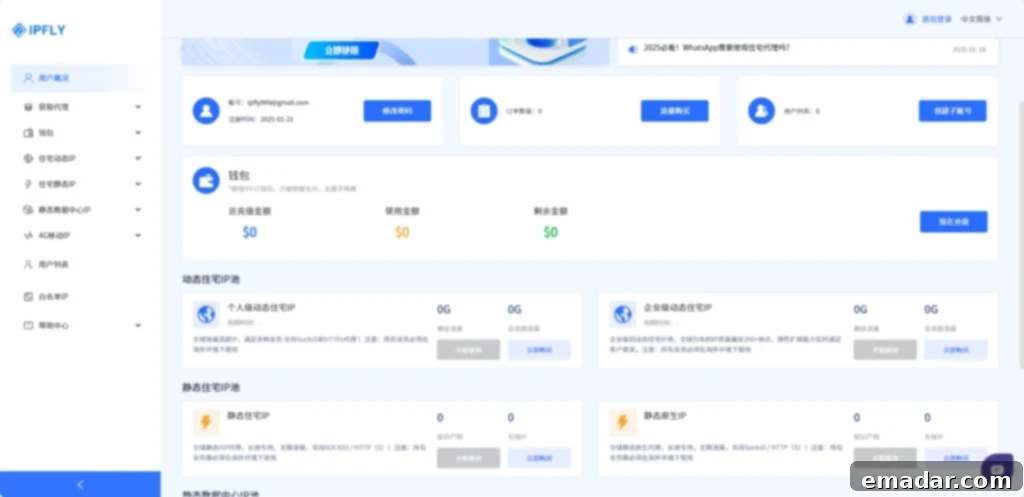
- Prioritize High-Quality Proxy Services: The foundation of effective proxy use is the quality of the proxy itself. It is crucial to select proxy IP services that guarantee high quality, exceptional stability, and a clean history. Poor-quality or free proxies are often slow, unreliable, and may have already been blacklisted by e-commerce platforms, leading to frequent operational interruptions and increased risk of detection. Reputable providers, such as those offering services like IPFLY, are known for their robust infrastructure, diverse IP pools, and reliable performance, ensuring uninterrupted and secure operations. Investing in premium proxies protects your accounts and optimizes your workflow.
- Implement Intelligent IP Resource Allocation: Not all accounts require the same level of IP rotation or geographic specificity. Develop a thoughtful strategy for assigning IP addresses to different accounts. For high-value accounts or those operating in sensitive markets, dedicated or frequently rotating IPs are advisable. Avoid using the same IP address for multiple accounts, especially if they are on the same platform, as this can easily trigger platform security mechanisms. A dynamic allocation strategy, possibly using a proxy manager, can ensure each account maintains a unique digital footprint, making it appear as an independent entity.
- Regularly Clear Browser Cache and Cookies: Even with proxies in place, browser fingerprinting techniques can still link activities across different accounts if local data is not managed properly. Browser cache, cookies, and other local storage elements store identifying information that platforms can use to connect disparate sessions. Therefore, regularly clearing the cache and cookies within each isolated browser environment (or using browsers designed for this, often called “anti-detect browsers”) is essential. This ensures that each session starts with a clean slate, further enhancing anonymity and reducing the risk of detection.
- Select the Appropriate Proxy Type for Your Needs: Different proxy types serve different operational requirements. Understanding these distinctions is key to optimizing your strategy:
- Dynamic Residential Proxies: These proxies route traffic through real residential IP addresses, making them extremely difficult for platforms to detect as proxy usage. They are ideal for tasks requiring high-frequency IP changes, such as extensive data scraping, mass account creation, rapid market testing, or any operation where a high degree of anonymity and frequent IP rotation is necessary. Their dynamic nature ensures a fresh IP with each request or at set intervals.
- Static Residential Proxies: Also known as dedicated residential proxies, these offer a consistent IP address from a residential ISP for an extended period. They are perfectly suited for long-term account management, maintaining stable login sessions, and building trust with e-commerce platforms. For accounts where a consistent IP is beneficial (e.g., maintaining a single Amazon seller account), static residential proxies provide stability and reduce the likelihood of suspicious activity flags due to IP changes.
- While not always ideal for cross-border e-commerce multi-account management due to easier detection, it’s worth noting that datacenter proxies exist. However, for the described use case, residential proxies (dynamic or static) offer superior stealth and performance.
In conclusion, the modern cross-border e-commerce merchant faces a landscape of incredible potential, but also significant operational hurdles. The combination of a **multi-account browser** and robust **network proxies** is no longer a luxury but a fundamental requirement for success. Multi-account browsers streamline the management of diverse storefronts, drastically improving efficiency and reducing manual errors. Simultaneously, network proxies provide the indispensable security infrastructure, protecting against IP bans, enabling comprehensive data collection, facilitating targeted marketing, and safeguarding sensitive account information. By thoughtfully integrating these powerful tools and adhering to best practices, e-commerce businesses can unlock new levels of scalability, security, and profitability, staying competitive and thriving in the global marketplace.