
The past year has marked a pivotal moment in the evolution of Artificial Intelligence. We’ve witnessed a significant leap, transforming AI from mere “content generation tools” into sophisticated “intelligent agents capable of executing complex tasks.” This profound shift is fundamentally driven by critical advancements, with one of the most impactful being the rise of the Model Context Protocol (MCP).
In essence, MCP can be thought of as the universal “USB interface” for the AI world. It provides large language models (LLMs) with a standardized method to seamlessly connect with external tools, diverse data sources, and a myriad of services. This capability is what truly unlocks AI’s potential to perform actions and deliver tangible results, moving far beyond simply answering questions or generating text. This pivotal change is allowing businesses to envision a future where AI isn’t just a conversational partner but an active participant in their operations, driving efficiency and innovation.
However, the journey from theoretical concept to practical, enterprise-level deployment often presents significant hurdles. Businesses frequently grapple with a crucial question: How can the nascent capabilities offered by MCP be reliably transformed into stable, scalable, and genuinely usable business functionalities? This is precisely the challenge that IPFLY aims to address with the introduction of its comprehensive MCP Empower system, designed to bridge the gap between protocol potential and real-world performance.

MCP Empowering AI: The Critical Leap from “Talking” to “Doing”
For years, the promise of AI has been immense, yet its practical application in dynamic business environments often hit a wall. Traditional AI systems, while powerful in their own right, operated within certain constraints that limited their actionable potential. With the advent of the Model Context Protocol (MCP), these limitations are rapidly dissolving, paving the way for a new era of intelligent automation.
How MCP Radically Expands AI’s Capability Horizon
Historically, the boundaries of AI capabilities were largely defined by:
- Limited Input/Output Modalities: Most AI was restricted to processing and generating text-based information. While effective for tasks like summarization or content creation, it lacked the ability to interact with the broader digital ecosystem.
- Inability to Invoke External Tools: AI models could not directly call upon specialized software, databases, or web services to gather real-time data or execute specific functions. This meant they were often isolated, requiring human intervention to bridge the gap between insight and action.
- Challenges with Complex Process Execution: Orchestrating multi-step tasks that involved interacting with various systems or dynamically adapting to real-world feedback was beyond the scope of standalone AI models.
MCP fundamentally transforms this landscape. By providing a structured way for AI models to understand and interact with their external environment, it endows AI with a suite of groundbreaking capabilities:
- Direct Tool Integration: AI can now autonomously call APIs, query databases, browse the internet, and interact with a vast array of proprietary and third-party applications. This means an AI agent can, for example, look up information, perform calculations, and then use a CRM tool to update a customer record, all within a single workflow.
- Automated Workflow Execution: With MCP, AI can initiate and manage complex, multi-stage workflows. It can receive a high-level instruction, break it down into smaller tasks, execute each step using appropriate tools, and dynamically adjust its approach based on real-time outcomes.
- Real-time Multi-system Interaction: AI agents can engage with multiple disparate systems concurrently and in real-time, retrieving information from one, processing it, and then acting on another. This fosters a highly responsive and integrated operational environment.
Consider these transformative examples:
- An AI agent can automatically perform web scraping to gather market intelligence, synthesize the data, and then organize it into a structured report ready for analysis, all without human oversight.
- An AI can monitor customer service channels, identify common issues, draft personalized responses, and even trigger the creation of support tickets or escalate critical queries by interacting with helpdesk software and email platforms.
- AI can execute sophisticated cross-platform tasks, such as monitoring competitor pricing on e-commerce sites globally, verifying the placement and performance of digital advertisements across various ad networks, or managing inventory levels by integrating with supplier APIs.
Thus, MCP fundamentally reframes AI’s role. It transitions AI from being a conversational interface or a data analysis engine to a proactive “execution-oriented agent system,” capable of taking initiative and achieving concrete objectives, rather than merely responding to prompts.
What is MCP Empower: IPFLY’s Advanced AI Connection Solution
Bridging the Gap from Protocol to Practical Implementation
While the conceptual advantages of MCP are clear and gaining widespread recognition, enterprises attempting to implement it often encounter a complex set of practical hurdles. The inherent challenges in deploying and managing such a sophisticated connectivity layer can quickly undermine its potential benefits. Common issues include:
- Complex Tool Onboarding: Integrating a diverse range of external tools, each with its own APIs, authentication methods, and data formats, can be an intricate and resource-intensive endeavor.
- Network Instability Leading to Execution Failures: AI agents relying on external connections are highly susceptible to network fluctuations, latency, and unreliable access, which can cause tasks to fail intermittently or entirely.
- Data Link Security Concerns: As AI agents interact with sensitive internal and external data, ensuring the security and integrity of these data links becomes paramount, especially when dealing with global or distributed operations.
- Difficulties in Multi-Node Coordination: For complex workflows requiring multiple AI agents or distributed execution across various geographical locations, coordinating these nodes and ensuring consistent, reliable performance poses a significant technical challenge.
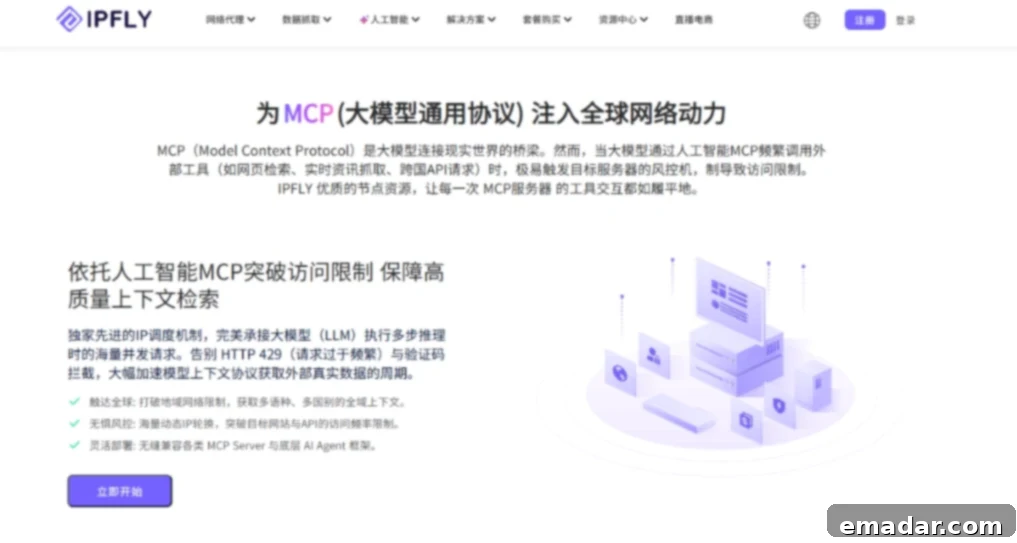
IPFLY’s MCP Empower system is specifically engineered to confront these challenges head-on. Its core philosophy is to:
Elevate the raw “protocol capability” of MCP into a robust, readily deployable, and scalable “connection infrastructure.”
More specifically, MCP Empower addresses critical operational questions for businesses leveraging AI:
- How can AI agents reliably access global resources? This involves ensuring consistent connectivity to target systems located anywhere in the world, bypassing geographical restrictions and network complexities.
- How can the success rate of AI-driven tasks be guaranteed? The system must be resilient, capable of handling network anomalies, retrying failed requests intelligently, and adapting to dynamic target environments to ensure task completion.
- How can consistency be maintained in complex network environments? AI workflows often involve interactions with systems that have varying security policies, rate limits, and network infrastructures. MCP Empower provides a consistent and optimized environment for these interactions, regardless of the underlying network complexity.
Why High-Quality Network Infrastructure is Indispensable for AI Workflows
The transition of AI from analytical tools to executable agents, facilitated by MCP, introduces a new, often overlooked dependency: the quality and reliability of the underlying network infrastructure. Many organizations invest heavily in AI models and tools, only to find their capabilities bottlenecked by subpar network connectivity.
The Hidden Bottleneck of AI Execution Capability
In any MCP-driven architecture, a fundamental truth emerges:
Network Quality is Directly Proportional to AI Execution Success Rate.
This isn’t just about speed; it encompasses reliability, authenticity, and resilience. Without a robust network, even the most advanced AI agent will struggle to perform. Typical problems that arise from inadequate network infrastructure include:
- IP Blocking and Task Failure: AI agents attempting to access external websites or services frequently risk having their IP addresses flagged and blocked by target systems due to unusual activity patterns or high request volumes. This can immediately halt tasks.
- Frequent Requests Identified as Anomalous: Many online services employ sophisticated anti-bot and security measures. If AI requests originate from a limited set of IP addresses or exhibit unnatural browsing patterns, they are often detected as automated activity, triggering CAPTCHAs, rate limits, or outright blocks.
- High Latency for Cross-Regional Access: When AI agents need to interact with data sources or services located in different geographical regions, high network latency can significantly slow down execution, degrade performance, and lead to timeouts or data inconsistencies.
- Data Collection Interruptions: Continuous data streams, crucial for many AI applications, can be easily disrupted by unstable network connections, leading to incomplete datasets, data corruption, or the need for costly manual reprocessing.
These issues are not theoretical; they manifest as tangible operational failures. For example:
- An AI monitoring e-commerce product prices across multiple platforms might find its IP addresses blocked, preventing it from gathering crucial competitive intelligence due to platform risk control systems.
- An AI designed for social media automation, such as managing multiple accounts for content publishing or engagement, could trigger account anomaly detections or require frequent CAPTCHA verifications if the underlying IP environment is inconsistent or suspicious.
- An AI performing large-scale data scraping for training new models will encounter frequent IP blacklisting, leading to failed data acquisition attempts and severely impacting the quality and quantity of its training data.
Therefore, it becomes unequivocally clear that the effective ceiling of AI capabilities is, to a significant extent, dictated by the quality and resilience of its network environment. Ignoring this critical factor is akin to investing in a high-performance engine but neglecting the fuel supply.
How IPFLY Significantly Enhances MCP Workflow Stability
Recognizing the absolute necessity of a superior network foundation for executable AI, IPFLY has meticulously engineered its MCP Empower system with a focus on unparalleled connection stability and reliability. The cornerstone of this stability is IPFLY’s globally distributed proxy network.
Leveraging a Global Proxy Network as the Underlying Backbone
IPFLY’s strategy revolves around providing AI agents with access to a vast, dynamic, and geographically diverse network of IP addresses. This global proxy network acts as a resilient buffer between the AI and its target systems, effectively masking the AI’s origin and distributing its requests across a multitude of authentic connection points. Key features of this network include:
- Extensive Global Coverage: The network spans over 190 countries and regions, ensuring that AI agents can access geographically restricted content or simulate local user behavior from virtually anywhere in the world. This is crucial for tasks requiring localized data or market-specific interactions.
- Massive IP Resource Pool: With a pool exceeding 90 million unique IP addresses, IPFLY offers an unparalleled capacity for dynamic IP rotation and distribution. This vast resource minimizes the chances of IP blacklisting and ensures a continuous supply of fresh, untainted IPs.
- Support for Multiple Proxy Types: IPFLY provides a versatile selection of proxy types, including residential proxies (appearing as real user IPs), dynamic proxies (constantly changing IPs), and datacenter proxies (high-speed, high-volume connections). This allows businesses to choose the optimal proxy type for specific AI tasks, balancing authenticity, speed, and cost-effectiveness.
This robust infrastructure endows AI agents performing MCP-driven tasks with several critical advantages:
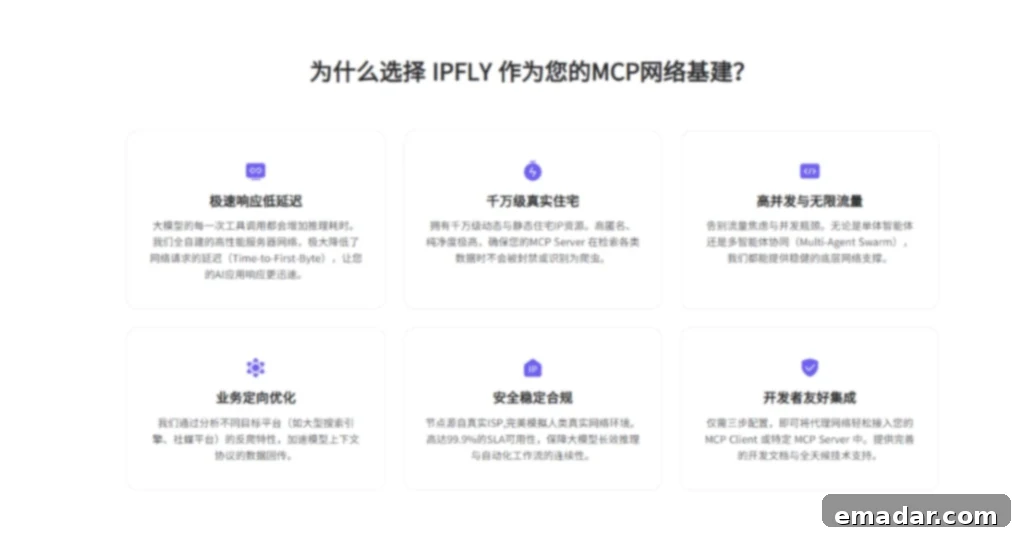
- More Authentic Access Environments: By routing requests through residential IPs, AI agents can mimic the behavior of genuine users, making it significantly harder for target websites to detect and block automated activity.
- Significantly Lower Blocking Risks: The sheer size and diversity of the IP pool, combined with intelligent rotation strategies, drastically reduce the likelihood of individual IPs being flagged or banned, ensuring uninterrupted task execution.
- Higher Overall Success Rates: With authentic access environments and minimized blocking risks, AI workflows can achieve consistently higher success rates in data collection, task execution, and system interaction, leading to more reliable outcomes and efficient resource utilization.
The Practical Value of Multi-Layer IP Filtering Mechanisms
Beyond simply providing a large pool of IPs, the quality and integrity of each IP address are paramount. A contaminated or previously flagged IP can still lead to detection and failure, even within a large network. IPFLY addresses this with sophisticated, multi-layer IP filtering mechanisms:
In real-world applications, the quality of an IP address directly influences:
- Whether Requests are Identified as Anomalous: A clean IP is less likely to trigger security algorithms that look for unusual or suspicious connection patterns.
- Whether CAPTCHAs are Triggered: Sites often use CAPTCHAs as a defense against bots. A high-quality, reputable IP reduces the chances of these being presented.
- The Integrity and Completeness of Data: Uninterrupted access via a stable IP ensures that data streams are consistent and complete, without partial downloads or aborted connections.
IPFLY ensures superior IP quality through a combination of advanced techniques:
- Big Data Screening: Leveraging vast datasets, IPFLY continuously analyzes IP performance and reputation, identifying and isolating problematic IPs.
- Multi-Layer Quality Detection: Each IP undergoes rigorous, multi-stage checks for blacklisting, spam scores, abuse history, and network health before being made available.
- Real-time Availability Monitoring: The system continuously monitors the live performance and availability of every IP in the pool, instantly removing any that show signs of degradation or unreliability.
This meticulous approach guarantees that every MCP call routed through IPFLY is fortified with the highest possible stability and authenticity, maximizing the efficiency and reliability of AI-driven operations.
Core Application Scenarios for MCP Empower
The combination of MCP’s ability to empower AI agents and IPFLY’s robust network infrastructure unlocks a multitude of transformative applications across various industries.
-
Cross-Border E-commerce Automation
The global e-commerce landscape is hyper-competitive, demanding real-time data and swift action. AI agents powered by MCP and IPFLY can revolutionize operations:
Typical Scenarios:
- Multi-Platform Price Monitoring: AI agents can continuously track product pricing across international e-commerce sites like Amazon, eBay, Alibaba, and local marketplaces to ensure competitive pricing strategies.
- Comprehensive Product Data Collection: Automated scraping of product specifications, images, reviews, and inventory levels from various vendor websites to enrich internal databases or identify new product opportunities.
- Dynamic Competitor Analysis: AI can monitor competitor promotions, new product launches, advertising campaigns, and customer feedback to provide actionable intelligence.
Key Challenges:
- Strict Platform Risk Control: Major e-commerce platforms employ advanced anti-bot measures to prevent large-scale automated data collection.
- Frequent Request Frequency Limits: Websites impose rate limits, blocking IPs that send too many requests in a short period.
IPFLY’s Solution:
- Dynamic Residential IPs: By using dynamic residential IPs, AI agents mimic genuine human users browsing from diverse locations, drastically reducing the risk of detection and blocking.
- Distributed Task Execution: IPFLY’s global network allows tasks to be distributed across numerous nodes worldwide, making requests appear organic and avoiding suspicion from any single geographical point.
-
Social Media Marketing and Account Management
Managing a robust social media presence, especially across multiple platforms and accounts, is labor-intensive and risky. MCP + IPFLY enables sophisticated automation:
Applications Include:
- Multi-Account Matrix Operations (e.g., TikTok, Instagram): Managing and scaling numerous social media accounts for content distribution, engagement, and trend monitoring.
- Automated Multi-Account Content Publishing: Scheduling and posting content across a network of accounts, optimizing timing and platform specifics.
- Advertising Placement and Verification: Monitoring the actual display and performance of ads across various social platforms to ensure campaigns are running as intended and reaching the target audience.
Core Challenges:
- Account Association Risk: Social media platforms actively detect and ban accounts that appear to be linked through common IP addresses or behavioral patterns.
- Inconsistent IP Environment: Maintaining a distinct and authentic IP footprint for each managed account is critical to avoid flags.
MCP + IPFLY Combination:
- Achieving Environment Isolation: IPFLY provides a unique, dedicated, and clean IP address for each social media account, effectively creating isolated environments that prevent cross-account detection.
- Providing Stable Regional IPs: Agents can operate from specific geographical locations, ensuring that social media activity aligns with the target audience’s region, enhancing authenticity.
-
AI Data Scraping and Training
High-quality, diverse, and voluminous data is the lifeblood of modern AI model training and refinement. MCP-enabled AI agents, supported by IPFLY, are ideal for this:
During the AI Training Phase:
- Demand for Massive Real-World Data: AI models require vast quantities of authentic, unstructured, and structured data from various online sources to learn effectively.
- Need for High-Frequency Requests: Collecting such large datasets often necessitates sending a continuous stream of requests to target websites.
Prevailing Problems:
- Data Source Access Restrictions: Many websites implement strict policies against automated scraping, limiting access to their content.
- Severe IP Blocking: Persistent high-frequency scraping attempts quickly lead to IP addresses being blacklisted, halting data collection efforts.
IPFLY’s Robust Solutions:
- Dynamic IP Rotation: IPFLY automatically rotates through millions of IP addresses, making each request appear to come from a different user, thus evading detection and maintaining continuous access.
- Distributed Scraping: Tasks can be fragmented and executed across IPFLY’s global network, allowing for parallel, high-volume data collection that is both efficient and less susceptible to localized blocking.
-
Automated Testing and Monitoring
Ensuring the performance, functionality, and availability of digital assets across a global user base is a continuous challenge. MCP-driven AI, supported by IPFLY, offers a superior solution:
Including:
- Global Website Performance Testing: AI agents can simulate user visits from various geographic locations to test website load times, functionality, and responsiveness under real-world conditions.
- API Monitoring for Global Services: Continuously checking the availability, latency, and correctness of APIs from different regions to ensure consistent service delivery.
- Geographical Access Verification: Confirming that websites, content, or services are accessible and display correctly to users in specific countries or regions, which is vital for geo-targeted content or compliance.
Significant Advantages:
- Simulating Diverse Regional Access: AI can accurately replicate user behavior and network conditions from virtually any country, providing a comprehensive view of global performance.
- Elevating Testing Realism: By using authentic residential IPs and routing through specific geographies, the tests become far more realistic, revealing issues that might not be apparent from local testing environments.
MCP + IPFLY: Forging a Scalable AI Infrastructure
From Point Tools to System-Level Capabilities
The trajectory of AI development clearly indicates a move beyond isolated, single-function tools. The future of AI lies in its ability to operate as a cohesive, integrated system. This vision encompasses:
- Seamless Toolchain Integration: AI systems will effortlessly orchestrate a variety of specialized tools, acting as a conductor for complex digital operations.
- End-to-End Workflow Automation: AI will take on broader responsibilities, automating entire business processes from inception to completion, requiring minimal human intervention.
- Sophisticated Multi-System Collaboration: Future AI will thrive in environments where it can intelligently interact and collaborate with numerous disparate systems, both internal and external, creating a truly interconnected digital ecosystem.
In this evolving landscape, the roles of MCP and IPFLY become intrinsically linked and equally vital:
MCP is the crucial enabler for “connection,” providing the standardized language and protocol for AI to discover and interact with external resources.
IPFLY, conversely, is responsible for ensuring “stable connection,” transforming raw connectivity into reliable, secure, and performant pathways for AI to act upon.
The synergistic combination of MCP and IPFLY yields a powerful outcome for businesses:
- Significantly Higher Execution Success Rates: The combined resilience of intelligent protocol handling and robust network infrastructure ensures that AI tasks are completed reliably, minimizing failures and wasted computational cycles.
- Reduced Operational and Maintenance Costs: By automating complex network management and ensuring consistent performance, businesses can drastically cut down on the human resources typically required for troubleshooting, re-running tasks, and managing IP infrastructure.
- Enhanced Scalability and Adaptability: This integrated approach provides a foundation that can effortlessly scale to accommodate growing AI demands and adapt to new applications or geographical requirements without compromising performance or reliability.

Practical Case Study: AI Automated Data Collection Workflow
To illustrate the tangible benefits of this synergy, let’s consider a typical MCP-driven workflow focused on automated data collection, a critical component for many modern AI applications.
Step-by-Step Breakdown of an AI Data Collection Workflow
- AI Receives the Task: An intelligent agent is given a specific objective, for example, “scrape the current price and stock levels for all products in category ‘X’ from a major e-commerce website.”
- Invokes MCP Tools for Web Interaction: The AI, using its MCP capabilities, identifies and calls upon a suitable external web scraping tool or a custom API designed for web interaction.
- Accesses Target Website via IPFLY’s Proxy Network: Instead of directly connecting to the target website, the scraping tool routes its requests through IPFLY’s global proxy network. This is where IPFLY intelligently selects the most suitable, clean, and geographically relevant IP address.
- Acquires and Processes Data: The website data is successfully retrieved, parsed, and processed by the AI. This might involve extracting specific price points, product descriptions, or inventory counts.
- Outputs Results or Triggers Subsequent Processes: The processed data is then stored, analyzed, or used to trigger the next stage of an automated workflow, such as updating an internal database, generating an alert, or informing a pricing optimization algorithm.
Critical Optimization Points with IPFLY
Without IPFLY, step 3 would be the most vulnerable point, frequently leading to failure. IPFLY optimizes this process significantly:
- Utilizing Different Regional IPs to Avoid Blocking: If the target website detects a pattern from one region, IPFLY can seamlessly switch to an IP from a completely different country or city, maintaining uninterrupted access.
- Dynamic IP Switching for Higher Success Rates: IPFLY’s system continuously monitors the performance of its IPs. If an IP shows signs of degradation or is suspected of being flagged, it is immediately rotated out for a fresh, high-quality alternative, ensuring consistent connectivity.
- Distributed Execution to Boost Efficiency: For large-scale data collection, the task can be broken down and simultaneously executed across multiple IPFLY proxy nodes, drastically reducing the total time required for data acquisition while minimizing the load on any single IP.
This case study underscores how IPFLY transforms a potentially fragile MCP-driven task into a robust, high-performance, and reliable operation.
How to Select the Ideal Proxy Solution for MCP Workflows
The efficacy of MCP-powered AI agents is profoundly influenced by the quality and appropriateness of their underlying proxy solution. Choosing the right proxy provider is not a one-size-fits-all decision but requires careful consideration of several key factors.
Key Evaluation Standards for Proxy Selection
When evaluating proxy solutions to support MCP workflows, businesses should prioritize the following critical attributes:
- IP Purity and Reputation: The ‘cleanliness’ of an IP address is paramount. IPs that have been previously used for malicious activities, spamming, or excessive scraping are more likely to be blacklisted. A reputable provider like IPFLY actively cleanses its IP pool to ensure high purity.
- Geographical Coverage: The ability to access IPs from specific countries or regions is crucial for geo-restricted content, localized market analysis, or simulating regional user behavior. Ensure the provider offers extensive global coverage matching your operational needs.
- Stability and Uptime: Intermittent connections or frequent IP failures can cripple AI workflows. Look for providers that guarantee high uptime and have robust infrastructure to ensure consistent, reliable connectivity.
- Concurrency Capabilities: For AI tasks requiring simultaneous requests or managing multiple agents, the proxy solution must be able to handle a high volume of concurrent connections without performance degradation.
- Speed and Latency: While authenticity is key, speed also matters. Low latency is essential for real-time data collection or time-sensitive task execution.
- Security Features: Ensure the proxy provider offers strong encryption, secure protocols, and robust authentication methods to protect your data and AI operations.
- Customer Support and Documentation: Reliable technical support and comprehensive documentation are invaluable for troubleshooting and optimizing proxy usage within complex AI environments.
Understanding Different Proxy Types and Their Applicable Scenarios
Different types of proxies are best suited for different MCP-driven tasks due to their unique characteristics:
- Static Residential IPs: These IPs are assigned by Internet Service Providers (ISPs) to real homes and remain unchanged over long periods.
- Suitable for: Tasks requiring consistent identity and high trust, such as social media account management, maintaining multiple e-commerce seller accounts, or managing sensitive web logins where IP consistency is critical to avoid flags.
- Why: They offer the highest level of authenticity and are rarely flagged as proxies, mimicking genuine user behavior over time.
- Dynamic Residential IPs: Also originating from real homes but dynamically change with each new connection or after a set interval.
- Suitable for: Large-scale data scraping, price monitoring, ad verification, and market research where frequent IP changes are needed to bypass rate limits and anti-bot measures.
- Why: They provide the authenticity of residential IPs combined with the agility of frequent rotation, making it difficult for target sites to track and block.
- Datacenter IPs: These IPs originate from commercial data centers, offering extremely high speeds and bandwidth.
- Suitable for: High-concurrency tasks that are less sensitive to IP authenticity, such as rapid website testing, API monitoring, general web browsing automation, or accessing publicly available data that doesn’t have stringent anti-bot protection.
- Why: They are cost-effective and provide lightning-fast performance for high-volume, non-sensitive tasks. However, they are more easily detectable as proxies.
By carefully matching the proxy type to the specific requirements of each MCP workflow, businesses can optimize both the success rate and the efficiency of their AI operations.
MCP Ecosystem’s Future: The Restructuring of AI Infrastructure
The current advancements in AI, spearheaded by protocols like MCP, signal a fundamental re-architecture of the technological landscape. We are rapidly moving towards a future where AI systems will possess unprecedented levels of autonomy and integration.
It is increasingly evident that future AI systems will be characterized by:
- Autonomous Tool Invocation: AI will automatically identify and call upon the most appropriate tools from a vast ecosystem to accomplish specific sub-tasks within a broader objective.
- Self-Directed Task Execution: Beyond simple commands, AI agents will be capable of receiving high-level goals and autonomously planning, executing, and adapting their strategies to achieve those goals.
- Sophisticated Multi-Agent Collaboration: Complex problems will be tackled by networks of specialized AI agents, each contributing their unique capabilities and collaboratively working towards a common objective.
Within this evolving paradigm, MCP is poised to become much more than just a technical specification:
- The Standard Interface for AI Systems: MCP will serve as the de facto communication protocol, allowing diverse AI models and external services to interact seamlessly, fostering an open and interoperable AI ecosystem.
- A Core Component of Enterprise AI Infrastructure: For businesses, MCP will move from an experimental concept to an essential, foundational layer of their AI strategy, enabling them to build robust and versatile AI-powered operations.
Concurrently, the foundational layer of network capabilities, particularly aspects like IP quality and global connectivity, will ascend in importance to become:
A critical determinant of AI’s real-world deployment success and overall effectiveness.
The most brilliant AI model, if starved of reliable and authentic connectivity, will remain confined to theoretical potential. The network layer is the nervous system that connects AI’s intelligence to the actionable world.
Summary: IPFLY’s Indispensable Role in the AI Connection Era
The Model Context Protocol (MCP) is unequivocally redefining the capabilities of Artificial Intelligence, propelling it from a realm of mere information processing into that of dynamic, executable agents. This paradigm shift holds immense promise for transforming industries and automating complex workflows.
However, the true measure of AI’s impact and its practical adoption hinges not just on its inherent intelligence, but on the robustness of its operational environment. Specifically, the factors that ultimately dictate successful deployment are:
- Network Stability: The unwavering reliability of connections to external tools and data sources.
- Execution Success Rate: The consistent ability of AI agents to complete their assigned tasks without interruption or failure.
- Global Connectivity Capability: The seamless capacity to interact with resources and simulate presence across diverse geographical locations.
This is precisely where the profound value of IPFLY MCP Empower lies. Its mission is to:
- Transform “AI connection capability” into a readily “usable and dependable capability”: IPFLY takes the abstract potential of MCP and grounds it in a practical, high-performance infrastructure.
- Furnish enterprises with a stable, scalable, and secure AI infrastructure: By ensuring optimal network conditions, IPFLY empowers businesses to build and expand their AI initiatives with confidence, knowing their agents have reliable access to the digital world.
Therefore, if MCP empowers AI to “know what to do” and “how to do it” by connecting to the right tools, then IPFLY ensures that AI can “actually get things done” effectively and consistently, turning potential into tangible outcomes.