
Mastering Web Scraping with Python: How IPFLY Ensures Scalable Data Operations
Python has become a leading programming language for data extraction and web automation, providing unparalleled ecosystem support for web scraping applications. From Beautiful Soup and Scrapy to Selenium and Playwright, the Python environment offers a comprehensive toolkit for extracting structured data from web sources of virtually any scale.
However, as organizations increasingly rely on web scraping with Python for competitive intelligence, market research, price monitoring, and business analytics, they encounter challenges from sophisticated anti-scraping mechanisms that stymie basic implementations. Modern websites deploy advanced bot detection, IP rate limiting, fingerprinting technologies, and behavioral analysis to systematically block or misdirect automated data acquisition efforts.
Understanding how to effectively implement web scraping with Python in this adversarial environment requires examining both technical extraction capabilities and the infrastructure requirements for sustainable, scalable operations. For enterprise applications, success depends not only on parsing HTML or navigating JavaScript but also on building resilient systems that maintain consistent data access despite aggressive countermeasures.

The Challenges of Modern Web Scraping with Python
Anti-Bot Detection and Blocking Mechanisms
Contemporary websites implement multi-layered protection systems specifically designed to identify and block automated access:
- IP-Based Rate Limiting: Sites track the frequency of requests originating from a single IP address, implementing temporary blocks, CAPTCHA challenges, or permanent blacklists when thresholds are exceeded. For large-scale web scraping with Python, these limitations can quickly exhaust single-IP capacity.
- Browser Fingerprinting: Advanced detection systems analyze HTTP headers, TLS fingerprints, canvas rendering, WebGL characteristics, and JavaScript execution environments to differentiate between automated browsers and genuine user sessions. Standard web scrapers configured with Python often exhibit detectable patterns that trigger blocking.
- Behavioral Analysis: Machine learning models evaluate navigation patterns, mouse movements, scrolling behavior, and request timing to identify non-human interaction characteristics. Even sophisticated automation tools may reveal an automation signature through consistency unattainable by human users.
- Honeypot Traps: Websites deploy invisible elements, hidden links, and structured data specifically designed to attract and identify scrapers, subsequently blocking the associated IP addresses or sessions.
Data Quality and Reliability Issues
Beyond blocking, web scraping with Python faces challenges in ensuring data integrity:
- Dynamic Content Loading: Modern web applications rely heavily on JavaScript frameworks that dynamically render content. Static HTML parsing cannot capture this content, necessitating complex browser automation that increases the risk of detection.
- Structural Instability: Website redesigns, A/B testing, and gradual interface evolutions disrupt extraction selectors, requiring continuous maintenance of scraping logic.
- Geographic Variance: Location-based content personalization introduces data inconsistencies when scraping from a single geographic point, complicating competitive analysis and market research.
Scale and Performance Requirements
Enterprise web scraping with Python requires capabilities beyond what basic implementations can provide:
- Concurrent Processing: Meaningful data acquisition necessitates executing parallel requests across thousands of sources simultaneously, requiring infrastructure that supports massive concurrency without degrading performance.
- Distributed Architecture: Global data acquisition requires mimicking the geographic distribution of local user populations, ensuring access to region-specific content and preventing single-point-of-failure vulnerabilities.
- Reliability Guarantees: Business-critical analytics rely on consistent data availability, demanding uptime commitments and automated recovery mechanisms that consumer-grade tools cannot provide.
IPFLY’s Solution: Residential Proxy Infrastructure for Python Scraping
Authentic Residential IP Architecture
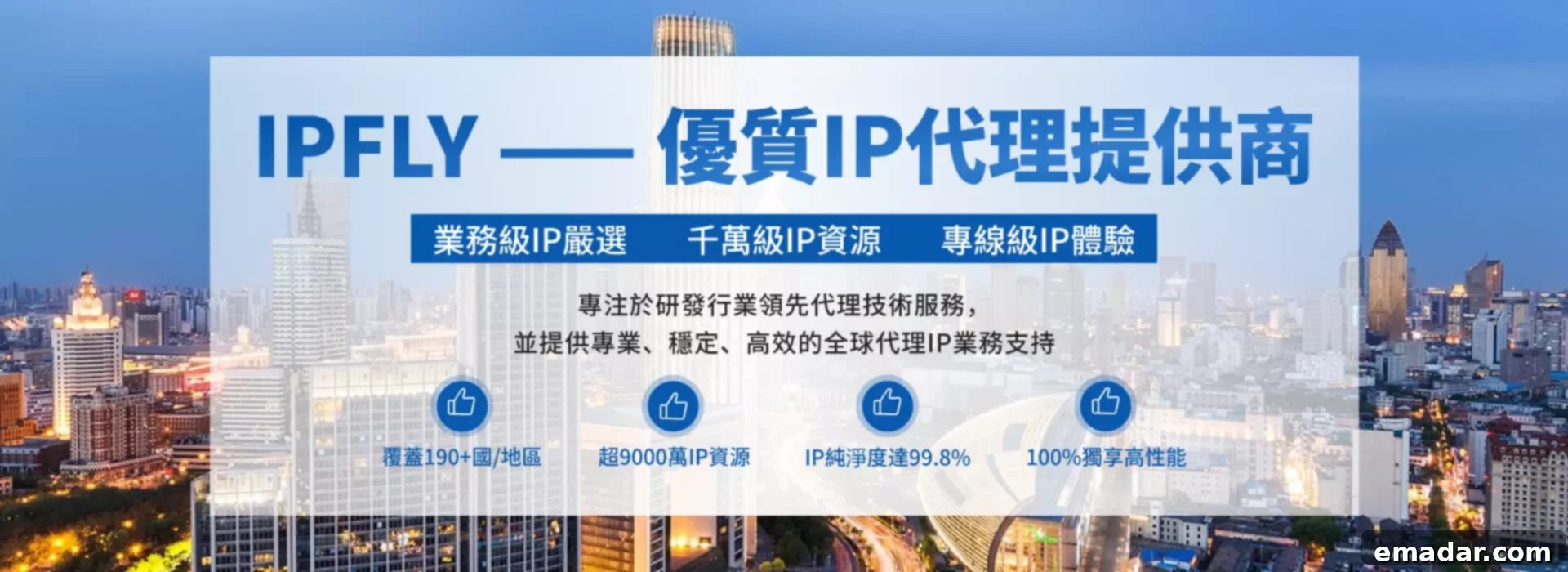
IPFLY offers enterprise-grade infrastructure specifically designed to address the challenges of web scraping with Python through a genuine residential proxy network. The platform maintains an extensive pool of over 90 million residential IP addresses spread across 190+ countries, enabling a realistic web presence that sophisticated anti-bot systems cannot distinguish from legitimate user traffic.
This residential foundation provides crucial capabilities for web scraping with Python:
- Detection Evasion: IPFLY’s residential IPs originate from real end-user devices connected through legitimate internet service providers. These addresses appear as normal consumer traffic to platform detection systems, bypassing IP-based blocking mechanisms that easily identify data center ranges.
- Request Distribution: Access to over 90 million addresses enables massive request distribution, preventing rate-limiting triggers by ensuring that individual IPs operate far below detection thresholds while maintaining aggregate collection velocity.
- Geographic Authenticity: Scraping activity appears to originate from genuine residential locations in 190+ countries, enabling access to region-specific content and preventing geographic inconsistency flags that trigger security responses.
Stringent IP Quality Management
IPFLY addresses the reliability requirements of web scraping with Python through comprehensive quality assurance:
- Proprietary Filtering Algorithms: Multi-layered assessment protocols leveraging big data analytics continuously evaluate address quality, ensuring that scraping operations utilize only high-purity, uncompromised, and reputable residential resources.
- Business-Grade IP Selection: Rather than generic proxy assignment, IPFLY filters residential resources according to specific scraping scenarios and target platform requirements. This targeted approach optimizes success rates for demanding extraction tasks.
- Dynamic and Static Allocation Options: IPFLY supports rotating dynamic residential IPs for maximum evasion and persistent static assignments for sessions requiring consistent identity—flexibility essential for complex web scraping workflows with Python.
Enterprise Scale and Reliability
IPFLY combines residential authenticity with the operational capabilities needed for enterprise web scraping with Python:
- Unlimited Concurrent Processing: Dedicated high-performance servers support massive simultaneous request volumes without concurrency limitations, enabling scalable data acquisition that grows with organizational needs.
- 99.9% Uptime Commitment: Comprehensive infrastructure redundancy ensures consistent data acquisition availability, preventing gaps in time-sensitive analysis or competitive intelligence.
- Millisecond Response Times: High-speed operation minimizes request latency, maximizing scraping throughput and ensuring that proxy utilization does not become a performance bottleneck.
- 24/7 Expert Support: Expert technical assistance ensures rapid resolution of integration challenges, optimization guidance, and operational troubleshooting for mission-critical scraping operations.
Technical Implementation: Web Scraping with Python and IPFLY
Integration with Python Scraping Frameworks
IPFLY seamlessly integrates with mainstream web scraping tools using Python:
- Scrapy Integration: IPFLY’s HTTP/HTTPS proxy support enables direct integration with Scrapy’s middleware architecture, facilitating rotating proxy implementation and retry logic for resilient scraping.
Requests and Beautiful Soup: For lightweight web scraping applications using Python, IPFLY proxies integrate directly with Python’s Requests library, enabling simple proxy rotation and session management for HTML parsing workflows.
Selenium and Playwright: Browser automation tools benefit from IPFLY’s SOCKS5 support, enabling realistic browser fingerprinting through residential IP routing that supplements stealth plugin configurations.
Proxy Rotation and Session Management
Effective web scraping with Python requires sophisticated proxy management:
- Intelligent Rotation Strategies: IPFLY supports implementing request-volume-based, time-based, or response-triggered rotation logic, ensuring optimal IP utilization without premature exhaustion or detection risk.
- Session Persistence: For workflows requiring login states or multi-step interactions, IPFLY’s static residential assignments maintain a consistent IP identity throughout the session, preventing authentication challenges or session invalidation.
- Geolocation Targeting: Precise country, region, or city-level IP selection ensures that web scraping operations with Python capture geographically accurate data for market research and competitive analysis.
Error Handling and Resilience
Robust web scraping implementations using Python leverage IPFLY for operational continuity:
- Automated Failover: Multiple IPFLY endpoints and automated retry mechanisms ensure that temporary blocks or network issues do not interrupt data acquisition, maintaining pipeline velocity.
- Response Validation: Integration with IPFLY enables rapid detection of blocking responses, CAPTCHA challenges, or misleading content, triggering automated IP rotation and request retries.
- Rate-Limit Optimization: Dynamic request pacing combined with IPFLY’s distributed infrastructure maximizes collection throughput while respecting target platform limitations.
Strategic Applications: Enterprise Data Collection with IPFLY and Python
Competitive Intelligence and Price Monitoring
Organizations use web scraping implementations with Python for market positioning:
- Dynamic Pricing Analysis: Continuously monitoring competitor pricing across global markets requires reliable access to region-specific e-commerce platforms. IPFLY’s residential infrastructure ensures consistent data availability despite sophisticated anti-bot protections.
- Product Catalog Extraction: Comprehensive competitive product analysis requires scalable collection from diverse sources. IPFLY’s unlimited concurrency supports parallel extraction across thousands of SKUs and marketplaces.
- Promotional Intelligence: Tracking competitor campaigns, discount strategies, and marketing initiatives requires reliable access provided by IPFLY’s residential authenticity.
Market Research and Consumer Analysis
Web scraping with Python enables data-driven market understanding:
- Sentiment Analysis: Social media, review platform, and forum monitoring for brand perception requires access to authenticated content facilitated by residential proxies.
- Trend Identification: News aggregation, search trend analysis, and emerging topic tracking rely on consistent access to diverse sources without geographic or rate-based restrictions.
- Demographic Research: Understanding regional preferences and behaviors requires genuine local access, enabled by IPFLY’s 190+ country coverage.
Financial and Investment Intelligence
Sophisticated web scraping with Python supports financial decision-making:
- Alternative Data Collection: Web-derived indicators—hiring patterns, real estate listings, consumer sentiment—provide investment insights when reliably collected through residential infrastructure.
- Regulatory Filing Monitoring: Automated tracking of disclosure documents, registration statements, and regulatory submissions requires consistent access ensured by IPFLY.
- Economic Indicator Tracking: Extraction of employment data, pricing indices, and activity metrics from web resources supplements traditional economic analysis.
Lead Generation and Business Development
B2B applications leverage web scraping with Python for growth:
- Prospect Identification: Directory extraction, professional network analysis, and industry database compilation require scalable, reliable data acquisition.
- Partner Research: Identifying potential collaborators, vendors, or acquisition targets through web analysis requires comprehensive source access.
- Market Expansion Analysis: Evaluating new market entries through competitive landscape mapping and opportunity identification requires geographic flexibility provided by IPFLY.
Comparative Advantages: IPFLY vs. Basic Proxy Solutions
Detection Resistance and Success Rates
| Capability | Data Center Proxies | IPFLY Residential Infrastructure |
|---|---|---|
| IP Type | Easily Identified Hosting Ranges | 100% Authentic Residential ISPs |
| Anti-Bot Evasion | Poor – Systemic Blocking | High – Indistinguishable from Users |
| CAPTCHA Frequency | High, Disruptive to Operations | Minimal, Smooth Data Acquisition |
| Success Rate on Protected Sites | 10-30% | 85-95% |
Basic data center proxies face systemic blocking from sophisticated platforms, rendering web scraping with Python unreliable. IPFLY’s residential foundation maintains consistent access even to heavily protected targets.
Scale and Operational Efficiency
| Capability | Consumer Proxy Services | IPFLY Residential Infrastructure |
|---|---|---|
| Concurrent Connections | Limited, Shared Resources | Unlimited, Dedicated Infrastructure |
| Geographic Coverage | Narrow, Popular Markets Only | 190+ Countries, Comprehensive |
| Bandwidth Allocation | Throttled, Restrictive | High-Speed, Unrestricted |
| Support Availability | Minimal, Community-Based | 24/7 Professional Technical Support |
Consumer-grade solutions are inadequate for enterprise web scraping with Python due to scalability limitations. IPFLY’s infrastructure supports production data pipelines without compromise.
Data Quality and Reliability
| Capability | Free Proxy Lists | IPFLY Residential Infrastructure |
|---|---|---|
| IP Reputation | Compromised, Abused | Stringently Filtered, High Purity |
| Connection Stability | Unpredictable, Frequent Failures | 99.9% Uptime, Consistent |
| Response Accuracy | Distorted, Manipulated | Authentic, Reliable |
| Security | High-Risk, Potential Malware | Professional Standards, Encrypted |
Free alternatives introduce data quality risks and security vulnerabilities that enterprise web scraping with Python cannot tolerate. IPFLY maintains professional standards to ensure data integrity.
Best Practices for Web Scraping with Python and IPFLY
Ethical and Legal Compliance
Responsible web scraping with Python requires attention to:
- Terms of Service Respect: Understand and adhere to target platform policies regarding automated access, ensuring that data acquisition activities remain within acceptable boundaries.
- Data Protection Compliance: Handle extracted personal information according to GDPR, CCPA, and applicable privacy regulations, implementing appropriate security and retention measures.
- Rate Limit Adherence: Leverage IPFLY’s distribution capabilities to maintain reasonable request velocities, respecting target platform resources without triggering unnecessary defensive responses.
Technical Optimization
Maximize web scraping effectiveness with Python:
- Request Distribution: Distribute requests broadly across IPFLY’s 90+ million IP pool, minimizing the frequency per IP while maintaining aggregate collection velocity.
- Header and Fingerprint Management: Combine IPFLY’s residential authenticity with proper user-agent rotation, header randomization, and browser fingerprint consistency for comprehensive detection evasion.
- Retry and Backoff Logic: Implement intelligent retry mechanisms with exponential backoff, automated IP rotation upon blocking detection, and comprehensive logging for operational monitoring.
Architecture and Scalability
Enterprise web scraping infrastructure with Python:
- Distributed Collection: Deploy scraping workers across multiple geographic regions via IPFLY’s global infrastructure, ensuring redundancy and local access capabilities.
- Queueing and Workflow Management: Implement robust task queues, prioritization, and dependency management to orchestrate large-scale collection operations across diverse sources.
- Data Pipeline Integration: Seamlessly integrate with storage, processing, and analysis systems, transforming raw web extractions into actionable business intelligence.
Building Production-Grade Web Scraping with Python
Web scraping with Python has evolved from simple scripting tasks to complex enterprise operations requiring professional infrastructure investments. As target platforms deploy increasingly sophisticated protection mechanisms, successful data acquisition depends on combining technical extraction capabilities with genuine web authenticity that basic proxy solutions cannot provide.
IPFLY delivers the infrastructure foundation needed for production web scraping with Python—combining 90+ million residential IP addresses in 190+ countries with unlimited concurrency, stringent quality assurance, and enterprise-grade reliability. By providing residential connectivity sourced from genuine ISP assignments, IPFLY empowers Python-based extraction systems to operate with success rates and consistency unattainable by data center alternatives.
For organizations committed to data-driven decision-making, IPFLY transforms web scraping with Python from a fragile, unreliable process into a powerful, scalable operational capability. The combination of residential authenticity, global distribution, and expert support ensures that competitive intelligence, market research, and business analytics initiatives proceed without interruption or compromise.
Investing in high-quality proxy infrastructure represents a strategic enabler of modern data operations. As web platform protections continue to advance and data needs become increasingly complex, organizations equipped with IPFLY residential proxy resources maintain a fundamental advantage in information access, operational reliability, and competitive effectiveness.