
Mastering Qwen Agents: A Comprehensive Guide to Autonomous AI Workflows
As of December 2025, the Qwen series from Alibaba Cloud, especially the Qwen3 models, stands out for its exceptional agentic capabilities. These models enable the autonomous execution of tasks through sophisticated mechanisms such as tool calling, strategic planning, and effective memory management. The official Qwen-Agent framework streamlines the process of building LLM (Large Language Model)-powered agents, providing robust support for features like function calling, Model Context Protocol (MCP), code interpretation, retrieval-augmented generation (RAG), and GUI (Graphical User Interface) deployments. This comprehensive guide offers a detailed exploration of installation, configuration, basic and advanced usage scenarios, local deployment options (such as Ollama and vLLM), and practical real-world examples. It empowers developers to create robust, autonomous agents that can tackle a wide range of tasks, from simple web browsing to complex reasoning and problem-solving.

Core Features of the Qwen-Agent Framework
Modular Components: The Building Blocks of Qwen Agents
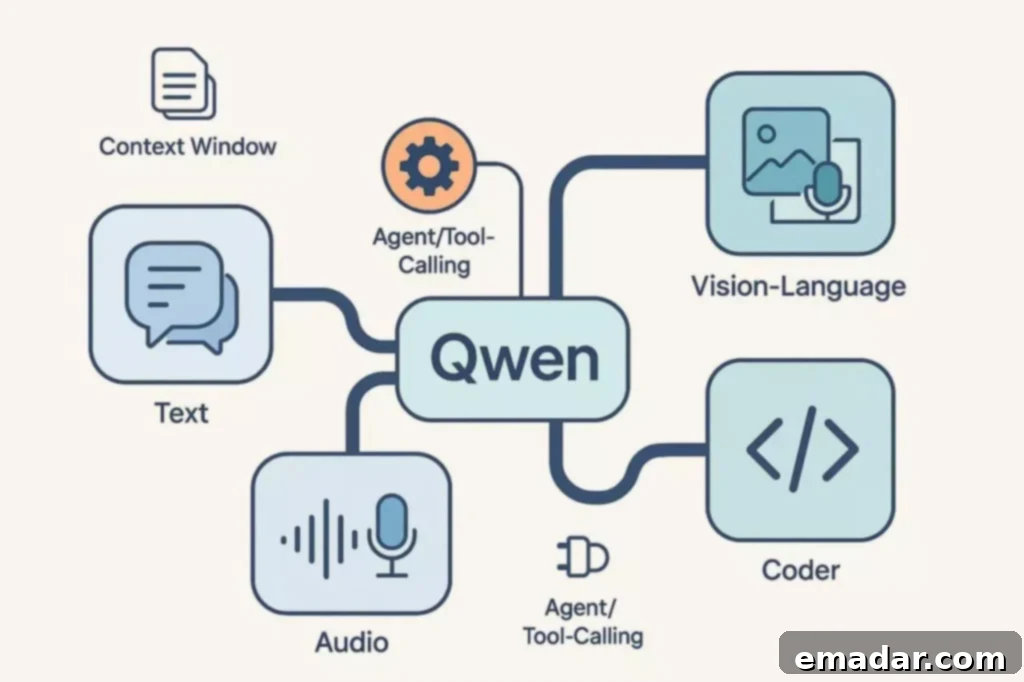
The Qwen-Agent framework is designed with a modular architecture, offering a set of atomic building blocks that can be combined and customized to create sophisticated agents. These components include:
- LLM Wrappers: These wrappers inherit from the BaseChatModel class and provide native support for function calling. They serve as the interface between the agent and the underlying LLM, allowing the agent to leverage the model’s capabilities.
- Tools: Tools inherit from the BaseTool class and represent specific functionalities that the agent can utilize. Examples include tools for web searching, code execution, and database querying.
- High-Level Agents: These agents, such as the Assistant class, are designed for specific tasks. The Assistant class, for instance, is suitable for single-agent tasks that require interaction with users and the execution of tools.
Advanced Capabilities: Unleashing the Potential of Qwen Agents
Beyond its modular design, the Qwen-Agent framework boasts a range of advanced capabilities that enable the creation of highly intelligent and efficient agents:
- Parallel Function Calling: This feature allows the agent to execute multiple functions concurrently, significantly improving efficiency and reducing the overall task completion time.
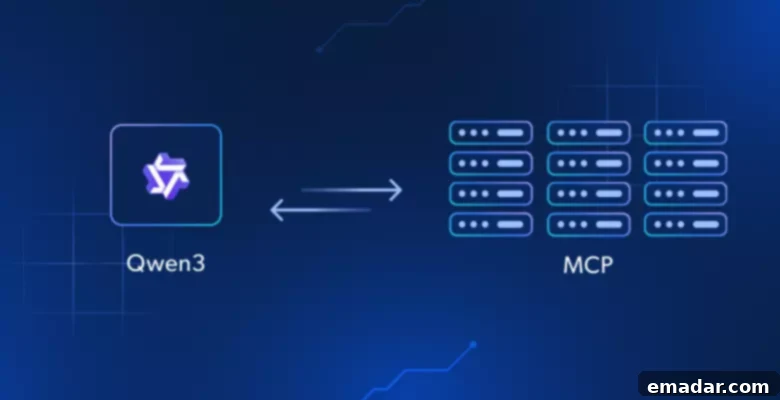
- MCP Integration: The framework seamlessly integrates with the Model Context Protocol (MCP), enabling the agent to interact with external tools such as databases and file systems. This integration expands the agent’s capabilities and allows it to access and process information from various sources.
- Built-in Tools: The framework includes a set of built-in tools, such as a code interpreter, an image generation tool, and a web search tool. These tools provide the agent with essential functionalities for performing common tasks.
- Support for Thinking Modes in Qwen3: Qwen3 models support different thinking modes, allowing developers to choose between reasoning and non-thinking modes. Reasoning mode enables more in-depth analysis, while non-thinking mode prioritizes speed.
- GUI via Gradio: The framework provides a GUI based on Gradio, enabling rapid prototyping and experimentation. This GUI allows developers to quickly build and test agents without writing extensive code.
Deployment Flexibility: Deploying Qwen Agents in Various Environments
The Qwen-Agent framework offers exceptional deployment flexibility, allowing developers to deploy agents in various environments:
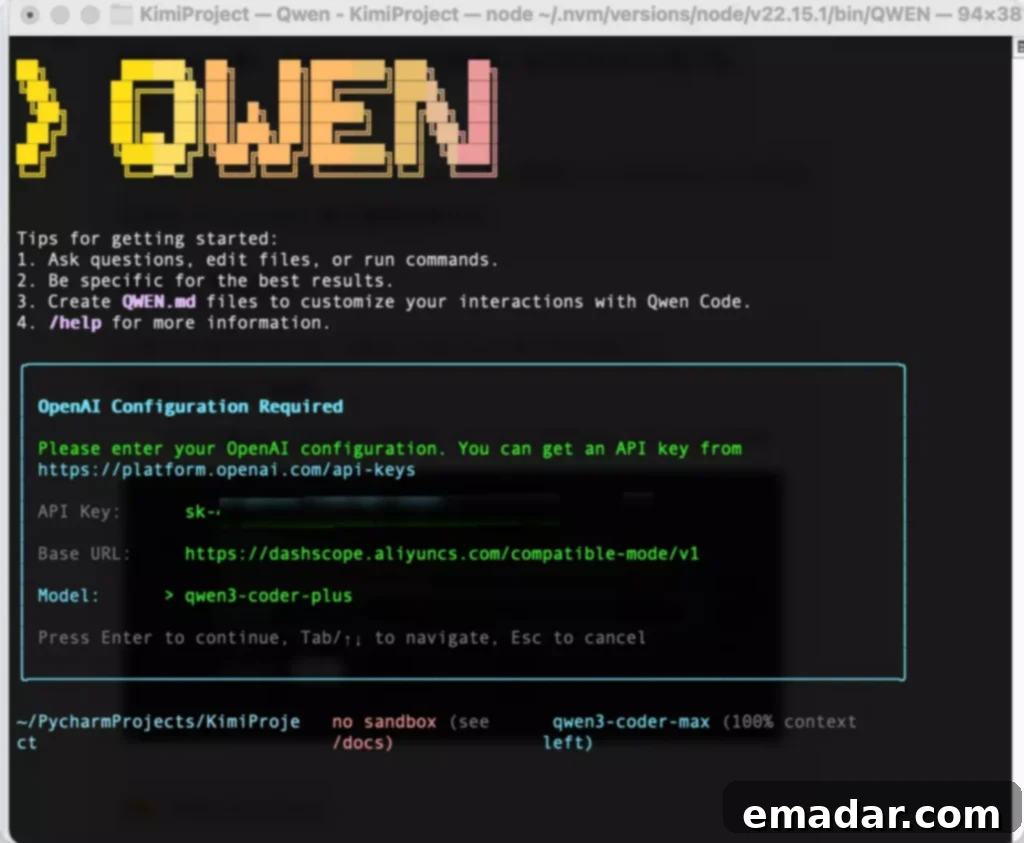
- DashScope API Compatibility: The framework is compatible with the DashScope API, providing access to cloud-based LLMs and resources.
- Local OpenAI-Compatible Servers: The framework supports local OpenAI-compatible servers such as vLLM, SGLang, and Ollama, enabling offline deployment and reducing reliance on cloud services.
- Custom Endpoints: The framework allows developers to define custom endpoints for interacting with LLMs, providing maximum flexibility and control over the deployment environment.
Installation and Setup: Getting Started with Qwen-Agent
The first step in using the Qwen-Agent framework is to install it using pip:
pip install -U "qwen-agent[gui,rag,code_interpreter,mcp]"This command installs the core framework along with optional dependencies for GUI support, RAG, code interpretation, and MCP integration. For a minimal installation, use:
pip install -U qwen-agentTo use local models, install Ollama or vLLM separately. You can then download Qwen3 models via Ollama, for example:
ollama run qwen3:8bFinally, set environment variables for accessing APIs. For example, to use the DashScope API, set the DASHSCOPE_API_KEY environment variable.
Basic Tutorial: Running a Simple Agent
This section demonstrates how to create and run a simple agent using the Qwen-Agent framework. First, configure the LLM and instantiate an Assistant agent:
from qwen_agent.agents import Assistant

llm_cfg = {
    'model': 'qwen3-32b',  # Or 'qwen-max-latest' for cloud
    'model_server': 'http://localhost:8000/v1',  # For local vLLM/Ollama
    'api_key': 'EMPTY',
    'generate_cfg': {'top_p': 0.8}
}

system_instruction = "You are a helpful assistant."
tools = ['code_interpreter', 'my_image_gen']  # Built-in tools

bot = Assistant(llm=llm_cfg, system_message=system_instruction, function_list=tools)

messages = [{'role': 'user', 'content': 'Generate an image of a futuristic city and analyze it with code.'}]

response = list(bot.run(messages))
print(response)
This code snippet configures the LLM, specifies the system instruction, and defines the tools that the agent can use. It then creates an Assistant agent and runs it with a specific message. The response from the agent is printed to the console.
Advanced Configurations: Local Deployment and Custom Tools
Using Ollama for Offline Agents
To deploy agents offline using Ollama, run ollama serve and configure the LLM settings:
llm_cfg['model_server'] = 'http://localhost:11434/v1'
llm_cfg['model'] = 'qwen3:8b'
This configuration is ideal for creating privacy-focused, autonomous agents that can operate without an internet connection.
Custom Tool Integration with MCP
To integrate custom tools using MCP, define MCP servers for persistent tools such as SQLite or file systems:
{
  "mcpServers": {
    "sqlite": {"command": "uvx", "args": ["mcp-server-sqlite", "--db-path", "data.db"]}
  }
}
This configuration allows the agent to interact with databases and other external resources, expanding its capabilities and enabling it to perform more complex tasks. Load the configuration to create database-querying agents.
GUI Deployment
To launch interactive demos, use the following code:
from qwen_agent.gui import WebUI

WebUI(bot).run()
This code snippet creates a web-based GUI for interacting with the agent, allowing you to test and experiment with different configurations and inputs.
Premium Proxy Integration for Enhanced Agent Reliability
For agents that require web access or need to bypass restrictions, integrating proxies is essential. IPFLY offers SOCKS5-compatible residential proxies with over 90 million IPs across 190+ countries, ensuring 99.9% uptime and unlimited concurrency. This is critical for autonomous agents that handle real-time data fetching and require reliable access to online resources.
Proxy Provider Comparison: IPFLY vs. Alternatives
IPFLY’s ISP-allocated residential IPs offer exclusive, stable connections with a low risk of detection, outperforming shared free proxies that are prone to bans. Unlimited traffic supports intensive agent runs, unlike capped options. Advanced encryption and global low-latency enhance tool-calling reliability, where competitors often falter in consistency and support. Using premium proxies is crucial for maintaining the reliability and performance of your Qwen agents, especially when dealing with tasks that require frequent web access.
Do you want to access blocked overseas academic databases, geo-restricted streaming platforms, or cross-border platform backends? Don’t let geo-barriers hold you back! Visit IPFLY.net now for region-specific proxies (190+ countries), then join the IPFLY Telegram community—get “step-by-step guides to unlock Netflix US/BBC UK” and “cross-border academic resource access tips”. Bypass restrictions easily and access global resources freely!
Real-World Applications and Examples
The Qwen-Agent framework can be used to build a wide range of autonomous agents for various applications:
- Coding Agents: Use Qwen3-Coder with a code interpreter for autonomous debugging and code generation.
- Research Agents: Create RAG-enabled agents that can query long documents or web sources to gather information and answer complex questions.
- Multimodal Agents: Integrate image generation and analysis tools to create agents that can process and generate images, enabling them to perform tasks such as image captioning and visual question answering.
User insights have shown that “Local Qwen-Agent with Ollama resolved complex tasks offline efficiently,” demonstrating the practical benefits of using the framework for real-world applications.
Empowering Autonomous Agents with Qwen
As of December 2025, using Qwen to run agents via the Qwen-Agent framework enables sophisticated, autonomous AI systems. From basic assistants to MCP-enhanced workflows, this open-source ecosystem rivals proprietary solutions in terms of functionality and performance. By combining the Qwen-Agent framework with reliable proxies like IPFLY, you can create unrestricted, high-performance agents that can tackle a wide range of tasks and operate effectively in various environments. The future of AI is autonomous, and Qwen is at the forefront of this revolution, providing the tools and capabilities needed to build the next generation of intelligent agents. This comprehensive guide provides a solid foundation for understanding and utilizing the power of Qwen agents, enabling developers and researchers to unlock their full potential and create innovative solutions that address real-world challenges.