
Have you ever wondered why your phone occasionally displays “IPv6” when connected to Wi-Fi? Or perhaps you’ve come across a lengthy, complex web address on certain websites? Congratulations, you’ve already stepped into the rapidly expanding world of IPv6! As the internet’s “new foundation,” IPv6 is quietly but profoundly transforming how we connect, communicate, and operate online. In 2025, understanding IPv6 isn’t just a technical curiosity; it’s a fundamental aspect of navigating the modern digital landscape, and being unaware could genuinely leave you behind.
Understanding IPv6: Why It’s Replacing IPv4
To grasp the significance of IPv6, it’s essential to first understand its predecessor, IPv4. Imagine IPv4 as the internet’s original address system – a unique numerical identifier assigned to every device connected to the network, much like a house number on a street. This system allows data packets to find their correct destination across the vast global network. However, IPv4 was designed decades ago, during a time when the internet’s explosive growth was unimaginable. It provides approximately 4.3 billion unique IP addresses. While that number might sound substantial, it pales in comparison to today’s demands.
Consider a bustling metropolis like New York City attempting to house its millions of residents with only a few hundred thousand house numbers. The resulting chaos, congestion, and lack of unique addresses would be insurmountable. This analogy perfectly illustrates the core dilemma IPv4 faces: address exhaustion. With billions of people worldwide, each owning multiple internet-connected devices – smartphones, tablets, laptops, smart TVs, and increasingly, an array of smart home gadgets and IoT sensors – IPv4 simply ran out of unique addresses. This scarcity has led to complex, often inefficient workarounds like Network Address Translation (NAT), which effectively forces many devices to share a single public IP address, adding layers of complexity and hindering direct communication.
Enter IPv6, the internet’s next-generation protocol. Unlike IPv4’s limited pool, IPv6 offers an astonishing number of addresses. Prepare to be astounded: IPv6 provides 2 to the power of 128 unique addresses. To put this into perspective, this isn’t just a large number; it’s an almost unfathomable quantity. It’s so vast that it transcends astronomical scales, offering enough unique identifiers to assign multiple IP addresses to every single atom on the surface of the Earth, with plenty left over. This virtually limitless address space is the cornerstone of IPv6’s ability to facilitate a truly ubiquitous and interconnected digital future, removing the fundamental constraint that has plagued the internet for years.
Key Advantages and Benefits of IPv6
The transition to IPv6 is not merely about addressing scarcity; it brings a host of fundamental improvements that enhance nearly every aspect of network operations and user experience.
-
Vastly Expanded Address Space
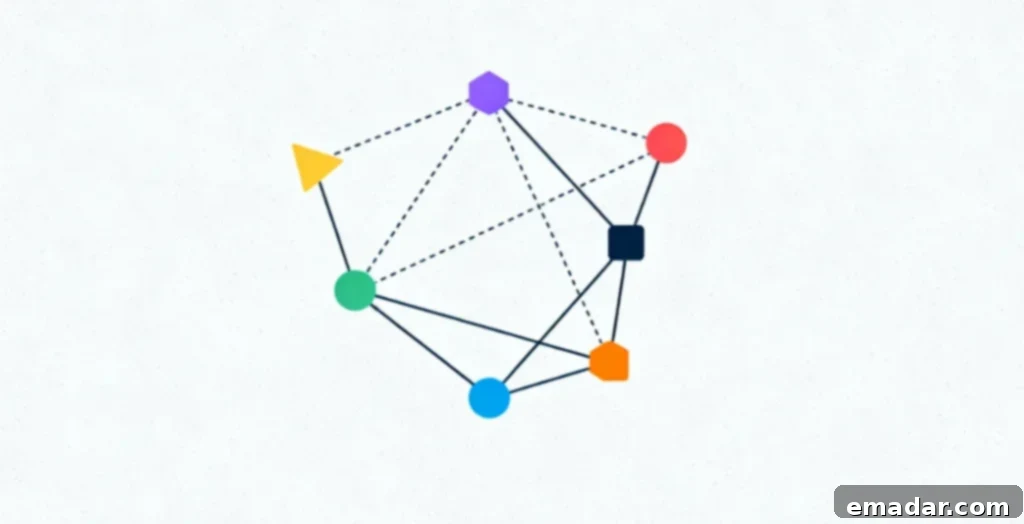
While IPv4’s 4.3 billion addresses seemed ample in its early days, IPv6’s address capacity is truly “cosmic” in scale. With 2128 addresses, you could theoretically assign billions of unique IP addresses to every grain of sand on every beach worldwide, and still not run out. This abundance eliminates the need for complex address sharing schemes like NAT, allowing every single device – from your smart refrigerator and air conditioner to your coffee machine, car, and even individual smart light bulbs – to possess its own unique, globally routable IP address. This capability is pivotal for the burgeoning Internet of Things (IoT), enabling direct, seamless, and secure communication among billions of devices without bottlenecks or convoluted configurations.
-
Significant Network Performance Enhancements
IPv6 was designed from the ground up to meet the demands of modern networks. Its streamlined header format simplifies packet processing for routers, reducing overhead and improving routing efficiency. Without the need for NAT, connections are more direct, leading to lower latency and higher throughput. This translates directly into a superior user experience: videos stream more smoothly, online games boast significantly lower lag, and large files download at faster speeds. For businesses, this means more efficient data transfers, improved cloud application performance, and a more responsive network infrastructure.
-
Substantially Enhanced Security
One of IPv6’s most compelling features is its native support for IPSec (Internet Protocol Security). Unlike IPv4, where IPSec was an optional add-on that often required additional configuration and sometimes third-party solutions, IPv6 integrates it as a mandatory component of the protocol suite. This means that robust end-to-end encryption and authentication can be implemented at the IP layer by default, making the network inherently more secure. This built-in “digital fortress” protects against various cyber threats, including man-in-the-middle attacks, IP spoofing, and unauthorized data interception, offering a more secure foundation for all online communications.
-
Simplified Network Configuration
Bid farewell to the complexities of manual IP address assignments and convoluted network settings. IPv6 supports advanced auto-configuration capabilities, most notably Stateless Address Autoconfiguration (SLAAC). Devices can automatically generate their own unique, globally routable IP addresses without the need for a central server like DHCP. This “plug-and-play” functionality makes connecting devices to the network as simple as plugging them into a power outlet. It drastically reduces the administrative burden for network managers and simplifies the experience for home users, fostering easier deployment and management of vast numbers of devices, especially crucial in IoT environments.
IPv6 in Practical Applications and Real-World Impact
The advantages of IPv6 extend beyond theoretical benefits, manifesting in tangible improvements across various sectors.
The Foundation of the Internet of Things (IoT) Era
Envision a truly smart home or a fully automated industrial complex. Your smart door lock, robotic vacuum, intelligent speaker, environmental sensors, and countless other connected devices all need unique identities to communicate effectively. In the IPv4 era, connecting dozens or hundreds of such devices required intricate NAT configurations, which often led to connectivity issues, security vulnerabilities, and limited direct communication. IPv6, however, acts as a universal “VIP identification card” for every single device. Each IoT gadget can have its own public, directly accessible IP address, allowing them to communicate seamlessly and securely over the internet without intermediaries. This direct connectivity is not just about convenience; it simplifies management, enhances security by enabling end-to-end encryption, and unlocks the full potential of distributed intelligence, from smart cities and healthcare monitoring to advanced manufacturing and autonomous vehicles.
New Opportunities for Cross-Border Business
For businesses engaged in cross-border e-commerce, international data transfer, or global operations, IPv6 offers a transformative network environment. Traditional IPv4 networks frequently encounter issues like address conflicts, complex routing paths, and performance degradation when traffic crosses national boundaries due to the scarcity of global addresses and reliance on NAT. IPv6’s expansive, globally unified address space eliminates these hurdles. It enables more direct, efficient, and reliable international data transmission. This streamlined global connectivity is crucial for cloud services, content delivery networks (CDNs), and any application requiring fast and stable access to users or servers worldwide. It fosters greater efficiency in international digital trade and collaboration.
This is where the importance of professional network services becomes paramount. Forward-thinking providers like IPFLY are already at the forefront, actively integrating IPv6 resources into their extensive IP address libraries. They offer users a comprehensive suite of proxy IP resources, ensuring access to both IPv4 and the rapidly expanding IPv6 pools, providing unparalleled flexibility and coverage for diverse business needs.
Technical Innovation in Proxy Services
The realm of network proxy services is experiencing a significant revolution driven by IPv6. Historically, IPv4 proxies have been relatively expensive due to the inherent scarcity of IP addresses. The limited supply has driven up costs for providers and, consequently, for users. IPv6, with its virtually infinite address supply, dramatically alters this dynamic. IPv6 proxies are not only more cost-effective but also offer superior network isolation and anonymity. Each proxy can be assigned a truly unique, dedicated IPv6 address, mitigating the risk of shared IP blacklisting or identification issues that can occur with overloaded IPv4 proxies.
This address abundance is particularly advantageous for applications requiring a vast number of independent IP addresses. Scenarios such as managing multiple online accounts, large-scale data harvesting and web scraping, market research, brand protection, and SEO monitoring all benefit immensely from the ability to access a massive pool of clean, unique IPv6 addresses. Services like IPFLY are leveraging this by integrating extensive IPv6 resources covering over 190 countries and regions globally. This provides users with more flexible, scalable, and economical network solutions, enabling them to operate with greater anonymity, efficiency, and reliability in an increasingly interconnected world.
How Ordinary Users Can Embrace IPv6 Today
The good news is that for most users, embracing IPv6 is simpler than it sounds, often involving just a few checks and adjustments.
Check Your Network Environment
The first step is to ascertain whether your devices and network are already utilizing IPv6. Modern operating systems – including Windows, macOS, Linux, Android, and iOS – have had native IPv6 support for many years. To check your current connection status, you can visit dedicated IPv6 test websites (e.g., test-ipv6.com or ipv6-test.com). These sites will quickly analyze your connection and inform you if you are browsing over IPv4, IPv6, or both (known as dual-stack).
Optimize Router Settings
If your home router was purchased relatively recently (generally after 2020), there’s a high probability it already supports IPv6. Access your router’s administration interface (usually via a web browser using an IP address like 192.168.1.1 or 192.168.0.1) and look for an “IPv6” or “WAN Settings” section. Within these settings, you can typically enable IPv6, often choosing between “Native” (if your ISP supports it directly), “Automatic,” or various tunneling options. If you’re using an older, legacy router, its hardware or firmware might not support IPv6, in which case an upgrade to a newer model would be advisable to fully leverage the benefits of the new protocol.
Confirm with Your Internet Service Provider (ISP)
Even if your devices and router are IPv6-ready, your internet service provider must also support and enable IPv6 for your connection. Most major ISPs worldwide have made significant strides in IPv6 deployment. In many regions, especially in countries like the USA, China, and various European nations, government initiatives and industry trends have pushed for widespread IPv6 adoption by telecom operators. Contact your ISP’s customer support to confirm whether they provide IPv6 service and if any specific activation steps are required for your particular internet package.
Navigating the Transition: Common “Interludes” in IPv6 Adoption
While the march towards full IPv6 adoption is steady, the transition period can sometimes present minor challenges.
Compatibility Issues
Despite the advancements, you might occasionally encounter websites or online services that have not yet fully migrated to IPv6 and still operate exclusively on IPv4. To address this, network devices commonly employ “dual-stack” technology. This means your device and network are configured to simultaneously support both IPv4 and IPv6 protocols. When you attempt to connect to a website, your system will intelligently determine which protocol the destination server supports and establish the connection using the most appropriate one, usually preferring IPv6 if available. This ensures seamless browsing regardless of the destination server’s protocol support, making the transition largely transparent to the end-user.
The Perceived Learning Curve
The visual appearance of IPv6 addresses can initially seem daunting compared to the familiar, dot-decimal format of IPv4. An IPv4 address like “192.168.1.1” is easily readable, while an IPv6 address such as “2001:0db8:85a3:0000:0000:8a2e:0370:7334” (often shortened to “2001:db8:85a3::8a2e:370:7334”) appears complex and long. However, it’s crucial to understand that for most everyday internet usage, you will rarely, if ever, need to manually type or even directly interact with these addresses. Operating systems, web browsers, and network services handle the translation and routing behind the scenes. The benefits of IPv6’s expanded capabilities far outweigh any initial unfamiliarity with its address format, as the system is designed for automated management rather than manual input.
The Final Word: The IPv6 Era Has Arrived
In 2025, IPv6 is no longer a distant or abstract technological concept; it has firmly cemented its place as an integral and indispensable component of our daily online experience. The transition from IPv4 to IPv6 is not merely an upgrade; it’s a fundamental evolution that is irreversibly reshaping the very fabric of the internet, driving innovation and enabling a level of connectivity previously unimaginable. The momentum behind IPv6’s adoption is unstoppable, propelled by the relentless expansion of the digital world.
Looking ahead, the rapid acceleration of technologies such as 5G mobile networks, the ubiquitous Internet of Things, and sophisticated artificial intelligence applications will demand an unprecedented number of network addresses, significantly faster data transfer speeds, and increasingly robust data security measures. IPv6 is uniquely positioned to serve as the bedrock for this entire digital future. Its virtually limitless address space, enhanced performance, native security features, and simplified configuration are not just improvements; they are essential enablers for the next wave of technological advancement, paving the way for a more connected, efficient, and secure global internet. Embracing IPv6 is not just about staying current; it’s about preparing for tomorrow’s digital opportunities.
IPFLY Proxy Advantages:
- Instantaneous connection times, ensuring stability and reliability without disconnections.
- Comprehensive protocol support, including HTTP, HTTPS, and SOCKS5, for versatile use.
- High IP purity, ideal for sustained, long-term management of cross-border accounts.
- Access to an extensive network of global nodes across 190+ countries, offering a vast selection of static and dynamic residential IPs.
- Full platform compatibility, seamlessly integrating with anti-detect browsers, system settings, and various automation tools.
👉 Claim your discount now for premium IP services!