
Professionals and students are quietly shifting how they handle restricted network access. Browser extensions that once served only as simple tab managers or ad blockers are evolving into full-featured access tools, and Leaf Browser has emerged as a distinct name in this space. Rather than functioning as a standalone browser, Leaf Browser is a Chrome extension that layers a separate browsing environment on top of Chrome’s rendering engine—complete with an independent proxy configuration panel, privacy controls, and a dedicated interface. The result is a lightweight, focused tool that can bypass many limits imposed by school networks, corporate firewalls, and regional content filters.
Leaf Browser’s appeal lies in its simplicity. It requires no complex installation, no operating-system level changes, and no command-line familiarity. Users add it from the web store to Chrome and, within moments, gain a separate browsing space where previously enforced network rules may no longer apply. That convenience has boundaries: Leaf Browser’s built-in proxy features have limits, which become clear when needs exceed casual short-term browsing. Anyone considering the extension for sustained research, competitive intelligence, or repeated multi-region content checks should understand its strengths—and when a more robust proxy layer is warranted.
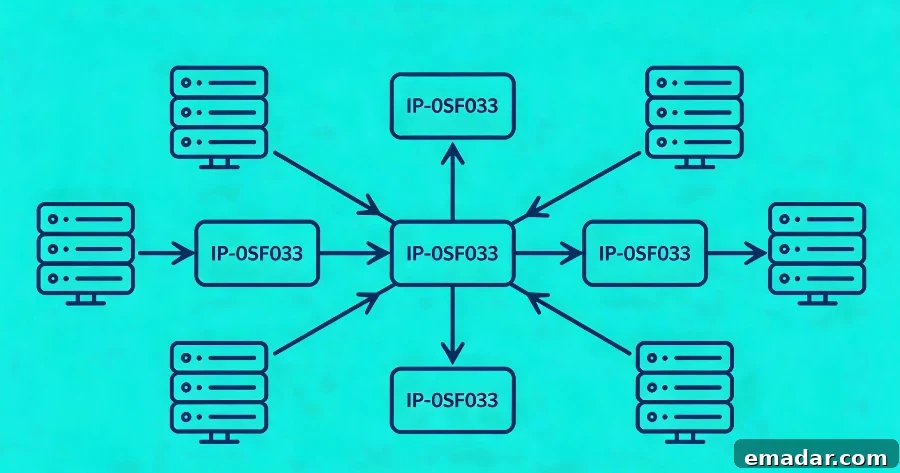
What exactly is Leaf Browser?
Leaf Browser occupies a unique position in the browser ecosystem. It is neither a Chromium fork like Brave or Edge nor a fully independent application. Instead, it installs as an extension on Google Chrome and, when enabled, presents a distinct browsing interface with its own tab grouping, privacy settings, and proxy configuration options. This architecture lets Leaf Browser inherit Chrome’s rendering engine, security fixes, and extension ecosystem while adding its own focused features.
The extension’s design centers on three pillars: privacy, speed, and access. Its minimalist interface removes visual clutter common in full browsers, offering tab groups, a built-in ad blocker, and an incognito mode that operates independently of Chrome’s native private window. For students on shared machines or professionals constrained by strict network policies, these combined features create a contained, temporary browsing session that leaves minimal local traces. Browsing history, cookies, and cache data created inside a Leaf Browser incognito window are cleared at session end, reducing the risk of information leakage on multi-user devices.
Extension architecture
Understanding how Leaf Browser works requires a brief look at its technical foundation. As a Chrome extension, it operates within the permissions framework defined by the Chrome Web Store. It can intercept and redirect traffic, modify request headers, and manage proxy settings—actions made possible by APIs Chrome exposes to trusted extensions. That access is both an advantage and a practical limit. The extension can act on traffic quickly without requiring a separate app, but it remains bound by what Chrome allows extensions to do. It cannot forward protocols that Chrome’s extension APIs do not support, nor can it run independently of Chrome’s network stack.
This dependency means Leaf Browser’s effectiveness partly depends on the host Chrome configuration. If network administrators apply policies that restrict extension installation or block proxy usage at the browser level, Leaf Browser may be constrained before it starts. Conversely, in unmanaged Chrome environments that permit extensions, Leaf Browser can be deployed in seconds.
Built-in proxy capabilities and their limits
One of the clearest differences between Leaf Browser and a standard Chrome incognito window is its proxy settings panel. Within the extension’s interface, users can choose from available proxy servers or manually enter custom proxy details—host, port, and credentials. Once configured, the extension routes browsing traffic through the selected proxy, masking the user’s real IP address and often bypassing URL filters and DNS blocks that would otherwise prevent site access.
This built-in proxy is why Leaf Browser is often described as an “unlocking” tool. A student on campus Wi‑Fi that blacklists streaming domains can start Leaf Browser, configure a working proxy, and potentially access blocked content. A business traveler in a country with restricted internet can use the same method to reach services otherwise unavailable. The proxy acts as a relay: the local network sees an encrypted connection to the proxy server IP, while the proxy forwards requests to target sites and relays responses back.
Why built-in proxies fall short for long-term needs
The convenience of Leaf Browser’s proxy approach hides a fundamental constraint: the quality of the proxy endpoint determines success, and Leaf Browser does not provide its own proxy infrastructure. The extension is a conduit, not a source. Users must supply proxy endpoints themselves—whether free public servers or paid services—and those endpoints define the experience.
Free proxies are often the first option for new users, but their shortcomings are well known. These IPs typically originate in data centers, are easily identified, and frequently appear on blacklists maintained by streaming platforms and content providers. A free proxy that suffices for a few minutes of casual browsing can fail when sustaining video streams, loading heavy JavaScript web apps, or processing authentication flows. Users often encounter high latency, abrupt disconnections, and injected ads. More importantly, free providers may not protect privacy—the traffic passing through untrusted middlemen can be logged, analyzed, or altered.
Paid single-endpoint proxies also have limits. Repeated access to a service via the same static IP builds a traffic profile that anti-abuse systems can use to flag or block requests. Over time, a single IP may be rate-limited, challenged with CAPTCHAs, or banned outright. For continuous tasks—price monitoring across weeks, archiving research materials, or daily regional content verification—relying on one proxy endpoint is fragile.
Why residential proxies strengthen Leaf Browser for professional use
Moving from basic proxy endpoints to a residential proxy network shifts access from intermittent and unstable to reliable and production-grade. Residential proxies route traffic through IP addresses assigned to real home connections by ISPs. To content providers and access checks, that traffic looks like ordinary household users in a given city or region—a level of authenticity that matters.
When Leaf Browser uses residential proxies, its unlocking ability gains a resilient network layer. Target servers no longer see suspicious data center IPs but instead see connections resembling millions of legitimate users. Firewalls and content filters are less likely to flag these requests as proxy traffic. The entire trust model changes: connections appear as normal ISP-assigned addresses rather than proxy-relayed endpoints.
Using a residential proxy backend like IPFLY
Leaf Browser’s proxy panel accepts standard proxy credentials: hostname, port, username, and password. Services such as IPFLY provide these credentials, but their backend distinguishes them from ordinary proxies. Rather than a single static server, an IPFLY gateway offers access to a pool of tens of millions of residential IPs across many countries. The gateway handles IP selection, rotation, and session persistence based on parameters set in the provider’s control panel—down to city and ISP-level targeting, rotation intervals, and session stickiness.
To use Leaf Browser with such a provider, enter the gateway address, port, and authentication into the extension’s proxy settings. Users need not manage IP lists, rotation logic, or endpoint health; the gateway’s infrastructure does this. When a request goes out, the gateway selects a suitable residential IP, routes traffic, and returns the response. If a task requires a London user perspective to access a local streaming catalog, the gateway ensures exit IPs come from London residential networks rather than nearby data centers or flagged endpoints.
With this setup, Leaf Browser’s unlocking behavior moves from a single-point approach to a distributed, robust model. One blocked IP no longer halts a workflow; the pool contains millions of alternatives. Content gates that block generic proxies will often treat traffic from residential IPs as local users and deliver unfiltered pages.
Session persistence for authenticated workflows
Many browsing tasks require state: logged-in portals, multi-step searches, and repeated page loads for ad verification depend on session continuity. Changing proxy IPs mid-session can invalidate cookies and authentication tokens, forcing reauthentication or triggering security checks.
Residential networks often support “sticky sessions,” retaining the same residential IP for a configurable period. In Leaf Browser, sticky sessions mean a research session—from login to data collection—can proceed under a single consistent network identity. Leaf Browser’s incognito mode handles local privacy by clearing cookies and history when the window closes, while the proxy’s session stickiness preserves remote identity for the duration of the task. When the session ends, the IP returns to the pool and subsequent sessions receive a different address.
Who benefits from Leaf Browser with residential proxies
Leaf Browser’s use cases go well beyond a student trying to watch a blocked video. Combining a lightweight extension-based browsing environment with a powerful residential proxy backend enables several professional workflows.
Academic research behind institutional filters
University networks can be among the most restrictive. Libraries may block streaming domains, research databases can be caught in broad filtering rules, and visiting scholars under different internet policies may find institutional resources inaccessible. A researcher investigating politically sensitive coverage might find needed news archives blocked at DNS level because an automatic rule flagged a keyword.
Configured with a residential proxy, Leaf Browser provides an environment isolated from institutional filters. Researchers can route traffic through a clean residential IP via a provider gateway and access blocked archives as if browsing from an unrestricted home network. Local network equipment only sees encrypted traffic to a residential gateway; target servers treat the request as a normal visitor and return content accordingly. This approach does not inherently violate policies—proxy connections simply present encrypted traffic to IP addresses not listed on the institution’s blocklists.
Competitive intelligence and market monitoring
Brand analysts and pricing teams need to view e-commerce and streaming platforms from multiple regional perspectives. Prices, product assortments, and promotions often differ by location. Accurate monitoring requires trustworthy IPs that won’t be flagged as proxy traffic—residential IPs meet that need.
Using Leaf Browser, analysts can switch geographic perspectives by changing proxy credentials. One session through a Tokyo residential IP checks amazon.co.jp pricing; another through a Frankfurt IP views amazon.de. Leaf Browser’s session isolation avoids cookie crossover between markets, and a provider’s city-level targeting ensures exit IPs match the metropolitan area used for verification.
Cross-region ad verification
Brands buying digital ads need independent verification that creatives are shown to the intended audiences. A campaign for Canada should display Canadian creative, price in CAD, and include French where appropriate. Verification teams route browsers through local residential IPs to emulate real local users and observe ad delivery firsthand.
Leaf Browser’s one-off sessions suit this use case: each check runs in a fresh incognito window with a new residential IP, leaving no artifacts that could affect subsequent audits. The combination of a clean browser fingerprint and real home IPs yields verification environments closely matching local user experiences, producing auditable results.
Privacy-focused browsing on public networks
Public Wi‑Fi—airports, cafes, co-working spaces—is convenient but insecure. Network operators may log traffic, inject ads, or restrict content. Professionals accessing corporate SaaS via public Wi‑Fi risk exposing credentials and revealing application URLs and traffic patterns.
Leaf Browser paired with an encrypted residential proxy adds a practical layer of protection: the local network only sees an HTTPS connection to the proxy gateway, while URLs, request contents, and transferred data remain encrypted. This does not replace comprehensive enterprise device protections but provides a lightweight, rapidly deployable privacy layer for browser-based tasks.
Configuring Leaf Browser with an external residential proxy
Connecting Leaf Browser to a residential proxy is similar to configuring any proxy-capable app, with a few extension-specific considerations. The proxy settings are accessed from the extension’s main interface, usually under a gear icon or a dedicated settings area.
First, obtain proxy credentials from the provider: gateway hostname, port, and authentication username and password. For HTTP/HTTPS proxies, ports often use 3128; for SOCKS5, 1080. Leaf Browser supports standard HTTP and HTTPS proxy configurations, covering the majority of web browsing and streaming scenarios. Tasks requiring non-HTTP protocols (FTP or custom TCP) may need OS‑level SOCKS5 setup, which lies outside Leaf Browser’s direct support.
After entering credentials, perform a connection test. Many providers offer test endpoints or IP-detection services that return the current public IP and its geolocation. Using Leaf Browser to access such endpoints confirms whether traffic is routed through the expected residential IP and verifies location parameters.
When a specific geographic exit is needed, geo-preferences are typically set in the proxy provider’s control panel rather than in Leaf Browser. Providers usually let users specify country, city, and ISP before generating credentials. Once those credentials are configured in Leaf Browser, the provider’s routing logic determines the exit location, not the extension itself.
Privacy, security, and ethical boundaries
Using any unlocking tool requires acting within legal and ethical boundaries. Leaf Browser is a tool whose legitimacy depends on user intent. Its proxy features are designed to circumvent network-level restrictions that block legitimate access, not to evade paywalls, commit fraud, or breach platform terms of service.
From a privacy standpoint, combining Leaf Browser’s incognito mode with a residential proxy creates strong separation between local identity and online activity. Incognito prevents local storage of history, cookies, and caches; the residential proxy hides the user’s real IP behind an address that is not directly traceable to the individual. However, this privacy depends on the provider’s trustworthiness. If a proxy provider logs traffic, sells browsing data, or sources IPs unethically, user privacy is compromised.
Reputable residential proxy networks are built from ethically sourced IPs contributed by volunteers or partners, and they follow strict no-logs policies so browsing activity and payloads are not recorded. Such commitments align with the expectations of enterprise customers, researchers, and journalists who rely on proxies for sensitive work.
A lightweight tool with enterprise potential
Leaf Browser’s strength is its simplicity. As a Chrome extension, it installs quickly, presents a clean interface, and makes proxy configuration accessible to nontechnical users in minutes. Whether students need to bypass campus filters for educational videos, researchers require access to region-restricted archives, or marketers must verify localized pricing, the extension lowers the barrier to entry.
That said, the performance of Leaf Browser’s proxy features depends entirely on the proxy endpoints used. Free data center proxies tend to fail under load, while residential networks offer clean, geolocated, and persistent IPs. That difference separates frustrating experiences from dependable access. Pairing Leaf Browser’s intuitive, session-isolated interface with a robust residential proxy infrastructure—offering millions of IPs, city-level targeting, sticky sessions, and protocol flexibility—transforms the extension from a casual unlocker into a reliable component of professional data-access workflows.
Network restrictions will not disappear: filtering grows more sophisticated, geo-blocks become finer-grained, and anti-proxy detection advances. Against that backdrop, combining a lightweight, session-isolated browser extension with a resilient residential proxy network provides a pragmatic solution that respects the technical realities of today’s internet while preserving access needed for research, business, and communication.