
Unlocking Digital Success: Why IP Quality Evaluation Requires More Than Surface-Level Checks
In today’s intricate digital landscape, where operations span global markets and interact with sophisticated online platforms, the quality of your IP addresses is no longer a mere technical detail—it’s a foundational pillar for success. High-quality IP addresses are absolutely critical, directly influencing:
- Account Stability and Longevity: Ensuring your digital accounts remain active, unflagged, and perform consistently without unexpected interruptions or bans.
- Advertising Validation and Fraud Prevention: Verifying ad placements, detecting fraudulent clicks, and ensuring your advertising spend is genuinely reaching its intended audience.
- Market Research Accuracy and Reliability: Guaranteeing that data collected for market analysis is authentic, geographically precise, and free from manipulation, leading to actionable insights.
- Platform Trust Evaluation and Engagement: Facilitating seamless interaction with online platforms by projecting a trustworthy network identity, enabling legitimate access and sustained activity.
Despite this critical importance, many organizations and individual users continue to rely on readily available public IP checking tools. While seemingly convenient, these tools often present significant limitations that can lead to misleading results and operational inefficiencies.
The core problem lies in their methodology. These public tools typically depend on:
- Static IP Databases: Relying on fixed, often outdated lists of IP classifications that don’t reflect the dynamic nature of modern networks.
- Delayed Update Cycles: Information is not refreshed in real-time, meaning an IP’s current status or reputation might be vastly different from what the tool reports.
- Simplified Classification Logic: Using rudimentary rules to categorize IPs, failing to account for complex network architectures and behavioral nuances.
As a direct consequence of these limitations, the output from such tools frequently fails to accurately reflect how advanced online platforms, equipped with sophisticated anti-fraud and anti-bot systems, actually evaluate network identity and trustworthiness in real-time. This disparity creates a significant operational risk for anyone seeking reliable digital engagement.
At IPFLY, we operate under a fundamentally different and far more rigorous standard. Our unwavering focus is on:
→ Real-world performance and proven reliability under the most stringent platform trust evaluation systems. We understand that an IP’s true value is defined by its ability to perform reliably where it matters most: within the live, dynamic environments of major online platforms.
Our Advanced Approach: Internal Quality Standards First, Industry-Leading Verification Always
While third-party IP checking tools can offer a basic, superficial reference point, their utility in today’s complex digital ecosystem is severely limited. They simply cannot fully represent the intricate factors that modern online platforms consider when assessing network connections. These factors include:
- Dynamic IP Reputation Scoring: Real-time assessment of an IP’s trustworthiness based on its recent activity, historical behavior, and connections within a broader network context.
- Sophisticated Behavioral Analysis Models: Algorithms that detect non-human traffic patterns, suspicious navigation, and automated interactions that deviate from typical user behavior.
- Comprehensive Traffic Legitimacy Evaluation: Deep packet inspection and contextual analysis to determine if traffic originates from a genuine user and adheres to platform policies, distinguishing it from bot or fraudulent activity.
This fundamental disparity creates a critical mismatch: an IP label provided by a public database rarely, if ever, reflects its actual operational performance and acceptance within a live platform environment. An IP might be labeled “residential” by a basic tool but still get flagged by a platform for suspicious behavior or a poor reputation score.
For this crucial reason, IPFLY has developed and meticulously implemented a stricter, multi-layered internal verification system. This system is specifically designed to go beyond static labels, aligning precisely with the dynamic and evolving criteria used by real-world platform environments to establish trust and legitimacy. Our commitment is to deliver IPs that don’t just look good on paper but perform flawlessly in practice.
The IPFLY 5-Layer IP Quality Verification System: Engineering Uncompromised Trust
Every single IP address that enters IPFLY’s exclusive resource pool must successfully navigate and pass a rigorous, multi-layer validation process. This comprehensive vetting ensures that only the highest quality, most reliable IPs are made available to our users, guaranteeing optimal performance and maximum stability for their operations.
1. Real Network Environment Validation: Ensuring Fundamental Authenticity
The first and most fundamental step in our verification process is to confirm the genuine nature of each IP. We meticulously verify that:
- Originates from a Legitimate ISP: We confirm that the IP address is allocated by a recognized Internet Service Provider, avoiding fraudulent or improperly sourced IPs.
- Belongs to Real Network Infrastructure: We ensure the IP is part of a genuine, active network, not a compromised or simulated environment.
- Reflects Authentic User Traffic Patterns: Our systems analyze initial traffic patterns to ensure they align with typical human usage, filtering out any IPs showing immediate signs of bot-like or synthetic activity.
This rigorous initial validation ensures fundamental network authenticity and identity consistency. It establishes a baseline of trust, guaranteeing that our IPs are rooted in legitimate infrastructure, which is paramount for long-term stability and platform acceptance.
2. Reputation and Blacklist Screening: Proactive Risk Mitigation
A clean reputation is indispensable for any IP aiming to navigate online platforms successfully. Each IP undergoes a comprehensive evaluation against an extensive array of datasets:
- Global Reputation Datasets: We cross-reference IPs with leading global databases that track suspicious activity, spam, and other malicious online behaviors.
- Historical Risk Indicators: We analyze an IP’s past usage, identifying any patterns or previous associations with high-risk activities or compromised networks.
- Known Abuse Records: Our systems check against records of known abuse, ensuring that IPs with a history of fraudulent activity, hacking attempts, or policy violations are immediately flagged and excluded.
Only IP addresses with absolutely clean and unimpeachable reputation profiles are retained within our network. This proactive and continuous screening process significantly reduces the likelihood of an IP being flagged by anti-fraud systems, resulting in an improved IP reputation score within platform trust systems and smoother, uninterrupted operations for our users.
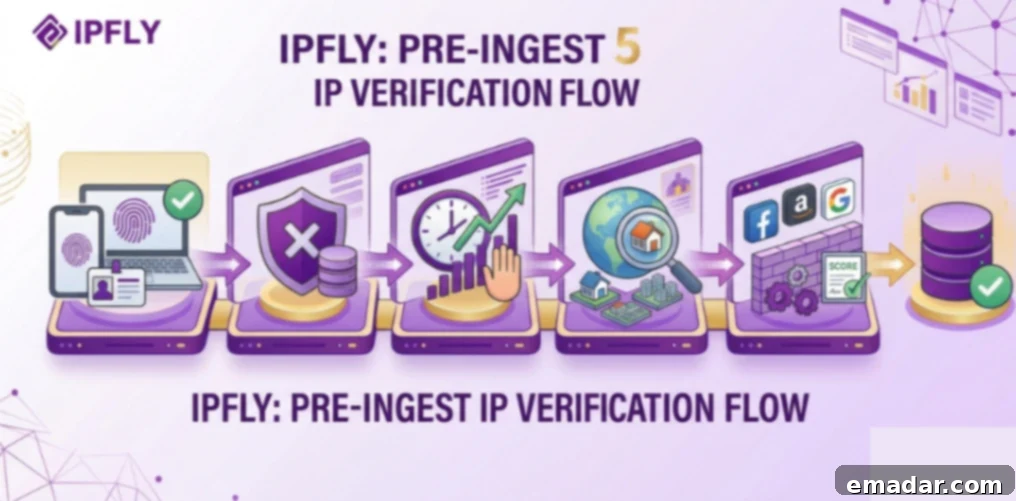
3. Usage Pattern Analysis: Detecting and Preventing Anomalies
Beyond an IP’s initial reputation, its ongoing usage patterns provide critical insights into its quality and trustworthiness. We continuously assess:
- Historical Usage Intensity: Analyzing the volume and frequency of past traffic to identify any spikes or lulls that might indicate unusual activity or abuse.
- Traffic Distribution Patterns: Evaluating how traffic is spread across various ports, protocols, and destinations to detect non-human or automated behavior.
- Behavioral Consistency Signals: Monitoring for deviations from typical human browsing or interaction patterns, such as unnaturally fast clicks, repetitive actions, or unusual request sequences.
IPs that exhibit abnormal, inconsistent, or suspicious usage patterns are immediately flagged and excluded from our pool. This meticulous analysis ensures that the IPs we provide maintain a natural, human-like activity profile, leading to stable and predictable operational performance. Users can operate with confidence, knowing their IPs are less likely to trigger platform security alerts based on erratic behavior.
4. Geo-Accuracy Validation: Precision for Targeted Operations
For a multitude of digital operations, precise geographical targeting is not just an advantage; it’s a fundamental requirement. Accurate location data is absolutely essential for:
- Advertising Verification: Confirming that advertisements are being displayed to the correct regional audiences, preventing wasted spend and ensuring compliance.
- Localization Testing: Ensuring that websites, applications, and services render correctly and function as intended for users in specific geographic areas.
- Market Research Workflows: Collecting regionally specific data to gain accurate insights into local consumer preferences, trends, and market conditions.
To meet these critical needs, we implement robust geo-accuracy validation. We meticulously validate:
- Country-level Accuracy: Verifying that the IP correctly resolves to the stated country.
- City-level Precision: Ensuring a high degree of accuracy down to the specific city level where an IP is located.
- ISP-Region Consistency: Confirming that the IP’s reported location is consistent with its associated Internet Service Provider’s operational region.
This rigorous validation process guarantees reliable geo-targeting and unparalleled data accuracy, empowering our users to conduct operations with confidence in the geographical integrity of their connections.
5. Platform Trust Simulation Testing: The Ultimate Real-World Test
This stage is arguably the most critical and sophisticated component of our entire verification system. It’s where theory meets practice, and IPs are tested under conditions that replicate real-world platform challenges. We actively simulate interactions with real platform environments to evaluate an IP’s performance against key trust metrics:
- Login Consistency: Assessing the IP’s ability to maintain stable, persistent login sessions without triggering suspicious activity alerts or captchas.
- Session Stability: Monitoring the continuity and robustness of connections over extended periods, ensuring no unexpected disconnections or performance degradation.
- Traffic Alignment with Platform Expectations: Analyzing how the IP’s traffic patterns are perceived by platform anti-fraud systems, ensuring they blend seamlessly with legitimate user behavior.
This advanced simulation allows us to identify and filter out IPs that, while appearing clean on basic checks, would ultimately fail under the scrutiny of modern platform security protocols. The result is a curated pool of IPs that not only meet but consistently exceed complex platform trust evaluation criteria, providing our users with an unprecedented level of reliability.
Understanding the Discrepancy: Why Public Detection Tools May Show Different Results
It is not uncommon for IPFLY users to occasionally observe inconsistencies between the classification of our proxy resources and the results generated by various third-party IP checking tools. This apparent discrepancy is not an indication of an issue with IPFLY’s quality but rather a clear demonstration of the fundamental differences in evaluation methodologies and the inherent limitations of public systems.
The Fundamental Limitations of Public Detection Systems
Most widely available public IP detection tools, by their very nature, are built upon antiquated principles that struggle to keep pace with the rapid evolution of network technology and platform security. They predominantly rely on:
- Static Classification Models: Employing rigid, predefined rules to categorize IPs, often based on outdated subnet allocations or public registry data.
- Historical IP Mapping: Drawing information from databases that may contain old or generalized classifications, failing to account for dynamic re-allocations and new infrastructure.
- Limited Behavioral Analysis: Lacking the sophisticated algorithms and real-time data feeds necessary to interpret actual traffic patterns and user behavior.
Critically, these tools are incapable of fully reflecting:
- Real-time Network Changes: Modern ISPs frequently reallocate IP addresses, deploy new network segments, and implement dynamic assignment protocols. Public tools lack the agility to track these instantaneous shifts.
- Hybrid ISP Infrastructure: Many residential ISPs utilize complex, hybrid networks that might combine fixed-line, mobile, or even satellite components, which static tools struggle to accurately classify.
- Platform-level Behavior Modeling: The advanced machine learning and AI-driven anti-fraud systems used by major platforms operate on a fundamentally different, behavioral-centric model, a dimension completely missed by basic checkers.
Common Misclassification Scenarios: Bridging the Information Gap
Certain types of legitimate IP addresses are particularly prone to misclassification by outdated public systems. These often include:
- Mobile Network IP Ranges: IPs assigned to smartphones and mobile devices, which are unequivocally residential traffic but can sometimes be mislabeled due to their dynamic nature or carrier infrastructure.
- Dynamic ISP Allocations: Many residential broadband providers dynamically assign IPs, meaning an IP might appear as a generic server IP in a static database, even though it’s serving a home user.
- CPE (Customer Premises Equipment) Devices: IPs routed through routers and modems in residential homes, which can sometimes be mistaken for data center IPs by overly simplistic classifiers.
- Base Station Network Outputs: IPs originating from cellular base stations, which are legitimate residential mobile connections but may be broadly categorized as “datacenter” by legacy systems.
These IP types may indeed appear as “non-residential” or “data center” in outdated or overly simplistic detection systems. However, the crucial distinction is that leading platform trust systems are sophisticated enough to recognize them as legitimate user traffic. They assess the entire context of the connection, not just a static label.
Key Insight: The Fundamental Divide
The core of this difference can be distilled into a critical insight:
Public tools evaluate static labels and outdated classifications.
Sophisticated platforms evaluate dynamic behavior and comprehensive trust signals.
This fundamental difference explains precisely why IP classification results may vary significantly between a basic checker and IPFLY’s internal system, while the real-world operational performance of IPFLY’s proxies remains consistently stable and highly effective on target platforms.

Why IPFLY’s Internal System Is More Reliable and Future-Proof
At IPFLY, our entire philosophy is anchored in delivering practical usability and unwavering stability, rather than adhering to antiquated, static IP classifications. Our internal verification system is meticulously engineered to address the complexities of modern digital operations, ensuring unparalleled reliability. Our system:
- Prioritizes Behavioral Validation: We focus on how an IP behaves in real-world scenarios, not just what a static database says about it. This is a crucial distinction that aligns with how platforms truly evaluate connections.
- Uses Real Scenario Simulation: By simulating actual platform interactions, we guarantee that our IPs are battle-tested and proven to bypass sophisticated anti-fraud and anti-bot mechanisms.
- Continuously Updates IP Reputation Data: Our systems constantly monitor and refresh IP reputation scores, ensuring that any deterioration in quality is immediately identified and addressed, maintaining the highest standards.
The cumulative result of this comprehensive approach is a strong, consistent, and proactive alignment with the most advanced platform trust evaluation frameworks. This means IPFLY provides residential proxies that truly perform, giving our users a distinct competitive advantage and peace of mind.
What This Unrivaled IP Quality Means for Your Critical Operations
Choosing to integrate IPFLY residential IPs into your operational workflows offers a profound advantage, translating directly into tangible benefits for your digital initiatives. You gain access to resources that provide:
- Stable Network Identity Conditions: Your connections will consistently project a trustworthy, legitimate user identity, significantly reducing the likelihood of being flagged or blocked by target platforms.
- Consistent Behavior Signals: Our verified IPs exhibit natural, human-like usage patterns, ensuring your automated tasks and data collection efforts seamlessly blend with regular user traffic.
- Reliable Long-Term Performance: With our continuous monitoring and rigorous verification, you can depend on our IPs for sustained, high-quality performance, enabling uninterrupted workflow execution and project longevity.
These critical benefits are indispensable for a wide array of demanding digital applications and business objectives, including:
- Cross-Border eCommerce Operations: Securely managing multiple accounts, performing localized product research, price monitoring, and ensuring smooth transaction processing across different geographical markets.
- Advertising Validation and Compliance: Verifying ad placements, ensuring campaigns reach target demographics, detecting ad fraud, and monitoring competitor advertising strategies with geographical accuracy.
- Market Research Automation: Collecting vast amounts of public data from diverse online sources to analyze consumer trends, sentiment, competitive landscapes, and product demand without detection.
- Public Data Collection Workflows: Ethically and efficiently gathering publicly available information for business intelligence, academic research, and trend analysis, while maintaining anonymity and compliance.
- Multi-Account Management Under Platform Policies: Safely operating and managing multiple accounts on various social media, e-commerce, or gaming platforms, adhering to their respective terms of service while ensuring each account appears as a unique, legitimate user.
Our Unwavering Commitment to Quality and Transparency
At IPFLY, the term “residential” is not just a label; it’s a solemn commitment to excellence and reliability. Any IP address designated as “residential” within our network must rigorously meet and continuously uphold our exceptionally strict internal criteria. This unwavering dedication ensures that our users receive only the highest caliber of proxy resources:
- Verified ISP Origin: Each IP’s source is meticulously traced and confirmed to originate from a legitimate, recognized Internet Service Provider, ensuring genuine residential status.
- Clean Reputation History: We guarantee that every IP has an unblemished record, free from associations with spam, abuse, or any malicious online activities.
- Proven Behavioral Consistency: IPs are continuously monitored to ensure they exhibit natural, human-like usage patterns, maintaining optimal trust scores with target platforms.
- Validated Platform Compatibility: Through our advanced simulation testing, we confirm that our IPs perform reliably and are accepted by the most sophisticated online platforms.
Our objective at IPFLY is crystal clear and unequivocally focused: to deliver IP resources that perform with unmatched reliability, stability, and integrity in real-world, dynamic online environments. We don’t just provide proxies; we provide confidence and a foundational layer for your digital success.
Compliance and Responsible Use: Our Ethical Stance
IPFLY is deeply committed to fostering a responsible and ethical digital ecosystem. Our cutting-edge proxy services are meticulously designed and intended exclusively for legitimate, compliant, and value-generating use cases. We empower businesses and individuals to execute critical operations within the bounds of legal and ethical guidelines. Permissible use cases include, but are not limited to:
- Cross-border eCommerce Operations: Facilitating legitimate business expansion and management across international markets.
- Advertising Verification and Localization Testing: Ensuring the integrity and effectiveness of advertising campaigns and digital content localization.
- Market Research Automation: Ethically gathering public data for comprehensive market analysis and strategic decision-making.
- Public Data Collection in Accordance with Platform Policies: Systematically collecting publicly available information where such activities align with the terms of service of the target platforms.
Conversely, IPFLY unequivocally does not support, endorse, or permit any activities that fall outside these legitimate parameters. Our services must never be used for:
- Unauthorized System Access: Gaining entry to systems or data without explicit permission.
- Violations of Platform Terms: Breaching the terms of service, privacy policies, or any other rules established by online platforms.
- Fraudulent or Abusive Activities: Engaging in any form of deception, manipulation, spamming, harassment, or other illicit online behavior.
Users are solely responsible for ensuring that their activities using IPFLY services comply with all applicable laws, regulations, and platform policies. Our commitment is to provide the tools for legitimate success, not for illicit gain.
Final Thoughts on True IP Quality
In the rapidly evolving digital landscape, the genuine quality of an IP address simply cannot be ascertained by surface-level labels or superficial checks alone. The true measure of an IP’s effectiveness lies in its ability to navigate and perform reliably within the sophisticated, dynamic environments of modern online platforms. Achieving this level of quality demands a holistic and continuous approach.
It requires:
- Multi-layer Verification: A deep, comprehensive vetting process that examines every facet of an IP’s origin, history, and current status.
- Real-world Validation: Testing IPs under conditions that mimic actual platform interactions, ensuring practical usability and performance.
- Continuous Optimization: Ongoing monitoring, analysis, and refinement of the IP pool to maintain peak quality and adapt to evolving platform defenses.
IPFLY’s proprietary internal quality system is meticulously built upon these very principles. This profound commitment to comprehensive and dynamic verification is precisely why our standards not only meet but consistently exceed the capabilities and reliability of typical third-party testing tools. When you choose IPFLY, you’re choosing a partner dedicated to your consistent and legitimate digital success.
Frequently Asked Questions (FAQ) About IPFLY’s Quality Standards
Why do public IP check tools often show inconsistent results compared to IPFLY’s performance?
Public IP check tools typically rely on static databases and simplified classification models, which are often outdated. In contrast, major online platforms and IPFLY’s internal system use dynamic trust evaluation systems, employing real-time behavioral analysis and sophisticated algorithms. This fundamental difference in methodology leads to varying results, with IPFLY’s approach being far more aligned with how platforms truly assess trust.
Does IPFLY rely on third-party validation for its IP quality assessment?
No. While external tools can serve as a basic reference for some users, IPFLY’s primary standard for IP quality and trust validation is its own rigorous, multi-layered internal verification system. We believe that only our proprietary, real-world simulation and continuous monitoring can accurately reflect an IP’s true performance on target platforms.
Are all residential IPs equally reliable across different providers?
Absolutely not. The reliability and quality of residential IPs can vary significantly between providers. Factors such as the IP’s source, its historical usage patterns, the rigor of the provider’s validation process, and their commitment to ongoing maintenance directly impact an IP’s performance and longevity on target platforms. IPFLY’s 5-layer system is designed to address these variables comprehensively.
How does IPFLY specifically ensure the high quality of its residential proxies?
IPFLY ensures superior quality through its unique 5-layer verification system. This includes real network environment validation, reputation and blacklist screening, detailed usage pattern analysis, geo-accuracy validation, and most critically, platform trust simulation testing. This comprehensive approach guarantees that only IPs proven to perform reliably in real-world platform environments are included in our pool.
What specific use cases benefit most from using high-quality residential IPs like IPFLY’s?
High-quality residential IPs are indispensable for operations requiring stable, legitimate network identities and consistent performance. Key use cases that benefit significantly include cross-border eCommerce operations, precise advertising verification and localization testing, automated market research and data collection workflows, and secure multi-account management on various online platforms.