
In the dynamic realms of cross-border e-commerce, social media marketing, and AI data collection, the **authenticity and stability of regional IP resources** are paramount. These factors directly influence data accuracy, operational efficiency, and ultimately, business performance. Unreliable or easily detectable IP addresses can lead to blocked access, inaccurate market insights, and failed campaigns, costing businesses valuable time and resources.
Recognizing this critical need, IPFLY is proud to announce the official launch of its **Philippines Native IP resources**. This significant expansion further fortifies our comprehensive Southeast Asian node network, providing users with unparalleled stability and reliability for operations requiring a genuine, localized online presence.
This update transcends a simple “node addition.” Instead, its core focus is on:
Delivering network resources that closely mimic real user environments, thereby enabling more precise and effective business execution.
In today’s interconnected digital landscape, businesses need more than just internet access; they require a digital identity that is indistinguishable from that of a local user. This is where native IP addresses become a game-changer, offering a competitive edge in critical online activities.
Understanding Philippines Native IP: Why It’s Crucial for Your Business
The concept of “native IP” is frequently misunderstood, yet its importance in advanced digital operations cannot be overstated. A native IP address, especially in a vibrant market like the Philippines, offers distinct advantages for businesses seeking genuine local engagement and data accuracy.
Core Characteristics of a Native IP
A native IP, often referred to as a residential IP, possesses fundamental attributes that set it apart from other proxy types:
- Directly Assigned by a Local ISP: Unlike data center IPs, native IPs are allocated by an Internet Service Provider (ISP) to a legitimate residential subscriber in a specific geographic location. This makes them appear as ordinary home internet connections, significantly increasing their credibility.
- Long-Term Binding to a Real Network Environment: These IPs are typically associated with an active, real-world internet connection for an extended period, reflecting authentic user behavior patterns rather than temporary, suspicious connections.
- Possesses Stable Geographical Attributes: Each native IP is firmly tied to its physical location, ensuring that any online request originating from it is consistently identified as coming from that specific region. This geo-stability is vital for geo-targeting and localization efforts.
When contrasted with standard proxy IPs, the benefits of native IPs become even clearer:
- Significantly Higher Trustworthiness: Because they originate from real residential connections, native IPs are far less likely to be flagged as suspicious or malicious by websites, social media platforms, and online services. This reduces the risk of bans, blocks, or CAPTCHA challenges.
- More Natural Access Behavior: Websites often analyze IP behavior to detect bots or automated scripts. Native IPs, by mirroring genuine user activity, allow for seamless browsing, data retrieval, and account management without triggering security protocols.
- Lower Probability of Abnormal Recognition: Many sophisticated online platforms utilize advanced detection systems to identify and filter out non-residential or proxy traffic. Native IPs bypass these systems effectively, ensuring uninterrupted access to critical data and services.
Why the Philippines Node Garners Significant Attention
The Philippines has emerged as a key player in the digital economy of Southeast Asia. Its rapidly expanding online ecosystem makes it an indispensable market for international businesses. Over recent years, the nation has experienced sustained growth in various online activities:
- Expanding Social Media User Base: With one of the highest social media penetration rates globally, Filipinos are incredibly active across platforms like Facebook, TikTok, and Instagram, making it a prime target for social media marketing and brand engagement.
- Increasing E-commerce Platform Penetration: The e-commerce sector in the Philippines is booming, driven by increasing internet access, a young tech-savvy population, and evolving consumer habits. Online shopping platforms are gaining immense traction, necessitating localized strategies.
- Growing Demand for Localized Content: As digital consumption grows, so does the demand for content tailored to local preferences, languages, and cultural nuances. Businesses need to understand and cater to these specific needs for effective market penetration.
For cross-border businesses targeting this vibrant market, these trends underscore critical requirements:
- A Need for a Truly Authentic Local Access Environment: To accurately gauge market sentiment, verify localized content, or conduct competitor analysis, businesses must operate from an IP address that platforms recognize as genuinely Filipino.
- Stable Regional Data Collection Capabilities: Reliable and consistent data is the backbone of informed decision-making. Accessing this data from a stable, local IP ensures its accuracy and relevance.
👉 Consequently, Philippines native IP addresses are rapidly becoming an essential component for a wide array of business operations, from market research to localized content delivery and secure account management.
IPFLY Philippines Native IP Resource Capabilities: A Deep Dive
IPFLY’s newly launched Philippines node has been meticulously optimized with a laser focus on two foundational pillars: “authenticity + stability.” These core tenets guarantee that our users receive a superior proxy experience tailored for the most demanding tasks.
Unmatched Local ISP Network Support
Our Philippines native IP resources are sourced directly from genuine local network environments, ensuring maximum authenticity:
- Authentic Residential or Carrier Networks: IPFLY procures its IPs from real residential users and major local internet service providers. This means your requests will originate from an IP address indistinguishable from that of a typical Filipino internet user, significantly reducing the likelihood of detection or blocking by target websites. This capability is vital for tasks that require a high degree of anonymity and local presence.
- Conforming to Local Access Behavior Characteristics: By operating within these genuine networks, our native IPs inherently adopt the browsing patterns and characteristics of local users. This natural behavior makes it exceptionally difficult for sophisticated anti-bot systems to identify your traffic as originating from a proxy, allowing for seamless integration into the target website’s ecosystem.
This commitment to sourcing from local ISP networks ensures that your online requests are perceived as legitimate, natural user traffic, providing a foundational advantage for all your localized operations.
Robust Stability and Enduring Availability
Recognizing that consistency is key for continuous business operations, IPFLY implements stringent screening and sophisticated scheduling optimizations for its IP resources:
- Enhanced IP Availability: Through advanced monitoring and intelligent rotation mechanisms, IPFLY ensures a consistently high pool of available, healthy IP addresses. This minimizes downtime and guarantees that a suitable IP is always ready for your tasks, even during peak usage.
- Reduced Connection Interruption Probability: Our infrastructure is designed for resilience. By actively managing network load and proactively addressing potential issues, we drastically lower the chances of unexpected disconnections, providing a smoother and more reliable user experience compared to less robust proxy services.
- Support for Sustained Task Execution: Many critical business operations, such as extensive data scraping, continuous monitoring, or long-term account management, require uninterrupted connectivity. IPFLY’s stable native IPs are specifically engineered to support these sustained tasks, allowing you to run lengthy operations without fear of premature termination due to IP failures or instability.
This blend of authenticity and stability makes IPFLY’s Philippines native IPs a powerful tool for any business looking to establish a robust and reliable digital footprint in the region.
Typical Application Scenarios: Unleashing the Power of Localized Execution
The inherent value of Philippines native IPs lies in their exceptional capacity for “localized execution.” This enables businesses to operate with the precision and authenticity of a local entity, unlocking a multitude of strategic advantages across various digital domains.
Scenario One: Cross-border E-commerce Localized Operations
For e-commerce businesses expanding into the Philippine market, understanding the local landscape is critical. Online platforms often exhibit significant regional variations:
- Product Displays and Pricing Strategies May Vary by Region: E-commerce giants dynamically adjust product availability, promotional offers, and pricing based on geographic location and user demographics. Without a native IP, you might miss crucial local deals or product launches.
Utilizing a Philippines native IP allows e-commerce ventures to:
- Obtain Page Data Closer to Local Users: Access websites as if you were a local customer, viewing accurate product listings, localized promotions, and competitor pricing specific to the Philippine market. This provides an authentic view of the consumer experience.
- Assist in Pricing and Product Selection Decisions: Gather precise market intelligence on popular products, pricing tiers, and competitive offerings. This data is invaluable for formulating effective pricing strategies, identifying market gaps, and optimizing your product catalog for local tastes and demands. Furthermore, it aids in monitoring local regulations and compliance for product listings.
Scenario Two: Social Media Content and Advertising Verification
Social media marketing teams face the constant challenge of ensuring their campaigns resonate locally and are displayed as intended. Geographic targeting means content and ads can appear differently across regions:
- Verify Content Display Effectiveness in the Local Context: Marketers need to confirm that their social media posts, stories, and profiles are being presented correctly to their target audience in the Philippines, free from geo-restrictions or unintentional content alterations.
Native IPs provide essential support for:
- Simulating Real User Access: View social media feeds, profiles, and trending topics exactly as a Filipino user would. This ensures your content is culturally relevant and optimized for local consumption. It also allows for brand reputation monitoring from a local perspective, tracking mentions and sentiment.
- Detecting Advertising Campaign Performance: Verify that your advertisements are correctly geo-targeted, displayed at the right frequency, and appearing on the intended platforms. This helps prevent ad fraud, ensures budget efficiency, and allows for real-time adjustments to maximize campaign ROI. Managing multiple social media accounts for different regional campaigns also becomes safer and more efficient.
Scenario Three: AI Data Collection and Analysis
In the rapidly evolving field of Artificial Intelligence, the quality and regional diversity of training data are critical for developing robust and unbiased models:
- Regional Data Differences are a Critical Factor: Language nuances, local customs, market trends, and online behavior patterns vary significantly by region. AI models trained solely on global or non-localized data may exhibit biases or perform poorly in specific markets.
Through the strategic use of Philippines native nodes, AI and data analytics teams can:
- Acquire Localized Data Samples: Collect rich, context-specific data such as localized product reviews, news articles, social media conversations, and market sentiment. This granular data is crucial for training AI models that perform accurately in the Philippine context, enhancing natural language processing (NLP) for local dialects, and improving recommendation engines.
- Enhance Data Diversity: By incorporating data from various local sources, businesses can significantly increase the diversity of their datasets. This diversity is vital for building more resilient and adaptable AI models that can better understand and predict regional specificities, ultimately leading to more accurate insights and better-informed strategic decisions for the Southeast Asian market.
Why Opt for Native IP Over Ordinary IP? A Comprehensive Comparison
While various types of proxy IPs exist, the distinction between native (residential) IPs and ordinary (often data center) IPs is crucial, particularly when engaging in sensitive or high-value online activities. The differences fundamentally impact reliability, detection rates, and the scope of achievable tasks.
In practical applications, the disparities between these two types of IPs are primarily evident in three key areas:
- Network Authenticity
- Native IP: Offers network authenticity that closely mirrors a genuine user. These IPs are tied to real residential internet connections, making them virtually indistinguishable from regular home internet traffic. This high level of authenticity is critical for accessing platforms with stringent anti-bot measures, such as streaming services, social media sites, and banking portals, which actively block known data center IP ranges.
- Ordinary IP: More susceptible to identification. These are typically data center IPs, which are easy to detect by websites and online services because they originate from commercial hosting environments rather than individual households. This often leads to immediate blocks, CAPTCHA challenges, or reduced access to content, severely limiting their utility for sensitive operations.
- Stability Performance
- Native IP: Demonstrates superior stability, making them ideal for long-term tasks. The infrastructure supporting residential IPs is designed for consistent, prolonged use, enabling continuous data collection, account management, or monitoring without frequent interruptions. This reliability minimizes wasted resources and ensures project continuity.
- Ordinary IP: Prone to greater fluctuations. Data center IPs can experience more frequent disconnections or changes due to shared infrastructure and less stringent monitoring. This instability makes them unsuitable for tasks requiring persistent connections or large-scale, continuous operations, often resulting in incomplete data sets or failed processes.
- Usage Scenarios
- Native IP: Exclusively suited for high-demand business scenarios. These include competitive intelligence, market research, localized ad verification, social media account management, bypassing geo-restrictions on sensitive content, and comprehensive web scraping for AI data training where authenticity and persistence are non-negotiable.
- Ordinary IP: Generally limited to basic tasks. While cheaper and faster for simple operations like general web browsing, basic content unblocking, or low-volume data checks, they are ill-equipped for tasks that involve sophisticated bot detection, require a high degree of trust, or demand consistent regional identity. Their use in critical operations often leads to inefficiencies and failed attempts.
In essence, choosing a native IP is an investment in reliability, authenticity, and the successful execution of complex, high-value online strategies, particularly in nuanced markets like the Philippines.
Optimizing Business Effectiveness with Philippines Native IP: Best Practices
To fully leverage the significant advantages offered by IPFLY’s Philippines native IP resources and maximize their value for your business operations, consider adopting these strategic recommendations:
- Align with Specific Use Cases
The type of native IP you choose should perfectly match the requirements of your task:
- Data Collection → Dynamic Residential IP: For large-scale web scraping, market research, or gathering extensive localized data for AI training, dynamic residential IPs are ideal. They offer a vast pool of rotating IPs, making it extremely difficult for target websites to track and block your requests. This ensures broad coverage and reduces the risk of detection during high-volume operations, allowing you to collect diverse datasets efficiently.
- Account Operation → Static Residential IP: When managing critical social media accounts, e-commerce profiles, or other online identities that require a consistent digital footprint, static residential IPs (often called Sticky IPs) are paramount. These IPs remain fixed for extended periods, providing a stable and trustworthy identity that mimics a real user logging in from the same location every time. This significantly reduces the risk of account flags, suspensions, or verification challenges, which are common when IPs frequently change.
- Control Access Rhythm and Behavior
Even with highly authentic native IPs, simulating natural user behavior is crucial to avoid triggering sophisticated anti-bot mechanisms:
- Avoid High-Frequency Abnormal Requests: Websites often monitor the speed and volume of requests. Sending too many requests too quickly, or making requests in an unnatural pattern, can lead to your IP being flagged regardless of its authenticity. Implement pauses and random delays between requests to mimic human browsing speed.
- Simulate Normal User Behavior: Beyond timing, consider other behavioral aspects. This includes rotating user agents, using realistic browser fingerprints, navigating through multiple pages before performing an action, and engaging with site elements (e.g., clicking on links, scrolling). Such nuanced behavior makes your automated tasks appear genuinely human, significantly reducing detection rates and ensuring smoother, uninterrupted operations.
- Integrate a Multi-Regional Strategy
For businesses with global ambitions, a holistic approach to IP usage is highly beneficial:
- Combine with Other Country Nodes: While Philippines native IPs are excellent for local market penetration, a truly comprehensive strategy involves integrating them with IP resources from other countries. This allows for broader market research, competitive analysis across different regions, and risk diversification. For example, simultaneously monitoring market trends in the Philippines, Indonesia, and Vietnam provides a richer understanding of Southeast Asian consumer behavior.
- Construct a Multi-Regional Data System: Building a robust data collection and analysis framework that spans multiple geographic regions provides a more complete global market intelligence picture. This multi-regional approach offers redundancy, enhances data diversity, and enables comparative analysis, giving your business a strategic advantage in identifying global trends and localized opportunities, while mitigating the risks associated with reliance on a single IP source or region.
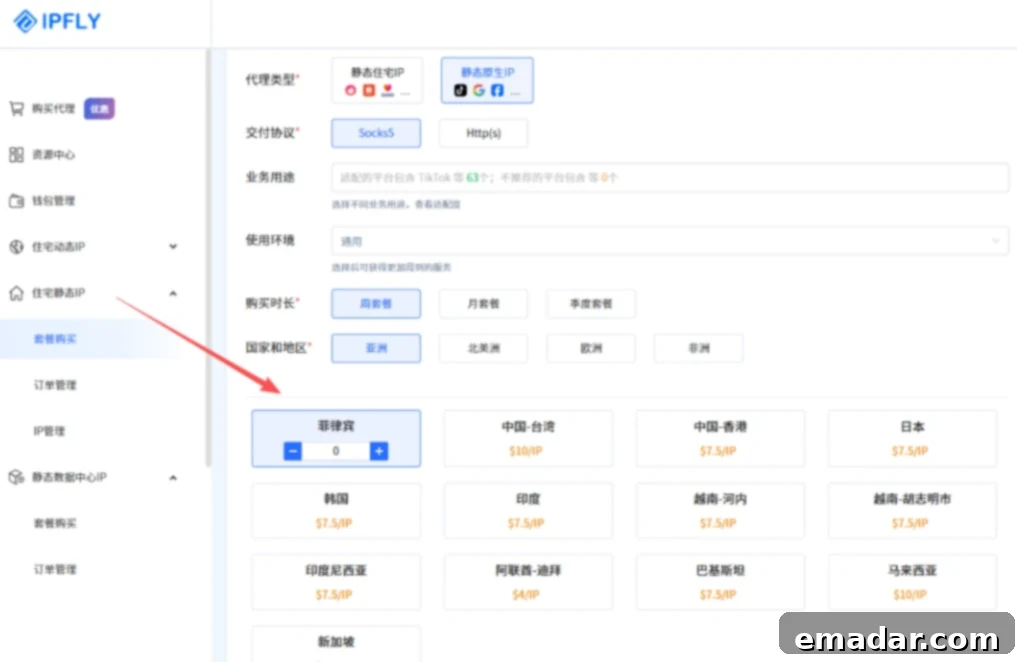
The Tangible Value Delivered by This Launch
The introduction of IPFLY’s Philippines native IP resources represents a pivotal moment for businesses targeting or operating within this vibrant Southeast Asian market. This launch transcends a mere addition to our service portfolio; it signifies a substantial enhancement of capabilities that directly translates into tangible benefits for our users.
With the new Philippines native IP resources, users are empowered to achieve:
- A More Authentic Regional Network Environment: Businesses can now interact with Philippine online platforms with the genuine identity of a local user. This eliminates the barriers often encountered with generic IPs, such as geo-restrictions, suspicious activity flags, and inaccurate localized content delivery. This authenticity is fundamental for truly understanding and engaging with the local digital ecosystem.
- A Significantly More Stable Access Experience: The meticulously optimized and robust infrastructure supporting these native IPs ensures consistent, uninterrupted connectivity. This stability is crucial for long-running data collection tasks, continuous market monitoring, and secure management of critical online accounts, reducing operational risks and improving efficiency.
- A Richer and More Diverse Data Source: By reliably accessing localized content and user-generated data from within the Philippines, businesses can gather more nuanced, specific, and accurate information. This enhanced data diversity is invaluable for training sophisticated AI models, conducting in-depth market research, and making data-driven decisions that are precisely tailored to the Philippine context, thereby reducing biases and improving predictive accuracy.
For businesses with operations or ambitions in the dynamic Southeast Asian market:
👉 This launch is not merely about “adding another node” to our network; it fundamentally represents “adding another layer of localized capability.” It equips businesses with the tools to operate with native precision, gaining a competitive edge by truly understanding and integrating into the local digital landscape, beyond just surface-level access.
Conclusion
As cross-border business activities continue their exponential growth and AI applications become increasingly sophisticated, the role of reliable and authentic network resources has fundamentally shifted. They are no longer just supplementary tools but have evolved into foundational capabilities, indispensable for any enterprise striving for success in the digital age.
IPFLY is unwavering in its commitment to continuously expanding its global node resources to meet these evolving demands. The launch of our Philippines native IP is a strategically vital step in our broader mission to solidify and enhance our presence across Southeast Asia, a region characterized by its rapid digital transformation and immense market potential.
Looking ahead, IPFLY remains dedicated to ongoing optimization across several key dimensions:
- Regional Coverage: Continuously extending our network to include more strategic locations worldwide, ensuring comprehensive global reach for our users.
- Network Quality: Investing in cutting-edge infrastructure and advanced monitoring systems to deliver unparalleled speed, stability, and authenticity across all our IP resources.
- User Experience: Refining our services, tools, and support to ensure a seamless, intuitive, and highly effective experience for every user, from seamless integration to responsive customer service.
By focusing on these core areas, IPFLY aims to empower its users with an even more stable and robust business foundation, enabling them to navigate the complexities of the global digital economy with confidence and achieve their strategic objectives.