
Why IP Quality Assessment Demands More Than Surface-Level Checks
In today’s fast-paced digital landscape, the quality of an IP address is far more than a technical detail; it is a fundamental pillar supporting the integrity and success of various online operations. A high-quality IP directly impacts critical business functions, influencing everything from seamless account management to precise market insights.
Specifically, superior IP quality plays a pivotal role in:
- Account Stability and Longevity: Ensuring that your online accounts remain active and unrestricted, free from unwarranted flags or suspensions.
- Advertising Verification and Compliance: Accurately checking ad placements, combating ad fraud, and ensuring compliance with regional advertising policies.
- Market Research Accuracy and Depth: Gathering reliable data from diverse geographic locations without encountering geo-restrictions or bot detection, leading to credible insights.
- Platform Trust Evaluation: How platforms perceive your network identity, which is crucial for access, performance, and avoiding detection as suspicious activity.
Many users and businesses, however, frequently rely on readily available public IP lookup tools to gauge IP quality. While these tools offer a superficial snapshot, they often fall short in providing a comprehensive and accurate assessment.
This limitation stems from their inherent dependencies:
- Reliance on Static IP Databases: These databases are often slow to update, leading to outdated information about an IP’s status or origin.
- Delayed Update Cycles: The internet is dynamic; an IP’s reputation can change rapidly. Public tools often lag, reflecting yesterday’s status rather than today’s.
- Simplified Classification Logic: They typically use basic rules for categorization, failing to account for complex, evolving network infrastructures and platform detection algorithms.
Consequently, the output from such tools frequently fails to reflect the sophisticated methods platforms employ to evaluate network identities and user behavior in real-time. This discrepancy can lead to critical operational failures and missed business opportunities.
At IPFLY, our philosophy diverges significantly from these common practices. We understand that true IP quality is measured by its efficacy where it matters most:
Our standard is fundamentally different: we place paramount importance on actual performance within various platform trust evaluation systems.
Our Philosophy: Internal Quality Standards Reign Supreme
While third-party IP evaluation tools can serve as a basic reference point, offering an initial, generalized categorization, they are fundamentally incapable of fully capturing the nuances of modern IP reputation and behavior. They offer a static label, not a dynamic assessment.
These external tools typically cannot adequately account for:
- Dynamic IP Reputation Scoring: An IP’s reputation is not fixed; it constantly evolves based on its usage history and interactions across the web. Public tools rarely incorporate this dynamic scoring.
- Sophisticated Behavioral Analysis Models: Platforms employ advanced algorithms to analyze user behavior, differentiating between legitimate human activity and automated bot traffic. Public tools lack this deep analytical capability.
- Real-time Traffic Legitimacy Evaluation: Assessing whether the traffic originating from an IP is genuine and adheres to platform policies, a critical factor for avoiding detection.
This fundamental gap leads to a significant mismatch: the IP score provided by a public database often does not accurately reflect the IP’s actual operational performance or its perceived trustworthiness by target platforms. An IP labeled “clean” by a public tool might still be flagged by a sophisticated platform due to behavioral patterns or historical usage not tracked externally.
Recognizing this critical limitation, IPFLY has developed and implemented a far more rigorous, multi-layered internal verification system. This system is meticulously designed to mirror and even anticipate the real-world evaluation criteria used by major online platforms, ensuring that every IP we provide is robust, reliable, and truly residential.
IPFLY’s 5-Layer IP Quality Verification System
Before any IP address is added to IPFLY’s extensive resource pool, it must undergo and successfully pass a comprehensive, multi-layered validation process. This stringent vetting ensures that only the highest quality, most trustworthy residential IPs are made available to our users, guaranteeing optimal performance and minimizing risk.
1. Real Network Environment Verification
The foundation of genuine IP quality lies in its authenticity. We meticulously verify each IP to ensure it originates from a legitimate source and is indistinguishable from genuine user traffic.
Specifically, we verify that each IP:
- Originates from a Legitimate Internet Service Provider (ISP): We confirm that the IP is genuinely allocated by a recognized ISP to a residential user, not a data center or commercial entity.
- Belongs to a Real, Active Network Infrastructure: We check for active connections and proper network routing, ensuring it’s not an unused, stale, or spoofed IP.
- Reflects True User Traffic Patterns: We analyze historical data to ensure the IP’s usage aligns with typical residential user behavior, avoiding patterns characteristic of automated or malicious activities.
This initial crucial step ensures the fundamental authenticity of the network source and the consistency of the IP’s identity, establishing a bedrock of trust for all subsequent operations.
2. Reputation & Blacklist Screening
An IP’s reputation is paramount. Even a genuinely residential IP can carry historical baggage that might trigger flags. Our screening process is designed to proactively identify and eliminate such risks.
Every IP address is rigorously evaluated against comprehensive standards, including:
- Global Reputation Data Sets: We cross-reference IPs with vast databases of known malicious activity, spam, or abuse, maintained by cybersecurity firms and industry watchdogs.
- Historical Risk Indicators: We analyze the IP’s past usage, looking for any previous associations with suspicious activities, high-risk domains, or frequent platform bans.
- Known Abuse Records: IPs with documented records of being used for fraud, hacking attempts, or policy violations are immediately discarded.
Through this meticulous process, only IP addresses with impeccable and consistently clean reputation records are retained in our pool. This proactive screening significantly enhances the IP’s perceived trustworthiness, directly leading to:
An elevated IP reputation score within platform trust systems, minimizing the likelihood of detection or blocking.
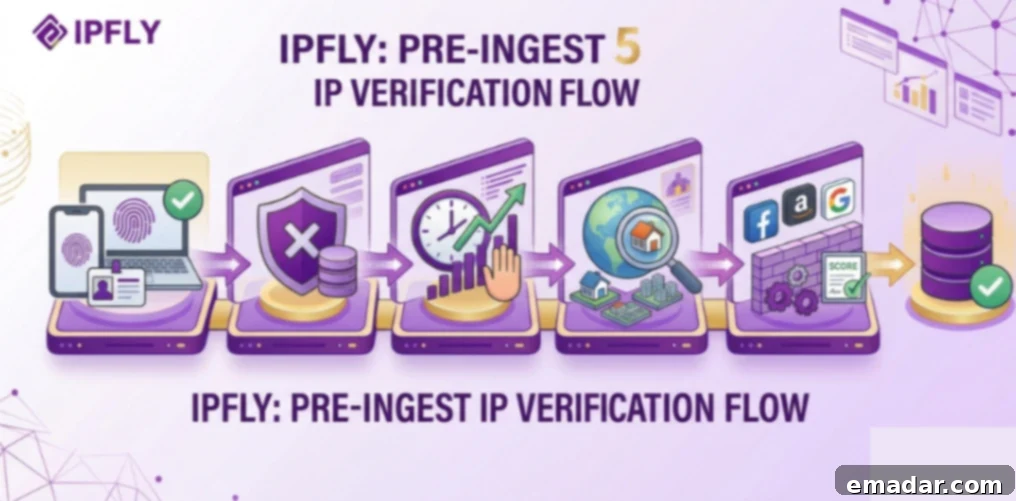
3. Usage Pattern Analysis
Beyond origin and reputation, an IP’s current and historical usage patterns are critical indicators of its quality and legitimacy. Platforms are increasingly sophisticated at detecting non-human behavior, making this layer indispensable.
We perform in-depth evaluations of:
- Historical Usage Intensity: Assessing the frequency and volume of activity associated with an IP to identify any patterns inconsistent with typical residential use.
- Traffic Flow Distribution Patterns: Analyzing where the IP’s traffic generally goes, looking for disproportionate access to specific sites or services that might indicate bot activity.
- Behavioral Consistency Signals: Monitoring for sudden changes in behavior, erratic browsing, or actions that deviate significantly from established human-like patterns.
IP addresses exhibiting any form of unusual or abnormal usage patterns are immediately flagged and excluded from our network. This continuous monitoring and analysis ensures that the IPs provided are consistent and predictable, resulting in:
Stable and predictable operational performance, reducing the risk of being identified as suspicious by target platforms.
4. Geo-Accuracy Verification
For many digital operations, precise geographical targeting is not just an advantage—it’s a necessity. Inaccurate geolocation can lead to wasted ad spend, flawed market data, and compliance issues.
Accurate location data is paramount for:
- Targeted Advertising Verification: Ensuring ads are displayed to the correct audience in specific regions, preventing ad fraud and optimizing campaign budgets.
- Localized Content and Application Testing: Verifying how websites, apps, and services perform and appear in different geographical markets.
- Effective Market Research Workflows: Collecting region-specific data for competitive analysis, trend identification, and consumer behavior studies with high confidence.
To guarantee this precision, we meticulously verify:
- Country-Level Accuracy: Ensuring the IP correctly identifies the intended country of origin.
- City-Level Precision: Going a step further to confirm the IP’s association with a specific city or metropolitan area.
- ISP and Regional Consistency: Cross-referencing the IP’s reported location with its ISP’s known service areas to ensure logical and consistent geographical assignment.
This rigorous geo-verification process delivers:
Highly reliable geolocation and impeccable data accuracy, crucial for operations requiring precise geographical targeting.
5. Platform Trust Simulation Test
This final stage is arguably the most critical and sophisticated aspect of our verification system. It moves beyond theoretical checks to practical, real-world validation against actual platform mechanisms.
We conduct advanced simulations within environments that mimic real target platforms to rigorously evaluate several key performance indicators:
- Login Consistency and Success Rates: Testing an IP’s ability to consistently log into various accounts on different platforms without encountering CAPTCHAs, two-factor authentication prompts, or immediate flags.
- Session Stability and Duration: Assessing how long a session initiated via the IP can remain active and perform actions without being abruptly terminated or challenged.
- Traffic Adherence to Platform Expectations: Monitoring the IP’s traffic patterns within the simulated environment to ensure it aligns with normal user behavior expected by the platform, avoiding anomalies that trigger security systems.
Only IP addresses that consistently perform excellently across these simulated tests, demonstrating seamless integration and high trustworthiness, are deemed fit for our network. This proactive testing ensures that our IPs are not just “clean” but genuinely compatible with platform security, resulting in:
IP addresses that consistently meet and exceed strict platform trust evaluation standards, ready for demanding operational tasks.
Why Public Detection Tools May Show Different Results
It’s not uncommon for users to observe perceived inconsistencies when comparing the classification of IPFLY’s residential resources with the results provided by various third-party IP detection tools. This apparent discrepancy, however, is not a flaw but rather a direct consequence of fundamental differences in evaluation methodologies and underlying objectives.
Limitations of Public Detection Systems
The majority of public IP lookup and detection tools are built upon outdated and overly simplistic models. They offer a binary or basic categorical assessment that fails to keep pace with the dynamic nature of the internet and the advanced defensive mechanisms of major online platforms.
Most of these tools primarily rely on:
- Static Classification Models: They categorize IPs based on fixed rules and predefined lists, which quickly become obsolete.
- Historical IP Mapping Databases: Their data is often historical and does not account for real-time network changes, reallocations, or ISP infrastructure upgrades.
- Limited Behavioral Analysis: Public tools typically lack the capability to analyze complex behavioral patterns, focusing instead on simple attributes like IP type or blacklisting status.
Crucially, these systems do not fully reflect or react to:
- The Real-Time Evolution of Network Infrastructure: ISPs constantly change how they allocate IPs, leading to dynamic IP pools and shared infrastructure.
- Complex, Hybrid ISP Infrastructures: Many modern ISPs utilize a blend of fixed-line, mobile, and satellite technologies, making simple “residential” labels inadequate.
- Sophisticated Platform-Level Behavioral Modeling: Major platforms analyze hundreds of behavioral signals in milliseconds to determine trust, a capability public tools cannot replicate.
Common Misclassification Scenarios
Due to these inherent limitations, certain types of IP addresses are frequently misclassified by public tools, despite being perfectly legitimate and trusted by real platforms. These often include:
- Mobile Network IP Address Ranges: IPs allocated to mobile devices are often dynamic and can be seen as “non-residential” by outdated systems, even though they represent genuine user traffic.
- Dynamic ISP Assignments: Many residential ISPs frequently reassign IPs from a shared pool, which can confuse static detection systems.
- CPE (Customer Premises Equipment) and Base Station Network Output: IPs originating from these legitimate residential connection points can sometimes be erroneously flagged.
In older, less sophisticated public systems, these perfectly valid IP addresses might misleadingly display as “non-residential” or even “data center.” However, it’s vital to understand that:
Platforms with advanced trust systems are typically designed to accurately identify these IPs as legitimate user traffic, prioritizing behavioral context over static labels.
Key Insight: The Fundamental Difference
The core distinction that explains these discrepancies is simple yet profound:
Public tools are designed to evaluate and assign static labels to an IP address.
In contrast, sophisticated platforms are designed to evaluate behavior and dynamic trust signals originating from an IP.
This critical difference explains why:
IP classification results might vary drastically between public tools and IPFLY’s internal assessment, but the actual, stable performance of IPFLY’s resources remains consistently high on target platforms.

Why IPFLY’s Internal System is More Reliable
IPFLY’s approach to IP quality is fundamentally different and inherently more reliable because we prioritize actual usability and consistent stability in real-world scenarios, rather than relying on outdated, static classifications that often mislead users.
Our sophisticated internal system achieves this superior reliability through several key differentiators:
- Prioritization of Behavioral Verification: We focus on how an IP behaves, not just what it’s labeled. This includes scrutinizing browsing patterns, interaction consistency, and absence of bot-like activity.
- Real-Scenario Simulation and Testing: Our system doesn’t just check databases; it actively tests IPs against environments that closely mimic popular online platforms, identifying potential issues before they impact your operations.
- Continuous and Dynamic IP Reputation Updates: We maintain a constantly evolving database of IP reputation, frequently updating scores based on live traffic, community feedback, and platform interactions, ensuring our data is always fresh and relevant.
This comprehensive and proactive approach ensures that our IP verification is deeply integrated with the realities of online operations, rather than superficial checks. The direct result of this dedication to dynamic, behavioral-centric quality assurance is:
An IP pool that is highly aligned with current and evolving platform trust evaluation frameworks, offering unmatched reliability and performance.
What This Means for Your Operations
Integrating IPFLY’s premium residential IPs into your digital operations translates directly into tangible business advantages, providing a stable and reliable foundation for your most critical tasks.
Using IPFLY’s meticulously verified residential IPs ensures:
- Stable Network Identity Conditions: Your online presence maintains a consistent and trustworthy identity, minimizing the risk of arbitrary blocking or flagging.
- Consistent Behavioral Signals: The traffic originating from our IPs mimics genuine human behavior, allowing you to operate seamlessly without triggering bot detection systems.
- Reliable Long-Term Performance: Our IPs are built for endurance, offering sustained, high-quality performance over extended periods, critical for ongoing projects.
These distinct advantages are absolutely crucial for a wide array of demanding digital applications and business objectives, including:
- Cross-Border E-commerce Operations: Managing multiple online stores, conducting competitive price monitoring, and ensuring a seamless shopping experience across different geographical markets.
- Comprehensive Advertising Verification: Accurately monitoring ad campaigns for proper placement, detecting fraud, and ensuring brand safety across various geo-targets.
- Automated Market Research and Competitive Analysis: Efficiently collecting large-scale, localized data for strategic decision-making, trend spotting, and staying ahead of competitors.
- Seamless Data Collection Workflows: Reliably extracting public data from websites without encountering CAPTCHAs, rate limits, or IP bans, ensuring data integrity.
- Multi-Account Management Under Platform Policies: Operating multiple accounts on various platforms while strictly adhering to their terms of service, maintaining account health and longevity.
Our Commitment to Unwavering Quality
At IPFLY, the label “residential” is not merely a classification; it is a promise of unparalleled quality, performance, and reliability. This promise is backed by our rigorous, multi-faceted internal standards that go far beyond what any public tool can assess.
Any IP address that is designated as “residential” within the IPFLY network must unequivocally meet our stringent internal benchmarks:
- Verified ISP Source: We ensure every IP genuinely originates from a recognized Internet Service Provider, assigned to a residential subscriber.
- Impeccable Reputation Record: Each IP must have a clean history, free from blacklistings, abuse reports, or associations with malicious activities.
- Verified Behavioral Consistency: The IP must demonstrate usage patterns that are consistent with authentic human behavior, avoiding any bot-like or anomalous signals.
- Proven Platform Compatibility: Through our simulation tests, the IP must consistently perform reliably on various target platforms, meeting their trust evaluation criteria.
Our overarching objective is unequivocally clear: to consistently provide IP resources that are not only labeled “residential” but are also proven to operate with absolute reliability and integrity in the most demanding real-world digital environments. This unwavering commitment to quality is what truly differentiates IPFLY in the proxy market.
Compliance and Responsible Use
IPFLY is deeply committed to fostering a responsible and ethical digital environment. Our proxy services are meticulously designed and intended exclusively for legitimate and compliant use cases. We empower businesses and individuals to perform critical online tasks with integrity and adherence to legal and platform guidelines.
Our high-quality residential proxies are specifically engineered to support ethical operations, including but not limited to:
- Cross-Border E-commerce Operations: Facilitating legitimate business expansion, competitive analysis, and international market access.
- Advertising Verification and Localized Testing: Ensuring brand safety, ad campaign accuracy, and proper display of localized content.
- Market Research Automation: Gathering publicly available data for legitimate academic or commercial research and analysis.
- Collecting Public Data in Accordance with Platform Policies: Automating the collection of openly accessible information, strictly respecting website terms of service and legal frameworks.
It is imperative to state that IPFLY does not support, condone, or facilitate any activities that deviate from these ethical principles. Our services are strictly prohibited for:
- Unauthorized System Access: Gaining entry to systems or networks without explicit permission.
- Violation of Platform Terms of Service: Engaging in activities that breach the agreements of any online platform.
- Fraudulent or Abusive Behavior: Any form of deception, scamming, or malicious activity, including spamming, phishing, or spreading malware.
By choosing IPFLY, you are choosing a partner dedicated to legal compliance and ethical best practices in the digital realm.
Conclusion
In the complex and ever-evolving digital landscape, the true quality of an IP address cannot be accurately judged by superficial labels or static classifications provided by basic public tools. A deep and reliable assessment of IP quality demands a far more sophisticated and dynamic approach.
Achieving and maintaining genuine IP quality necessitates:
- Multi-Layered Verification: A comprehensive series of checks that go beyond basic categorizations to analyze every aspect of an IP’s origin, reputation, and behavior.
- Practical, Real-World Validation: Active testing and simulation against live platform environments to confirm an IP’s functional trustworthiness.
- Continuous Optimization and Adaptation: An ongoing process of monitoring, updating, and refining verification methods to keep pace with evolving internet infrastructure and platform security measures.
IPFLY’s proprietary internal quality system is meticulously built upon these very principles. It is a testament to our understanding that an IP’s value is defined by its performance and its ability to seamlessly integrate into demanding online operations without detection or hindrance. This commitment to deep, dynamic verification is precisely why:
Our rigorous standards consistently surpass the capabilities and accuracy of ordinary third-party testing tools, providing our clients with an unparalleled advantage.
Frequently Asked Questions (FAQ)
Why do public IP lookup tools show inconsistent results compared to IPFLY’s performance?
Public tools often rely on static, outdated databases and simplified classification rules. In contrast, IPFLY’s system, much like major online platforms, employs dynamic, real-time trust evaluation systems and behavioral analysis, which provides a more accurate and operationally relevant assessment.
Does IPFLY rely on third-party verification services to assess IP quality?
No. While external tools can offer a preliminary reference, they are not our primary standard. IPFLY employs its own sophisticated, proprietary 5-layer internal verification system, which is the paramount standard for ensuring the quality and reliability of our residential IPs.
Are all residential IP addresses equally reliable and high-quality?
Absolutely not. The reliability and quality of a residential IP address vary significantly. Key factors include its originating ISP, its historical reputation, how it has been used, and the rigor of the verification process it has undergone. IPFLY’s stringent system ensures only the highest quality residential IPs are provided.
How does IPFLY specifically ensure the high quality and trustworthiness of its IPs?
IPFLY ensures superior quality through its unique 5-layer verification system. This includes real network environment verification, reputation and blacklist screening, detailed usage pattern analysis, precise geo-accuracy verification, and most critically, platform trust simulation tests that mimic real online environments.
Which specific application scenarios benefit most from IPFLY’s high-quality residential IPs?
High-quality residential IPs from IPFLY provide significant advantages for demanding operations such as cross-border e-commerce, comprehensive advertising verification, automated market research and competitive analysis, and sophisticated data collection workflows where platform trust and consistent performance are paramount.