
“How do I open a cross-border e-commerce store?” is one of the first questions many entrepreneurs ask when entering this industry. Common online answers often boil down to three steps—get a business license, choose a platform, upload products—as if completing those steps guarantees orders will follow. Experienced sellers know there’s a hidden divide: some accounts run smoothly for years after registration, while others receive “related violation” warnings within days. The difference isn’t how well you fill out a form but the preparation that registration pages don’t mention—especially planning your network environment.
Choose a platform: where will your first store open?
Before preparing any documents, decide on the target platform. Different platforms have very different seller qualification requirements, operating models, and expectations for network environments.
Logic for selecting major third-party platforms
Amazon has the largest global traffic, covering mature markets like North America, Europe, and Japan. It suits sellers with brand awareness and some capital. Amazon’s onboarding threshold is relatively high: beyond a business license, you typically must provide legal representative identity documents, payment account details, and proof of address. Its secondary review process means many newcomers get stuck during registration.
eBay and AliExpress have more lenient onboarding processes and are suitable for small and medium sellers. Shopee and Lazada are the primary choices for Southeast Asia, where mobile traffic dominates and operations tend to be promotion-driven and social in nature. Your choice depends on your supply chain strengths, target markets, and team capabilities. One common trend across platforms is stricter account-security policies—especially detection of “multiple stores linked to the same person.”
Independent stores: build your own site
Building an independent store with Shopify or WooCommerce turns the process into “buy a domain, pick a theme, configure payments and shipping.” Independent stores don’t require submitting a business license for platform review, but you must generate your own traffic. Many sellers with third-party platform stores use independent sites as a brand hub and margin supplement.
Whether you choose a marketplace or an independent site, if you plan to operate more than one store, network isolation should be planned before registration. This will be covered in detail in the network identity planning section below.
Documents to prepare before opening a store
Regardless of platform, basic documents required are similar. Preparing these in advance avoids registration interruptions or triggering duplicate-account checks.
- Business license: Most platforms require a company entity. Sole proprietors can sometimes register but have lower privileges and trust. The registered business scope should align with your sales categories.
- Legal representative identity: Scanned front and back of the ID; some platforms require a live photo or video verification holding the ID.
- Dual-currency credit card: For subscription fees and advertising payments; Visa or Mastercard are commonly accepted.
- Receiving account: Third-party payment providers such as Payoneer or others that provide virtual bank accounts for platform payouts.
- Proof of address: Some platforms ask for utility bills or bank statements during secondary review; the address must match the business license.
- Dedicated email and phone number: Each store must have a unique email and phone number; never reuse them across stores.
These materials form the registration foundation. Once the store is live, operational safety depends on an often-overlooked factor: your network environment.
Network planning: the critical pre-opening consideration
Many sellers register their first store from office or home broadband, which works for a single store. But when you operate a second or third store, platforms can associate accounts by IP address. Logging into multiple stores from the same IP risks having all accounts penalized if one store violates rules. This “account association” risk is a major concern in cross-border e-commerce.
The solution is to assign each store a dedicated, long-term network exit that appears as a residential connection—not an IP from a data center or cloud provider—because such IP ranges attract greater scrutiny from platform risk systems.
Give each store a fixed “network identity”
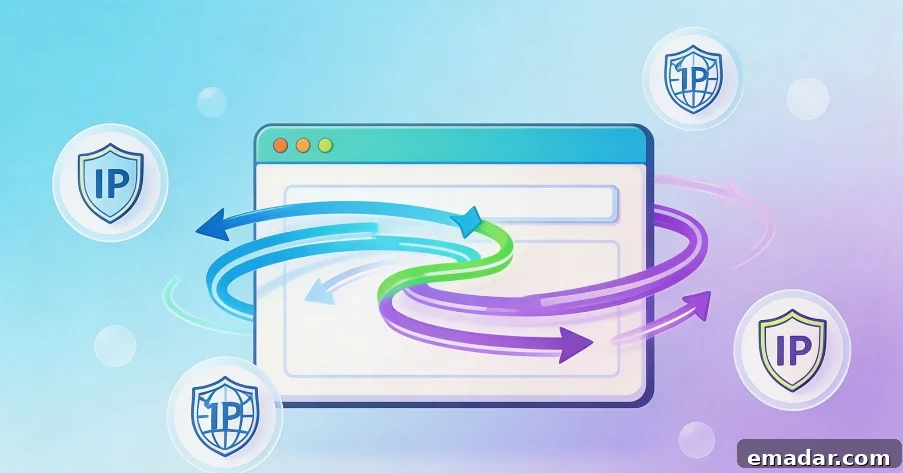
Static residential network exits are designed for safe multi-store isolation. These IPs come from real household ISPs and enjoy higher baseline trust in platform reputation systems. Critically, each static residential exit remains fixed while allocated—today’s IP remains the same tomorrow and months later. Consistent, unchanging login behavior helps platforms recognize your store as a low-risk, stable operator, reducing the likelihood of additional verification or freezes triggered by unusual environment changes.
During preparation, allocate a dedicated static residential exit for each store before registration. Register and operate through that exit to build a clean “one-store-one-IP” history from day one. Ideally choose exits that match your target markets: for example, use a U.S. city-level residential exit for the U.S. marketplace, and separate Tokyo and Frankfurt exits for Japan and Germany, respectively, ensuring complete isolation.
Step-by-step store registration process
Using Amazon as an example, a typical new seller registration includes these steps:
- Create a seller account: Use a dedicated email to submit an application on the Amazon global selling site and select your target marketplace.
- Enter company information: Upload the business license, ensure the company name and address match the license, and submit legal representative identity.
- Video or postcard verification: The platform may require a live video call with the legal representative, or send a postcard to the registered address with a verification code.
- Provide payment and payout details: Bind a dual-currency credit card and receiving account consistent with the registered entity.
- Tax information review: For U.S. marketplaces, complete W-8BEN or required tax filings.
Perform all steps through the pre-planned fixed network exit. Registration-stage reviews are strict: platforms silently evaluate IP and address consistency and operational stability. Using a stable residential exit from the start reduces verification risk.
Isolation architecture for multi-store management
When opening a second store, network architecture must become systematic. The most effective approach is to assign an independent browser profile to each store and configure each profile to use its own static residential exit.
Practical setup: create multiple Chrome users—one per store. Install a network configuration extension in each profile and enter the assigned residential exit’s address, port, and authentication details. When working on Store A’s profile, all traffic goes through Store A’s dedicated exit; switching to Store B uses Store B’s exit. This ensures there is no IP overlap between stores.
This model scales horizontally if you manage five or ten stores. Batch-provisioning of static residential exits and separate authentication for each exit keeps each store’s identity fully isolated and makes multi-store operations orderly instead of chaotic.
Operational security after opening
After launch, beyond listing products and handling orders, consistently following platform security rules is essential.
- Don’t share login devices: If possible, use separate computers for different stores. If not, at minimum use separate browser profiles plus dedicated network exits.
- Don’t reuse phone numbers or emails: One phone number and one email per store. Any reused contact information can be used as evidence to link accounts.
- Keep login IPs stable: Avoid changing exits for short-term convenience. Each IP change creates logs. Use providers that supply stable, fixed residential exits to reduce uncertainty from IP changes.
Start right to build a solid store
Opening a cross-border e-commerce store is not simply “finish the registration form.” It’s a complete process: selecting a platform, preparing documents, planning network identity, and maintaining operational security. The often-underestimated but critical element is the network-level identity—a stable, clean, fixed network exit is the cornerstone of safe multi-store operations.
For sellers planning multiple stores, allocating a dedicated static residential network exit for each store from day one creates a controllable, reliable environment that lets you focus on growing the business rather than troubleshooting security issues.