In the expansive digital landscape, Facebook stands out with its colossal user base, attracting a myriad of marketers, businesses, and individuals who often find themselves needing to manage multiple accounts. Whether for diverse marketing campaigns, distinct business ventures, or simply separating personal and professional online presences, the necessity for multiple Facebook accounts is a common reality. However, Facebook maintains extremely stringent policies against associated accounts, employing sophisticated detection mechanisms. Should the platform identify that multiple accounts originate from the same network environment or device, users face a significant risk of account suspension or permanent banning. This strict enforcement necessitates a robust solution to circumvent such risks. Static residential proxy IPs emerge as an exceptionally effective method to navigate these challenges. This comprehensive guide will delve into how leveraging static residential proxy IPs can prevent the association of multiple Facebook accounts, ensuring your operations remain secure and uninterrupted.
Understanding Facebook’s Account Association Detection Mechanisms
Before implementing any preventative measures, it’s crucial to understand how Facebook identifies and links multiple accounts. The platform utilizes a sophisticated array of data points and algorithms designed to detect patterns indicative of account association. By grasping these mechanisms, users can adopt more targeted and effective strategies for protection.
IP Address Tracking: The Digital Fingerprint of Your Network
An Internet Protocol (IP) address is a unique numerical label assigned to every device connected to a computer network that uses the Internet Protocol for communication. It acts as your device’s identifier on the internet. Using the same IP address to access multiple Facebook accounts is, without doubt, the most immediate and glaring signal for account association. Facebook’s systems are programmed to flag activities where different user profiles log in from identical IP addresses, particularly when these logins occur frequently or within short intervals. This pattern strongly suggests that these accounts are being managed by a single entity, triggering automated security protocols. Relying on shared or dynamic public IP addresses, where your IP frequently changes but might still be used by others, can inadvertently lead to association risks, as previous users of that IP might have engaged in suspicious activities or managed other accounts.
Device Fingerprinting: Beyond the IP
Facebook’s detection capabilities extend far beyond just IP addresses. Device fingerprinting involves collecting a unique set of identifiable information about your device and browser, creating a “fingerprint” that is often unique enough to identify you across different sessions and even different networks. This comprehensive data includes your operating system (e.g., Windows, macOS, Android), browser type and version (e.g., Chrome, Firefox, Safari), installed plugins and extensions, system fonts, screen resolution, time zone, language settings, and even advanced hardware attributes through technologies like WebGL and Canvas API. Together, these elements form a distinct digital signature. If multiple Facebook accounts are accessed from devices with identical or highly similar device fingerprints, even with different IP addresses, Facebook can infer a strong link between these accounts, leading to potential flags and suspensions. Anti-detect browsers are specifically designed to counteract this by creating unique, virtual device fingerprints for each account.
Cookies and Cache: Stored User Activity Trails
Browsers extensively utilize cookies and cache to enhance user experience by storing small pieces of data related to your online activities. While convenient for remembering login details and website preferences, these stored cookies and cache files can also contain a wealth of information about your Facebook activity. Facebook can leverage this data to track user behavior, login patterns, and account interactions. If you log into multiple Facebook accounts from the same browser environment without properly isolating or clearing these stored data, the cookies and cache from one account can inadvertently link to another. This cross-contamination of information provides Facebook with yet another data point to associate your accounts, making regular clearance or, ideally, browser isolation a critical preventative measure.
Account Information Discrepancies and Overlaps
Beyond technical identifiers, Facebook also scrutinizes the fundamental information provided during account registration and subsequent usage. This includes details such as phone numbers, email addresses, names, recovery contacts, and even profile pictures or shared connections. Any significant overlap or subtle similarities in these core account details can serve as a potent signal for association. For instance, using the same phone number or email address for verification on multiple accounts, or creating accounts with very similar names and birthdates, significantly increases the risk of detection. Facebook’s algorithms are adept at identifying these commonalities, even when attempts are made to slightly alter information, reinforcing the need for truly unique and distinct identities for each managed account.
Having a thorough understanding of Facebook’s intricate detection mechanisms empowers users to implement more precise and effective preventative measures. In this complex landscape, static residential proxy IPs play an absolutely vital role in creating the necessary separation and anonymity.

The Undeniable Advantages of Static Residential Proxy IPs
Static residential proxy IPs represent a pinnacle of privacy and anonymity solutions for online activities. Unlike traditional data center proxies, which are easily identifiable by internet service providers (ISPs) and online platforms due to their commercial IP ranges and server-like characteristics, a static residential proxy IP is a genuine IP address assigned by an ISP to a real home or residential user. These IPs originate from real broadband connections, mimicking the natural traffic patterns of an ordinary internet user. This inherent characteristic makes them significantly less susceptible to detection by platforms like Facebook, as they appear to be standard, legitimate network requests from a regular individual. The distinct advantages of utilizing static residential proxy IPs for managing multiple Facebook accounts are manifold:
Unparalleled High Anonymity
One of the primary benefits of static residential proxies is their exceptional ability to conceal the user’s true IP address. By routing your internet traffic through a residential IP, you effectively mask your actual geographical location and network information from Facebook. This high level of anonymity is crucial for preventing the platform from tracing multiple accounts back to your real identity or physical location. It creates a robust barrier, ensuring that your various Facebook profiles operate within distinct and isolated digital environments, significantly reducing the risk of being identified and linked by Facebook’s vigilant tracking systems.
Superior Trustworthiness and Legitimacy
Facebook’s algorithms are constantly evaluating the legitimacy of network requests to differentiate between genuine users and automated bots or malicious actors. Data center proxies, due to their origin from commercial servers, often carry a lower trust score and are frequently flagged as suspicious or potentially abusive. In stark contrast, static residential proxy IPs boast a significantly higher level of trustworthiness. Because they originate from real home internet connections, they are perceived by Facebook as legitimate user traffic. This elevated trust dramatically reduces the likelihood of your accounts being flagged as bots, spam, or malicious entities, thereby ensuring a smoother, more natural interaction with the platform and mitigating the risk of suspensions.
Enhanced Stability and Consistent Connection
The “static” nature of these IPs is a critical advantage. A static IP address means that each connection to a particular Facebook account consistently uses the same IP address over an extended period. This stability is vital for maintaining a natural user profile. Frequent IP changes or the use of rotating proxies can sometimes trigger suspicion, as such patterns might deviate from typical user behavior. By assigning a dedicated static residential IP to each Facebook account, you create a stable and persistent online presence for that specific profile. This consistency helps to avoid anomalies that could otherwise flag an account for unusual activity, offering a reliable and continuous connection that bolsters the account’s perceived legitimacy and longevity on the platform.
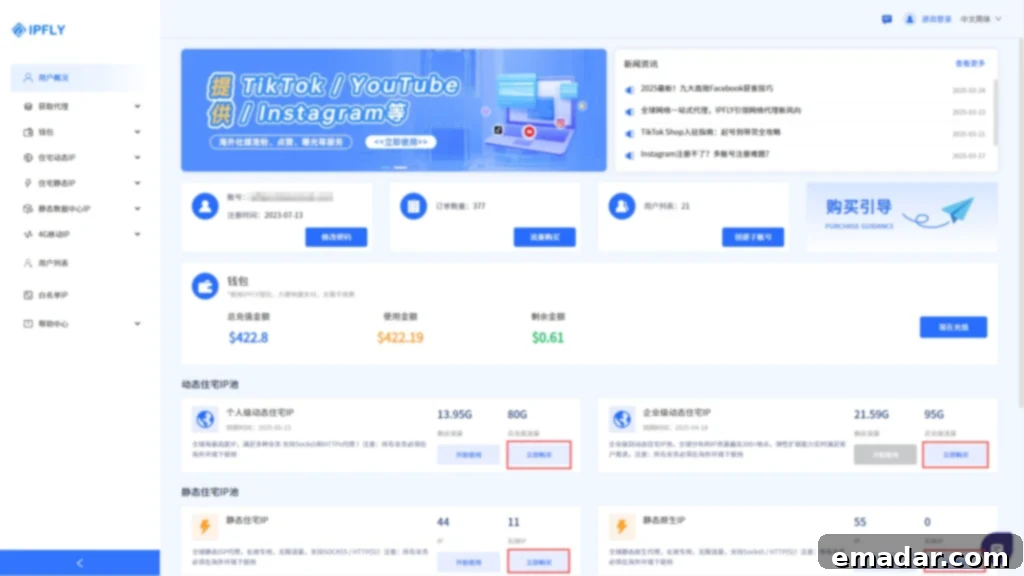
To fully capitalize on these advantages and ensure optimal performance, selecting a highly reliable proxy IP provider is paramount. For instance, providers like IPFLY offer extensive static residential proxy IP resources sourced from global real home broadband networks. This ensures that each IP address boasts unparalleled credibility and stability, providing a premium solution for secure account management. Whether your objective is to conduct advanced market research, execute extensive marketing campaigns, or meticulously manage numerous social media accounts, IPFLY is designed to meet your specific requirements, helping you preserve your privacy and enhance your security while operating on Facebook.
Comprehensive Guide: How to Use Static Residential Proxy IPs to Prevent Multiple Facebook Account Association
Successfully managing multiple Facebook accounts without triggering association flags requires a strategic approach that combines the power of static residential proxies with meticulous operational practices. Follow these crucial steps to establish and maintain secure, independent Facebook profiles.
1. Select a Reputable and High-Quality Proxy Provider
The foundation of your multi-account strategy lies in the quality of your proxy provider. It is essential to choose a service that offers premium static residential proxy IPs. Look for providers known for their vast IP pools, ensuring a wide selection of unique, clean IPs. Geographic coverage is also important, allowing you to select IPs that align with the perceived location of your accounts. Furthermore, prioritize providers with a proven track record of service stability, high uptime, and responsive customer support. For example, IPFLY stands out by offering not only an extensive pool of residential IPs but also unparalleled service stability and broad geographical distribution, critical elements for robust, long-term account management. A reliable provider will ensure your IPs are ethically sourced and regularly monitored for performance, preventing issues that could compromise your accounts.
-
Allocate a Unique Static Residential Proxy IP to Each Account
This is arguably the most critical rule: Each and every Facebook account you manage must be assigned its own, dedicated static residential proxy IP. This “one account, one IP” principle is non-negotiable. Sharing a single proxy IP among multiple Facebook accounts completely undermines the purpose of using a proxy in the first place, as it immediately creates the very association you are trying to avoid. Facebook’s systems will swiftly detect these shared login patterns, leading to quick identification and potential suspension of all linked accounts. Ensure your proxy setup strictly adheres to this dedicated assignment for every single profile to maintain maximum separation and anonymity.
-
Isolate Browser Environments for Each Account
To further enhance isolation and prevent device fingerprinting, it is highly recommended to use distinct browser environments for each Facebook account. Simply using different browsers (e.g., Chrome for one account, Firefox for another) is a basic step, but it’s often insufficient against advanced detection. The most effective solution involves utilizing specialized anti-detect browsers, such as MultiLogin, GoLogin, or Incogniton. These sophisticated tools allow you to create completely separate, virtual browser profiles for each Facebook account. Each profile comes with its own unique set of device fingerprints (user agent, plugins, fonts, screen resolution, etc.), cookies, and local storage. This creates a truly isolated digital identity for every account, preventing any cross-contamination of device-specific data that Facebook could use for association.
-
Regularly Clear Cookies and Cache
Even with isolated browser environments or anti-detect browsers, it’s good practice to manage browser data proactively. Cookies and cache files can store residual information about your previous sessions and activities, which, if not properly managed, could inadvertently link accounts. Regularly clearing your browser’s cookies and cache for each specific profile or ensuring your anti-detect browser is configured to handle this automatically helps prevent any potential information crossover. This ensures that each login session starts with a clean slate, reducing the risk of Facebook drawing connections based on historical browser data.
-
Exercise Caution with Account Information
Beyond technical safeguards, the personal information associated with your accounts plays a significant role in detection. Absolutely avoid using identical phone numbers, email addresses, or even strikingly similar names across multiple Facebook profiles. Strive to use genuinely unique pieces of information for each account. This might involve utilizing virtual phone numbers, creating distinct email addresses for each profile, and varying names, birthdates, and other demographic details. Consistency within each account’s profile is key, but the unique differentiation between accounts is paramount. Any pattern of shared personal identifiers is a red flag for Facebook’s association algorithms.
5. Simulate Normal User Behavior and Engagement
While technical measures are crucial, behavioral patterns are equally important. Accounts that exhibit rapid, high-intensity actions, such as mass posting, aggressive liking, or excessive commenting in a short period, are highly susceptible to being flagged as automated bots or suspicious entities. To ensure longevity and avoid detection, it is vital to simulate authentic, normal human behavior. This includes gradual engagement, varied activities like browsing news feeds, joining relevant groups, interacting with friends and pages, and occasionally uploading personal content. Avoid sudden spikes in activity and adopt a natural, inconsistent (in a human way) posting and interaction schedule. Gradually “warm up” new accounts by starting with minimal activity and slowly increasing engagement over time, making them appear like genuine, organic users.
6. Maintain Consistent Proxy IP Usage Patterns per Account
The phrase “setting proxy IP usage time” should be interpreted not as frequently changing the static IP assigned to an account, but rather as maintaining a consistent and natural usage pattern for each account *with its dedicated static IP*. The core benefit of a static residential IP is its stability and persistence for a single account. Therefore, avoid logging into a Facebook account from its dedicated static IP, then suddenly logging in from your real IP, or another proxy IP, only to switch back. This inconsistency is a major red flag. Instead, establish a consistent routine: once an account is linked to a static residential IP, always access that account through that specific IP. While you shouldn’t keep accounts logged in 24/7 without activity, the stability of the IP itself for that account is key. If an IP appears to be compromised or flagged for any reason, only then should you consider rotating it, ensuring the new IP is also a clean, dedicated static residential proxy. The goal is to make each account’s online footprint, including its IP and access patterns, look as consistent and organic as possible over time.
Conclusion: Secure Your Facebook Operations with Static Residential Proxies
In summary, leveraging static residential proxy IPs, especially those provided by reputable services like IPFLY, represents one of the most effective and reliable strategies for preventing the association of multiple Facebook accounts. The combination of high anonymity, superior trustworthiness, and connection stability offered by these proxies creates a robust defense against Facebook’s sophisticated detection mechanisms. By meticulously choosing high-quality proxy IPs and integrating them with a comprehensive suite of anti-association measures—including dedicated IP allocation for each account, stringent browser isolation, regular data hygiene, distinct account information, and authentic user behavior simulation—you can significantly enhance the security and longevity of your Facebook profiles, effectively mitigating the risk of bans and suspensions. It is paramount to remember that ethical and compliant use of the Facebook platform remains the cornerstone of maintaining a healthy and sustainable online presence. By adhering to best practices and utilizing cutting-edge tools, businesses and individuals can navigate the complexities of multi-account management with confidence and security.
Experience the unparalleled power of IPFLY’s global proxy pool with a free trial today! Access over 90 million real residential IPs with lightning-fast, second-level switching capabilities, ensuring zero account association and boosting your data collection success rate by an impressive 98%. Don’t miss out on this opportunity to revolutionize your online operations.
Click now to claim your exclusive “New User Welcome Offer” and enjoy a discount on your first order!