
Unlocking the Power of Hong Kong Proxy IPs: A Comprehensive Guide for Enhanced Performance and Security
While basic knowledge helps you avoid common pitfalls, advanced analysis teaches you how to boost efficiency. In practical engineering and large-scale international business ventures, the value of Hong Kong proxy IPs extends far beyond simply acting as a “transfer station.” This guide delves into the intricacies of leveraging Hong Kong IPs for optimal performance and security.
Understanding the Stability Variations Among Hong Kong IPs
Many users notice significant differences in the performance of Hong Kong IPs: some load websites instantly, while others frequently time out. The primary reason lies in the network architecture.
- CN2 GIA Line (Direct Connection Top-Tier Line): This is a telecom direct connection line specifically optimized for traffic to mainland China. If your operations involve using a Hong Kong proxy from within mainland China, CN2 determines the smoothness of your experience. With minimal packet loss, it is ideal for high-frequency trading and real-time monitoring.
- BGP Multi-Line Transfer: Dynamic dialing proxies typically utilize BGP lines, automatically selecting the optimal exit point. This offers strong disaster recovery capabilities; even if a submarine cable fluctuates, it can quickly switch, making it suitable for large-scale web scraping and data collection.
- International Public Network BGP: This involves routed traffic. Although it’s still a Hong Kong IP, it may detour through Singapore or Japan before returning to mainland China, resulting in high latency.
Pro Tip: When choosing a provider, don’t just focus on the word “Hong Kong.” Inquire whether they support CN2/GIA or BGP direct connection.
Static Residential vs. Dynamic Residential vs. Data Center IPs
In sophisticated business scenarios, the “physical attributes” of an IP directly influence your success rate.
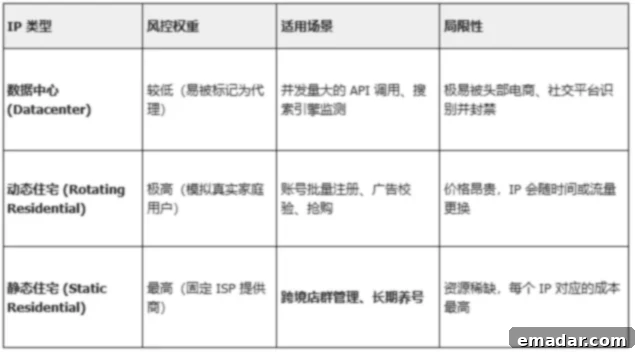
Key Insight: Hong Kong boasts a high internet penetration rate. Its ISP residential IPs (such as PCCW and Hong Kong Broadband) have high whitelist priority on major international platforms (like Amazon, Google, and Meta). For precise operations requiring “long-term online” presence, static residential IPs are an irreplaceable asset.
Combating Risk Control: Preventing Hong Kong IP Identification
Even with high-quality Hong Kong proxies, ignoring coordination at the protocol and fingerprint layers can still trigger risk controls.
- WebRTC Leak Protection: Many browsers leak your real local network IP through the WebRTC protocol, exposing both the “Hong Kong IP + mainland China internal network IP.” This must be isolated using a fingerprint browser or plugin.
- DNS Pollution and Matching: If you’re using a Hong Kong proxy IP but the DNS resolution returns a mainland China server address, this “geographical location conflict” is the fastest way for risk control systems to identify proxies.
- MTU Value Anomalies: The MTU (Maximum Transmission Unit) of proxy servers often differs from that of ordinary broadband. Advanced users technically modify packets to resemble genuine home broadband dialing.
Enterprise-Level Strategies: Hong Kong Proxy “Hybrid Networking” Solutions
Truly sophisticated cross-border teams don’t rely on just one type of IP.
- Traffic Tiered Management:
- Daily Office/Lightweight Queries: Use inexpensive Hong Kong data center IPs.
- Core Stores/Main Account Operations: Bind dedicated Hong Kong static residential IPs (fixed ISP).
- Large-Scale Data Scraping: Call on Hong Kong dynamic residential pools, leveraging their high concurrency and anonymity.
- Redundancy Design as a “Jumping-Off Point”:
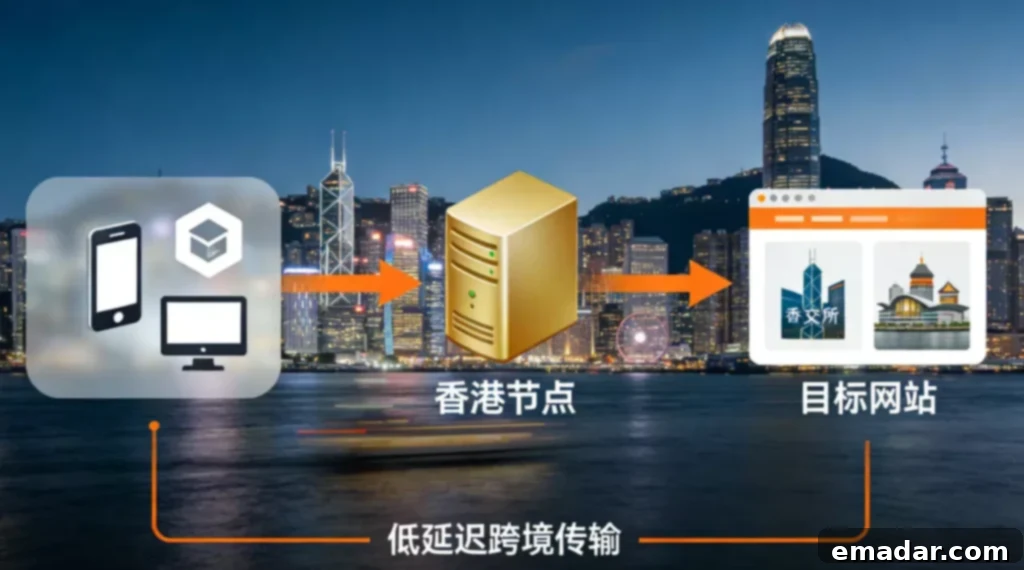
- Many teams use Hong Kong as the “first hop,” forwarding to other regions globally. This provides shorter management links, faster data return, and the ability to utilize Hong Kong’s compliant environment for data pre-processing.
Summary: From “Usable” to “Highly Effective”
Hong Kong proxy IPs are far from simple “firewall circumvention” tools. They represent the optimal balance between speed and security in international business operations.
- If you seek cost-effectiveness, focus on the dedicated rate of data center IPs.
- If you prioritize security, pay attention to the Residential ISP attribute.
- If you demand speed, look for CN2/BGP line optimization.
Utilize IPFLY Residential Proxy IPs
IPFLY features self-built servers and a big data screening system, providing only:
- Genuine ISP-assigned residential IPs
- Clean, unpolluted IP ranges, non-shared, with no history of abuse
- Support for IP detection, location filtering, and multi-country switching
Prevent risk control and manage risks effectively! Achieve IP isolation with IPFLY!