
Navigating AI Geographic Restrictions: A Comprehensive Guide to Gemini and Beyond
The message “Gemini is not currently supported in your region” can be frustrating. How long will this limitation persist? Is it a temporary phase of technological rollout, or a long-term business strategy? Understanding the evolving trends of AI service geographic restrictions is crucial for developing reasonable strategies, from short-term solutions to long-term planning.
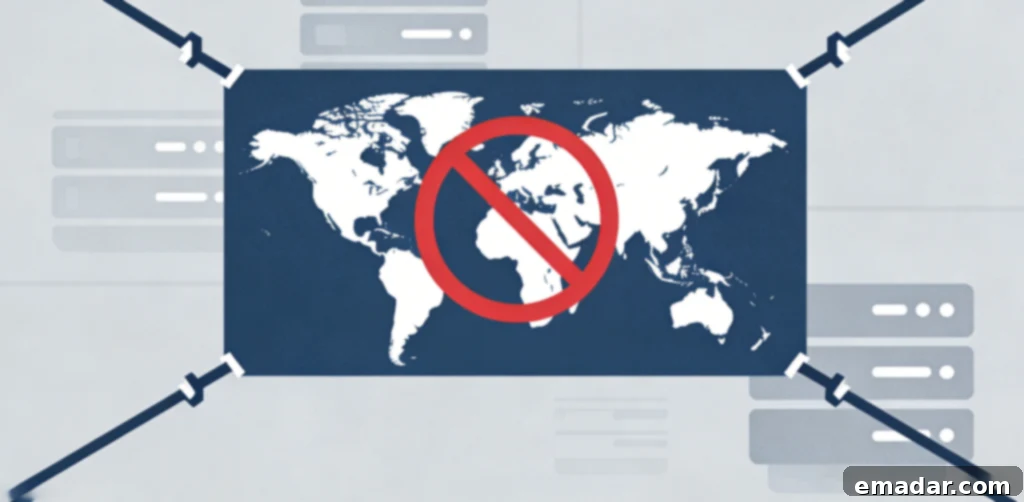
The Evolving Dynamics of Geographic Restrictions in AI
Forces Driving Expansion and Openness
Several factors are pushing AI services toward broader global availability:
Market Competitive Pressures
- OpenAI’s Rapid Global Expansion: OpenAI’s ChatGPT has expanded globally at an unprecedented pace, putting significant pressure on Google and other AI providers to keep up and avoid falling behind. This competitive landscape necessitates rapid expansion to maintain market share and user engagement.
- Microsoft’s Copilot Integration: Microsoft is integrating AI capabilities through Copilot, reaching a broader range of users across diverse applications. This widespread integration forces other AI providers to expand their reach to compete effectively in various user scenarios.
- The Rise of Open-Source Models: The increasing popularity and capability of open-source AI models threaten the market dominance of closed, proprietary systems. Open-source alternatives offer flexibility and customization, driving the need for commercial AI services to provide compelling reasons for users to choose their platforms.
Globalization of User Needs
- The Need for Unified AI Tools in Multinational Corporations: Multinational enterprises require consistent AI tools to support global teams, fostering collaboration and efficiency across diverse geographic locations. This demand pushes AI providers to offer standardized services worldwide.
- Developer Community Calls for Global API Availability: The developer community advocates for globally accessible APIs to facilitate innovation and integration across different projects and platforms. This drive for universal access promotes the removal of geographic barriers.
- The Push for Equal Access to Knowledge in Academia and Education: Academic and educational institutions are pushing for equal access to knowledge, including AI tools, to promote global learning and research opportunities. This educational imperative encourages AI providers to expand their reach to support these initiatives.
Technological Maturity and Advancements
- Improved Multilingual Support: Advancements in multilingual support are gradually lowering the barriers to localization, making it easier for AI services to cater to diverse linguistic needs across different regions.
- Standardization of Security and Compliance Frameworks: Standardized security and compliance frameworks are accelerating regional adaptation, reducing the complexity and cost of meeting regulatory requirements in various jurisdictions.
- Enhanced Edge Computing Capabilities: Enhanced edge computing capabilities support distributed deployment, enabling AI services to operate closer to users and reduce latency, thereby facilitating expansion into regions with limited infrastructure.
Reasons for Maintaining Restrictions
Despite the push for global expansion, several factors contribute to the maintenance of geographic restrictions:
Regulatory Complexity
- Stringent Requirements of the EU AI Act: The EU AI Act’s stringent requirements necessitate significant compliance investments, making it challenging for AI providers to rapidly expand into the European market without thorough preparation.
- Data Localization Laws in Various Countries: Data localization regulations in numerous countries restrict cross-border data flow, requiring AI providers to store and process data within specific geographic boundaries, which adds to operational complexity.
- Content Censorship and Ideological Differences: Varying content censorship policies and ideological differences across regions increase the cost of adapting AI products, making it necessary for AI providers to carefully evaluate each market.
Geopolitical Factors
- Technology Export Controls and Sanctions: Technology export controls and sanctions limit service availability in certain regions, restricting AI providers from operating in countries subject to these restrictions.
- Data Sovereignty Disputes: Data sovereignty disputes influence data center location decisions, impacting the availability of AI services in regions where these issues are prominent.
- National Security Concerns: National security considerations raise concerns about the proliferation of AI capabilities, leading to cautious approaches in expanding access to sensitive technologies.
Commercial Strategy Choices
- Prioritization of High-Value Markets: AI providers may prioritize serving high-value markets to maximize revenue, focusing on regions where they can achieve the greatest financial returns.
- Control of Support Costs: Limiting expansion helps control support costs, avoiding losses in markets with low payment capabilities or limited demand for premium services.
- Protection of Intellectual Property: Restrictions help protect intellectual property, preventing model misuse or distillation, ensuring that the AI provider’s innovations are not exploited.
Future Scenarios: Predicting the Trajectory of AI Availability
Scenario 1: Gradual Global Expansion (Probability: 60%)
Description: Google gradually adds support for new regions annually, achieving coverage of major global markets within 5-10 years.
Characteristics
- Prioritization of English-Speaking Countries and Developed Economies: Initial expansion focuses on English-speaking countries and developed economies with established technological infrastructure and high user adoption rates.
- Subsequent Expansion to Densely Populated and Strategic Markets: Expansion then extends to densely populated countries and strategic markets with significant growth potential.
- Long-Term Restrictions in Sanctioned Countries and Heavily Regulated Markets: Some regions, including sanctioned countries and heavily regulated markets, may face long-term restrictions due to geopolitical and compliance challenges.
Impact
- Most Users Eventually Gain Official Support, but with Extended Waiting Times: The majority of users will eventually gain official support, but they may need to wait longer compared to users in prioritized regions.
- Continued Need for Alternative Solutions During the Transition Period (1-3 Years): During the transition period, alternative solutions will remain necessary to access AI capabilities in unsupported regions.
- Persistent Functional Differences Across Regions: Functional differences may persist across regions due to regulatory requirements, localization efforts, and market-specific customization.
Response Strategies
- Short-Term: Use technical solutions like residential proxies to maintain access.
- Mid-Term: Monitor official expansion announcements and prepare for migration.
- Long-Term: Establish stable workflows based on official services.
Scenario 2: Regional Collaboration Model (Probability: 25%)
Description: AI providers collaborate with local enterprises or governments to enter restricted markets under a “Gemini Powered by Local Partner” model.
Characteristics
- Data Storage in Local Regions: Data is stored locally to comply with data sovereignty requirements.
- Potential Censorship or Fine-Tuning of Models: Models may undergo censorship or fine-tuning to align with local regulations and cultural norms.
- Possible Differences in Functionality and Performance Compared to Global Versions: Functionality and performance may differ compared to global versions due to customization and regulatory constraints.
Impact
- Users Gain Official Support, but Experience May Be Limited: Users gain access to official support, but their overall experience may be limited by localized features and performance constraints.
- Potential Interoperability Issues Between International and Local Versions: Interoperability issues may arise between international and local versions, making it challenging to seamlessly integrate data and workflows.
- Privacy and Security Depend on Local Partners: Privacy and security depend on the practices of local partners, raising concerns about data protection and compliance with international standards.
Response Strategies
- Evaluate Whether the Local Version Meets Your Needs: Assess whether the local version offers the necessary functionalities and performance to meet your requirements.
- Maintain Access to the International Version as a Backup: If possible, maintain access to the international version as a backup option to ensure continuity and access to a broader range of features.
- Pay Attention to Data Sovereignty and Privacy Protection: Closely monitor data sovereignty and privacy protection arrangements to understand how your data is handled and secured.
Scenario 3: Long-Term Fragmentation and Alternatives (Probability: 15%)
Description: Geopolitical tensions persist, leading to further fragmentation of the global internet, making services like Gemini unavailable in certain regions for the long term.
Characteristics
- Formation of a “Splinternet”: The emergence of a “splinternet” leads to different regions using different AI ecosystems, creating technological and informational divides.
- Open-Source Models and Local Alternatives Become Mainstream: Open-source models and local alternatives become mainstream, filling the gap left by restricted commercial AI services.
- Expansion of Technological Standards and Capability Gaps: Technological standards and capability gaps widen between regions, hindering global collaboration and knowledge sharing.
Impact
- Necessity to Rely Completely on Alternative Solutions: Users must rely completely on alternative solutions, such as open-source models and local AI platforms.
- Obstruction of Global Collaboration and Knowledge Sharing: Global collaboration and knowledge sharing are hindered due to technological fragmentation and limited access to common AI tools.
- Entrenchment of Technological Capability Inequalities: Inequalities in technological capabilities become entrenched, impacting economic development and innovation in affected regions.
Response Strategies
- Invest in Open-Source Models and Local AI Capability Building: Invest in open-source models and local AI capability building to foster self-reliance and innovation.
- Establish Cross-Border Cooperation Networks: Establish cross-border cooperation networks to share resources and knowledge, mitigating the impact of technological isolation.
- Advocate for Technology Openness and Global Governance Frameworks: Advocate for technology openness and global governance frameworks to promote equitable access to AI and reduce fragmentation.
Technical Strategies for the Transition Period
Short Term (0-12 Months): Stable Access
Core Need: Maintain reliable access until official support becomes available.
Technical Solutions
- Deploy High-Quality Residential Proxy Networks: Deploy high-quality residential proxy networks to simulate users from supported regions, ensuring reliable access to AI services.
- Establish Redundancy Mechanisms: Implement redundancy mechanisms with multiple IP sources and access paths to minimize downtime and ensure continuous access.
- Monitor IP Health and Replace Invalid Resources Promptly: Continuously monitor IP health and promptly replace invalid resources to maintain the effectiveness of the proxy network.
Residential proxy services offer the stability and reliability needed during this transition. Their global coverage, high-purity ISP partnerships, and enterprise-grade SLA guarantees are suitable for users who need long-term stable access. Static residential proxies provide fixed IP identities, reducing frequent verification, while dynamic residential proxies support intelligent rotation, dispersing risk.
Mid Term (1-3 Years): Flexible Adaptation
Core Need: Adapt to the dynamics of official expansion and prepare for migration.
Technical Solutions
- Establish a Multi-AI Tool Strategy: Develop a multi-AI tool strategy to avoid complete reliance on a single service, ensuring flexibility and resilience.
- Maintain Modular Technical Solutions: Keep technical solutions modular to facilitate switching between different AI platforms and services.
- Track Official Developments and Evaluate Migration Timing: Monitor official developments and evaluate the optimal timing for migrating to official services or alternative solutions.
Organizational Preparation
- Train Teams to Use Multiple AI Tools: Train teams to use multiple AI tools to reduce switching costs and ensure proficiency across different platforms.
- Establish Data Migration and Backup Mechanisms: Establish data migration and backup mechanisms to safeguard data and facilitate seamless transitions.
- Evaluate the Functionality, Price, and Compliance of Official Services: Evaluate the functionality, pricing, and compliance aspects of official services to make informed decisions about migration.
Long Term (3-5 Years+): Sustainable Architecture
Core Need: Establish an AI capability architecture that is not dependent on specific regional restrictions.
Technical Solutions
- Invest in Locally Deployed Open-Source Models: Invest in locally deployed open-source models to ensure autonomy and control over AI capabilities.
- Establish a Hybrid Architecture: Build a hybrid architecture that complements commercial services with in-house capabilities, maximizing flexibility and resilience.
- Participate in Global AI Governance: Participate in global AI governance initiatives to promote openness and fairness in AI development and deployment.
Action Recommendations for Different Users
Individual Users
Immediate Actions
- Assess the Value of Gemini to Your Work and Studies: Evaluate the benefits of Gemini for your work and studies to determine whether the effort to access it is worthwhile.
- Choose a Reliable Residential Proxy Service: Select a reliable residential proxy service to establish stable access to Gemini.
- Monitor Alternative Solutions: Keep an eye on alternative solutions such as OpenAI and Anthropic.
Mid-Term Planning
- Learn Core AI Tool Skills: Focus on learning core AI tool skills rather than specific product operations, ensuring adaptability across different platforms.
- Establish Transferable Workflows and Data Formats: Establish transferable workflows and data formats to facilitate seamless transitions between AI services.
- Prepare to Migrate to Official Services or Alternatives: Prepare to migrate to official services or alternative solutions as they become available.
Enterprise Users
Immediate Actions
- Assess the Impact of Missing AI Tools on Business Operations: Evaluate the impact of missing AI tools on business operations to quantify the need for solutions.
- Develop an Enterprise-Level Access Solution: Develop an enterprise-level access solution, including proxy networks and compliance reviews, to ensure secure and compliant access.
- Establish Usage Guidelines and Security Protocols: Establish usage guidelines and security protocols to govern AI usage within the organization.
Mid-Term Planning
- Establish Corporate Relationships with Google: Establish corporate relationships with Google to advocate for priority support and access to Gemini.
- Invest in Local AI Capability Building: Invest in local AI capability building to reduce external dependencies and foster innovation.
- Establish a Multi-Vendor Strategy: Implement a multi-vendor strategy to diversify risk and ensure access to a wide range of AI tools and services.
Academic Institutions
Immediate Actions
- Provide Technical Support and Compliance Guidance to Researchers: Provide technical support and compliance guidance to researchers to facilitate access to AI resources.
- Evaluate Educational Discounts: Evaluate educational discounts offered by proxy service providers to reduce costs.
- Establish Institutional Access and Usage Policies: Establish institutional access and usage policies to ensure responsible and compliant AI usage.
Long-Term Planning
- Participate in Open-Source AI Projects: Contribute to open-source AI projects, providing local language data and evaluations to enhance model performance.
- Promote International Academic Collaboration: Foster international academic collaboration to share AI resources and capabilities.
- Advocate for Equitable Access to AI Services: Advocate for equitable access to AI services for academic institutions to promote research and education.
Maintaining Agility in Uncertainty: The Epitome of Technology Globalization and Local Tensions
The message “Gemini is not currently supported in your region” reflects the deep tension between technology globalization and local particularities in the AI era. This tension will persist, but its specific manifestations will evolve with technological, commercial, and political factors.
For users, the wisest strategy is to remain agile: leverage existing technical solutions to address current needs while closely monitoring official developments and preparing to migrate when appropriate; avoid placing all bets on a single service, and build a portfolio of tools and vendors; participate in and promote the construction of a more open and equitable AI ecosystem.
Technical restrictions are temporary, but the demand for technological capabilities is lasting. Regardless of how long Gemini’s geographic restrictions persist, enhancing your AI literacy and building a flexible technical architecture are always the best preparations for facing uncertainty.
Key Benefits of Residential Proxies:
- Full node stability, supporting 190+ countries and regions worldwide.
- Fast connection speeds, smooth operation, and simulation of real home broadband scenarios.