
Unlocking Global Stability: The Indispensable Need for a Fixed IP Address
In today’s hyper-connected global economy, businesses and individuals alike face unprecedented challenges in maintaining a stable, secure, and identifiable online presence. The seemingly innocuous internet protocol (IP) address, often overlooked, plays a foundational role in digital operations. While dynamic IPs offer flexibility for casual browsing, they introduce significant friction and risk for professional, commercial, and industrial applications. A fixed IP address, also known as a static or dedicated IP, has emerged as a critical requirement, addressing three core demands for robust and uninterrupted digital interactions.
The imperative for a fixed IP is no longer a niche requirement but a mainstream necessity, underpinned by compelling data and real-world implications. Organizations that rely on dynamic IPs frequently encounter operational roadblocks, security vulnerabilities, and identity management issues that can severely impact their bottom line and reputation. Understanding these challenges is the first step towards building a resilient digital infrastructure.
Mitigating Business Continuity Crises in a Dynamic Digital Landscape
The fluctuating nature of dynamic IP addresses poses a direct threat to business continuity, especially for operations that demand consistent digital identification. This is particularly evident in sensitive sectors like cross-border e-commerce and financial services.
For instance, recent data from Marketplace Pulse in 2024 reveals that an alarming 78% of cross-border e-commerce businesses experience platform risk control triggers due to frequent IP changes. E-commerce platforms, in their vigilance against fraud and account manipulation, closely monitor IP consistency. When an account’s access IP frequently shifts across different geographical locations or network types, it raises red flags, leading to account suspensions, mandatory reviews, or even permanent bans. This can halt sales, disrupt supply chains, and inflict significant financial losses.
Similarly, in the financial sector, the stability of IP addresses is paramount. The SWIFT 2023 report highlighted that financial payment interfaces suffer a transaction failure rate as high as 34% due to IP fluctuations. Payment gateways and banking systems rely on IP addresses for identity verification and fraud prevention. Inconsistent IPs can lead to transaction declines, delayed settlements, and a complete breakdown in trust with financial partners. Gartner’s assessment model estimates that enterprises face an average loss of $87,000 per hour for IP-related business interruptions. These figures underscore the critical need for a stable and predictable IP environment to safeguard revenue streams and operational integrity.
Beyond these examples, many other business functions are impacted. Remote workforces struggle with consistent access to corporate resources, VPN connections become unstable, and cloud-based applications may throttle access if IP addresses are not consistent. A fixed IP address provides the digital anchor necessary to maintain uninterrupted service and reliable access, fostering trust and operational efficiency across all business touchpoints.
Overcoming Security Authentication Bottlenecks and Building Trust
In an era dominated by cyber threats, robust security is non-negotiable. Fixed IP addresses play a crucial role in establishing and maintaining trust within digital security frameworks, often serving as a cornerstone for authentication and access control mechanisms.
Many critical online services and platforms enforce strict IP-based security protocols. For example, leading payment processors like PayPal and Stripe frequently require businesses to bind their payment systems to a fixed IP whitelist. This means that only transactions originating from pre-approved IP addresses are processed, significantly reducing the risk of unauthorized access and fraudulent activities. Without a fixed IP, businesses would struggle to meet these fundamental security requirements, potentially limiting their ability to conduct online transactions securely.
Cloud service providers like AWS and Azure also leverage IP reputation scoring for API calls. If an IP address exhibits inconsistent behavior, frequent changes, or is associated with suspicious activities, its reputation score can drop below acceptable thresholds (e.g., below 80 points), leading to throttled access or complete denial of service. This can cripple operations that rely on programmatic interaction with cloud resources.
A stark illustration of this risk involves a cross-border payment platform that experienced significant IP instability. As a result, Visa flagged them as high-risk, leading to the freezing of $2.6 million in funds. This incident highlights how dynamic and inconsistent IP usage can trigger severe financial repercussions and erode trust with critical financial institutions. For any organization handling sensitive data or high-value transactions, a dedicated, clean IP address is not just a preference; it’s a security mandate that forms the bedrock of a reliable digital identity and a trusted operational footprint. It allows businesses to whitelist their access points, fortifying their defenses against unauthorized intrusions and ensuring compliance with stringent security regulations.
Resolving the IoT Identity Dilemma for Precision and Reliability
The proliferation of the Internet of Things (IoT) devices across industries, from smart factories to autonomous vehicles, has introduced a new set of challenges related to device identification, connectivity, and command execution. A fixed IP address is instrumental in establishing a reliable and precise identity for each IoT endpoint.
In industrial settings, fixed IP addresses are essential for the remote, precise localization of industrial equipment, often required to achieve an error margin of less than 10 meters. This precision is vital for asset tracking, predictive maintenance, and robotic control systems where exact positioning and consistent communication are non-negotiable. Dynamic IPs, with their unpredictable assignments, make such precise localization and consistent communication nearly impossible.
Furthermore, in the realm of connected vehicles, Vehicle-to-Everything (V2X) communication, crucial for autonomous driving and smart transportation systems, mandates that an IP address be permanently bound to a vehicle’s ID. This requirement, aligned with standards like ISO 21434, ensures that each vehicle maintains a unique and traceable digital identity throughout its operational lifespan. This dedicated binding is critical for over-the-air (OTA) updates, emergency services, and real-time traffic management.
The consequences of relying on dynamic IPs in IoT environments can be severe. For example, smart factory equipment using dynamic IPs has been observed to experience communication loss an average of 27 times per day. Such frequent disconnections lead to operational inefficiencies, production delays, safety hazards, and significant data integrity issues. A fixed IP provides the stable, persistent identity that IoT devices need to communicate reliably, be precisely located, and integrate seamlessly into complex networked systems, ultimately enhancing efficiency, safety, and data accuracy across the entire IoT ecosystem.

IPFLY’s Fixed IP: Five Pillars of Technological Advancement
Recognizing the growing demand for highly reliable, secure, and performant fixed IP solutions, IPFLY has engineered a platform that sets new industry standards. Our offerings are built upon five major technical breakthroughs, ensuring unparalleled service for businesses operating on a global scale.
1. Carrier-Grade Global Resource System
IPFLY’s foundational strength lies in its expansive and exclusive network infrastructure. We provide unparalleled global coverage by directly connecting with 68 top-tier Internet Service Providers (ISPs), including industry giants like AT&T, NTT, and Deutsche Telekom. This direct peering minimizes network hops, drastically reducing latency and improving data transfer speeds. Our network supports city-level IP localization in over 190 countries, with pinpoint accuracy down to the postal code level in critical regions like the United States. This granular control is crucial for applications requiring precise geographical targeting and compliance.
A cornerstone of our offering is the principle of resource exclusivity. Each IP address provided by IPFLY is dedicated solely to a single client and will never enter a shared pool. This ensures an IP purity rate of 99.9%, independently verified and certified by BrightData. Such high purity guarantees that your IP address is untainted by the activities of other users, minimizing the risk of blacklisting, reputation damage, and interference with your online operations. This dedicated approach translates directly into enhanced reliability and trust for your digital footprint.
2. Unwavering Stability Guarantee
Stability is paramount for any critical online operation, and IPFLY’s architecture is meticulously designed for maximum uptime and performance. Our network topology features a dual-active data center architecture, ensuring seamless failover with a recovery time of less than 8 seconds in the event of any localized outage. This redundancy provides an unparalleled level of business continuity.
We leverage BGP (Border Gateway Protocol) multi-line access, which intelligently routes traffic across multiple network paths to prevent single points of failure and optimize data flow. This advanced routing results in an exceptionally low packet loss rate of less than 0.01% and a request success rate of 99.99%. For international operations, especially between geographically distant regions like China and the United States, we achieve an impressive average latency of less than 85ms. Furthermore, each dedicated IP supports over 50,000 concurrent connections, catering to the most demanding high-traffic applications without compromise.
Explore our robust network architecture here.
3. Comprehensive Security Protection Matrix
Security is deeply embedded into IPFLY’s infrastructure. We employ a multi-layered security matrix to protect your data and ensure the integrity of your connections. All traffic is secured with dual-channel encryption using TLS 1.3 and WireGuard protocols. This combination offers state-of-the-art cryptographic protection, including resistance against quantum computing attacks (compliant with NIST L2 standards), safeguarding your data from sophisticated threats.
Our proactive security measures include real-time scanning across more than 200 RBL (Real-time Blackhole List) databases. This continuous monitoring allows us to instantly detect if any IP address is listed as suspicious or malicious. In the event of an attack or detection of a compromised IP, our system automatically isolates the affected IP and activates a secure backup channel, ensuring uninterrupted service and preventing your operations from being impacted by external threats.
4. Intelligent Operations and Maintenance System
Managing a vast and complex IP network requires sophisticated tools. IPFLY provides an intelligent Operations and Maintenance (O&M) system designed for maximum transparency and control. Our visual monitoring dashboard offers real-time tracking of IP health, traffic load, and security events. Clients can easily monitor key performance indicators and receive instant insights into their network’s status. To ensure proactive management, customizable alert thresholds can be set for critical metrics, such as success rates falling below 99% or latency exceeding 100ms, enabling immediate intervention.
Beyond monitoring, IPFLY’s platform is built with a strong API ecosystem integration. This allows businesses to seamlessly integrate IPFLY services into their existing infrastructure, automating IP management, provisioning, and monitoring processes. Such integration is vital for enterprises seeking to scale their operations efficiently and maintain granular control over their network resources without manual intervention.

5. Global Hot Proxy Nodes for Strategic Advantage
IPFLY strategically deploys high-performance proxy nodes in key global locations, offering specialized capabilities tailored to various industry needs. These nodes are optimized to deliver specific advantages for critical business operations.
| Node Region | Core Capability | Applicable Scenarios |
| North America (Virginia) | Financial-grade low latency (3ms to NYSE) | High-frequency trading, payment clearing, real-time market data |
| Europe (Frankfurt) | GDPR-compliant data channels | Cross-border e-commerce, privacy computing, data sovereignty |
| Asia-Pacific (Singapore) | 200Gbps DDoS attack-resistant bandwidth | Game publishing, live streaming, high-traffic content delivery |
Our North America (Virginia) node is engineered for ultra-low latency, achieving a remarkable 3ms connection to the New York Stock Exchange (NYSE). This makes it indispensable for high-frequency trading firms, financial institutions engaged in rapid payment clearing, and any operation where milliseconds can translate into millions. The Europe (Frankfurt) node prioritizes GDPR compliance, offering secure and privacy-focused data channels critical for cross-border e-commerce businesses operating within the EU, privacy computing initiatives, and ensuring data sovereignty for European entities. Finally, our Asia-Pacific (Singapore) node boasts a robust 200Gbps of DDoS attack-resistant bandwidth, making it the ideal choice for demanding applications such as game publishing, live streaming platforms, and any high-traffic content delivery network that requires unwavering performance and protection against malicious attacks.
Practical Applications and Tangible Results of Fixed IP
The benefits of a fixed IP address translate into concrete improvements across various business domains, enhancing operational efficiency, security, and profitability.
Scenario 1: Seamless Cross-Border E-commerce Omni-channel Operations
For cross-border e-commerce, maintaining account stability across multiple platforms like Amazon is crucial. It’s a well-documented fact that Amazon stores face a probability of up to 93% of triggering an audit due to IP address changes. This leads to account suspensions, lost sales, and significant operational overhead.
IPFLY’s solution directly addresses this by assigning a dedicated, city-level fixed IP address to each e-commerce store, ensuring an IP survival cycle of at least 180 days. Crucially, this solution also synchronizes local device fingerprints, including browser time zone, fonts, and resolution, creating a consistent digital identity that mimics a genuine local user. This comprehensive approach has led to a dramatic improvement in account audit pass rates, soaring from 31% to an impressive 98%. During peak shopping seasons like Black Friday, a single IP facilitated General Merchandise Value (GMV) exceeding $530,000, demonstrating the direct impact on revenue and operational continuity.
Scenario 2: Fortifying Financial Payment System Integration
In the financial sector, the security and reliability of payment gateways are paramount. Integrating with critical financial interfaces such as SWIFT or PayPal APIs necessitates robust IP management to ensure secure and uninterrupted transactions.
IPFLY’s fixed IP solution enables businesses to bind dedicated IP addresses to these sensitive API interfaces, leveraging a whitelist model for IP reputation certification. This ensures that all payment requests originate from trusted, verified sources. As a direct result, payment success rates have surged from 82% to an outstanding 99.7%, significantly reducing lost revenue due to transaction failures. Simultaneously, the number of risk transaction alerts has plummeted by 91%, drastically cutting down on fraud investigation costs and enhancing overall system security and trust with financial partners. This fosters a frictionless and highly secure payment environment.
Scenario 3: Reliable Industrial IoT Network Integration
The burgeoning Industrial IoT (IIoT) requires an equally robust networking solution to ensure the continuous operation and data integrity of connected devices. The challenge with dynamic IPs in IIoT is constant device identity changes and potential communication breakdowns.
IPFLY addresses this by binding each industrial device to its own independent fixed IP address, coupled with optimized private network transmission protocols (including dynamic MTU value adjustments). This ensures that every device maintains a persistent identity and a stable, high-performance connection. A notable case study demonstrates the profound impact: data flow interruption time was reduced from an average of 46 minutes per day to zero, eliminating costly downtime. Furthermore, the failure rate for Over-The-Air (OTA) updates, crucial for device maintenance and security, dropped from 17% to a mere 0.3%. This level of stability is critical for predictive maintenance, remote control, and real-time data acquisition in complex industrial environments.
Informed Fixed IP Selection: Decision-Making and Technical Evaluation
Choosing the right fixed IP solution is a strategic decision that can significantly impact a business’s operational efficiency, security posture, and long-term scalability. Not all “static IPs” are created equal, and understanding the nuances between standard offerings and a premium service like IPFLY’s dedicated fixed IPs is crucial.
| Dimension | Standard Static IP | IPFLY Fixed IP |
| IP Purity | 78%-92% | 99.9% |
| Lifetime/Stability | 7-30 days | 1-365 days, fully customizable |
| SLA Guarantee | 95% | 99.99% |
| Compliance Certifications | Basic ISO certifications | Global, comprehensive system certifications |
When evaluating solutions, several key dimensions stand out:
IP Purity: Standard static IPs often come from shared pools or are recycled frequently, leading to a purity range of 78%-92%. This lower purity means a higher risk of the IP being flagged due to previous users’ activities, leading to blacklisting or reduced reputation. IPFLY guarantees a 99.9% IP purity, ensuring a clean, untainted digital identity for your operations, minimizing friction with online platforms and services.
Lifetime/Stability: The “static” nature of many standard IPs is misleading; their operational lifetime can be as short as 7-30 days. This necessitates frequent IP changes, introducing the very instability that businesses are trying to avoid. IPFLY offers fully customizable IP lifetimes ranging from 1 to 365 days, providing the long-term stability and predictability essential for critical business operations and maintaining consistent digital identities.
SLA Guarantee: Service Level Agreements (SLAs) are a testament to a provider’s confidence in their service. Basic static IP providers typically offer an SLA of around 95%, implying potential downtimes that can be detrimental to mission-critical applications. IPFLY elevates this to a 99.99% SLA, reflecting our commitment to near-perfect uptime and reliability, ensuring your business operations are virtually uninterrupted.
Compliance Certifications: In a world with increasing regulatory scrutiny, compliance is non-negotiable. Standard static IPs might offer basic ISO certifications. IPFLY, however, adheres to a comprehensive suite of global system certifications, providing assurance that our infrastructure meets the highest international standards for security, privacy, and data integrity. This global compliance framework is particularly vital for businesses operating across diverse regulatory landscapes.
The choice between a standard static IP and IPFLY’s dedicated fixed IP comes down to a fundamental question: are you seeking a temporary patch or a foundational solution for enduring digital stability and security? For businesses striving for global presence, uninterrupted operations, and robust security, the investment in a high-quality fixed IP solution like IPFLY’s is an imperative, not a luxury. It provides the essential infrastructure to navigate the complexities of the digital world with confidence and efficiency.
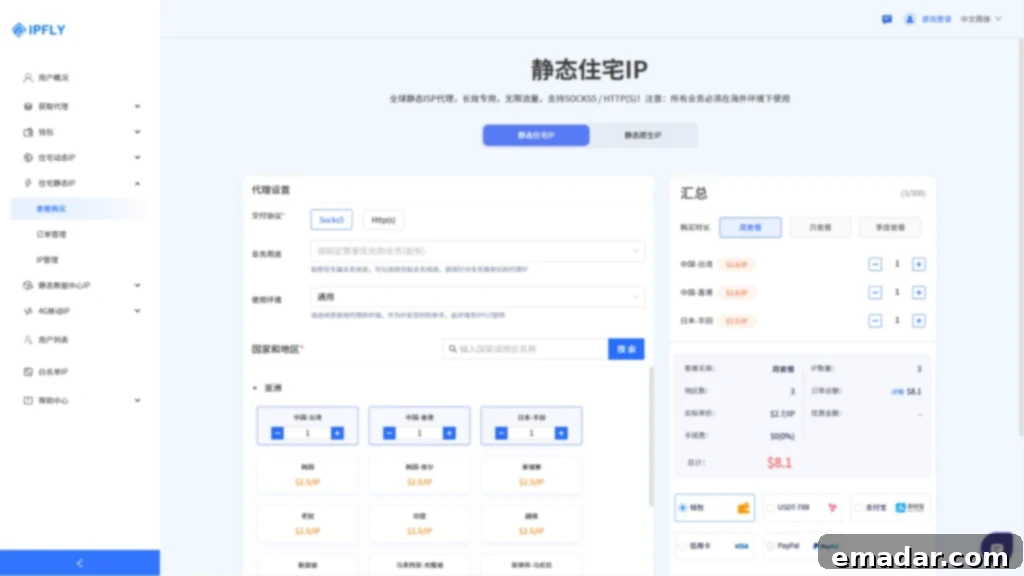
Embark on Your Journey to Uninterrupted Business with IPFLY Fixed IP
The digital landscape demands unwavering stability, ironclad security, and dependable connectivity. IPFLY’s advanced fixed IP solutions are engineered to meet and exceed these demands, providing the essential infrastructure for businesses to thrive in a globalized, data-driven world. Experience the difference that a truly dedicated and highly pure IP address can make for your operations, from seamless cross-border e-commerce to secure financial transactions and robust IoT networking.
IPFLY Fixed IP New User Exclusive Plan:
🔥 Register now and unlock triple privileges:
✅ Receive a 3-day enterprise-grade fixed IP trial package completely free.
✅ Gain access to a dedicated technical consultant for 7×24 hour one-on-one solution configuration guidance.
✅ Start your journey towards business continuity today: Visit our official website!