
Have you ever suddenly found yourself unable to access certain websites, or experienced frequent disconnections while gaming? These frustrating online issues might be closely related to your IP address. Today, we’re diving deep into the world of “Dynamic IP” – understanding what it is, how it works, and why it has become the preferred choice for millions of internet users worldwide.
What Exactly is a Dynamic IP Address?
A Dynamic IP (Internet Protocol) address is, as its name suggests, an IP address that is not fixed or permanent. Instead, it is a temporary address assigned to your device by your Internet Service Provider (ISP), such as major telecommunication companies. This means that each time your device connects or reconnects to the internet, it might be assigned a completely different IP address from a pool of available addresses maintained by your ISP. This fluid nature of dynamic IPs is a fundamental aspect of modern internet infrastructure, enabling efficient resource management and offering several benefits to end-users.
In contrast, a Static IP address remains constant and unchanged. It’s a permanent identifier assigned to a specific device or network location, which persists across connection restarts. While static IPs have their own niche applications, dynamic IPs are far more common for residential users and many businesses due to their inherent advantages and the way the internet is largely structured today.
How Does a Dynamic IP Address Work? The Mechanism Behind the Change
The operational principle of dynamic IP addresses is ingeniously simple and highly efficient. ISPs maintain a large pool of IP addresses. When your device, whether it’s a computer, smartphone, or router, attempts to connect to the internet, it sends a request to the ISP’s server. Using a protocol primarily known as DHCP (Dynamic Host Configuration Protocol), the ISP then randomly allocates an available IP address from its pool to your device. This address is leased to your device for a specific period, which can range from a few hours to several days.
Once this lease expires, or when your device disconnects from the internet for a significant period (e.g., turning off your router, or a power outage), the assigned IP address is typically reclaimed by the ISP and returned to the general pool. This makes it available for another user or device. When you reconnect, the DHCP server will assign you a new IP address, which could be the same as before, but more often than not, it will be a different one. This constant rotation and reassignment are crucial for the efficient management of a finite number of IP addresses across a vast and ever-growing number of internet-connected devices.
Why Opt for Dynamic IP? The Compelling Advantages
Choosing a dynamic IP address offers a multitude of benefits, making it an excellent choice for the vast majority of internet users, from individual households to small and medium-sized businesses. Let’s delve into the primary reasons behind its widespread adoption:
- Cost-Effectiveness: A Budget-Friendly Solution
One of the most significant advantages of dynamic IP addresses is their lower cost. ISPs incur higher operational and management expenses to maintain and provision static IP addresses, requiring dedicated infrastructure and administrative effort to ensure their permanence and stability. Consequently, static IPs are usually offered as a premium service. For the average home user or small business, dynamic IPs represent a more economical choice, as they are typically included as standard with most internet service packages without any additional fees. This cost efficiency allows users to enjoy reliable internet access without incurring unnecessary expenses. - Enhanced Security: A Shifting Digital Shield
While not an absolute security measure, the frequent change of your IP address can significantly enhance your online security posture. For potential hackers or malicious actors attempting to track your online activities, target your network with persistent attacks, or identify your physical location, a constantly changing IP address makes their task considerably more difficult. It’s like trying to hit a moving target – the IP address they might have identified for an attack could be different the next time they try. This fluidity acts as a deterrent, adding an extra layer of privacy and making it harder for unwanted surveillance or targeted cyber threats. Of course, it’s crucial to remember that dynamic IPs are part of a broader security strategy, and other measures like firewalls, strong passwords, and VPNs remain essential. - Effortless Configuration: Simplicity at Its Best
Dynamic IP addresses are synonymous with ease of use and hassle-free setup. The entire allocation process is handled automatically by your ISP using DHCP. This means there’s no need for manual configuration of complex network settings on your part. You simply connect your device to the internet, and it automatically obtains an IP address, ready for immediate use. This plug-and-play functionality makes dynamic IPs ideal for users who prefer a straightforward internet experience without delving into technical intricacies, minimizing potential errors and setup frustrations. - Optimized Resource Utilization: Maximizing the IP Address Pool
The internet relies on IP addresses to route traffic, and the number of available IPv4 addresses, in particular, is finite. Dynamic IP allocation is a brilliant solution to this scarcity. Since not every internet user is online 24/7, and most don’t require a constant, fixed IP, dynamic allocation allows ISPs to efficiently reuse addresses. When a user disconnects, their IP address is freed up and returned to the pool, becoming available for another user. This maximizes the utilization of the limited IP address space, ensuring that more users can be served with fewer total addresses, thus supporting the continuous growth of internet connectivity worldwide. - Increased Privacy and Anonymity: A Layer of Disguise
Beyond basic security, dynamic IPs contribute to a degree of increased privacy and pseudo-anonymity. As your IP address changes regularly, it becomes harder for websites, advertisers, or other entities to build a long-term profile of your online activities directly linked to a single, persistent IP address. While sophisticated tracking methods exist (like cookies and browser fingerprinting), a dynamic IP makes it more challenging for data aggregators to piece together a comprehensive, IP-based history of your browsing habits, offering a small but significant boost to your overall online privacy. - Bypassing IP-Based Restrictions: Freedom from Bans
In certain scenarios, dynamic IP addresses can be advantageous for bypassing temporary IP bans or restrictions imposed by websites or online services. Some platforms might limit downloads per IP address, or ban an IP due to suspected abusive behavior (which could sometimes be accidental or shared). By simply reconnecting to the internet and obtaining a new IP address, users can often circumvent these temporary blocks, allowing them to continue accessing content or services without significant disruption. This flexibility is particularly useful for tasks like web scraping or accessing geo-restricted content (when combined with other tools).
Why Choose IPFLY for Your Dynamic IP Needs?
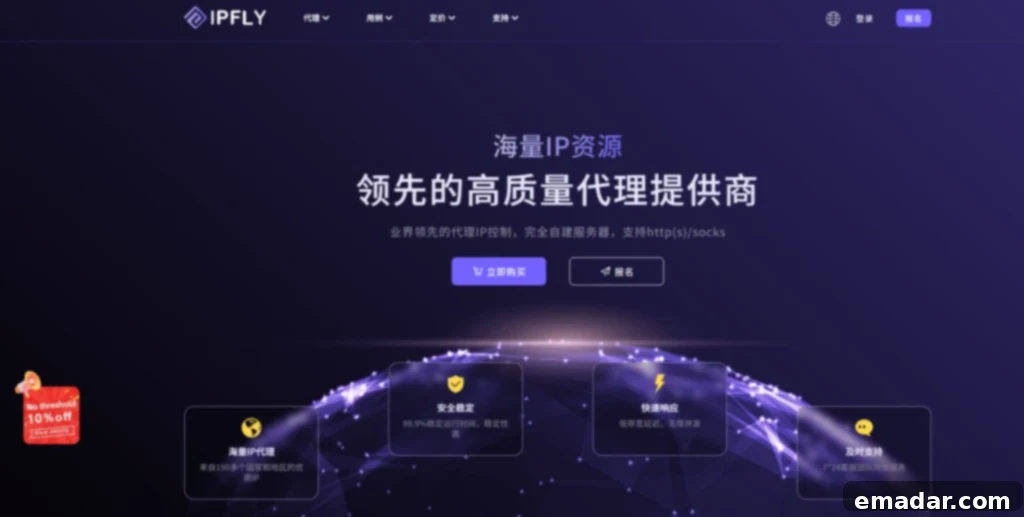
Among the myriad of platforms offering dynamic IP services, IPFLY distinguishes itself with remarkable advantages and a commitment to superior service, making it a premier choice for individuals and businesses alike seeking reliable and robust dynamic IP solutions.
Expansive Global Residential IP Resources: Unparalleled Reach and Authenticity:
IPFLY boasts an colossal network of residential IP resources spanning over 190 countries and regions worldwide. This extensive geographical coverage and the sheer volume of IPs mean that no matter your operational needs, IPFLY can provide a rich and precise selection of IP addresses. For businesses engaged in cross-border e-commerce, this translates to the ability to seamlessly browse and interact with different national e-commerce platforms, bypassing geographical restrictions to conduct market research or competitive analysis. Similarly, for those managing multi-regional social media campaigns or conducting web scraping operations, IPFLY’s residential IPs allow you to simulate genuine user visits from specific locations, significantly enhancing data accuracy and reducing the risk of detection or blocking. These residential IPs are highly valued because they originate from real internet service providers and are assigned to actual homes, making them appear authentic to target websites.
Exceptional Performance: Speed, Stability, and Reliability Redefined:
At the core of IPFLY’s offering is its robust, entirely self-built server infrastructure. This foundation underpins a high-speed and remarkably stable network architecture, ensuring that even during frequent IP switching – a common characteristic of dynamic IP usage – network connectivity remains fluid and uninterrupted. Users benefit from significantly reduced network latency and minimized packet loss, critical factors for activities demanding high responsiveness such as online gaming, streaming, or large-scale data transfers. IPFLY’s commitment to performance guarantees a smooth and efficient online experience, regardless of the intensity of your IP usage.
Cutting-Edge Technology: Intelligent IP Management and Longevity:
IPFLY leverages industry-leading proxy IP control mechanisms to intelligently allocate dynamic IP addresses. This sophisticated system dramatically lowers the risk of being detected and blocked by target websites, a common challenge in operations like web scraping or market intelligence gathering. Furthermore, IPFLY’s IP pool is constantly updated in real-time. This continuous refreshment ensures the long-term effectiveness and diversity of the IPs available, guaranteeing that you always have access to fresh, uncompromised addresses. This proactive approach to IP management makes IPFLY an unparalleled choice for acquiring dynamic IP services, providing peace of mind and sustained operational efficiency for all your online endeavors.
Dedicated Customer Support and Scalability: Your Partner in Success:
Beyond its technological prowess, IPFLY understands the importance of reliable support. They offer dedicated customer service to assist users with any queries or technical challenges, ensuring a smooth and productive experience. Moreover, their infrastructure is designed for scalability, capable of meeting the evolving demands of both individual users and large enterprises. Whether you require a handful of IPs for personal use or thousands for extensive business operations, IPFLY can adapt and deliver, making it a flexible and dependable partner in the dynamic world of online connectivity.
In summary, dynamic IP addresses offer a compelling blend of cost-effectiveness, enhanced security, user-friendliness, and efficient resource management. For the vast majority of everyday internet users, it stands as an economical, convenient, and sufficiently secure option. Dynamic IPs seamlessly cater to common online activities, including routine web browsing, streaming high-definition videos, engaging in online gaming, and much more, providing a robust and adaptable internet connection.
While specific scenarios might necessitate a static IP address – such as hosting a server from your home network, requiring stable remote access to a specific device, or needing to maintain a consistent digital footprint for specific business applications – for nearly all other users, a dynamic IP is more than adequate. Understanding the multifaceted advantages of dynamic IP addresses empowers you to make a more informed decision about your internet connectivity, allowing you to optimize your online experience and harness the full potential of your internet connection effectively.