
Have you ever encountered any of these frustrating issues while operating your YouTube channels?
- Experiencing severe content throttling and a sudden drop in views after uploading a video?
- Account inexplicably banned despite strictly adhering to YouTube’s guidelines?
- Your advertising account flagged as “high-risk” right after creation, facing constant scrutiny?
- Managing multiple accounts only to trigger frequent verifications or freezes within moments?
You might assume YouTube is overly strict, but the real culprit could be a fundamental issue: your IP address!
Today, we’re diving deep to answer a crucial question that directly impacts the fate of your YouTube presence: “Does your YouTube account truly need a proxy IP?” The answer, as you’ll discover, is not just important but absolutely critical for sustained success and avoiding severe penalties.
Understanding YouTube’s Advanced Identification Mechanisms
Behind YouTube’s massive platform lies Google, a tech giant with incredibly sophisticated and intricate systems designed to identify user behavior. These systems go far beyond simple checks, creating a comprehensive digital profile of every interaction. Understanding how YouTube identifies you is the first step in safeguarding your accounts. Here are the primary factors they analyze:
- IP Address: This is your digital fingerprint on the internet. YouTube meticulously tracks where you log in from, whether your IP address frequently changes, and if there are any unusual geographical jumps in your access patterns. Inconsistent IP usage can be a major red flag, signaling suspicious activity.
- Browser Fingerprint: Beyond just your IP, YouTube examines your browser’s unique characteristics. This includes your operating system, browser type and version, language settings, screen resolution, installed fonts, time zone, WebGL renderer, and even Canvas fingerprinting. These seemingly minor details combine to create a distinct “fingerprint” that can uniquely identify your device, even if your IP changes.
- Login Behavior: The platform closely monitors how you interact with accounts. Are multiple accounts being logged into from a single IP address? Are there sudden access attempts from unusual or non-standard geographical regions? Any deviation from what YouTube considers “normal” human behavior can trigger alarm bells.
Once YouTube’s intelligent systems detect that you are not behaving like a “local, natural user”—meaning you’re potentially masking your true identity or location, or engaging in suspicious activities—it will trigger a series of adverse actions:
- Content Throttling and Reduced Recommendations: Your videos will receive limited reach, appearing less frequently in recommendations, searches, and suggested videos, effectively stifling your channel’s growth.
- Frequent Verification Pop-ups: You’ll be constantly prompted to verify your identity through captchas, phone verifications, or email codes, disrupting your workflow and indicating a lack of trust.
- Account Flagged as High-Risk: This is a precursor to more severe penalties. High-risk accounts are under constant surveillance and are more likely to face immediate action.
- Direct Account Suspension and Ad Account Termination: The ultimate consequence – losing your entire YouTube channel and the ability to run ads, leading to a significant loss of time, effort, and potential revenue.
The undeniable conclusion is clear: YouTube places immense importance on the authenticity and consistency of your access environment, and your IP address is a pivotal component of this critical evaluation. It’s the digital equivalent of your physical address in the online world.

Is a Proxy IP the Ultimate Solution?
While a proxy IP is not a magical panacea that solves every problem, it undeniably serves as the paramount “first line of defense” against account abnormalities and detection. Its role is foundational in creating a stable, secure, and authentic online presence for your YouTube activities. Specifically, investing in dedicated residential IP addresses or native IP addresses offers a vastly superior level of protection and performance compared to generic VPNs or shared proxy pools.
Why are Dedicated Residential and Native IPs Superior?
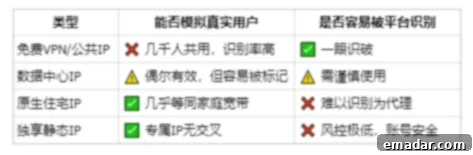
The distinction lies in how these IP types are perceived by YouTube’s sophisticated algorithms. Shared IPs, often used by basic VPNs, are frequently flagged because they route traffic from many users through a single server, making the IP look suspicious or even blacklisted due to the actions of others. Data center IPs, while dedicated, are easily identifiable as belonging to a commercial server farm, not a genuine home user, which immediately raises red flags for platforms seeking real user behavior.
Dedicated residential IPs, on the other hand, are IP addresses assigned by an Internet Service Provider (ISP) to individual households. They mimic real users accessing the internet from their homes, making them appear completely legitimate to YouTube. When you use a dedicated residential proxy, YouTube sees a stable, consistent IP associated with a specific residential location, significantly reducing the likelihood of detection.
Even more powerful are native IPs, which are residential IPs that are truly registered to an ISP within the specific country or region you are targeting. This means the IP not only looks like a residential IP but also genuinely originates from the desired geographic location, passing even the strictest geo-location checks. This level of authenticity is crucial for convincing YouTube that your activity is legitimate and localized, especially when operating channels for specific regions from another part of the world.
Critical Scenarios Where a Proxy IP is Indispensable
While the benefits of a proxy IP extend to many online activities, there are specific situations where its implementation becomes not just recommended, but absolutely essential for the survival and success of your YouTube operations:
- Cross-Border YouTube Channel Management or Content Matrix: Imagine operating a U.S.-focused YouTube channel from a location outside the United States. The platform’s geo-location algorithms will immediately detect this geographical discrepancy. By using a local, dedicated U.S. residential or native IP, you effectively bypass this issue. This allows your activities to appear genuinely originating from the target region, ensuring your content reaches the intended audience, aligns with local trends, and avoids the scrutiny associated with geo-spoofing. It’s crucial for gaining traction in specific markets and complying with regional content policies.
- Operating Multiple YouTube Accounts on a Single Device: Attempting to log into and manage several YouTube channels from the same IP address and browser fingerprint is a surefire way to trigger YouTube’s “bulk operation” detection. The platform is designed to identify and penalize such behavior, often leading to rapid account linking, flagging, or even mass suspension. The solution lies in creating isolated, distinct environments for each account. By combining a dedicated static residential proxy (like those from IPFLY) with an advanced anti-detect browser (also known as a fingerprint browser), you can assign a unique IP and a completely distinct browser fingerprint to each YouTube account. This makes each account appear as if it’s being operated by a different, legitimate user from a separate device, effectively solving the multi-account management challenge.
- YouTube Advertising Campaign Management: The requirements for IP authenticity are even more stringent when it comes to advertising on YouTube (Google Ads). Ad platforms are hyper-vigilant about fraud, click manipulation, and policy violations. Using a low-quality, shared, or data center IP can instantly trigger a “high-risk” assessment for your ad account, leading to difficult ad approvals, higher CPMs, and worst of all, immediate ad account suspension. A clean, dedicated native IP, on the other hand, builds trust with Google Ads. It ensures your campaigns are perceived as legitimate, leading to smoother ad reviews, reduced ad spend waste, and significantly lowering the risk of account penalties. For any serious advertiser, this is non-negotiable.
- Distributed Team Account Management: For larger operations or agencies with teams spread across different geographical locations, managing multiple YouTube accounts presents a unique challenge. If various team members, logging in from different physical locations but potentially sharing a few central IPs (e.g., through a corporate VPN), access the same YouTube accounts, it can confuse YouTube’s risk control systems. This inconsistent access pattern can be flagged as suspicious. Implementing a strategy where each team member or regional group uses specific, dedicated proxy IPs ensures that all account access appears consistent and localized, preventing any risk control triggers and maintaining the integrity of your channels.
Optimizing Your YouTube Operations: Correct Proxy IP Configuration
Effective YouTube management with proxies isn’t just about using *any* proxy; it’s about deploying the right tools in synergy to create an environment that mimics genuine human behavior flawlessly. Here’s how to properly configure your setup:
Essential Tool Combination:
- IP Type Selection: Dedicated Native Residential Proxies. For YouTube, compromise is not an option. You need IP addresses that belong to real ISPs and are associated with actual residential locations in your target geographical areas. Providers like IPFLY offer an extensive network of such IPs across 190+ regions (e.g., United States, United Kingdom, Singapore). These IPs are clean, untainted by past malicious activity, and appear as legitimate home users, providing the highest level of trust and anonymity.
- Indispensable Companion Tool: Anti-Detect Browser (Fingerprint Browser). While a dedicated IP hides your true location, an anti-detect browser (such as AdsPower, Multilogin, or Incogniton) tackles the browser fingerprint aspect. This specialized software allows you to create multiple, distinct browser profiles. Each profile can be configured with a unique set of browser parameters—User-Agent, Canvas fingerprint, WebGL, WebRTC, time zone, language settings, screen resolution, and even cookies—making it appear as a completely different physical device to YouTube.
- The Power Combination: Browser Profile + Stable Native IP = “Humanized” Multi-Account Operation. The true magic happens when these two components are used together. For each YouTube account you manage, you create a dedicated profile in your anti-detect browser. To this profile, you assign a unique, dedicated native residential IP address. This powerful combination means that every single YouTube account operates within its own, completely isolated digital environment. YouTube sees each account accessing from a unique IP and with a distinct browser fingerprint, eliminating any patterns that could link them together. This “humanized” approach is the gold standard for secure and scalable YouTube management, making your multi-account operations virtually indistinguishable from individual, legitimate users.
Frequently Asked Questions (Q&A) About YouTube & Proxy IPs
Q1: I’m currently using a general VPN or “magic tool.” Why should I switch to a dedicated proxy IP?
General VPNs and “magic tools” primarily focus on basic internet privacy and typically route your traffic through shared IP addresses, often from data centers. These shared IPs are highly susceptible to being detected by sophisticated platforms like YouTube because: 1) They are shared by many users, some of whom may engage in problematic activities, leading to the IP getting blacklisted; and 2) Data center IPs are easily identifiable as such, immediately signaling non-residential usage to YouTube. Dedicated residential proxy IPs, especially native ones, are clean, secure, exclusive to you, and mimic genuine home user activity. They are specifically designed for platform-specific interactions that require high levels of authenticity and are therefore far more suitable for the refined and secure operation of YouTube accounts.
Q2: Can I use a single proxy IP for multiple YouTube accounts?
We strongly advise against this practice. The optimal and safest strategy is to adhere to a strict rule: one YouTube account, one dedicated proxy IP, and one unique browser fingerprint environment. Using a single IP for multiple accounts, even if it’s a dedicated residential IP, creates an obvious linking pattern that YouTube’s algorithms can easily detect. This pattern quickly triggers “batch behavior” flags, leading to immediate scrutiny, verification requests, or even the simultaneous suspension of all linked accounts. Investing in dedicated IPs for each account, as offered by providers like IPFLY with global coverage, ensures proper isolation and significantly mitigates this risk, allowing you to manage multiple accounts securely and seamlessly across various platforms.
Q3: Are free proxy services suitable for YouTube operations?
Absolutely not. While tempting, free proxy services are notoriously unreliable, incredibly slow, and pose significant security risks. They often come from compromised sources, have extremely short lifespans, and are shared by countless users, making them instantly detectable and blacklisted by platforms like YouTube. Using a free proxy for YouTube is almost guaranteed to result in immediate account suspension, data breaches, or other severe penalties. For any serious YouTube endeavor, investing in a reputable paid proxy service is a fundamental requirement.
Q4: How should I choose a reliable proxy provider for YouTube?
When selecting a proxy provider, prioritize quality, reliability, and specific features crucial for YouTube. Look for providers that offer: 1) Dedicated Native Residential IPs: This is paramount for authenticity. 2) Wide Geographic Coverage: Ensures you can target specific regions effectively. 3) High Uptime and Stability: Consistent connectivity is vital for uninterrupted operations. 4) Responsive Customer Support: Essential for troubleshooting and guidance. 5) Ethical Practices: Choose providers that obtain IPs legally and transparently. A provider like IPFLY, specializing in global dedicated native residential IPs, would be an excellent choice for robust YouTube account protection.
In today’s highly competitive and intelligently policed digital landscape, where content saturation is high and risk control systems are increasingly sophisticated, a seemingly simple element like an IP address is often the definitive factor distinguishing a “real person” from an automated “bot” in the eyes of the platform.
If you:
- Aim to launch advertising campaigns with minimal risk and maximum approval rates.
- Are building an extensive matrix of overseas YouTube accounts to dominate various niches.
- Are committed to protecting your valuable channels from instant bans and maintaining long-term growth.
Then, a dedicated proxy IP is not merely an option; it is an indispensable guardian, a digital talisman safeguarding your entire YouTube ecosystem!
Fortify your operations, mitigate risks, and ensure the longevity of your digital assets – achieve superior IP isolation with IPFLY!