
The no-inventory e-commerce model, commonly known as dropshipping, has emerged as a compelling pathway for entrepreneurs to enter the digital retail space with minimal upfront investment. Operating on a lean “product selection, listing, and fulfillment” framework, it significantly lowers the barrier to entry. However, many aspiring dropshippers often encounter significant roadblocks, such as misaligned product choices, stringent platform risk controls, and insufficient geographical adaptation, which can severely impede operational success. At its core, dropshipping thrives on precisely identifying and matching supply with demand, thereby capitalizing on profit margins. Critical aspects like cross-border product sourcing, effective multi-store management, and maintaining operational integrity heavily rely on a stable and authentic network environment. This ensures seamless adaptation to diverse market network infrastructures, enabling businesses to overcome challenges related to regional data acquisition and consistent store environment maintenance.
Mastering the intricacies of the entire dropshipping operational workflow, coupled with adept network adaptation techniques, is not merely advantageous but absolutely crucial for achieving efficient scaling and sustained growth in this dynamic e-commerce landscape.
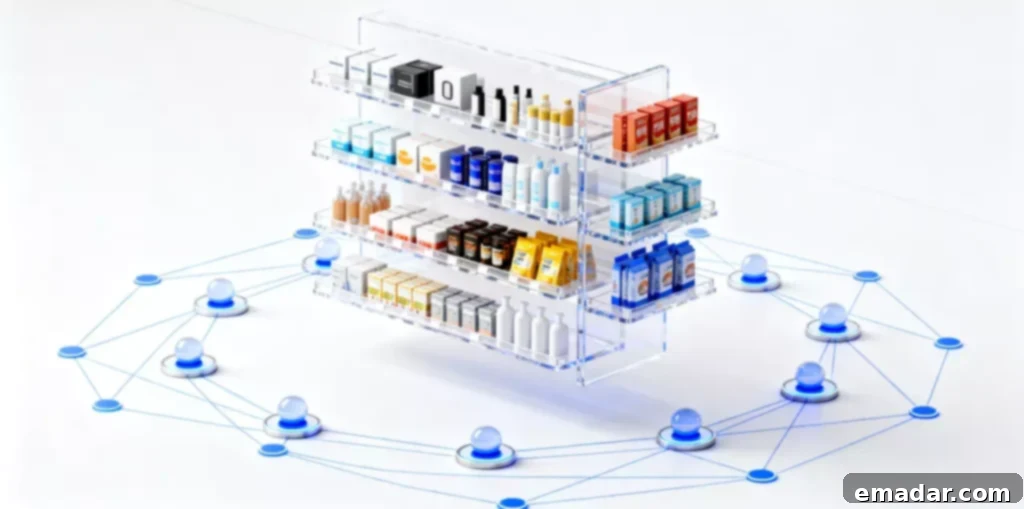
The Core Logic of Dropshipping: Shifting from “Product Moving” to Strategic Supply-Demand Matching
Dropshipping is fundamentally more sophisticated than merely “moving products” from one point to another. Its true essence lies in the precise capture of information asymmetry and gaps between supply and demand. To truly succeed and avoid the pitfalls of low-profit margin competition, dropshippers must establish a robust, closed-loop operational logic encompassing product selection, traffic generation, and efficient order fulfillment.
Product Selection Logic: Evolving from “Platform Recommendations” to Proactive “Demand Mining”
At the heart of successful dropshipping lies the ability to identify products characterized by clear market demand, moderate competitive intensity, and controllable profit margins. This requires moving beyond the common mistake of solely relying on platform hot-selling lists. First, it’s vital to uncover latent or hidden demands by meticulously analyzing long-tail search terms, scrutinizing user reviews for pain points, and identifying unmet needs within the target market. Second, assessing the intensity of competition is paramount. Focus on products with moderate sales volumes but relatively few existing reviews, as this strategy helps to avoid direct confrontation with established, top-tier sellers who often dominate saturated niches. Third, a thorough calculation of profit margins is indispensable. Ensure that after deducting platform commissions, shipping costs, and any other associated fees, the net profit margin is consistently above 15%. For products with inherently lower profit margins, achieving profitability typically necessitates operating at a significantly higher volume.
Traffic Logic: Harnessing Platform Algorithms for Organic Growth
Unlike traditional retail, dropshipping heavily relies on platform-generated traffic rather than an independent customer base. Therefore, aligning with and optimizing for platform algorithm rules is critical for visibility and sales. Firstly, meticulously optimize product titles by incorporating a strategic combination of core keywords, descriptive attribute words, and relevant scenario-based terms to significantly enhance search exposure. Secondly, enhance product descriptions and listings with comprehensive details that highlight differentiated selling points, such as unique dimensions, premium materials, or specific use-case scenarios. This not only informs the customer but also reduces the bounce rate by providing clearer expectations. Thirdly, consistently maintain and improve your store’s fundamental platform weight. This involves employing reasonable pricing strategies, offering timely and responsive customer service, and actively working to elevate your overall store rating, which ultimately encourages platforms to direct more organic traffic to your listings.
Fulfillment Logic: Streamlining Processes to Minimize Operational Overheads
Fulfillment represents the quintessential “asset-light” aspect of the dropshipping model, necessitating the establishment of highly efficient and seamlessly integrated mechanisms. Firstly, meticulously select reliable and trustworthy supplier channels that can consistently guarantee stable product quality and exceptionally fast shipping times—ideally within 48 hours of an order being placed. Secondly, implement robust systems for real-time inventory synchronization to prevent overselling, which can lead to customer dissatisfaction and negative reviews. Utilizing specialized tools that connect directly with supplier inventories is highly recommended for this purpose. Thirdly, optimize the after-sales process by clearly defining and documenting the division of responsibilities with your suppliers. This proactive approach significantly reduces the time and resources you personally need to expend on handling returns, refunds, and customer disputes.
Key Operational Links: Detailed Implementation from Product Selection to Store Maintenance
The overall operational effectiveness of a dropshipping business is profoundly influenced by meticulous attention to detail. Every single stage of the process must be executed with precision, efficiency, and strict adherence to compliance standards. Neglecting these details through careless operations can lead to a significant decline in your store’s platform weighting and overall performance.
Product Selection Research: Precisely Capturing Market Demand
Thorough product selection research forms the foundational cornerstone of dropshipping success. This critical process should be systematically completed in three distinct steps: comprehensive data collection, insightful demand analysis, and rigorous feasibility validation.
Data collection must intently focus on acquiring authentic, real-time data from the specific target market. This includes vital metrics such as product search volumes, competitive pricing ranges, frequently recurring keywords in customer reviews, and prevailing sales trends of competing products. Accessing and accurately gathering this granular data often requires an authentic network environment geographically aligned with the target region. This is where IPFLY’s static residential IPs become invaluable. They provide a stable, genuine, and geographically precise network environment, ensuring that the data captured accurately reflects local market demands and preferences. This eliminates the risk of data distortion that can arise from IP location discrepancies, which can otherwise lead to flawed market insights and poor product choices.
Demand analysis necessitates a structured approach to categorizing and interpreting collected user pain points. These can typically be segmented into “high-frequency essential needs,” “improvement-oriented demands,” and “highly personalized desires.” Prioritizing products that address high-frequency essential needs often yields the most immediate and substantial market traction. Finally, feasibility validation requires confirming two critical aspects: first, whether reliable supplier channels can consistently provide the chosen products, meeting stringent criteria for price, quality, and timely shipping; and second, whether the target platform offers promotional support or imposes any specific restrictions on the sale of such product categories.
Store Setup and Basic Operations: Rapidly Building Trust and Credibility
For a new dropshipping store, the initial 1-2 weeks are crucial for completing fundamental setup and initiating operations. The core objectives during this period are to strictly adhere to platform guidelines and to swiftly establish a foundation of trust with potential customers.
Optimizing store information is key to immediate credibility. Ensure your store avatar, name, and branding are highly relevant to your primary product category (e.g., “Elite Home Essentials” or “Tech Gadget Hub”). The store’s description should clearly articulate the range of products offered and highlight key service advantages (e.g., “Specializing in premium, affordable home goods with 48-hour dispatch”). When it comes to product listing standards, initially upload a manageable quantity—around 20-30 products per store is advisable. This approach helps avoid being flagged as a “bulk listing account” by platform algorithms. Crucially, each product’s title, detailed description, and main images must be unique and differentiated; resist the urge to directly copy materials from your supplier. Instead, invest time in optimizing and slightly modifying them to stand out. Lastly, activating initial traffic is essential. After listing, focus on optimizing keywords to improve organic search visibility, proactively respond to all customer inquiries (aiming for a response time under 10 minutes), and diligently work to accumulate positive initial reviews. Target a 100% positive review rate for your first 10 orders to quickly build social proof and platform trust.
Multi-Store Management: The Strategic Imperative for Scaled Growth
To significantly enhance revenue and scale a dropshipping operation, venturing into multi-store management is often an inevitable and highly effective strategy. However, this approach introduces two critical challenges that must be expertly addressed: maintaining robust “environment isolation” and achieving an optimal “efficiency balance.”
The core principle of environment isolation is to ensure “one store, one unique environment.” This mandates that each individual store operates with its own independent device, a distinct user account, and a unique network IP address. Failing to maintain this strict isolation can lead to environment correlation, which platforms frequently detect and penalize with severe consequences such as traffic limitations, reduced visibility, or even permanent account suspension. When selecting network IPs, residential IPs are highly preferred due to their authentic, consumer-like properties, which significantly increase the likelihood of passing stringent platform risk control checks. IPFLY’s residential proxy IPs are specifically designed to provide an independent, unlinked network environment for each store, offering flexible geographical adaptation that can perfectly match the target markets of different stores, thereby maximizing operational security and efficacy. Efficiency improvement in a multi-store setup can be achieved through the implementation of highly standardized processes. This involves developing uniform product selection criteria, standardized listing templates, and consistent customer service scripts, all of which substantially reduce repetitive manual labor. Furthermore, leveraging lightweight, integrated tools to simultaneously manage orders and inventory across multiple stores is crucial for minimizing human error and boosting overall operational throughput.
Network Environment Adaptation: The Indispensable “Invisible Support” for Dropshipping
The network environment often remains an overlooked yet critically important element in the success of dropshipping, particularly in cross-border operations and multi-store management scenarios. The appropriate adaptation of your network directly impacts the accuracy of crucial data and the fundamental security of your various store fronts.
Product Selection Research Phase: Achieving Geographical Precision
Effective product selection mandates the acquisition of highly localized data from the specific target market. Therefore, it is absolutely essential that your network IP’s geographical location precisely matches that of your intended market. For instance, if you are targeting the European or American markets, you must utilize residential IPs from the corresponding countries. Similarly, for Southeast Asian markets, matching IPs to key cities within that region is crucial. A mismatch between your IP’s geographical location and your target market can lead to significantly distorted product data. This might manifest as incorrect pricing (displaying non-local prices), inaccurate sales volumes (showing aggregated data across regions rather than local trends), or skewed competitor insights. IPFLY’s residential proxy IPs offer extensive geographical coverage, boasting a robust and ample capacity of city-level IP pools in core markets, which allows for precise matching of the geographical requirements essential for accurate product selection research.
Store Operations Phase: Ensuring Environment Stability
Sustained, long-term store operation necessitates an exceptionally stable network environment to prevent anomalies or flags that could arise from IP fluctuations. The IP address used to log into and manage a store should ideally remain fixed and consistent over extended periods (static IPs are highly recommended for this purpose). Frequent changes in the login IP can trigger “unusual login location” security alerts from platforms, potentially leading to temporary account restrictions or even suspensions. Furthermore, all operational behaviors should align with the typical usage patterns of the IP’s geographical region. For example, managing a store targeting European or American markets should ideally involve logging in and performing operations during local business hours, thereby simulating the behavior of a genuine, local seller. This consistent digital footprint is vital for maintaining platform trust and avoiding scrutiny.
Special Adaptation for Cross-Border Scenarios: Cultivating Local Trust
For cross-border dropshipping ventures, strategically leveraging the network environment is paramount for reinforcing local trustworthiness and authenticity. The IP address used must be a native residential IP from the target market, possessing a legitimate local ISP identifier. This ensures that your network fingerprint is indistinguishable from that of a genuine local seller. Concurrently, device parameters must be synchronized to match the local environment; for instance, setting the system language to the local language and the timezone to the local time. Such meticulous environmental consistency prevents contradictions that could be detected by platform algorithms. This comprehensive local adaptation significantly enhances the store’s regional weighting, which can result in products appearing higher in local search results, thereby indirectly boosting conversion rates and overall sales performance.
Lightweight Operations Techniques: Cost-Effective Strategies for Enhanced Performance
Dropshipping does not necessitate complex and hefty investments. By strategically employing a few lightweight yet impactful techniques, even small to medium-sized operators can significantly enhance their operational efficiency and profitability, facilitating rapid implementation and tangible results.
Product Selection “Off-Season Layout” Technique
A highly effective strategy is to proactively plan and list off-season products 1-2 months in advance, allowing you to capture early traffic and gain a significant competitive edge. For example, begin listing heating equipment towards the end of summer, or focus on sun protection products as winter draws to a close. Off-season products typically face lower competition, and suppliers often offer more advantageous pricing. This allows you to implement a lower-price strategy to rapidly accumulate sales and build initial store authority. When the peak season for these products arrives, your store, bolstered by its accumulated historical weighting and positive reviews, will achieve higher visibility and greater exposure, leading to increased sales volumes.
Customer Service “Efficient Response” Technique
To deliver exceptional customer service with minimal effort, develop a comprehensive “frequently asked questions (FAQ) script library.” This should cover common inquiries regarding product dimensions, materials, shipping timelines, and after-sales policies. Customer service representatives can then quickly copy, adapt, and send pre-written responses, aiming to keep response times consistently under 5 minutes. Additionally, implement an automated greeting and acknowledgment system. When a customer initiates contact, an immediate auto-reply such as “Hello! We are looking into your query and will respond within 10 minutes” can significantly reduce customer waiting anxiety and improve satisfaction even before a human agent intervenes.
Inventory “Dynamic Monitoring” Technique
Dedicate a brief 10-minute slot each day to review the inventory levels and pricing of your core products. Implement an inventory alert system (e.g., receive notifications when stock levels drop below 5 units) to promptly delist out-of-stock items or explore alternative supply channels. On a weekly basis, conduct a thorough comparison between your supplier’s current pricing and your product’s selling price on the platform. If a supplier price increase causes your projected profit margin to fall below 10%, take immediate action either by adjusting the selling price to maintain profitability or by temporarily delisting the product until more favorable conditions arise.
The fundamental competitive advantage in dropshipping is built upon a synergistic blend of “precise product selection, exceptional operational efficiency, and unwavering environmental compliance,” rather than a simplistic reliance on mere information arbitrage. For aspiring and current practitioners, the focus should not be on chasing overly complex or obscure operational tricks. Instead, success hinges on mastering the core principles of “supply-demand matching logic, adherence to fundamental operational standards, and intelligent network adaptation methods.” By consistently applying these essential strategies, dropshippers can achieve stable operations and sustainable revenue growth through a genuinely asset-light business model.
Curious to learn more? Register on the IPFLY official website to discover detailed product information and ensure your network experience is entirely free from slowness, blockages, or restrictions.