
In the evolving landscape of online data acquisition and secure browsing, proxies have become indispensable tools. Whether you’re managing multiple social media accounts, conducting large-scale web scraping, or ensuring anonymous access, the right proxy setup is critical for success. When you invest in a proxy plan, your provider typically offers two primary methods for connecting your applications or browsers to their service: a direct list of individual IP addresses or a single, smart gateway hostname. While both serve the fundamental purpose of routing your internet traffic through an intermediary server, they operate on distinct principles and are designed for vastly different use cases. Understanding the profound distinctions between these two systems is not just beneficial, it’s absolutely essential for making an informed decision that aligns with your project’s specific requirements and long-term goals.
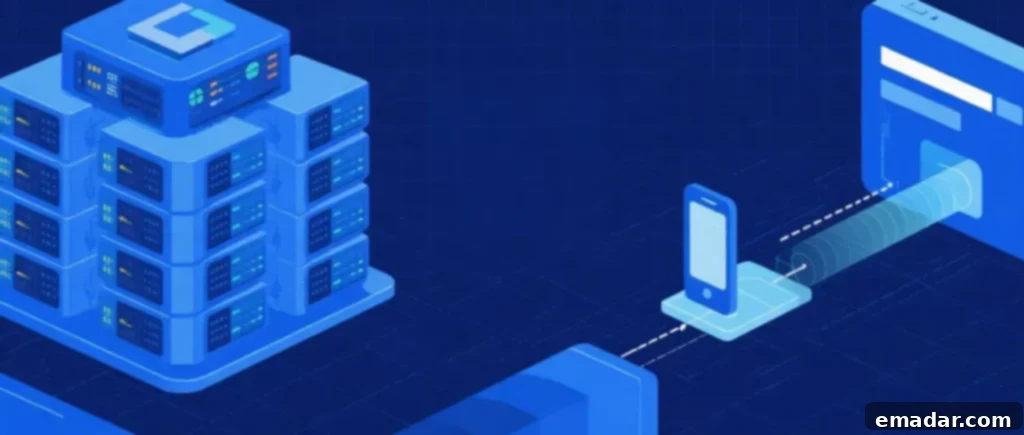
Direct IP vs. Backconnect Proxies: Choosing the Right Solution for Your Project
The choice between a direct IP list and a gateway hostname often dictates the efficiency, stability, and scalability of your operations. Let’s delve deeper into each method to uncover their mechanics, ideal applications, and strategic advantages.
The Traditional Approach: The Direct IP List
The direct IP list represents the classic, foundational method of proxy delivery. When you opt for this system, your provider furnishes you with an explicit list of individual proxy servers. Each entry in this list is a distinct, static IP address, complete with its unique port number, allowing for precise control over your network identity.
What a Direct IP List Looks Like:
A typical direct IP list provides you with a series of entries, similar to this:
192.168.1.1:8000
192.168.1.2:8001
192.168.1.3:8002
…and so on, potentially extending to hundreds or thousands of unique entries, depending on your proxy package.
How Direct IP Proxies Work:
With a direct IP list, you are granted complete autonomy over the IP rotation logic. This means that your own custom software, script, or application is solely responsible for selecting an IP address from the provided list, utilizing it for one or more specific requests, and then intelligently switching to another IP address from the list when needed. This method demands a higher degree of technical configuration and active management from the user’s end, as you are essentially building and maintaining your own rotation mechanism.
When to Use Direct IP Proxies:
This traditional proxy method is exceptionally well-suited for tasks that unequivocally demand a stable, static IP address for an extended duration. The primary advantage here is consistency. For example, if you are diligently managing a single social media profile, an e-commerce vendor account, or even specific gaming accounts, it’s crucial that all your activity originates from the same IP address. This consistency mimics the behavior of a genuine, consistent user, thereby reducing the likelihood of detection, account flags, or blocks. Other ideal scenarios include accessing geo-restricted content from a fixed location, maintaining dedicated server access, or conducting long-term SEO monitoring for specific keywords in a particular region.
Direct IPs offer predictability, which is invaluable when trust and continuity are paramount. They are perfect for tasks where an IP change could trigger security alerts or require re-authentication.
The Modern Approach: The Gateway Hostname (Backconnect Proxy)
The gateway hostname, universally known as a “backconnect proxy,” represents a more advanced and powerful system meticulously engineered for unparalleled scale, convenience, and automation. Unlike the static, cumbersome list of individual IPs, with a backconnect proxy, you receive a single, memorable address that functions as an intelligent, dynamic entry point to an enormous, constantly refreshing pool of IP addresses.
What a Gateway Hostname Looks Like:
Instead of a long list, you’ll simply connect to a single hostname and port:
gw.ipfly.com:8080
This single entry abstracts away the immense complexity of managing a vast IP pool.
How Backconnect Proxies Work (The Taxi Analogy):
To grasp the fundamental difference, consider this analogy: Imagine a direct IP list as having the individual phone numbers of 1,000 different taxi drivers. If you need a ride, you must manually select a driver from your list, call them, and coordinate your trip. If that driver is busy or the number doesn’t work, you must then manually pick another one from your list and repeat the process. You are entirely responsible for managing this complex coordination.
Conversely, a gateway hostname is analogous to having one, single phone number for a central taxi dispatch center. You dial the same dispatch number every single time you need a ride. The sophisticated dispatch system, operating entirely in the background, automatically connects you to the next available driver from their vast fleet. You don’t know (or need to know) which specific driver will pick you up; you only know that a driver will arrive. All the intricate logistics of driver selection, availability, and rotation are handled seamlessly and automatically for you by the dispatch system. In the world of proxies, this means the provider’s infrastructure manages the complex IP rotation and allocation, ensuring your requests are always routed through fresh, clean IPs without any manual intervention on your part.
When to Use Gateway Hostnames (Backconnect Proxies):
This method is demonstrably superior and often indispensable for any project that necessitates high-volume, automatic IP rotation. The automated nature and access to a massive IP pool make it ideal for demanding tasks such as large-scale web scraping, where you need to extract vast amounts of data from numerous websites without encountering IP bans or rate limits. Other critical applications include comprehensive market research, meticulous ad verification, competitive intelligence gathering, cybersecurity analysis, and time-sensitive operations like “sneaker copping” or limited-edition product acquisition, where obtaining a new, clean IP address for nearly every single request dramatically increases your success rate and anonymity.
Backconnect proxies reduce development overhead, simplify your code, and significantly enhance the efficiency and reliability of any large-scale automation project by abstracting away the complexities of IP management.
The IPFLY Advantage: The Power of Choice and Unmatched Simplicity
A truly versatile and customer-centric proxy provider understands that the diverse landscape of online tasks demands a diverse set of tools. This fundamental understanding is precisely why a leading provider like IPFLY commits to offering the flexibility of both essential connection methods. This ensures that every user, regardless of their project’s complexity or scale, has access to the optimal solution for achieving unparalleled success.
For users who require a dedicated, unchanging IP for long-term account management, maintaining brand reputation, or ensuring consistent regional access, IPFLY expertly provides premium static residential proxies. These proxies come with direct IP addresses, guaranteeing the stability and trust needed for sensitive and ongoing operations. With a static residential IP, your online presence appears consistent and legitimate, which is crucial for preventing account suspensions and maintaining access to specific platforms.
However, for the vast majority of modern data collection, web scraping, and automation tasks that demand agility and scale, IPFLY’s backconnect gateway host stands out as the more powerful, efficient, and exceptionally convenient choice. By directing all your requests to a single, easily configurable hostname and port, you gain immediate, seamless access to IPFLY’s extensive and dynamic pool of millions of high-quality residential IP addresses. The sophisticated IPFLY system takes over all the complex IP rotation automatically on our end, intelligently cycling through IPs to ensure that virtually every request you make goes out through a new, clean, and unflagged IP address. This not only dramatically simplifies your codebase and reduces development time but also significantly enhances the efficiency, reliability, and anonymity of any large-scale project, allowing you to focus on your core objectives rather than proxy management.
Head-to-Head Comparison: Direct IP List vs. Gateway Hostname
To further illustrate the key differences and help you decide, here’s a direct comparison of the fundamental features and ideal use cases for each proxy type:
| Feature | Direct IP List | Gateway Hostname (Backconnect) |
| Ease of Use | More Complex (User manages IP rotation and selection manually) | Extremely Simple (Provider manages all IP rotation and allocation automatically) |
| Best for IP Rotation? | Generally No (Requires significant user effort for effective rotation) | Yes (Ideal for seamless, high-volume, automatic rotation) |
| Best for a Static IP? | Yes (Ideal for tasks requiring a consistent, unchanging IP) | No (Designed to rotate IPs with every or frequent requests) |
| Primary Use Case | Stable, long-term account management; specific geo-targeting with fixed IP | Large-scale web scraping, market research, ad verification, high-volume automation, anonymous browsing |
| Technical Overhead | Higher (Requires custom scripting for IP management) | Lower (Set it once, and the system handles the rest) |
| Scalability | Limited (Scaling means managing more individual IPs) | Excellent (Connects to a vast, dynamic IP pool effortlessly) |
As the table clearly indicates, the optimal choice hinges on your specific operational needs. While direct IPs offer granular control and stability for specific tasks, backconnect proxies excel in scenarios demanding high dynamism and minimal management overhead.
Are you new to the world of proxies and feeling overwhelmed by the strategies or service options available? There’s no need to stress! Your first step should be to visit IPFLY.net for comprehensive basic service information and to explore our robust offerings. For even deeper insights and community support, we highly recommend joining the vibrant IPFLY Telegram community. Here, you’ll find an abundance of beginner guides, frequently asked questions (FAQs), and direct support from fellow users and experts, all designed to help you integrate proxies correctly and start your projects with absolute ease!

Which One Should You Choose for Your Project’s Success?
Ultimately, the decision between utilizing a direct IP list and a gateway hostname is a profoundly strategic one, entirely dictated by your project’s overarching goals and operational demands. There isn’t a universally “better” option; rather, there is only the right tool for the job at hand.
If your project’s success relies on a stable, unchanging IP address for single, long-term tasks—such as consistent account management, maintaining digital identity, or dedicated access to specific platforms—then a direct IP proxy is undoubtedly the precise and reliable tool you need. Its predictability and dedicated nature provide the foundation for trust and continuity.
Conversely, if your project demands immense scale, blistering speed, and seamless, automatic IP rotation to circumvent detection and access vast amounts of public data—think large-scale web scraping, competitive analysis, or automated market research—then the modern gateway host system is not only simpler to implement but also significantly more efficient and vastly more powerful. It empowers you to perform high-volume operations without the manual overhead of IP management.
By making the astute decision to partner with a top-tier provider like IPFLY, which offers a robust suite of both direct IP and backconnect proxy options, you gain the unparalleled flexibility to select the perfect connection method tailored for any task. This strategic choice ensures that all your projects are not just executed, but are fundamentally built for enduring success in today’s dynamic online environment.