
“Are there free proxy IPs?” This is a common question from people new to web scraping, cross-border e-commerce, or international operations. A quick search returns hundreds of “free proxy IP” sites claiming thousands of fresh IPs every day. But can you really trust them? Can free proxies meet real business needs, and what hidden risks do they pose? This article explains free proxy IPs from principles and use cases to risks and alternatives, helping you make an informed decision.
1. What is an IP proxy and why use one?
1.1 Basic concept of proxy IP
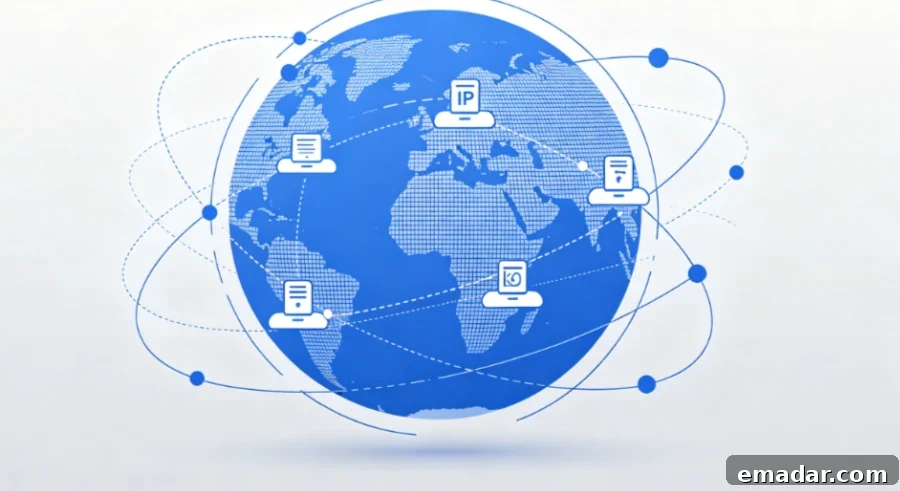
An IP proxy acts as an intermediary in the network. When you access a target site through a proxy, the site sees the proxy server’s IP instead of your real IP. It’s like asking a friend to pick up a package: the courier only sees your friend, not the actual recipient.
1.2 Common scenarios for using proxy IPs
- Web scraping: Avoiding bans caused by frequent requests from the same IP.
- Cross-border e-commerce: Managing multiple store accounts while reducing account association risk.
- Ad verification: Viewing ad placements from different regions.
- Privacy protection: Hiding your real IP to prevent tracking.
- Access acceleration: Using geographically closer nodes to reduce latency.
2. Where do free proxies come from and how do they work?
2.1 Main sources of free proxies
| Source | Description | Quality |
| Public proxy lists | Scanned open proxy ports (e.g., 3128, 8080) | Very low; many are dead |
| User-shared proxies | IPs shared voluntarily by users of certain “accelerator” apps | Low and unstable |
| Compromised machines | Servers or home routers hijacked by malware | High risk; not recommended |
2.2 How free proxies operate
Free proxies often use transparent or anonymous proxy modes. Providers scan the internet for devices with open proxy ports (3128, 8080, 1080), collect these addresses, and list them for public use. These endpoints can be misconfigured routers, outdated servers, or compromised machines.
2.3 Fatal flaws of free proxy pools
- Very short lifespan: Public proxies often live only minutes to hours.
- Unreliable quality: Many IPs are slow, high-latency, or entirely unreachable.
- Unknown provenance: You cannot know who controls the server or who may be monitoring traffic.
3. Three major risks of free proxy IPs
3.1 Privacy leakage
This is the most serious issue. Operators of free proxies can intercept any data passing through—login credentials, cookies, API keys, and personal information. With HTTP proxies, data is in plaintext; even with HTTPS, the proxy can see which sites you visit.
3.2 Poor stability and availability
- Many IPs are already dead; finding one working IP out of ten is common.
- Speeds are often very slow, with seconds or tens of seconds of latency.
- Connections can drop anytime, making free proxies unusable for anything requiring stability.
- Public proxy pools are frequently blacklisted by target sites.
3.3 Security and legal risks
- Malicious injection: Servers may alter content, inject ads, or add malicious code.
- Account linkage: Multiple users sharing one proxy IP increases the chance of account association and bans.
- Legal exposure: If the proxy uses a compromised host, your activity could be traced or construed as malicious.
4. Free vs. paid proxies: key differences
| Comparison | Free proxy IPs | Paid proxy IPs |
| IP source | Public scans, unknown origins | Self-built servers or vetted providers, global coverage |
| IP types | Mostly data-center transparent proxies | Residential static, residential rotating, data-center options |
| Availability | Often below 20% | Typically very high (near 99% with reputable providers) |
| Speed and latency | Often slow and prone to timeouts | Low latency, optimized routing |
| Stability | Unreliable and short-lived | 24/7 stable service |
| Security | No guarantees; possible monitoring or tampering | Encrypted channels, IP vetting |
| Concurrency support | Poor; many users share the same IP | High concurrency, configurable limits |
| Suitable scenarios | Learning and basic testing only | Scraping, e-commerce, ad verification, enterprise use |
5. When can free proxies be used?
Despite high risk and low quality, free proxies can be acceptable in limited, non-sensitive scenarios:
- Learning and testing: Trying out scraping code or verifying logic in a demo environment.
- Bypassing simple region restrictions: Viewing region-limited public content without logging in.
- Temporary anonymous browsing: Visiting public pages that contain no personal or sensitive data.
Never use free proxies for:
- Logging into any account (email, social media, e-commerce backends).
- Submitting forms or making payments.
- Managing cross-border e-commerce stores.
- Accessing or collecting any sensitive or corporate data.
6. How to choose a paid proxy service
When your business requires stability, security, and reliability, paid proxies are the only sensible choice. A professional proxy provider should offer:
- Extensive IP resources: A large, well-maintained IP pool with global coverage.
- Multiple proxy types: Residential static, residential rotating, and data-center proxies to fit different needs.
- Self-built infrastructure: Own server clusters rather than unstable third-party nodes.
- Smart selection and filtering: Algorithms and multi-layer screening to ensure high success rates.
- High availability: Near-100% usable IPs and 24/7 uptime.
- Full protocol support: HTTP/HTTPS/SOCKS5 for compatibility with scrapers, browsers, and apps.
Reliable paid services provide predictable performance, security measures, and support that free lists cannot match. For critical business tasks—data collection, account management, brand protection—paid proxies are an investment in stability and compliance.
Free proxy IPs are like keys found on the street: they might sometimes work, but you never know if they’ll fail at a crucial moment or what risks they hide. For learning and very basic testing, free proxies can help you get started. For any real business use, the privacy, reliability, and legal risks far outweigh the cost savings.
Choosing a proxy provider is ultimately about trust. Opt for transparent, stable, and secure infrastructure rather than an opaque, unreliable resource. A reputable paid provider will give you the control and safeguards necessary for professional applications.