
In cross-border e-commerce and overseas social media management, Line is often underestimated yet widely used. In markets like Japan, Thailand, and Taiwan, Line serves not only as an everyday messaging app but also as an official brand channel, customer service platform, and sometimes even a transaction endpoint.
For operators based in mainland China or other regions where Line isn’t widely used, registering an account can present significant hurdles: SMS codes that never arrive, accounts mysteriously blocked after registration, or multiple accounts repeatedly linked and removed. These issues rarely stem from phone numbers alone; the network identity behind the registration plays a critical role.
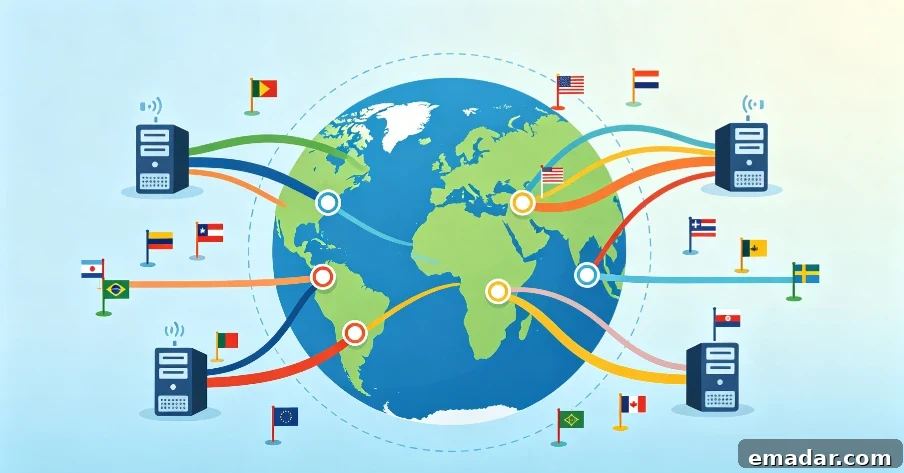
Basic Line Registration Flow and Common Obstacles
The official Line registration process is straightforward: download the app or open the desktop client, enter your phone number, receive an SMS verification code, and set up a nickname and avatar. For cross-border operators, however, the process often stalls at the initial verification step.
Phone Number Restrictions and SMS Delivery Problems
Line enforces geographic rules for phone numbers. Although services across regions are interoperable, the number used for registration must come from a country or region supported by Line and usually should match the target market. For example, managing a Line official account for Japan is best done using a Japanese mobile number; otherwise, features may be limited and the account can be flagged as suspicious.
Obtaining overseas phone numbers is not always easy. Virtual numbers and one-time SMS services are frequently blacklisted by Line, preventing verification codes from being delivered. Even if registration succeeds with such a number, service providers may later reclaim or recycle those numbers, leaving the Line account at risk of losing access permanently.
The Invisible Gatekeeper: Network Environment
Many users try countless phone numbers and still fail to register because Line’s risk controls operate at a deeper level. Line logs the IP address and its geographic origin during registration. If a registration request uses a Japanese phone number but comes from a non-Japanese IP or an IP associated with data centers, Line’s risk engine raises suspicion, which can block registration or demand additional verification. That IP footprint remains tied to the account throughout its lifecycle and becomes key evidence in future risk assessments.
Why Network Environment Matters for Line Accounts
Line’s risk model evaluates whether an account behaves like a local, ordinary user. The IP address—essentially a digital address—is one of the first attributes analyzed.
How the Platform Identifies Abnormal Users
When Line’s servers receive a registration or login request, they profile the source IP across multiple dimensions: Is it a residential ISP or a known data center? Has that IP been used to register or log into other Line accounts recently? Does the IP’s region match the phone number’s country? Any mismatch triggers the platform’s risk workflows. This explains why many operators report accounts disappearing “for no reason.”
The Risk of Account Linking When Managing Multiple Accounts
Cross-border teams often manage multiple Line accounts for different brands or markets. If those accounts all log in from the same IP or contiguous IP range, Line’s linking algorithms may treat them as controlled by the same person. Should one account violate policy or be flagged, the rest of the account matrix can be affected. For sellers who rely on Line for customer contact, this kind of collateral damage can be devastating.
Using Residential IPs to Build a Secure Foundation for Line Registration and Operation
The solution isn’t only about phone numbers; it’s about giving each Line account a distinct, stable, and believable network identity. That requires isolation at the IP level.
Static Residential Proxies: A Permanent “Home” for Each Account
For Line accounts that require long-term, stable access without frequent verifications, static residential proxies are often the most effective approach. These proxies provide real home broadband IPs that appear as ordinary user addresses and can be assigned long-term to a single account. During registration, use a static residential IP that matches the phone number’s region and complete the process from that same network environment. That proxy becomes the account’s regular digital residence in Line’s view.
Daily logins, message handling, and official account administration should continue through the same static residential gateway. Because each IP looks like a genuine residential connection and remains unchanged, the account avoids unnecessary verification triggers. To operate multiple accounts, assign a different static residential IP to each account to ensure complete isolation at the network level without needing separate physical devices or broadband lines.
Keep Registration and Account Maintenance on the Same IP
An often-overlooked detail is consistency: the IP used for registration should match the IP used for ongoing account activity. If an account is registered with one residential IP and later frequently accessed from other networks, Line will detect IP changes and may treat the account as suspicious. Long-lived static residential proxies naturally support this consistency. Teams can share the same proxy configuration among operators so that account behavior stays uniform and predictable.
Dynamic Residential Proxies for Market Research and Content Monitoring
Beyond daily account operations, cross-border teams frequently need to research public Line content—view official accounts in various regions, check sticker store trends, or gather public feedback. Performing high-volume browsing from a primary account IP risks triggering rate limits or affecting the account’s reputation.
Dynamic residential proxies are designed for this use case. They provide a pool of genuine residential IPs that rotate automatically, letting each request appear as coming from a different ordinary user. Using dynamic residential proxies to collect and analyze public Line content prevents impacting operational accounts and reduces the chance of being rate-limited or blocked.
Below is a simplified code example illustrating the basic request approach using a dynamic residential proxy endpoint (for configuration illustration only):
Python
import requests

proxies = {
    "http": "http://[email protected]:10001",
    "https": "http://[email protected]:10001"
}

url = "https://store.line.me/home/zh-Hant"
headers = {"User-Agent": "Mozilla/5.0 (Windows NT 10.0; Win64; x64)"}
response = requests.get(url, headers=headers, proxies=proxies, timeout=10)
print(response.status_code)
In practice, combine such requests with compliant frequency control and scraping strategies. The crucial prerequisite for stable operation is that the network exit points present as real residential locations.
Network Needs for Common Line Tasks
To make selection more straightforward, the table below summarizes typical Line tasks and the recommended type of network resource for each:
| Task | Network Behavior | Recommended IP Resource | Reason |
| Line account registration | One-time but must match phone region | Static residential proxy | Ensures a verifiable, non-overlapping registration IP |
| Daily login and customer support | Long-term, stable identity | Static residential proxy | Maintain a consistent IP to build trust and avoid verifications |
| Managing multiple accounts | Each account requires independent IP | Static residential proxy | Prevents cross-account linking at the IP layer |
| Official account backend operations | Fixed exit, high security | Static residential proxy | Protects brand accounts with a stable, trusted network |
| Sticker/content trend research | High-volume browsing, anti-blocking | Dynamic residential proxy | Auto-rotating IPs mimic organic visits |
| Competitor account analysis | Switching between regions to view content | Dynamic residential proxy | Provides authentic regional perspectives |
Treat Line Account Security as Network Identity, Not Luck
Line registration may look like a simple SMS verification step, but its risk systems evaluate IP profiles, behavior patterns, and account linking. For individual users, these checks may be a minor annoyance; for cross-border sellers who use Line to engage customers and promote brands, losing an account can mean severed customer relationships and lost revenue.
Rather than repeatedly swapping phone numbers and devices, focus on the foundation: give each Line account a stable, independent, and authentic network identity. Use static residential proxies to ensure consistent registration and login behavior, and employ dynamic residential proxies to broaden market research safely. When the network environment stops being a variable, Line can fully realize its value as a bridge to overseas customers.

Lay a stable foundation for every Line account with authentic residential IPs.
Residential static and dynamic proxy solutions have helped many cross-border operators with Line registration, account isolation, and overseas market research. Consider adopting a global residential IP network so each Line account starts from a secure, trustworthy base.