
In the landscape of international content expansion and video marketing, YouTube remains the indispensable core platform. Brand channels, product reviews, and KOL networks all rely on this world’s second-largest search engine for exposure and credibility. For teams managing multiple channels or just starting on YouTube, the worst nightmare isn’t low views — it’s waking up to the cold message on the dashboard: “Your account has been terminated.”
Many creators first check their videos for policy violations, but in countless shutdown cases the root cause isn’t the content itself. Instead, account network environments and operational patterns are often flagged by platform algorithms as “inauthentic” or “linked activity.”
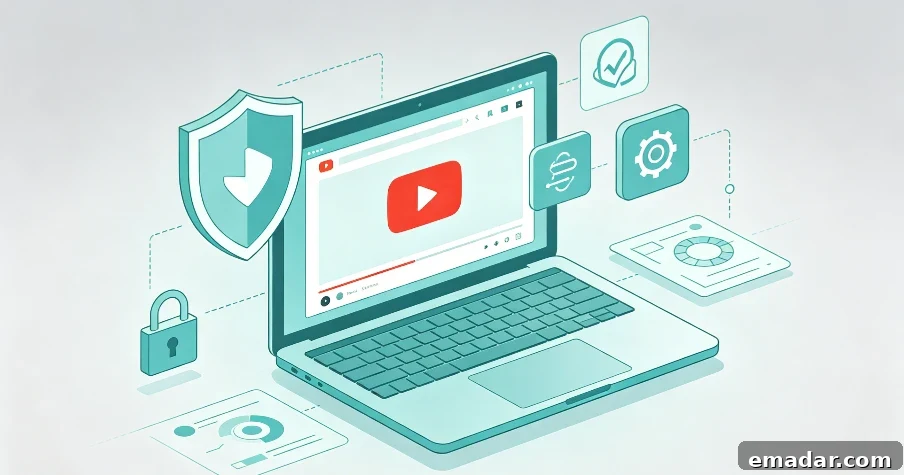
What exactly is YouTube monitoring? Understand the platform’s risk control dimensions
To truly avoid bans you can’t rely on luck or intuition. Google’s risk-control system behind YouTube is one of the most sophisticated online behavior analysis systems in the world. It continuously evaluates each account’s health across multiple dimensions, and when certain indicator combinations exceed risk thresholds, bans are automatically triggered.
Consistency of IP addresses and login environments
YouTube logs each account’s historical login IPs and analyzes patterns of IP change. A normal user might switch between home, office, and mobile networks — that’s reasonable. But if an account logs in from multiple countries or cities in a short time, or uses IPs identified as data centers or hosting exits, the system marks it as anomalous. For channel operators, using unknown proxies or data-center IPs to access the backend already places the account in a high-risk zone.
Detection of associations between multiple accounts
Google’s association detection spans beyond YouTube to services such as Gmail, Google Ads, and Google Play. If multiple YouTube channel owners share recovery emails, phone numbers, payment details, or commonly used login IPs, the system links them. Once one channel is penalized, related channels may be affected as well. This “guilt by association” is the biggest threat for teams running multiple brand channels or KOL networks.
Machine-learning profiles of behavior patterns
Beyond static identity data, YouTube analyzes operational behavior. For example, a new channel uploading many videos in a short time, frequently changing titles and tags, bulk-subscribing to other channels, or posting near-identical comments can trigger spam filters. For multi-channel operators, if several channels show synchronized operation rhythms — such as uploads and edits occurring at the same time — the algorithm can detect coordinated features.
Network environment is the first line of defense: build independent identities with residential IPs
Among all risk-control dimensions, IP addresses are the most fundamental and often overlooked. They are the origin of all online activity; once that origin is marked as “untrustworthy” by the platform, even fully compliant content is vulnerable.
Why data-center IPs often trigger YouTube bans
Many operators use cheap hosting proxies or shared network exits to manage YouTube channels for cost reasons. These data-center IP ranges are widely flagged by Google, and any login request from them receives a higher risk score. If many other YouTube accounts operate under the same data-center IP, association is almost guaranteed. Even original content can suffer collateral damage due to the “network pollution” of the IP.
Static residential proxies: assign each channel a real home network
The reliable way to shed the data-center label is to use genuine residential network exits. Static residential proxies provide IP addresses from real home broadband users around the world, each IP dedicated to one user and fixed long-term. For YouTube channel management, this allows you to assign channel A a Los Angeles residential IP and channel B a London residential IP; in Google’s view, each channel then belongs to a separate household and location.
From a channel’s initial registration, use the same static residential IP for logins and content management and keep it consistent. This stable, authentic network identity helps the channel build a long-term trust record with the platform’s risk systems. If appeals or identity verifications are needed later, a consistently used residential IP is powerful supporting evidence.
Practical setup for isolating multiple channels
When a team manages multiple YouTube channels, each channel should have a dedicated static residential IP exit, and those IPs must never be cross-used. Practically, team members can manage multiple channels from a single computer by using separate browser profiles and assigning each profile a different static residential IP, achieving “one device, multiple channels, fully independent network identities.” This approach avoids the cost of separate hardware and prevents leaving linkage traces on office networks.
Account nurturing details: help new channels pass the observation period
A newly registered YouTube channel is under strict observation for the initial weeks or months. Mistakes during this window can trigger bans with little recourse. Account nurturing is essentially demonstrating during this period that the account is operated by a real person with legitimate intent.
Independent and authentic registration information
Each channel should use a unique phone number and backup email that do not overlap with other team channels. The IP used during registration should remain consistent through the nurturing and operation phases. Static residential proxies ensure this requirement by making the registration IP the channel’s “birth address,” and all subsequent important operations should originate from that same IP.
Gradual behavior that mimics real users
New channels shouldn’t upload many videos or apply customizations on day one. Spend several days browsing related videos, liking and saving content to let the platform see the account as an interest-driven viewer. Then gradually begin uploading, starting at a modest pace such as one or two videos per week to avoid sudden bulk actions. Maintain regular login times and avoid frequent late-night activity.
Avoid automation tools
During the nurturing phase especially, do not use automatic publishing, auto-commenting, or auto-subscribing tools. These tools produce automation patterns that YouTube recognizes as bot activity; even a single use can lead to permanent bans. In stable operation, keep manual control of core channel tasks and limit automation to non-login public data collection.
Key anti-ban points in daily operations
Once a channel reaches stability, the focus shifts from “proving I’m real” to “proving I’m a compliant content provider.” This requires consistent discipline across content, operations, and network environment.
Awareness of content compliance boundaries
YouTube’s community guidelines cover hate speech, violence, adult content, misinformation, and more. Cross-border operators must pay special attention to cultural differences that create compliance blind spots. Expressions acceptable in one market may be violations in another. Best practice is to follow the strictest standards in target markets and to preview content using a local residential IP to simulate the local user perspective and check for possible regional restrictions.
Diversify operations to reduce system attention
For multi-channel teams, differentiate upload times, editing habits, and optimization strategies across channels. For example, channel A might favor question-style titles while channel B uses declarative titles; channel A’s thumbnails use warm tones while channel B uses cool tones. These differences aren’t deceptive — they give each channel a distinct content personality and help avoid algorithmic clustering as coordinated operation.
Clean payment and monetization practices
When channels enable ad revenue or other monetization, associated Google AdSense accounts and payment methods must remain separate. Sharing a single payout account across multiple channels is strongly penalized. Each channel should have dedicated payment details, and the network exit used during application and verification should match the channel’s operational IP.
Use dynamic residential proxies to safely collect YouTube public data
YouTube operation also depends on ongoing market and competitor analysis: tracking trending videos, researching keyword and tag strategies, and monitoring content trends. Sending these data-collection requests from a channel’s operational IP risks triggering rate limits and polluting the main IP, exposing the primary channel to unnecessary scrutiny.
Dynamic residential proxy pools are designed for public data collection. They cover many countries and regions and support automatic rotation, so each search or page visit simulates a request from a different real household. Deploying such proxies for trend monitoring, keyword analysis, and public comment harvesting ensures continuous data flow without associating those requests with the channel’s operational IP.
In actual deployments, add rate limiting, retry logic, and session management. Regardless of higher-level optimization, the residential nature of the underlying IPs is the foundation for preventing collection requests from being blocked or returning misleading results.
What to do if an account is restricted or warned
Even with safeguards, misclassification can still lead to warnings or temporary restrictions. How you respond will determine whether the account returns to normal or heads toward permanent ban.
Remain calm and avoid repeated probing
After receiving a warning, immediately stop unconventional operations: pause data collection scripts and avoid logging in from other IPs. Log in once from the channel’s usual static residential IP to review the warning and submit an appeal per instructions. Repeated IP switching or logins from multiple devices increases suspicion of account compromise.
Appeals — maintain consistency of network identity
When submitting an appeal, use the static residential IP that the channel has consistently used. The platform compares the current IP with historical IP records during review. A long-term, locality-consistent residential IP strengthens the claim that you are the legitimate account owner and improves the chances of successful appeal.
Quick reference: anti-ban strategies by operating stage
The following summarizes risks and recommended IP choices through a channel’s lifecycle for easy reference:
| Operating Stage | Main Risk | Core Anti-Ban Strategy | Recommended IP Type |
| Channel Registration | IP flagged, identity linkage | Independent residential IP, unique registration info | Static residential IP |
| Initial Nurturing | Abnormal behavior patterns | Gradual actions, avoid bulk operations | Static residential IP |
| Daily Operation | Content violations, synchronized operations | Compliance checks, operational differentiation | Static residential IP |
| Multi-Channel Management | Cross-channel linkage | Dedicated IP and browser environment per channel | Static residential IP |
| Data Collection | Main IP pollution, rate limits | Use separate exits for public data collection | Dynamic residential IP |
| Appeal & Recovery | IP inconsistency | Log in from historically used residential IP | Static residential IP |
A stable network identity is the foundation of your YouTube efforts
At first glance, YouTube bans may seem like content moderation outcomes, but deeper inspection reveals that the network environment often acts as an invisible judge. A long-term, stable residential IP that has never been flagged helps build trust for your channel; an obscure data-center IP can be added to a risk list at any algorithm update.
Treat each YouTube channel as an independent local creator and assign it a fixed, authentic network identity. This is the most basic and durable anti-ban measure. When the network environment no longer hides threats, creators can focus on the essential task: producing great content that keeps global audiences watching.
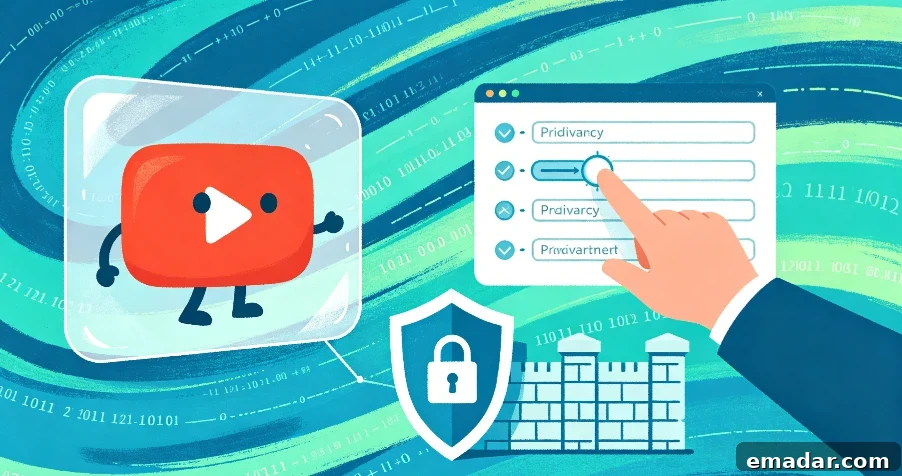
Assign an independent, trustworthy network identity to each of your YouTube channels